What Can Go Wrong
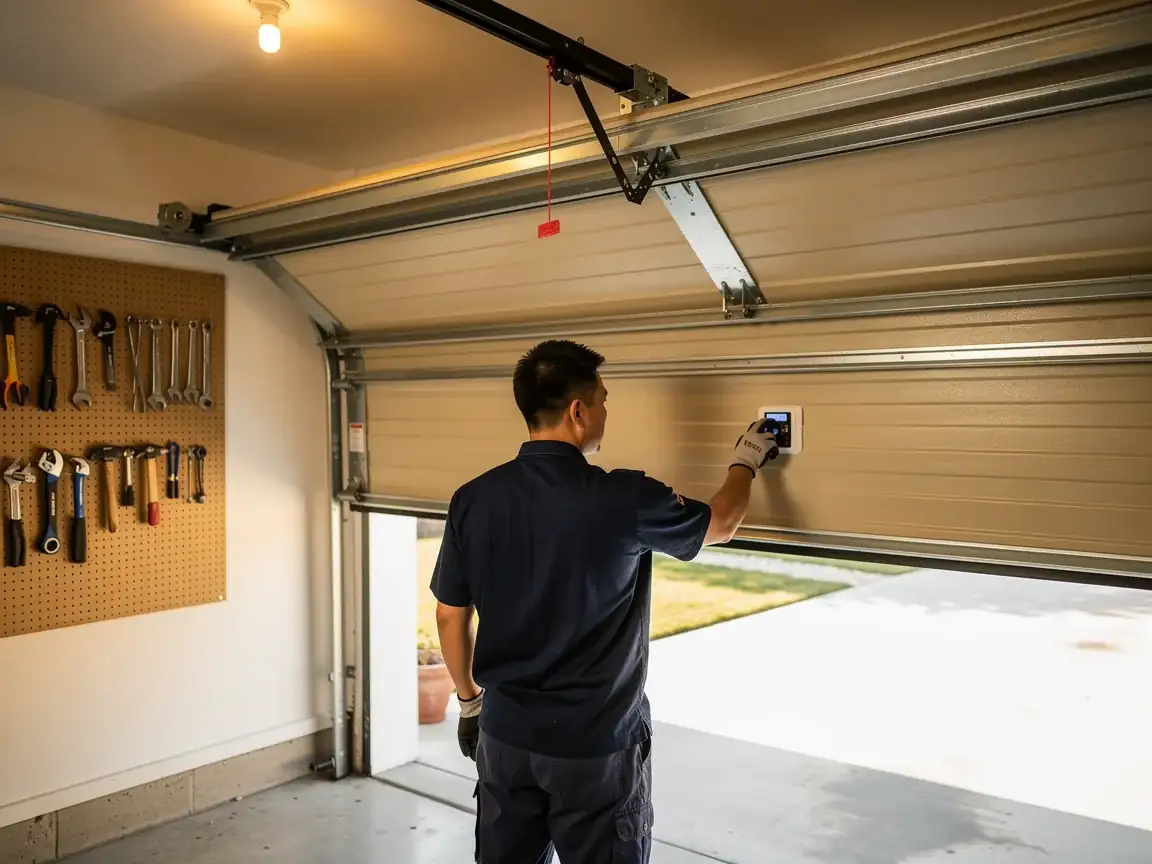
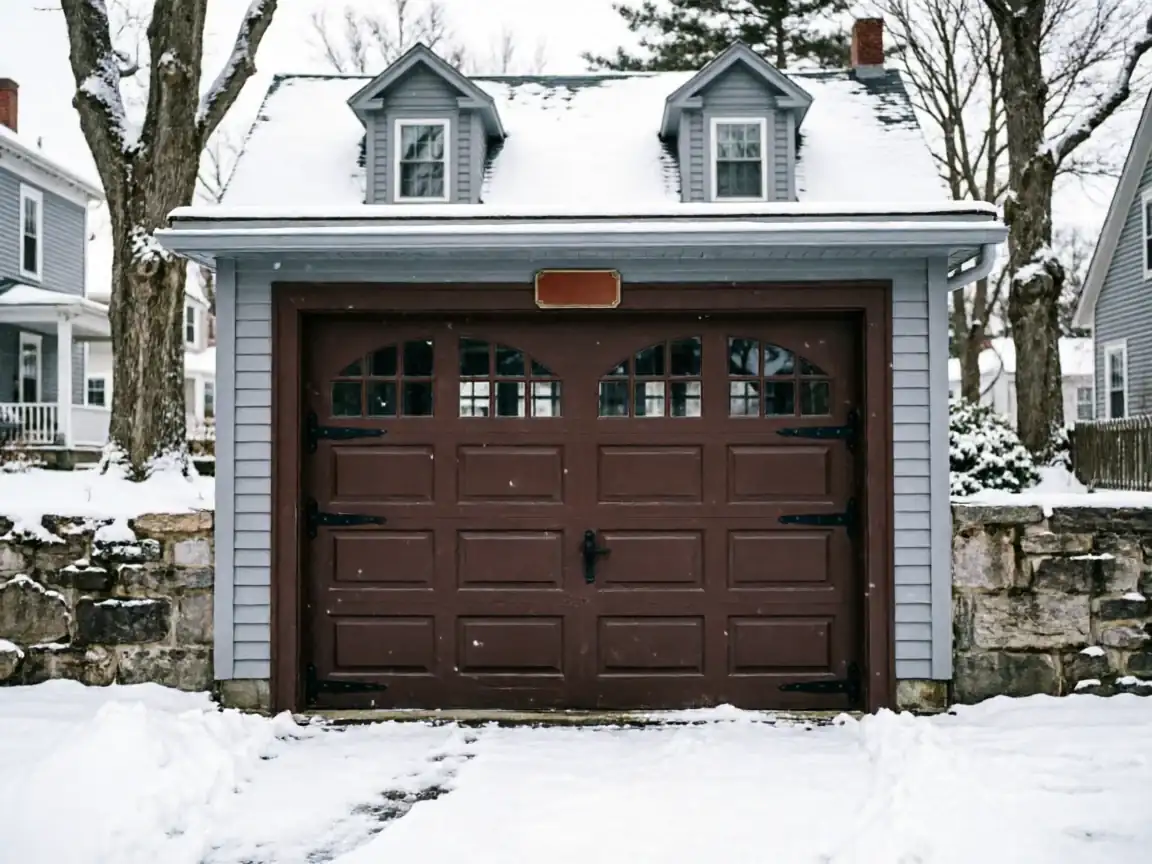
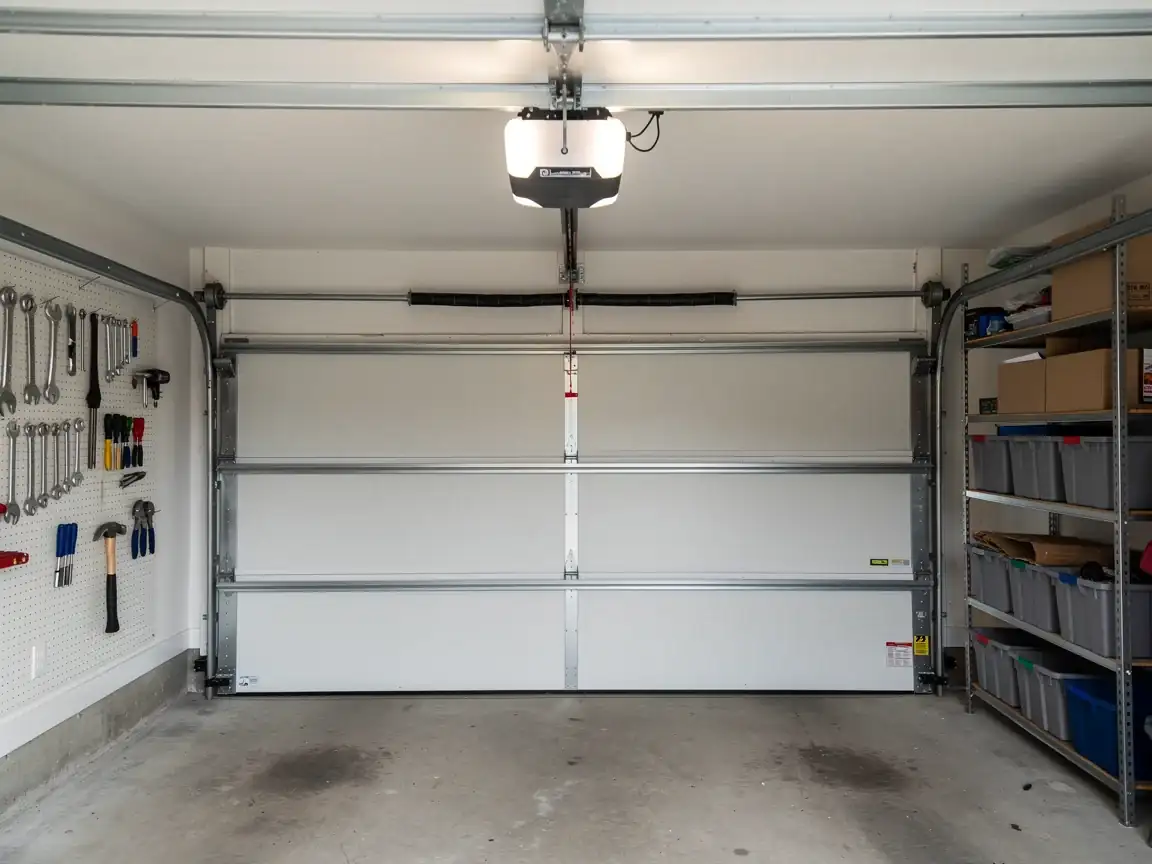
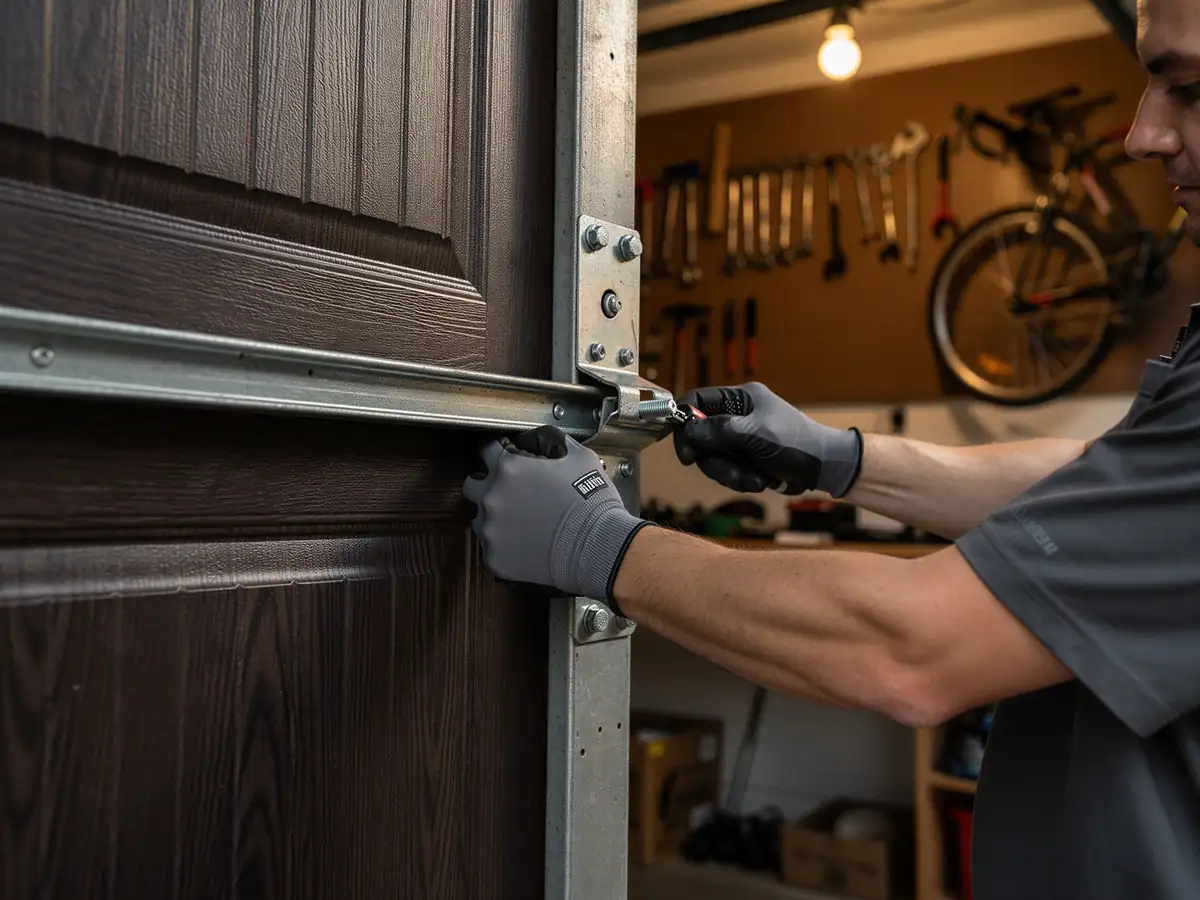
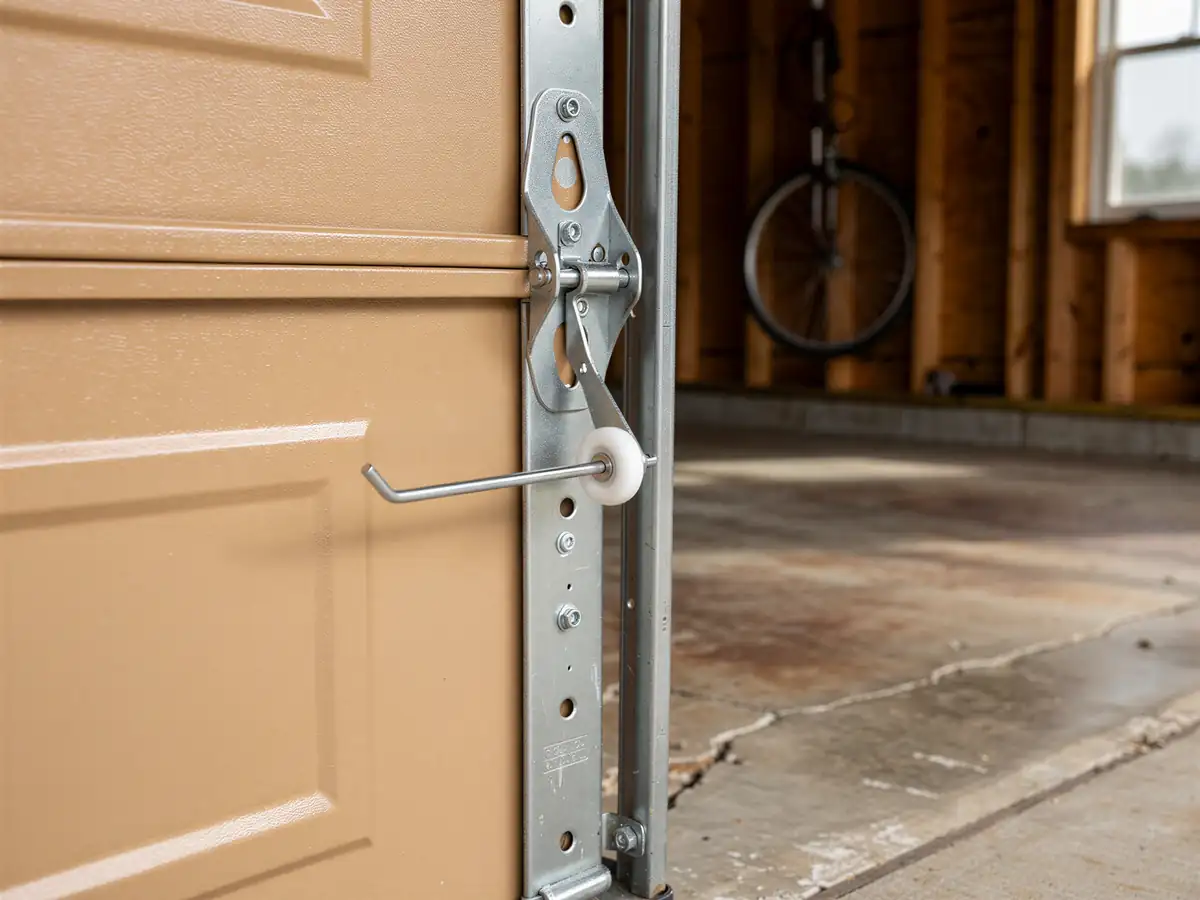
Most houses in Wolcott went up around 1973, right in the middle of the area's 1960s-70s building wave. Doors from that era were hung on steel track bolted to wood jambs with lag screws, not the reinforced brackets you see on newer builds. Over fifty years those lag screws work loose in the framing, the track brackets shift a fraction of an inch at a time, and the door starts riding a track that's no longer plumb. Add in the galvanized track itself, which was a thinner gauge back then than what gets installed today, and you get a track that dents or bows instead of flexing back into shape. A dented section catches a roller just enough to walk the door sideways. In a lot of these houses the opener was added later, sometimes decades after the door itself, which means the travel settings and safety reversal were tuned for hardware that's since sagged. That combination - aging track, loosened brackets, a mismatched opener - is the usual root of an off-track door in this town, more than any one dramatic event.
The Symptom
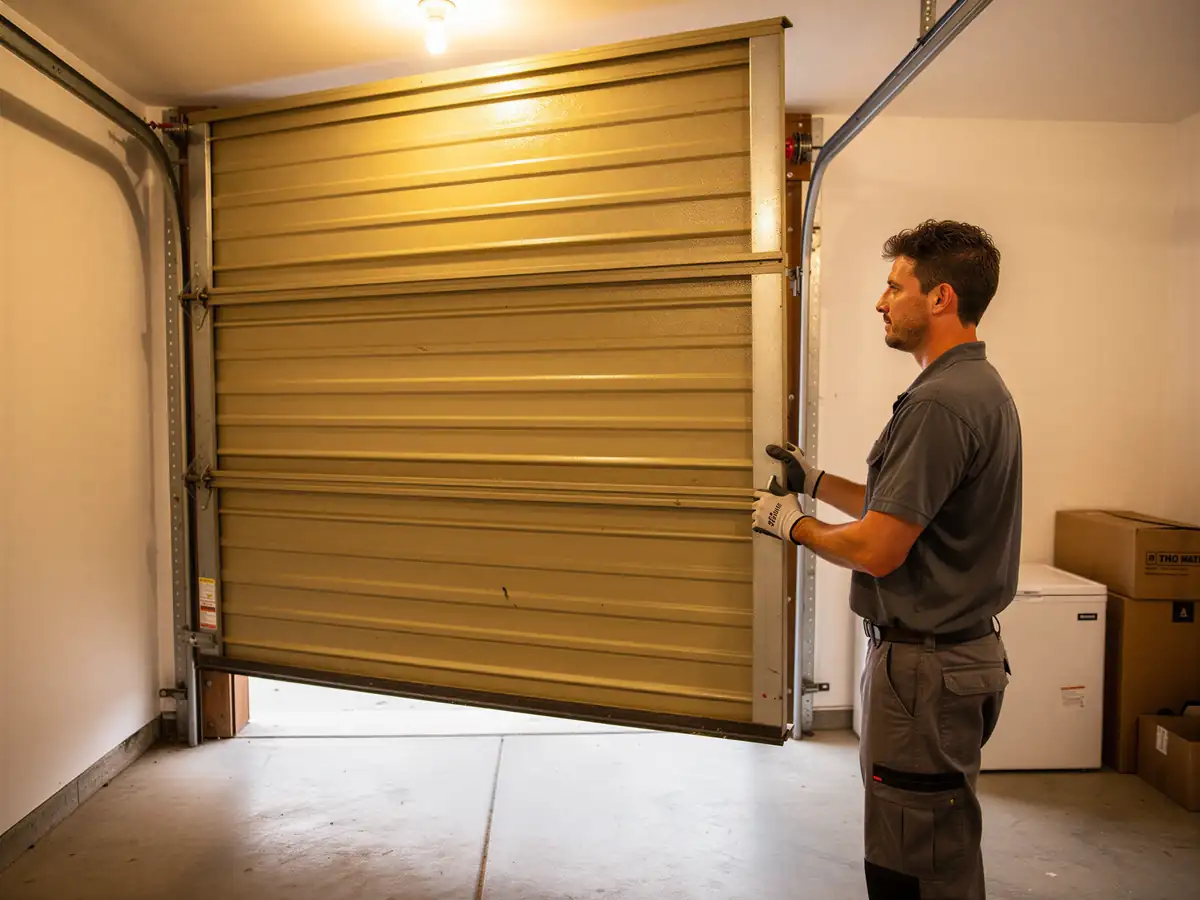
You'll usually see it before you hear it: the door sits crooked in the opening, tilted a few degrees, with daylight showing unevenly along one side. Sometimes a roller has actually jumped the track and you can see the wheel sitting outside the rail. Other times the door still looks like it's in the track but it binds halfway up, grinds, or reverses on its own partway through the cycle - that's usually a bent section you can't see from the floor. If the door came off while closing, do not run the opener again. Running it with a roller off the rail can bend the track further, pull a hinge, or put stress on a cable that's already carrying the door's weight unevenly.
Doing It Yourself
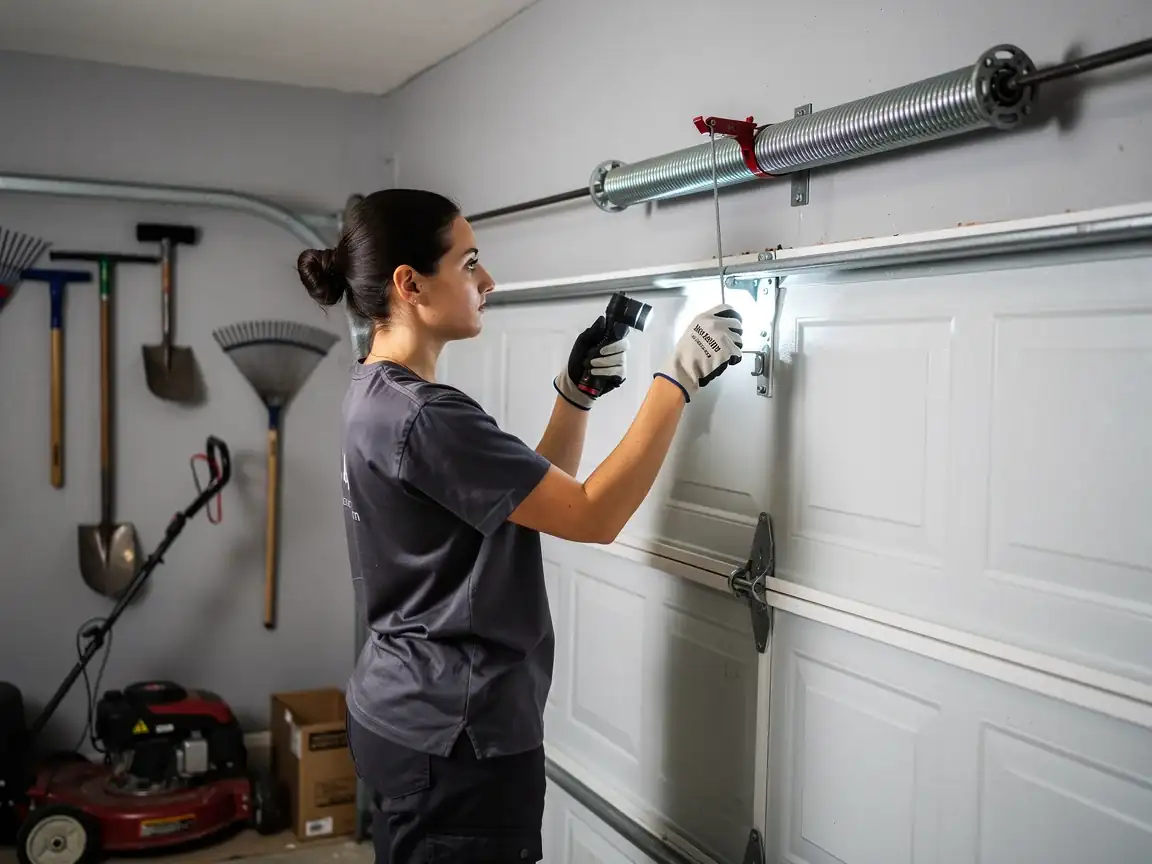
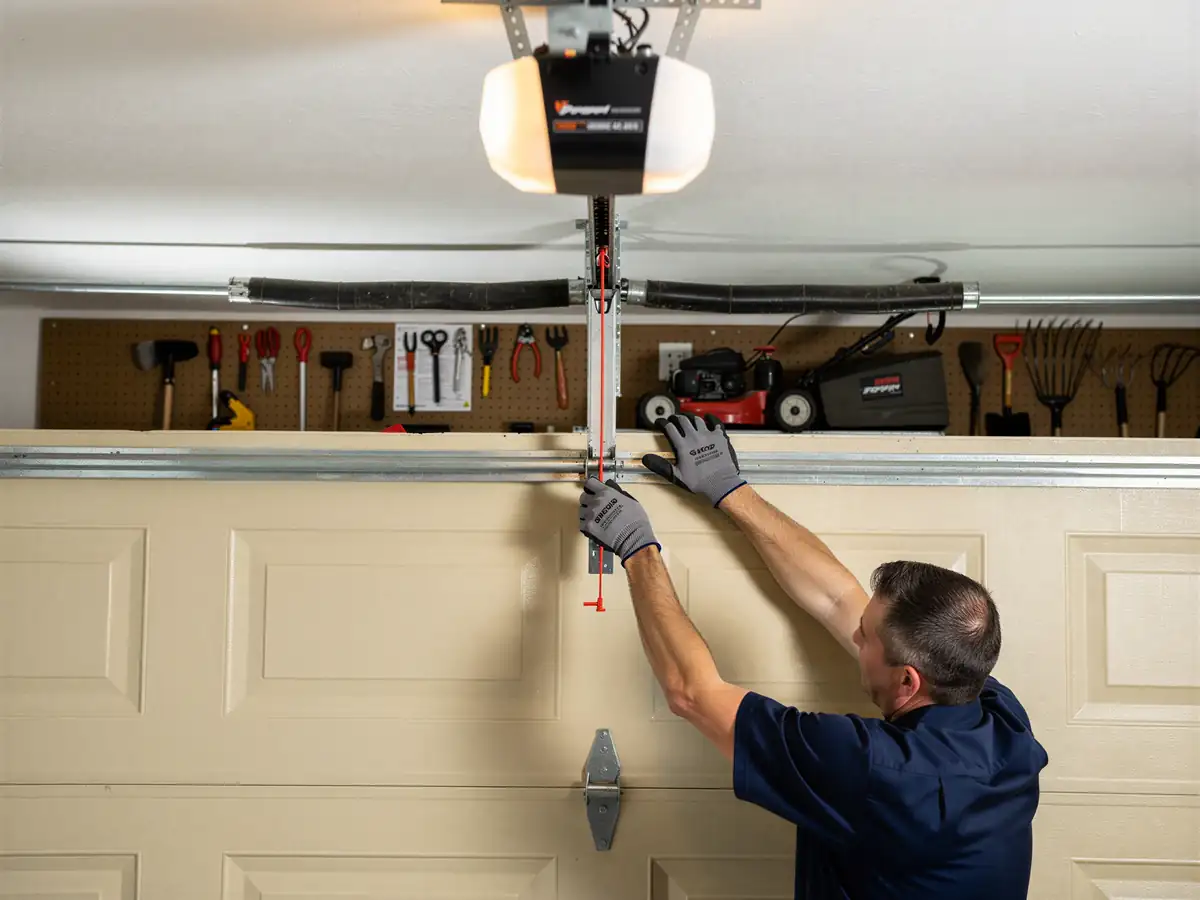
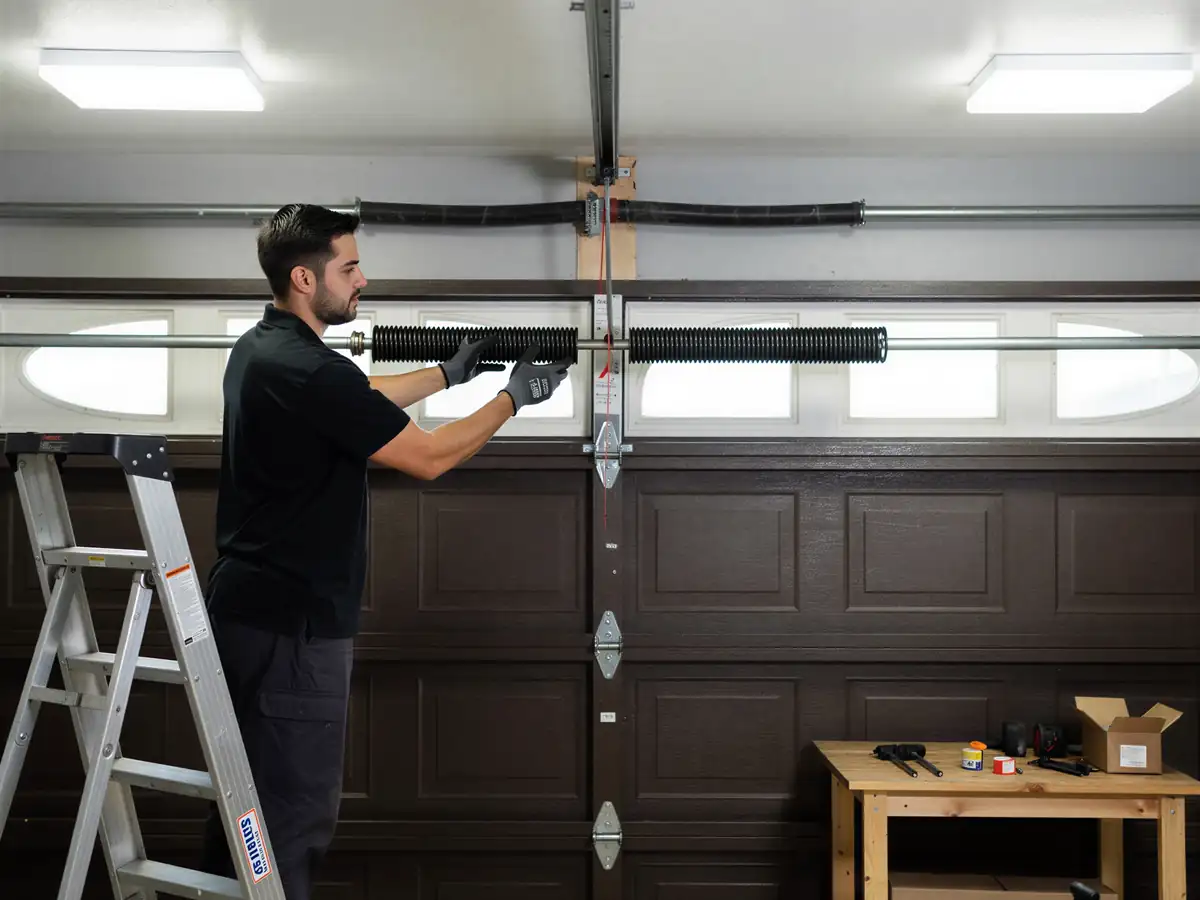
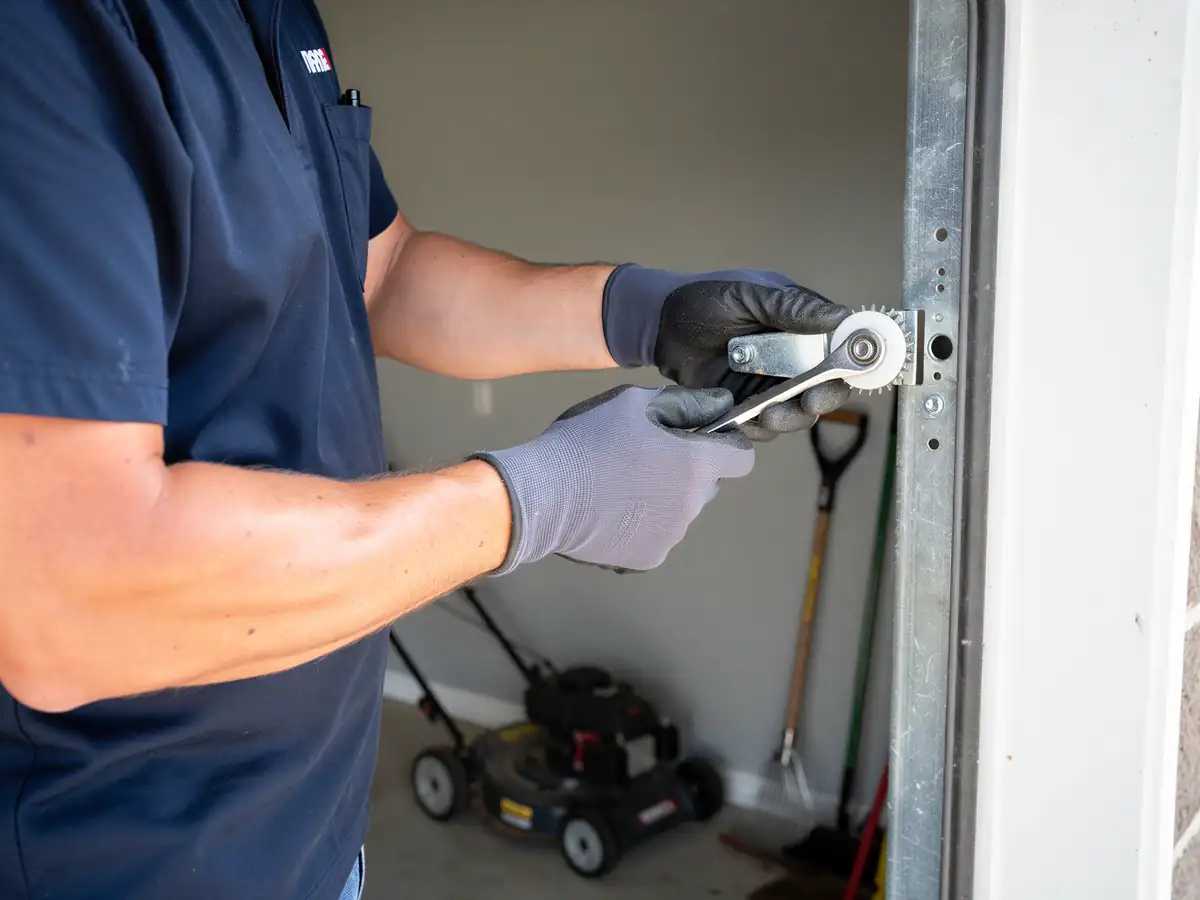
If the door has jumped the track but the panel isn't bent, you can sometimes walk the roller back onto the rail by hand with the door manually disengaged from the opener - pull the release cord first, always. Past that, leave it. The springs on a door this age are under full tension whether the door is on track or not, and a door that's already off-balance is more likely to drop or swing if you start loosening bolts you're not sure about. Tightening a loose bracket with the door hanging on it is also a two-person job at minimum, and on a lag-bolted jamb from the early 1970s it's easy to strip the hole and make the repair harder, not easier. If the door is sitting crooked, call it in rather than force it back yourself.