The Drive Over
We're based in Bristol, and Farmington sits about 6 miles out, so there's no depot here and no claim of a local crew standing by around the clock. What we do have is a truck that makes this run regularly, because Farmington is one of the areas we cover most. When you call, you're getting a crew that knows the drive and knows what tends to be wrong with a Farmington door before they pull up, not a dispatcher reading a script.
That's worth saying plainly because a lot of garage door outfits imply they're around the corner when they're not. We're not pretending otherwise. The 6 miles means we schedule the trip, we don't drop by on a whim, and that shapes how we book the day. If you're flexible on timing, you'll usually get a better slot.
This Area's Housing
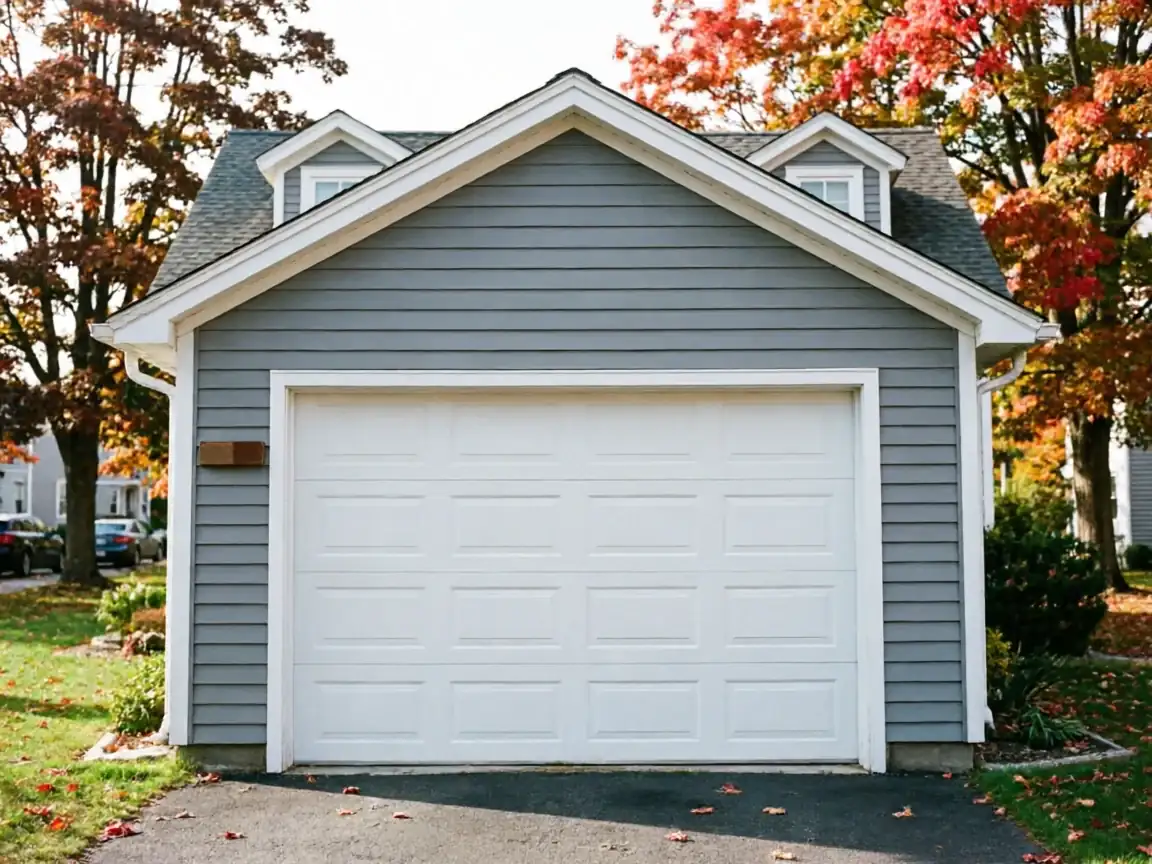
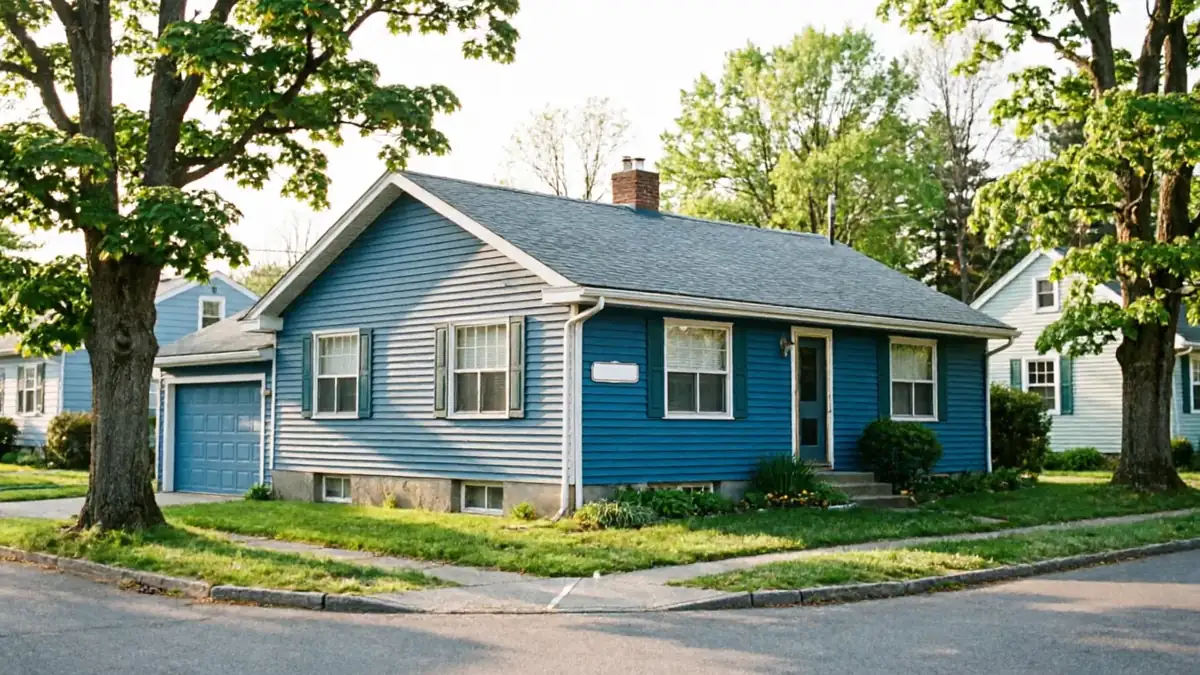
Farmington's housing stock centers on 1980, a good decade newer than the median build year across the wider Bristol service area, which runs closer to 1971. That gap matters more than it sounds. A house built in 1980 was framed and permitted under a different set of assumptions about garage openings, door weight, and header support than one built in the 1960s or earlier.
Farmington also carries a notably higher median household income, around $134,237, well above the roughly $107,435 median across the broader service area. With 10,963 households in the area, you've got a fair number of doors from that same build window, which means a lot of garages here are hitting the age where original hardware starts failing, but the doors themselves and the openings they sit in are a step up from the oldest stock nearby. Newer header framing, more consistent opening widths, and less of the ad-hoc bracing you find in older towns on our route.
How That Shows Up in the Door
A 1980-era garage in this area almost always means a door and track system that's past its original design life but not ancient
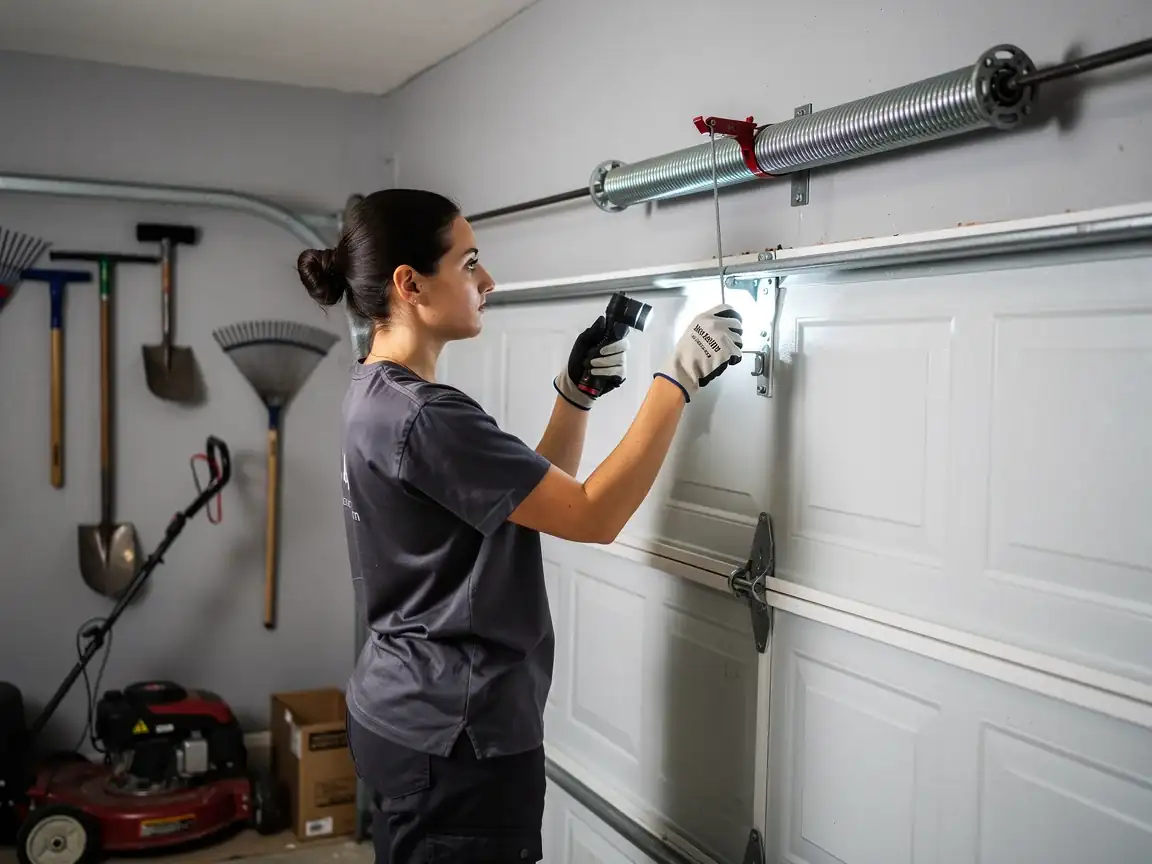
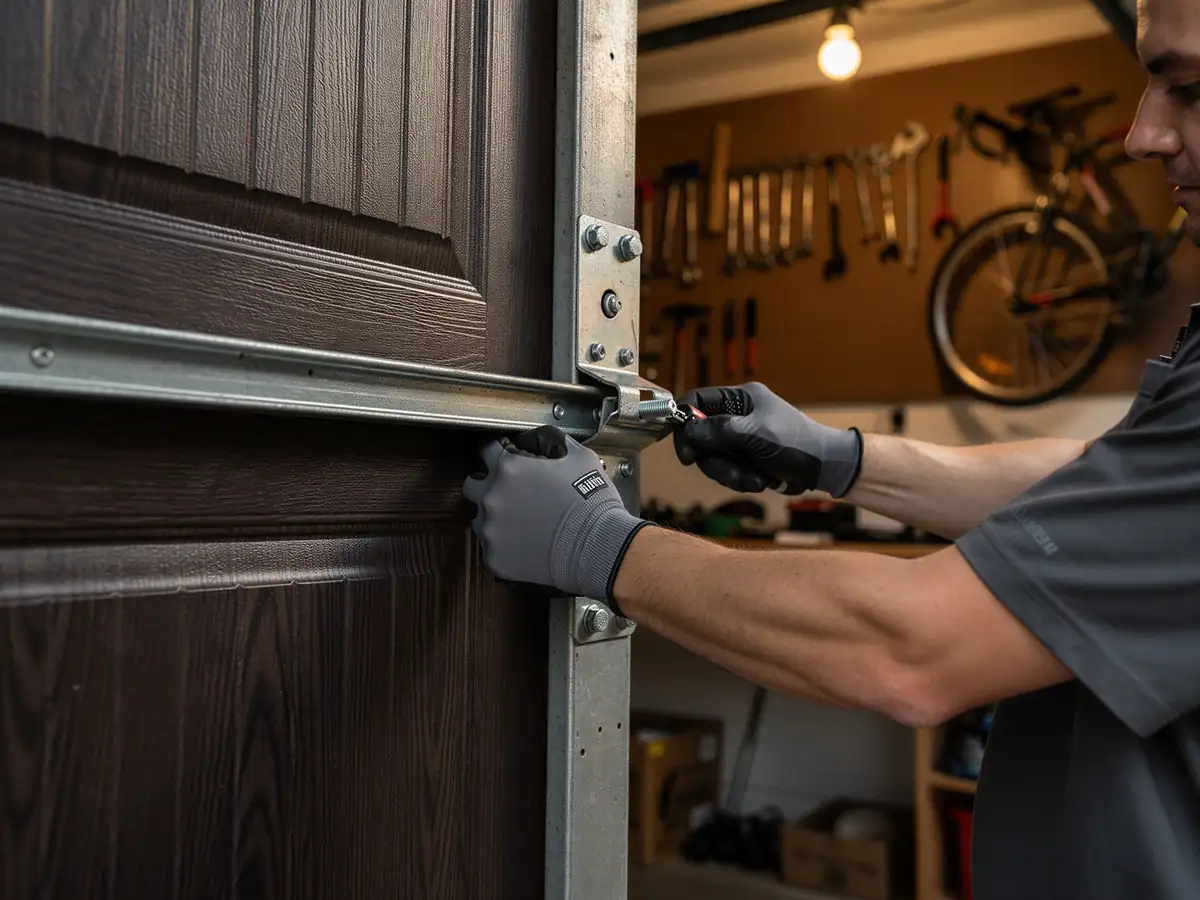
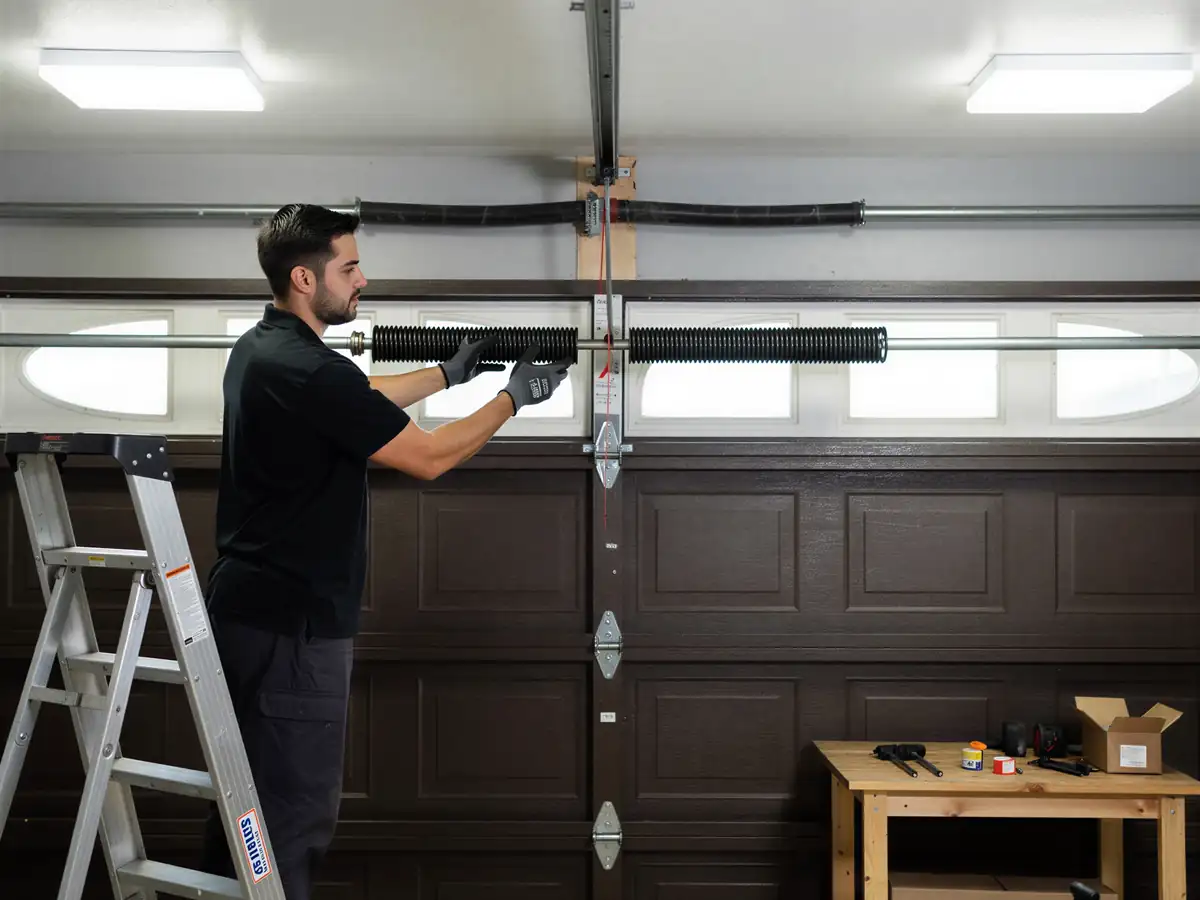
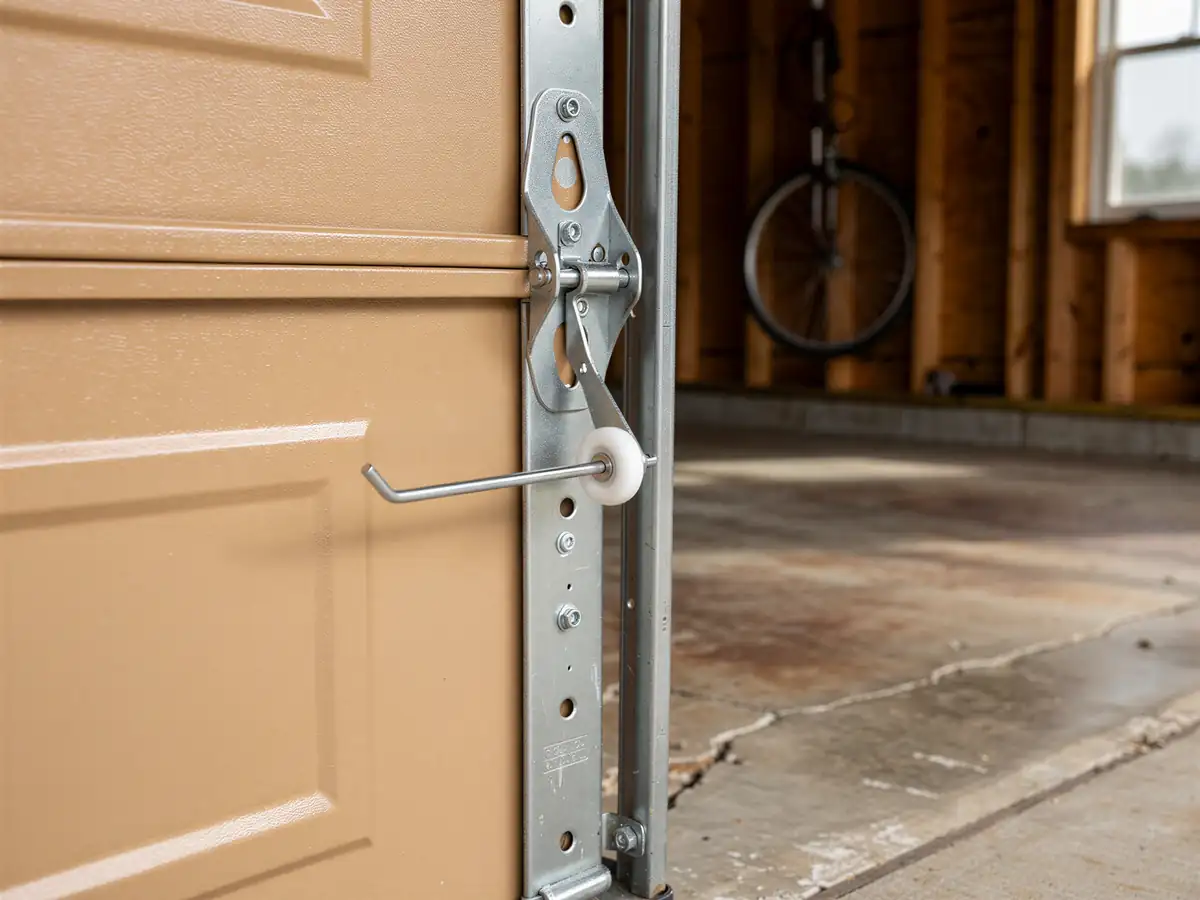
By now the factory springs have usually been replaced at least once, if not twice, and the openers are often a second or third unit layered onto the original wiring. We see a lot of extension-spring setups from that build era that were fine when the door was lighter steel, and less fine once a heavier insulated replacement door went on top of the same hardware.
Connecticut's cold climate adds its own wear pattern regardless of build year
Cold-stiffened grease, slower rollers, and cables that lose flex in deep winter. On a 1980-built opening that's typically a bit wider and taller than older stock nearby, that stiffness puts more strain on springs sized for a lighter door. We size spring replacements to the actual door weight we find on site, not to what a 1980 spec sheet says it should be, because forty-plus years of panel swaps and insulation retrofits means the original spec rarely matches what's hanging there now.
What People Here Ring About
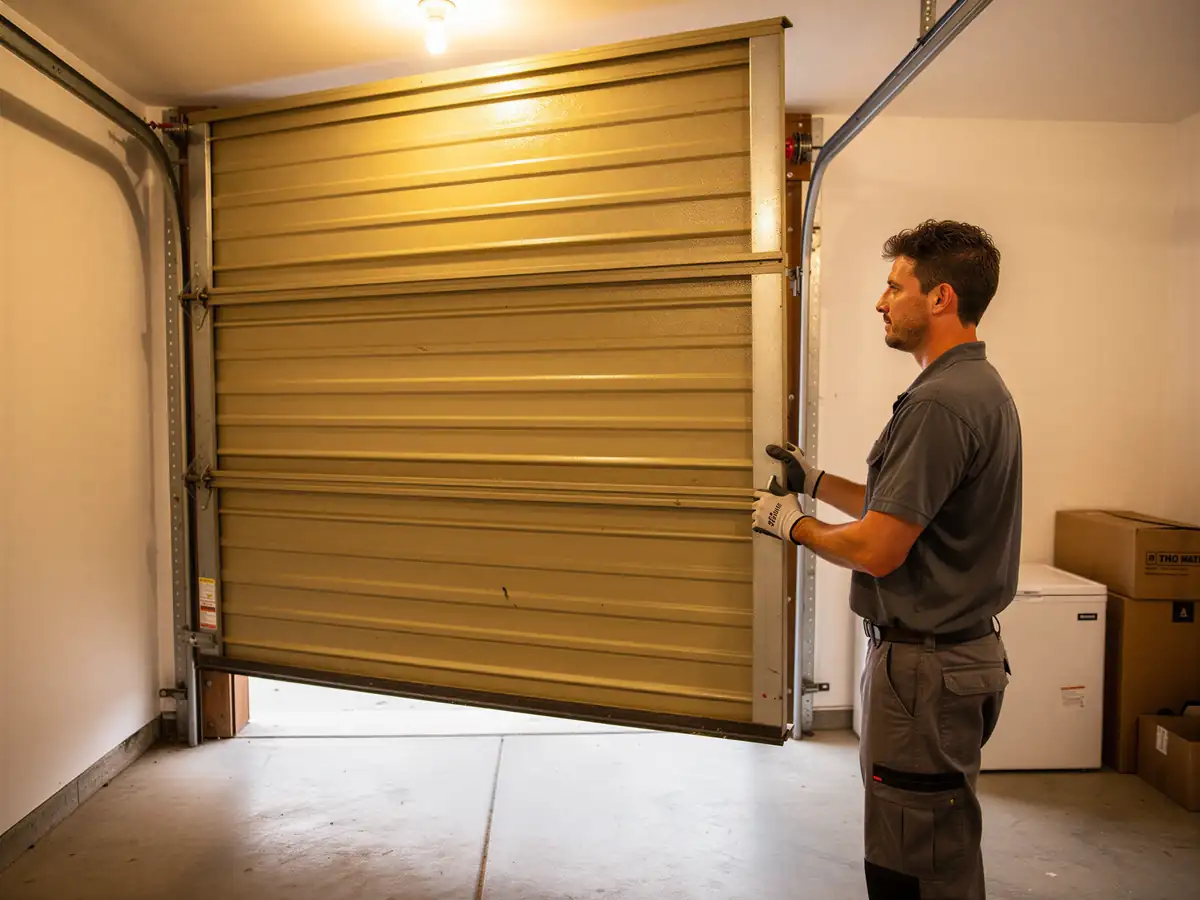
The calls we get from this area split a few predictable ways. Torsion springs that let go on a double door are common, especially heading into winter when cold grease and cold steel both work against the spring. Openers from the same build generation are starting to fail on circuit boards rather than motors, which is a different repair than people expect. And track alignment issues show up more here than you'd think, usually from a door panel swap at some point that didn't quite match the original track spacing.
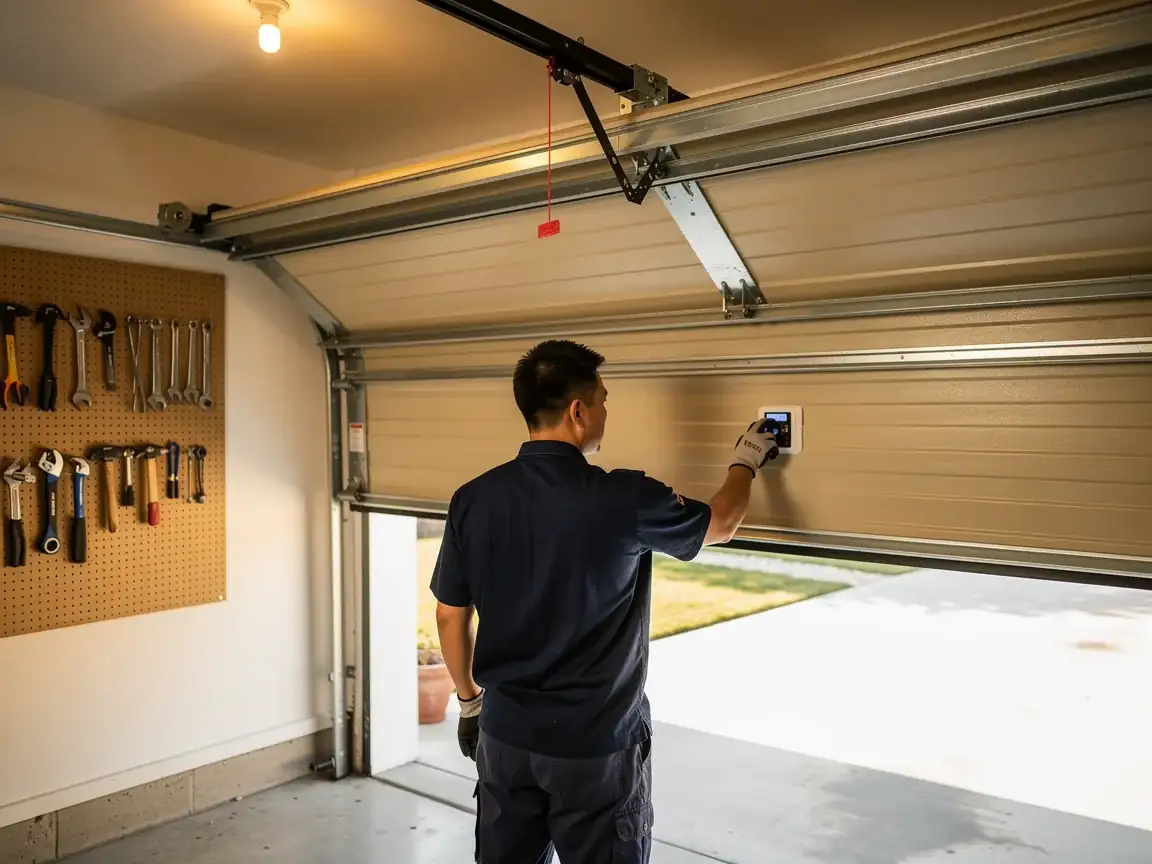
One honest limit: if a board-level opener failure means the control unit is discontinued, we'll tell you straight that replacement beats chasing parts, rather than quoting hours of diagnostic time on a unit nobody stocks boards for anymore. We'd rather give you that answer on the phone than after a truck roll.