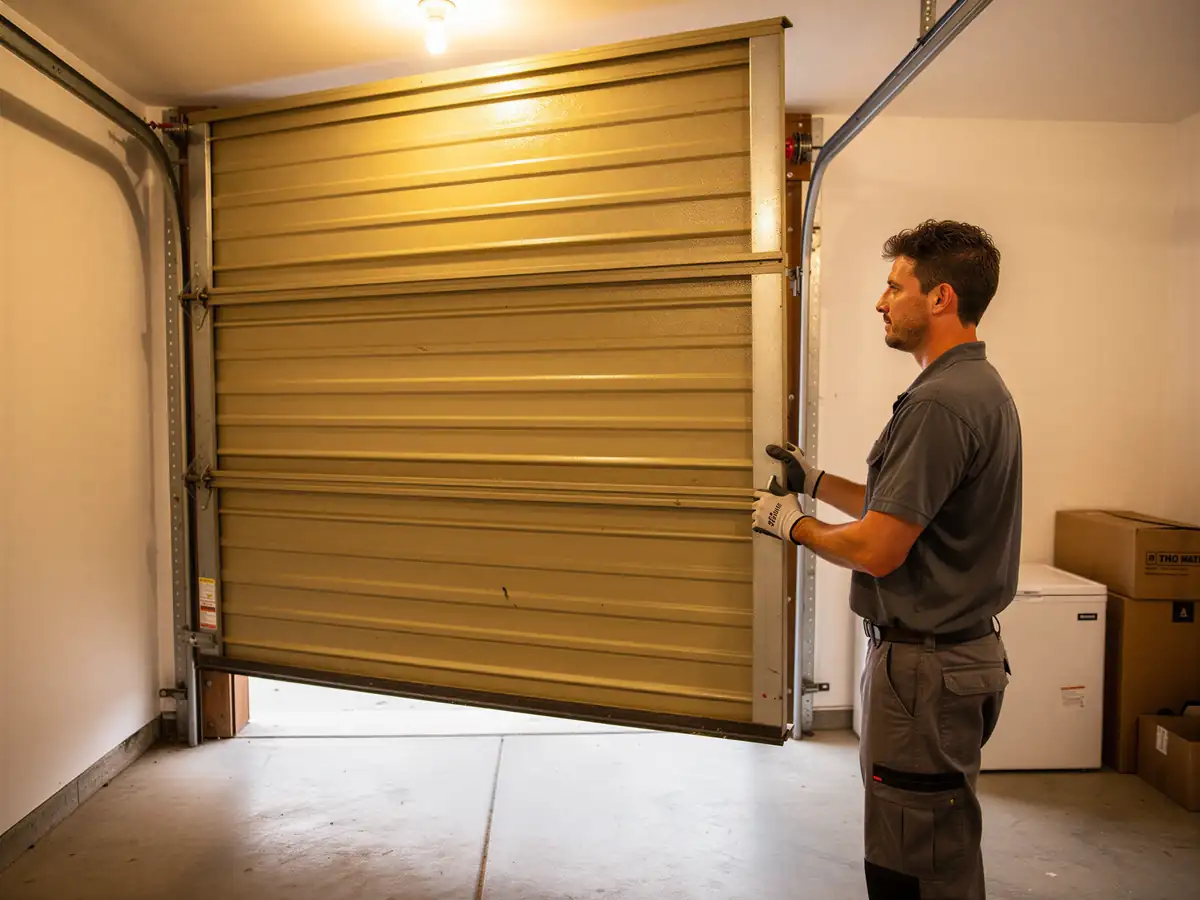
What Can Go Wrong
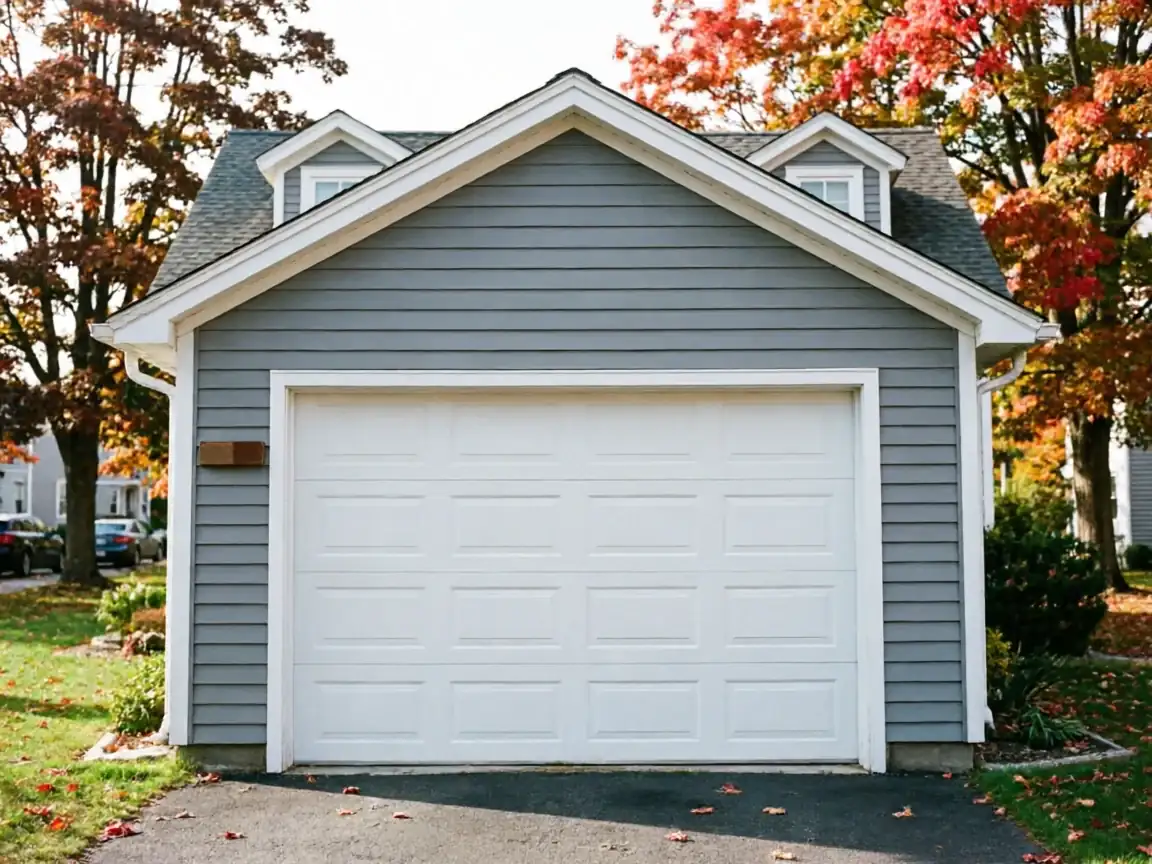
Most houses in Farmington went up around 1980, a decade later than the 1971 median for the rest of the territory we cover. That puts the typical door here squarely in the steel sectional era - two-car openings, roughly 16 feet wide, hung on torsion springs rather than the extension-spring hardware you still find on the area's older pre-1960s stock. A door from 1980 is now well past the point where original hardware is still original.
The climate band here runs cold and severe, and that matters more than people think. Grease stiffens below freezing, so a roller that's fine in July can grind and stick in January. Torsion springs under constant tension lose temper faster in hard freeze-thaw cycles, and a spring that's already fatigued is far more likely to snap on the coldest morning of the year than on a mild one.
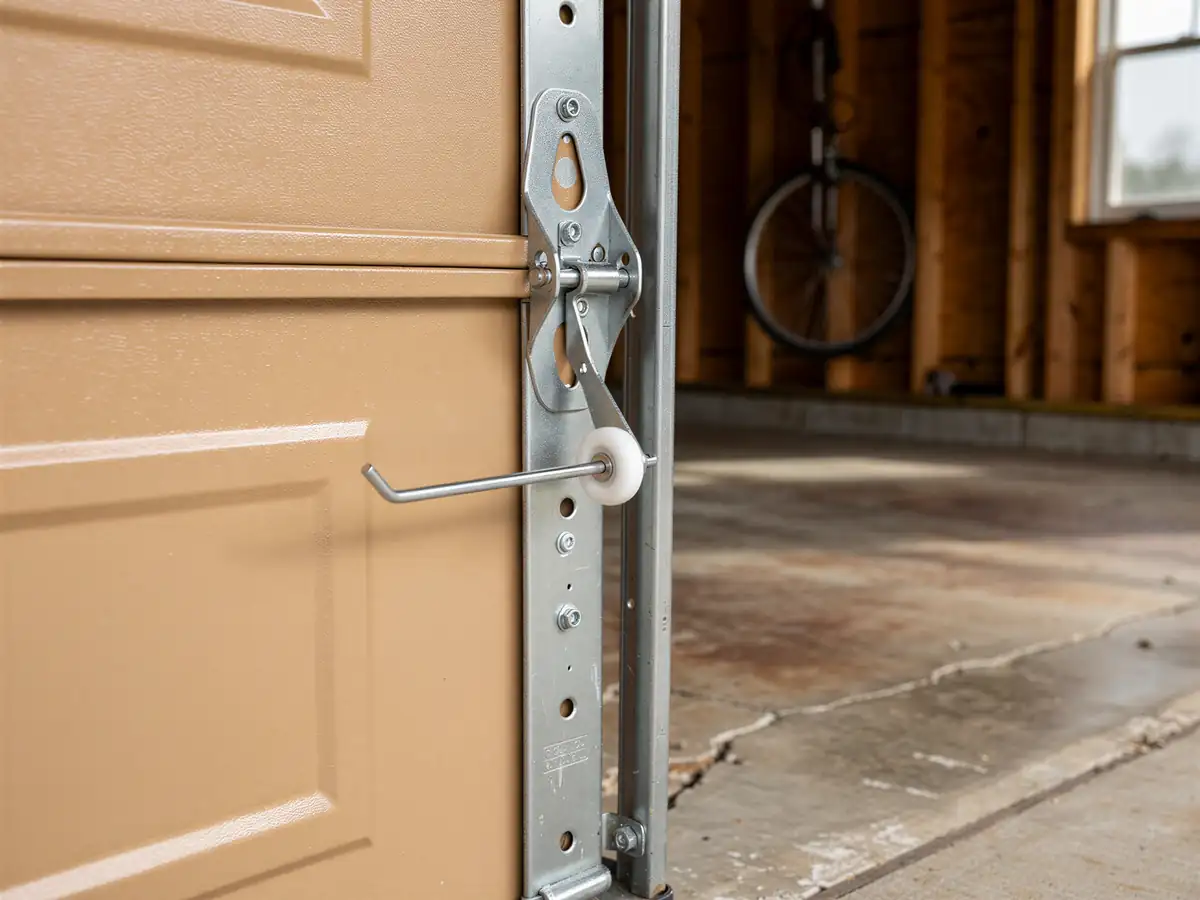
Beyond the spring, the usual wear shows up where you'd expect on a 40-plus-year-old steel door: rust blooming along the bottom panel where road salt and snowmelt sit against it all winter, rollers galled from decades of travel, and cable starting to fray near the drum. Opener gear-sets strip quietly, so the door still runs but takes longer and strains harder each time.
Doing It Yourself
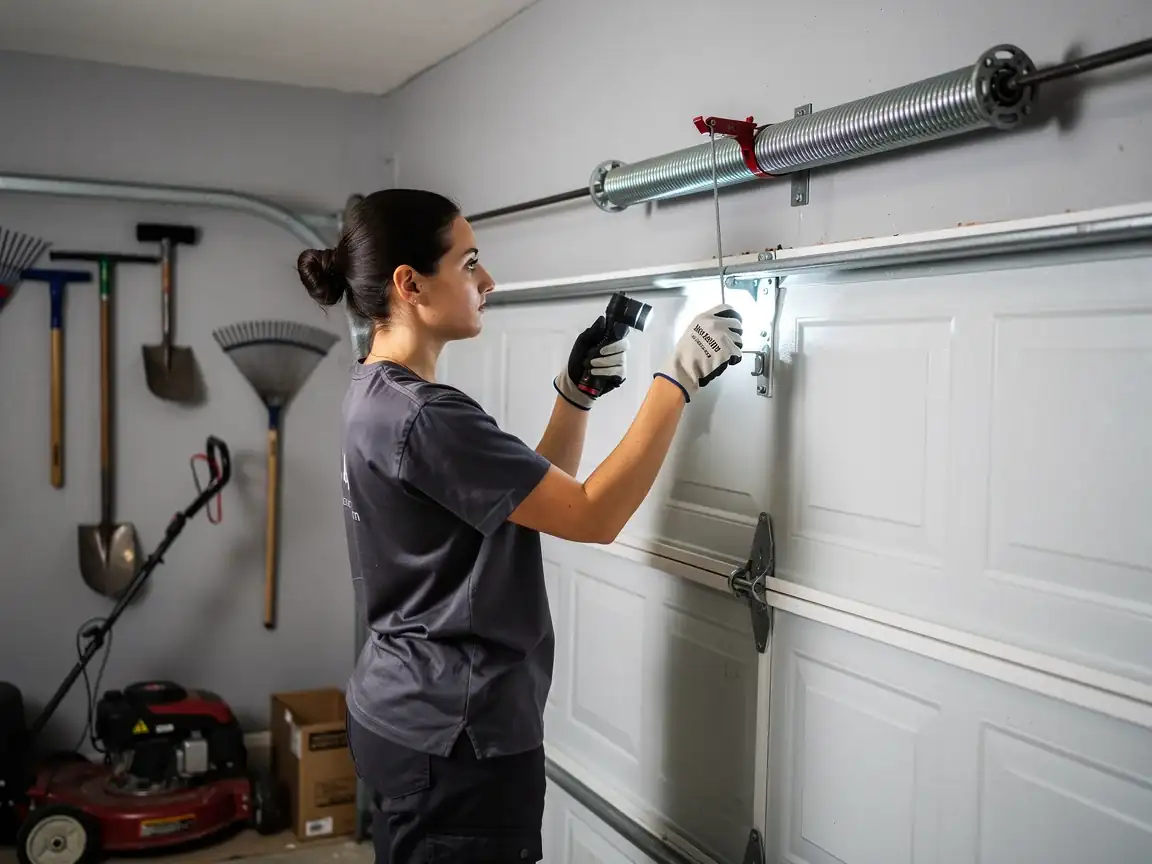
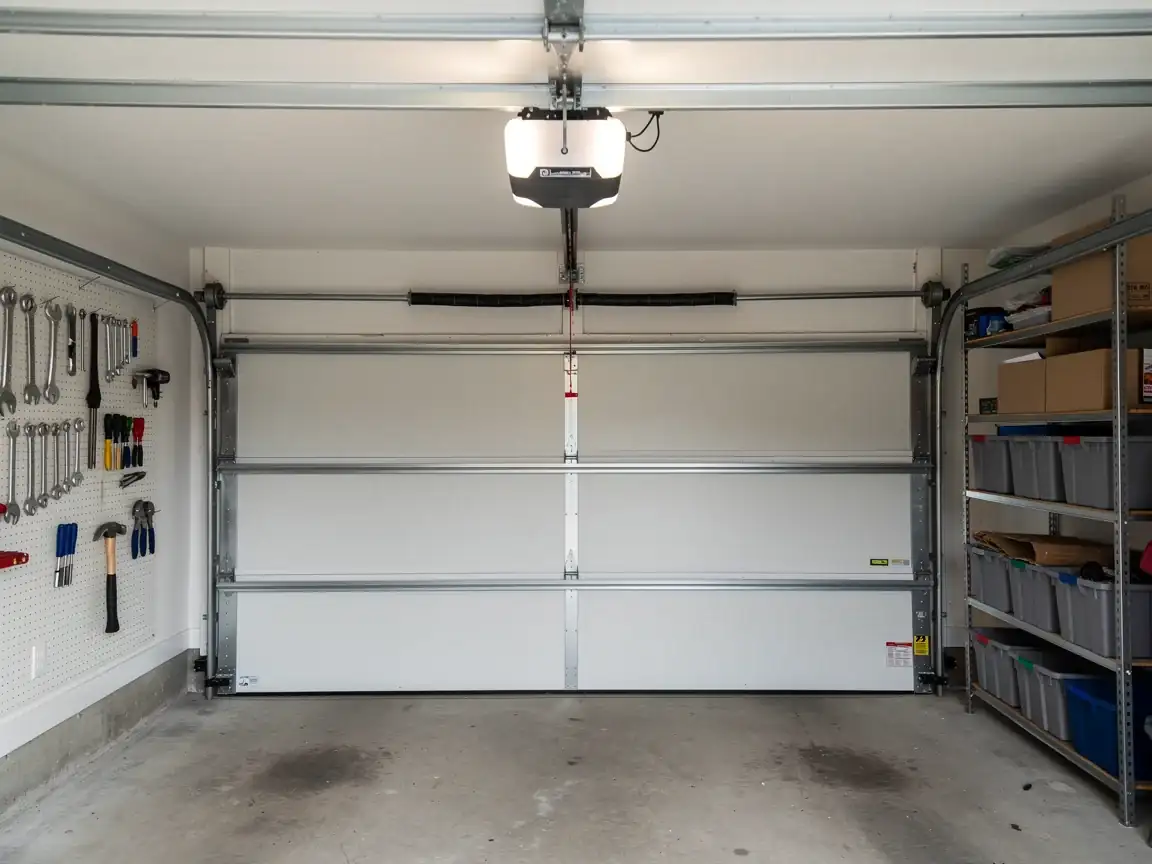
A few things are worth doing yourself between visits. Wipe down the tracks and check for dents or gaps where a roller might jump the rail. Run a visual check on the bottom bracket and cables for fraying or rust pitting - if you see either, stop opening the door and call someone. Lubricate hinges and rollers with a garage-door-specific grease, not WD-40, which is a solvent and strips what little lubricant is already there.
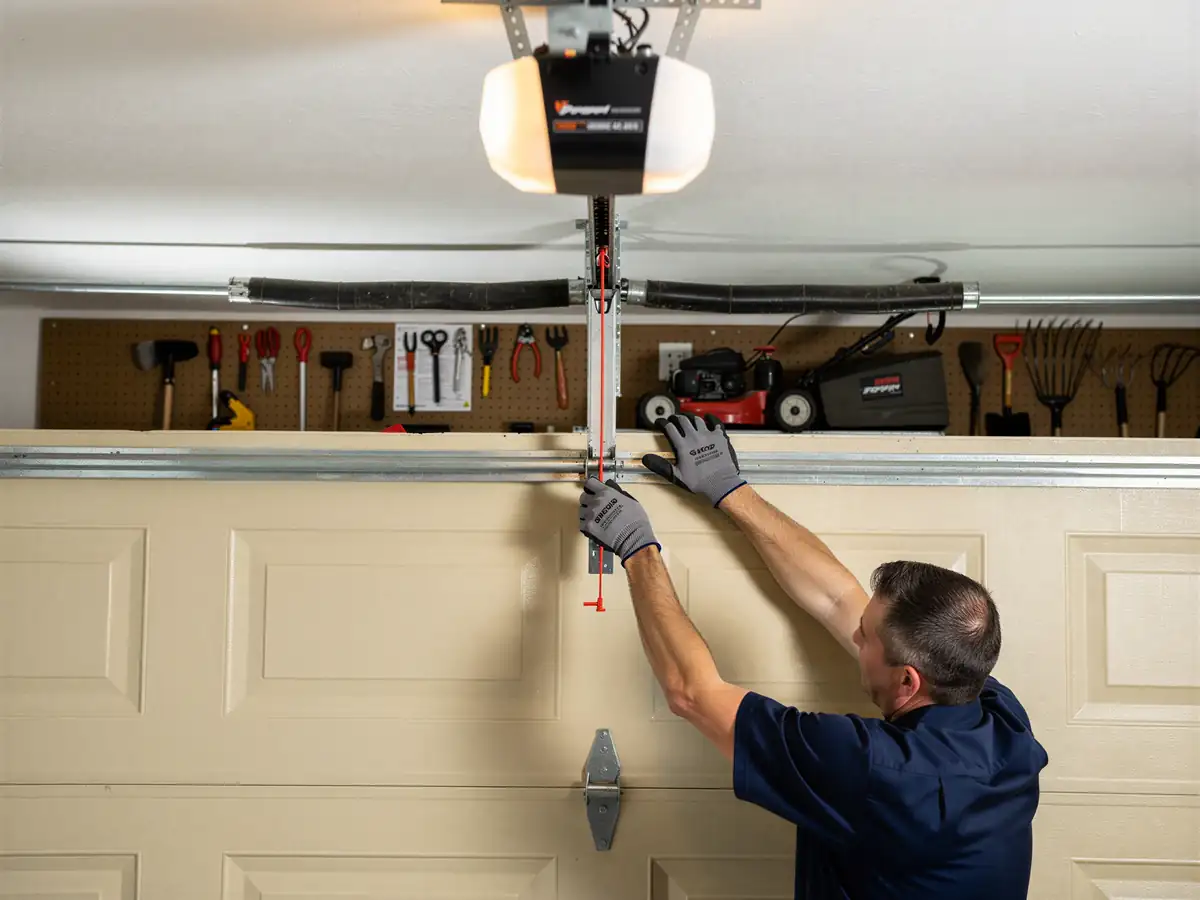
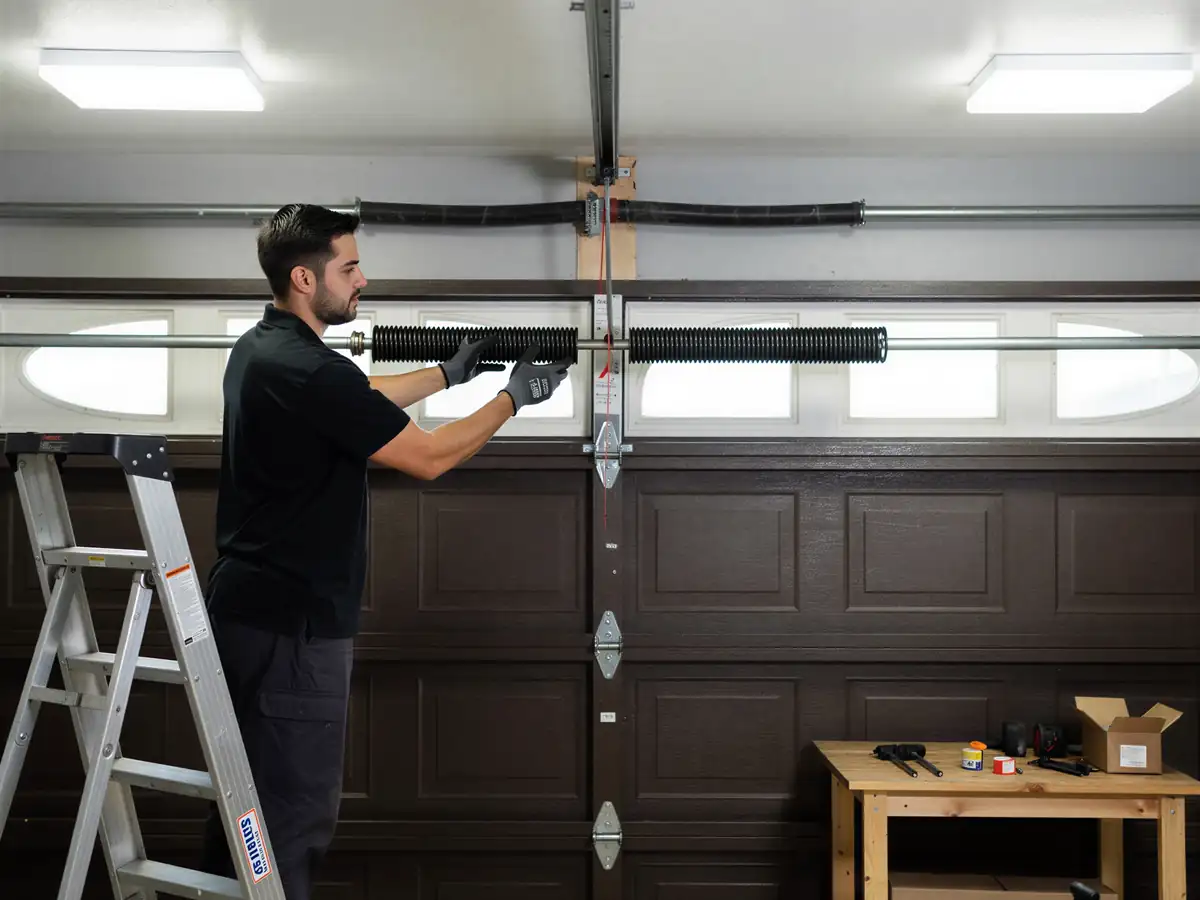
What we don't recommend you do yourself is touch the torsion spring. On a 16-foot double door built in the 1980s, that spring is holding more tension than most people expect, and a slipped winding bar has put people in the hospital. The balance test - disconnecting the opener and seeing whether the door holds position halfway up - is safe to try, but if it drifts either way, that's a job for a tech with the right bars and clamps, not a Saturday afternoon project.
That's the honest limit of DIY here: cleaning, lubricating, and watching for wear are fine. Spring tension and cable work aren't, no matter how straightforward the YouTube video makes it look.
How We Fix It
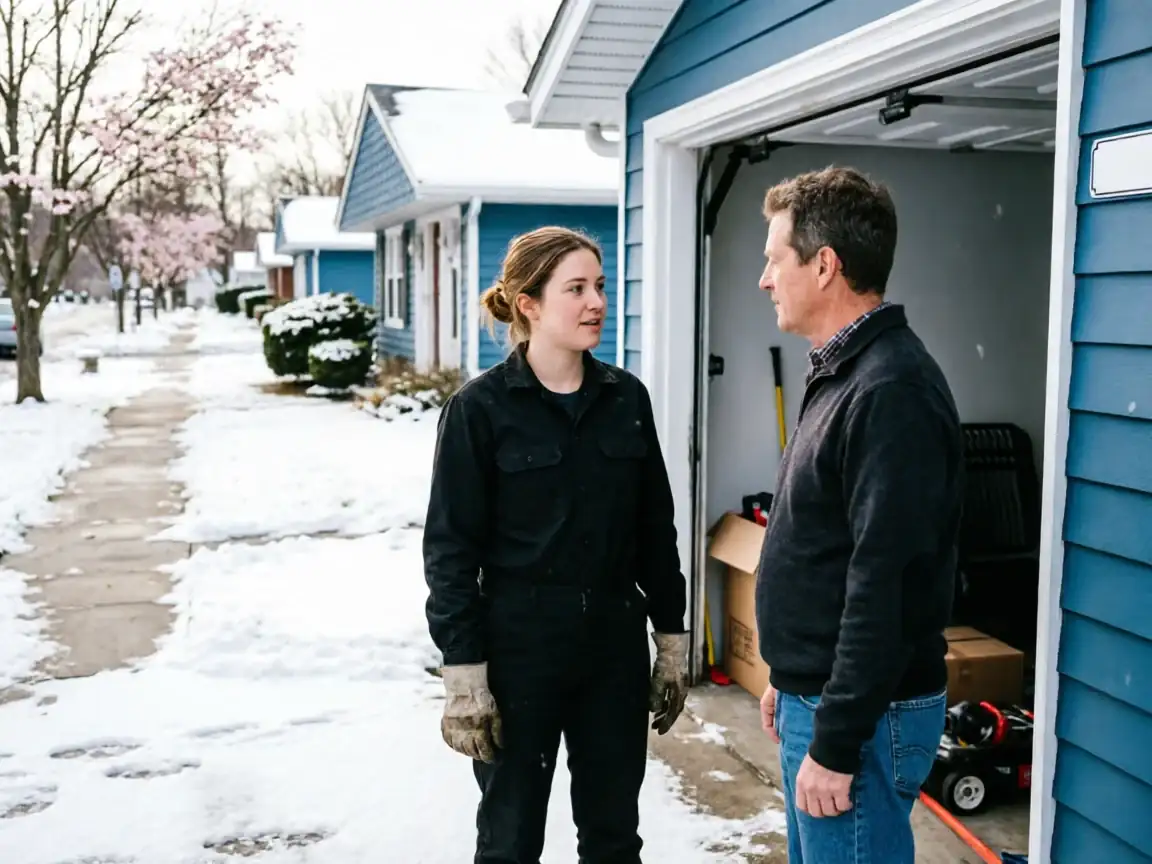
We come out from Bristol, 6 miles away, for a standard maintenance pass on Farmington doors
That starts with a full visual on the panel, track, and spring, since a 1980-era door usually shows its age in all three places at once rather than one at a time.
- 6 miles
We tighten loose hardware
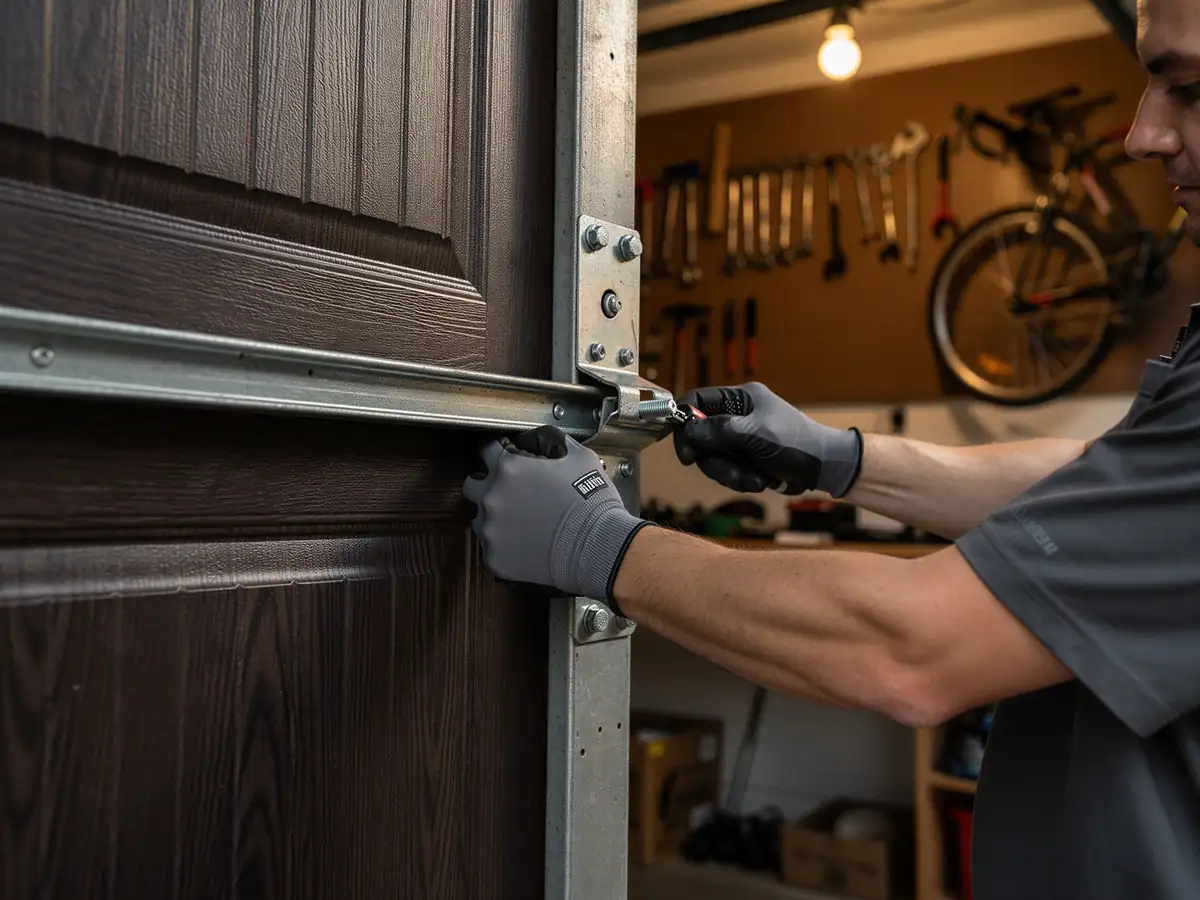
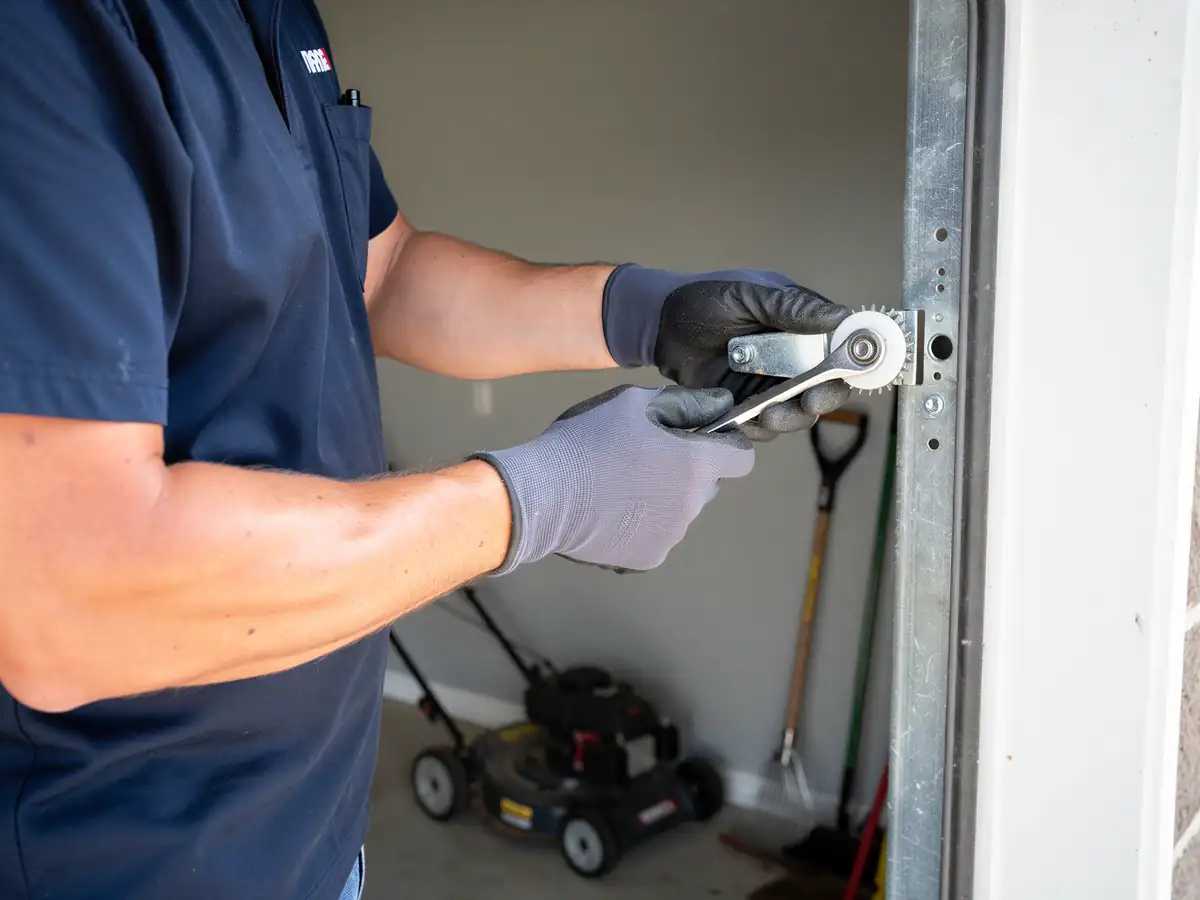
Bolts and brackets work themselves loose over decades of vibration - regrease the rollers and hinges with the right compound for a cold-climate door, and check spring tension against the door's actual weight rather than just eyeballing it. If a roller's worn past its wheel, we swap it rather than lubricate around the problem. Same with a cable showing fray: that gets replaced, not patched.
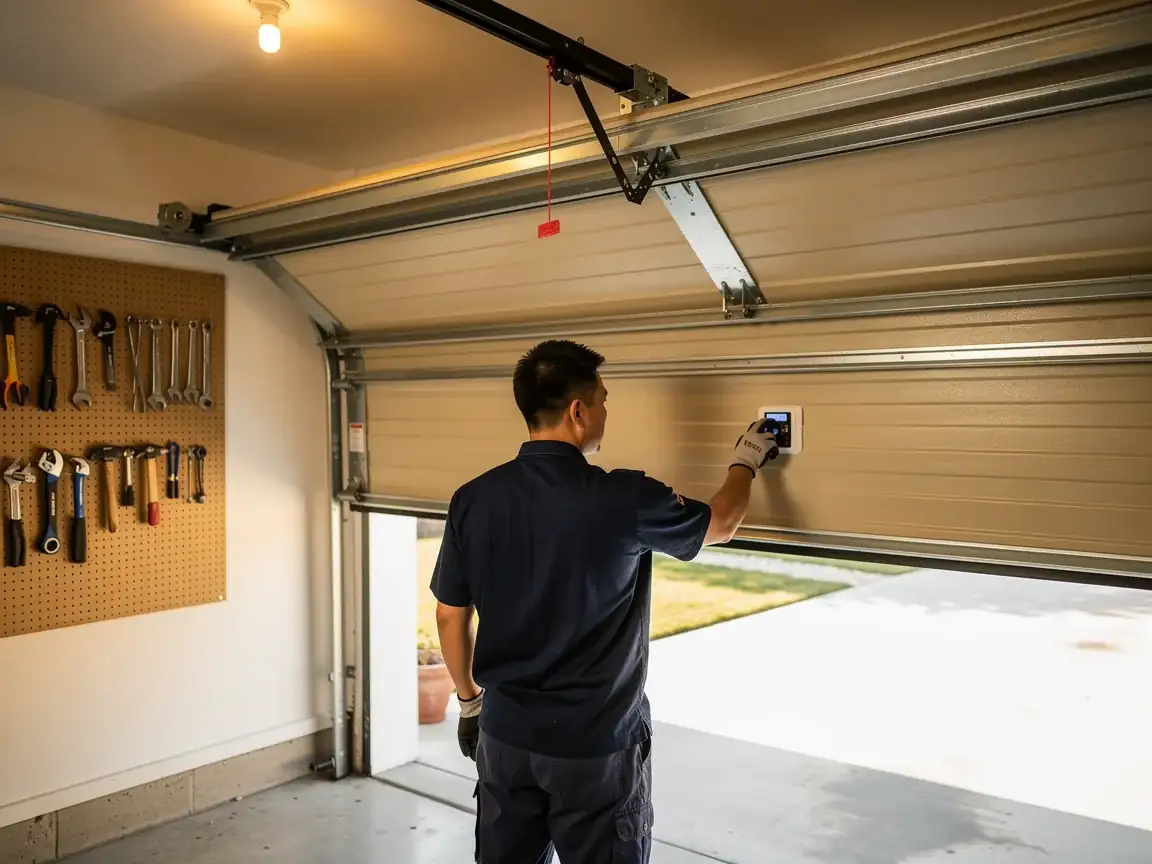
We also check the opener's travel limits and force settings
Since a door that's drifted slightly off-balance over the years puts extra load on the motor every single cycle, which shortens the opener's life whether or not the door itself still looks fine.
How to Book
For maintenance work in Farmington, we schedule out of our Bristol base - see our garage door maintenance page for what a standard visit covers across the territory. If you're looking at a full door replacement or a repair beyond tune-up scope, our Farmington services page covers that separately; this page is about keeping an existing door running, not swapping it out.
When you call, it helps to know roughly how old the door is and whether it's ever had the spring replaced. On a 1980-built house, there's a decent chance the answer is never, which changes what we bring.
Time on the Job
A maintenance visit on a 1980-era steel door usually follows the same order: visual inspection first, then hardware tightening, then lubrication, then a balance and force check on the opener. How long any one of those steps takes depends on what we find - a door that's been neglected for years takes longer to regrease and re-tension than one that's had regular attention.
We don't put a fixed number on the visit because a straightforward tune-up and a tune-up where we discover a frayed cable or a stripped gear are two different jobs that happen to start the same way. What we can say is that we work through the door in that same sequence every time, so nothing gets skipped because it looked fine at a glance.
What Is on the Truck
For a Farmington maintenance call we carry what a 1980s steel sectional door typically needs
Rollers in the common sizes, hinges, lubricant rated for cold-climate use, cable, and basic hardware - bolts, brackets, the fasteners that work loose over forty years of vibration. We don't carry every spring size for every door on every visit, since torsion springs are sized to the door's weight and track drop, and guessing wrong means a second trip.
If a visit turns up something outside the standard tune-up
A cracked panel, a stripped opener gear, a spring that needs replacing rather than just adjusting - we'll tell you on the spot rather than force a fix that won't hold. Some of that parts work means ordering the right piece rather than improvising with what's already on the truck.