What Can Go Wrong
Farmington's median household income sits at $134,237, well above the $107,435 median across the rest of our service area. That matters more than it sounds like it should, because it changes the math on repair versus replace. When a torsion spring snaps on a door that's otherwise in good shape, the repair bill is small next to the value of the house it protects, so fixing it almost always wins here.
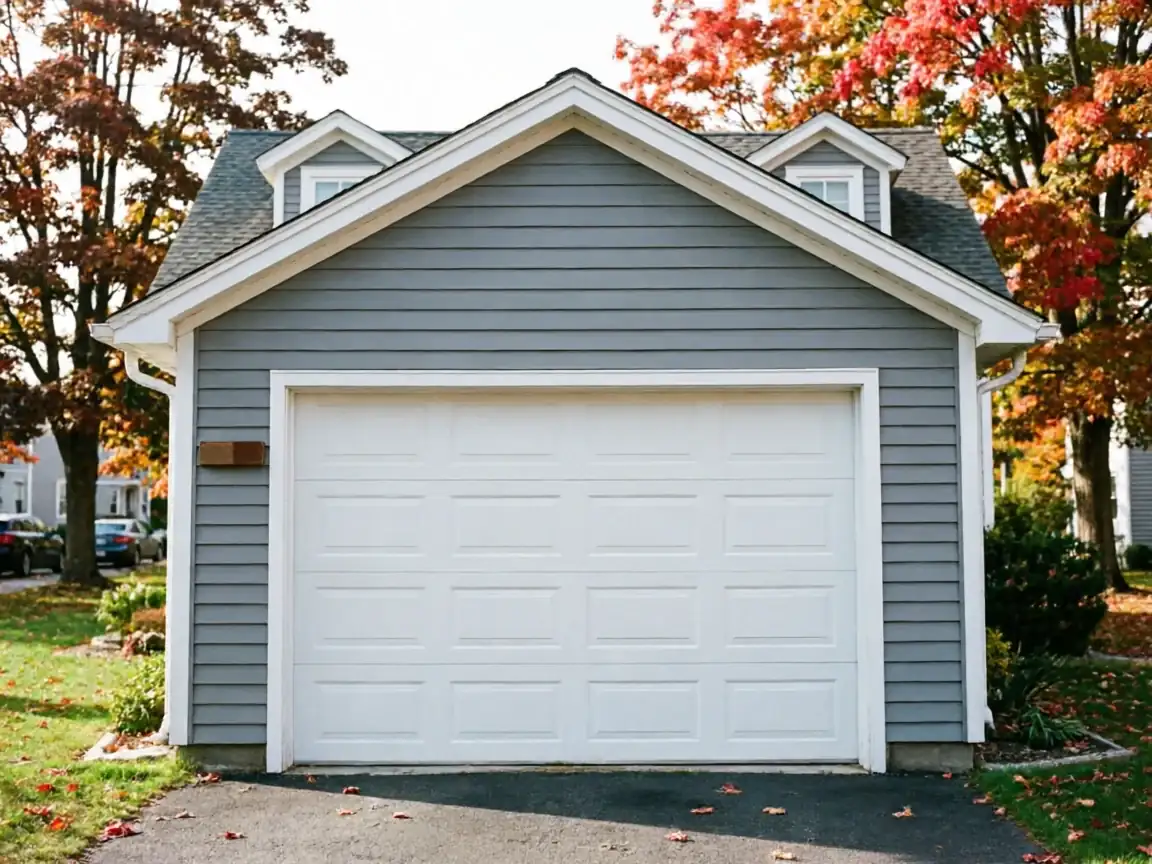
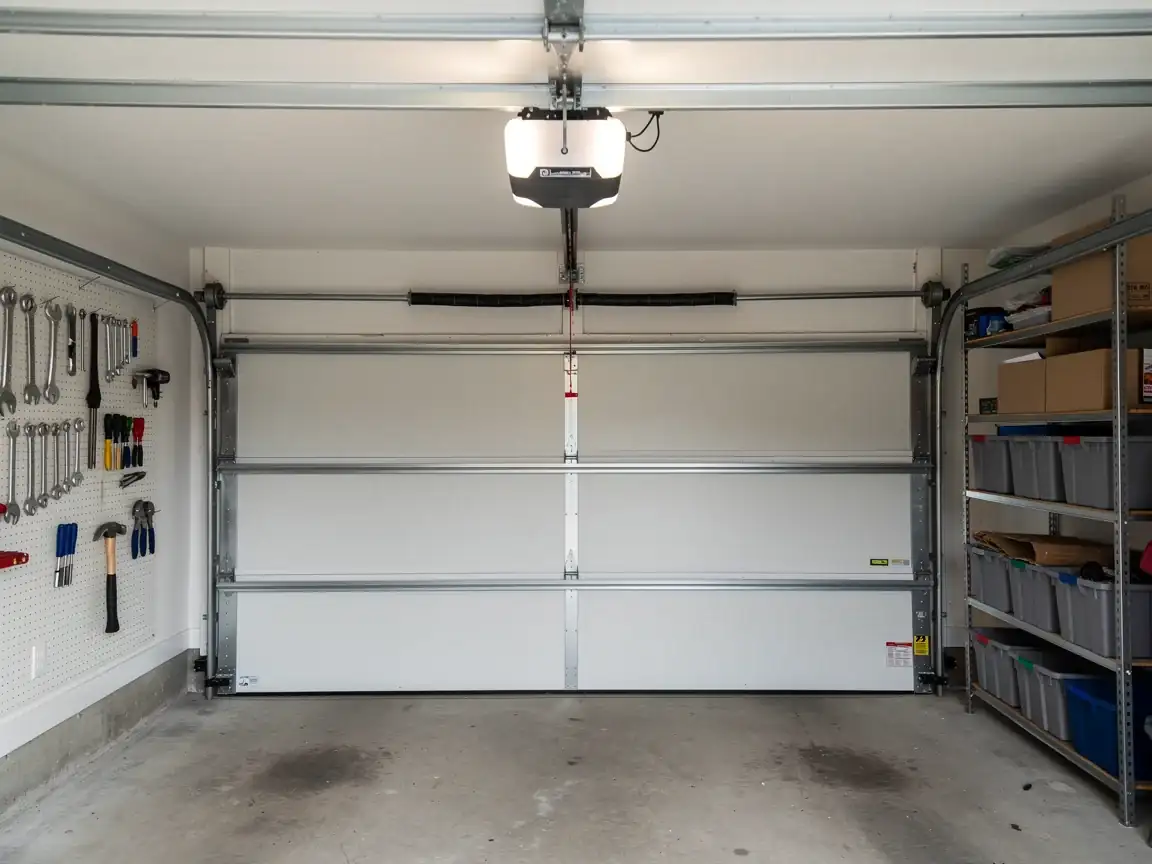
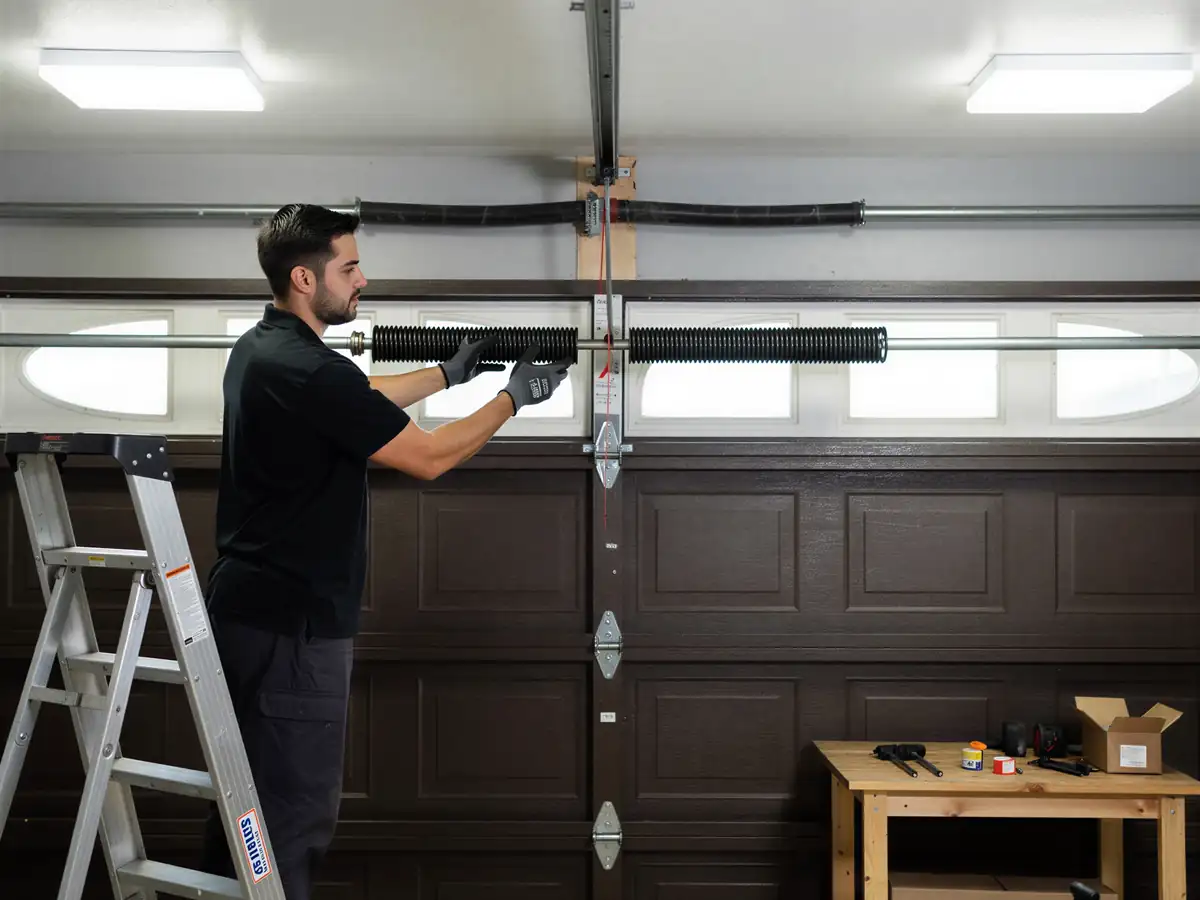
The houses themselves tell a different story than most of what we see. Farmington's median year built is 1980, a good decade newer than the 1971 median across the wider area we cover. That means more doors on standard torsion springs mounted above the header rather than the older side-mounted setups common in 1950s and 60s housing stock nearby. The failure mode is usually straightforward: one spring goes, the door won't lift, or it slams down hard because the second spring is carrying a load it wasn't built for.
Winters here are the other variable. We're in a cold-severe climate band, and cold makes steel brittle. A spring that's been cycling for years can go on a 10-degree morning when it would have held on through October. We see more snapped springs between December and February than any other stretch.
Doing It Yourself
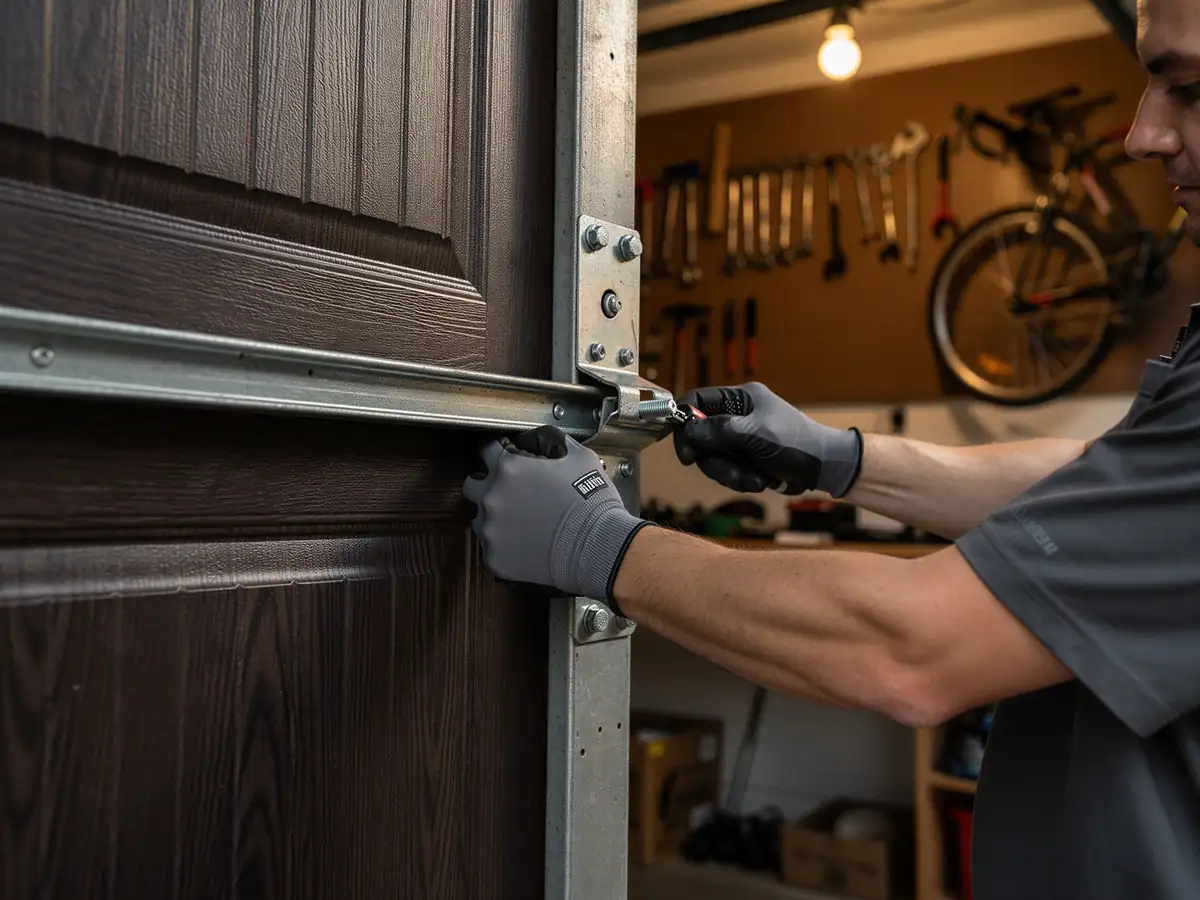
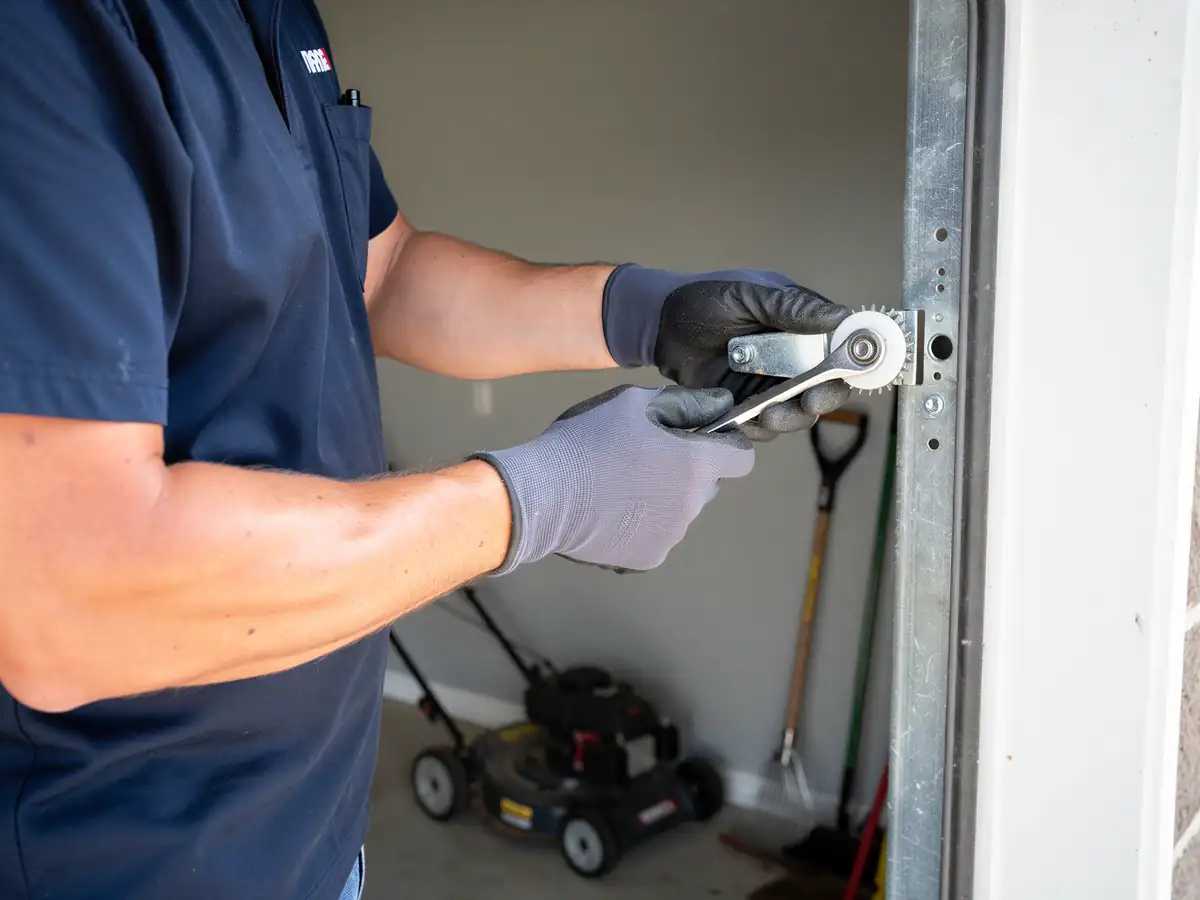
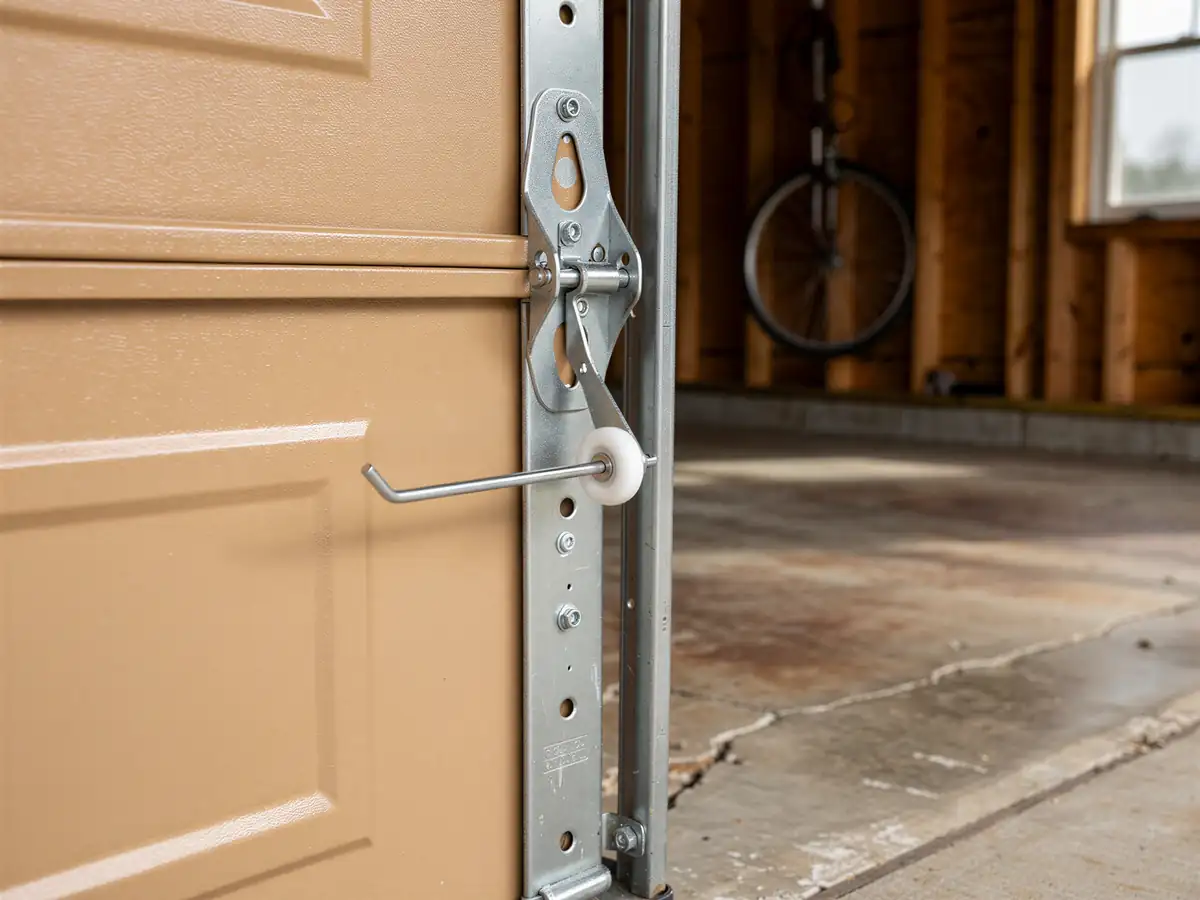
A torsion spring is wound under enough tension to break a bone or worse if it lets go while you're working on it. We're not going to walk you through winding or unwinding one here - that's not a YouTube-and-a-wrench job, full stop. If you're comfortable swapping the small stuff - rollers, a bent bracket, lubricating hinges - go ahead. Springs and the cables tied to them are the one category on a garage door we tell every homeowner to leave alone.
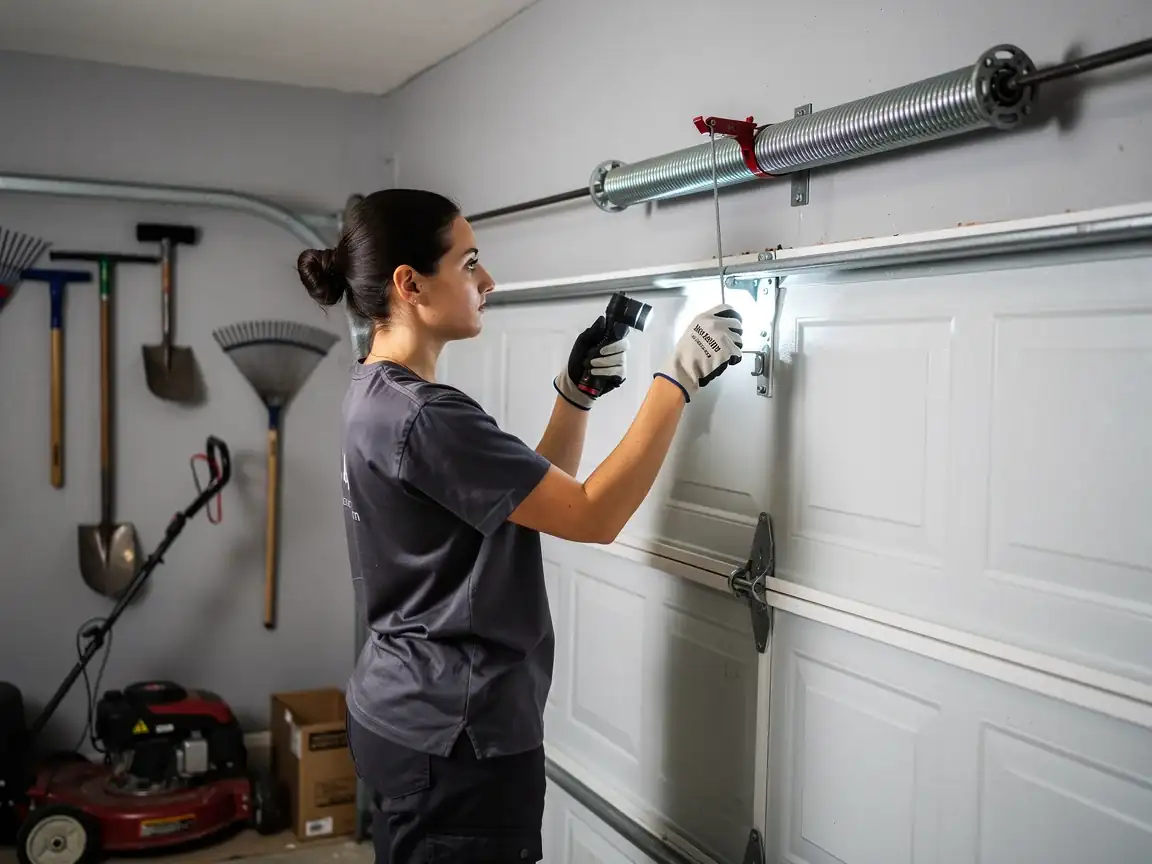
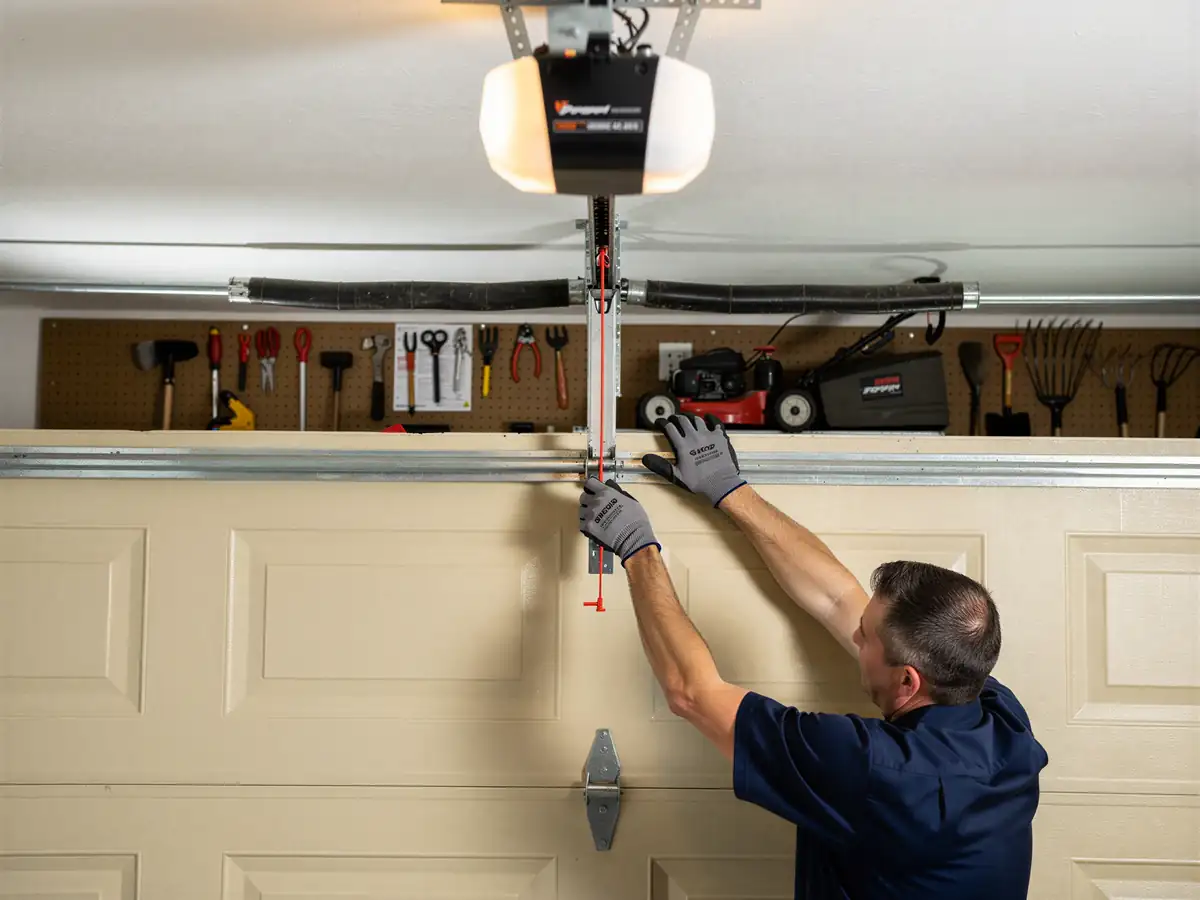
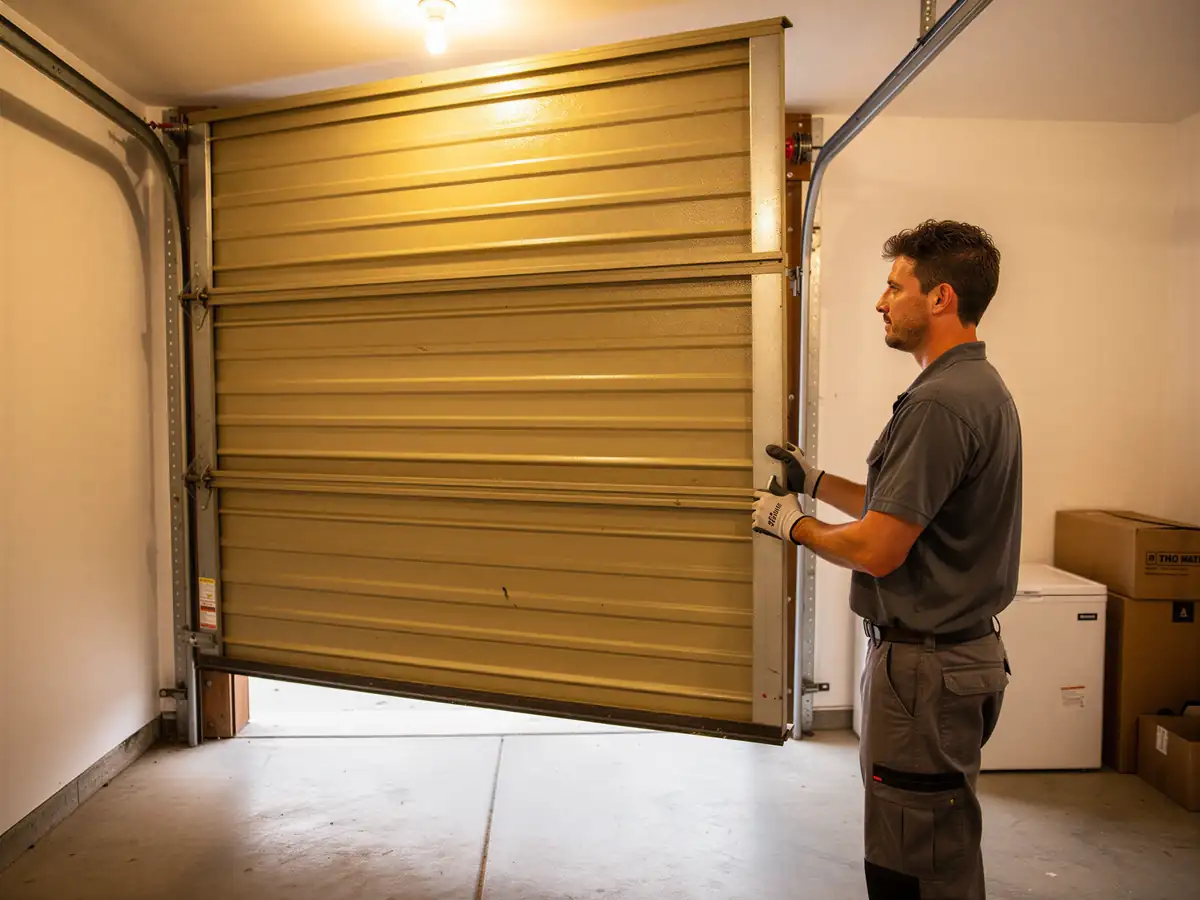
What you can do safely is diagnose. If the door feels unusually heavy to lift by hand, or you hear a bang from the garage and the door won't move afterward, that's almost certainly a broken spring. Check whether one side of the door looks crooked when it's halfway open - that's a single spring down on a double door, still holding tension on the other side, which is its own hazard. Don't try to force it open with the opener. That strains the motor and the track for no reason.
How We Fix It
We come out from Bristol, 6 miles away
So there's no local depot or branch to mention - just a truck that makes this drive regularly. On a standard torsion spring job, we match the spring to the door's weight and the drum size already on the shaft rather than guessing at a stock size, then we check the cables, rollers, and the opener's force settings before we close it out. A spring replacement without that check is a callback waiting to happen.
- 6 miles
Given how many Farmington doors date to the early-80s build wave
We're mostly dealing with standard torsion setups rather than the older extension-spring or side-mount hardware you find on 1950s and 60s housing closer to the center of our coverage area. That's a more straightforward repair, with parts that aren't hard to source.
How to Book
Tell us the door's size - single or double - and whether you've noticed one side sagging or the whole thing refusing to budge. That's usually enough for us to bring the right spring size on the first trip instead of a second visit. We quote the job before we start, and the price doesn't move once we're on-site unless something we find changes the scope - a broken cable discovered mid-job, for instance.
You can see the rest of what we do in Farmington on our area page, and the full spring repair writeup for our home base is on the Bristol page.
Time on the Job
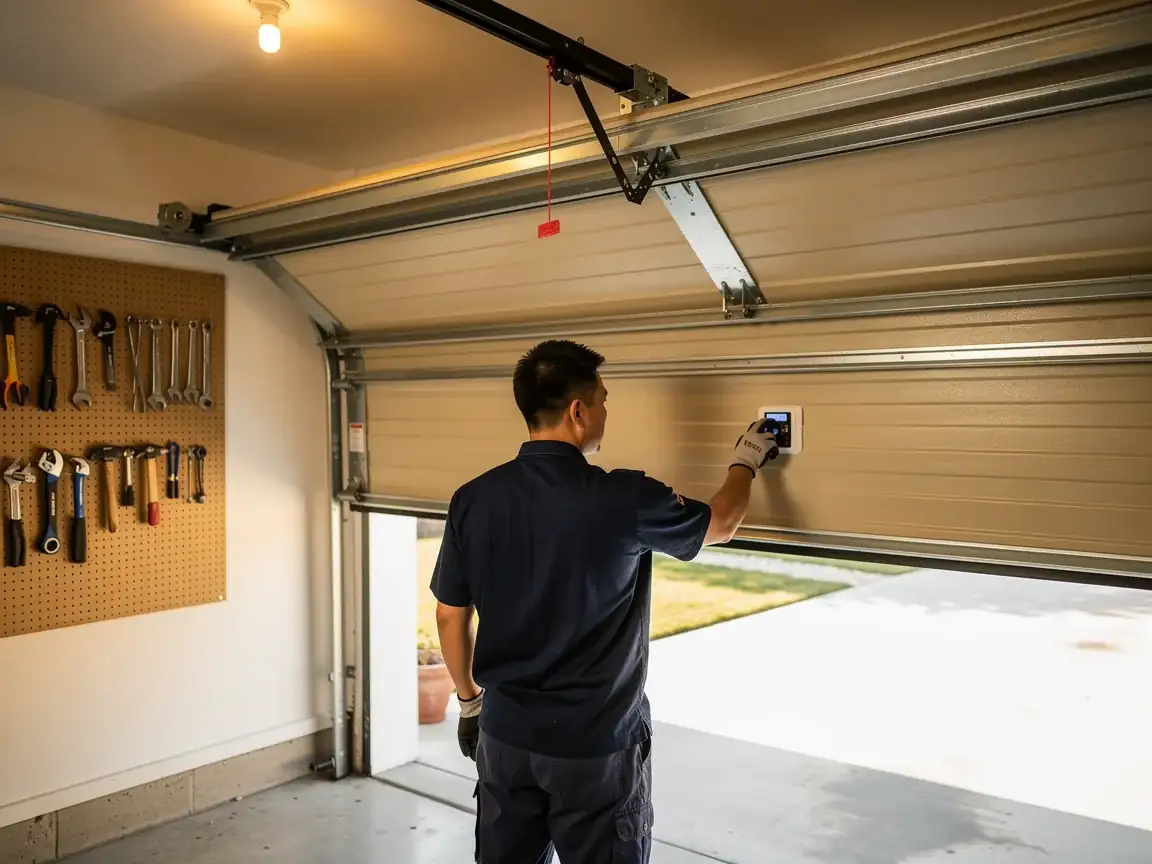
A straight torsion spring swap on a standard door, once we're set up, usually runs under two hours. Two springs instead of one adds some time but not much - most of the labor is in the setup and teardown, not the wind itself. What can stretch the visit is anything the newer 1980-era hardware doesn't usually have: if the opener's travel limits need resetting afterward, or if a cable frayed from the sudden stop when the spring went, we handle that in the same trip rather than scheduling a second one.
We don't pad the estimate with extras you don't need. If the door's fine once the spring's replaced, that's the whole job.
What Is on the Truck
We carry a working stock of standard torsion springs sized for the door weights and drum diameters most common on homes built in that early-80s window
Which covers the bulk of what we see in Farmington. We also carry matching cables, since a spring failure often stresses the cable on the same side, and the usual rollers, hinges, and bottom brackets.
What we don't carry is every spring size for every door ever made
If a door's been custom-fitted or retrofitted with something unusual, we may need to order a part, and we'll tell you that up front rather than improvise with something close enough. That's rare on this type of housing stock, but it happens.