Doing Nothing For Now
If your door reverses occasionally when nothing's in the way, and the sensors still light up steady when you walk past them, you can live with it for a while. A sensor that's slightly out of alignment isn't a safety hazard by itself - the door's auto-reverse is still doing its job, just too cautiously. What you shouldn't ignore is a sensor that's gone dark entirely, or a door that won't close at all with the opener clicking but nothing moving. That's not drift anymore, that's a dead eye or a cut wire, and it needs a look. Most of Bristol's housing went up between 1938 and 1986, median year 1971, which means a lot of garages still have the original wood jambs the sensor brackets were screwed into decades ago. Those brackets have had fifty-plus winters to work loose a sixteenth of an inch at a time. One honest limitation: if the bracket itself has rotted out of the jamb, realignment is a patch, not a fix - at that point you're replacing the mounting point, not just tweaking the eye.
What to Check
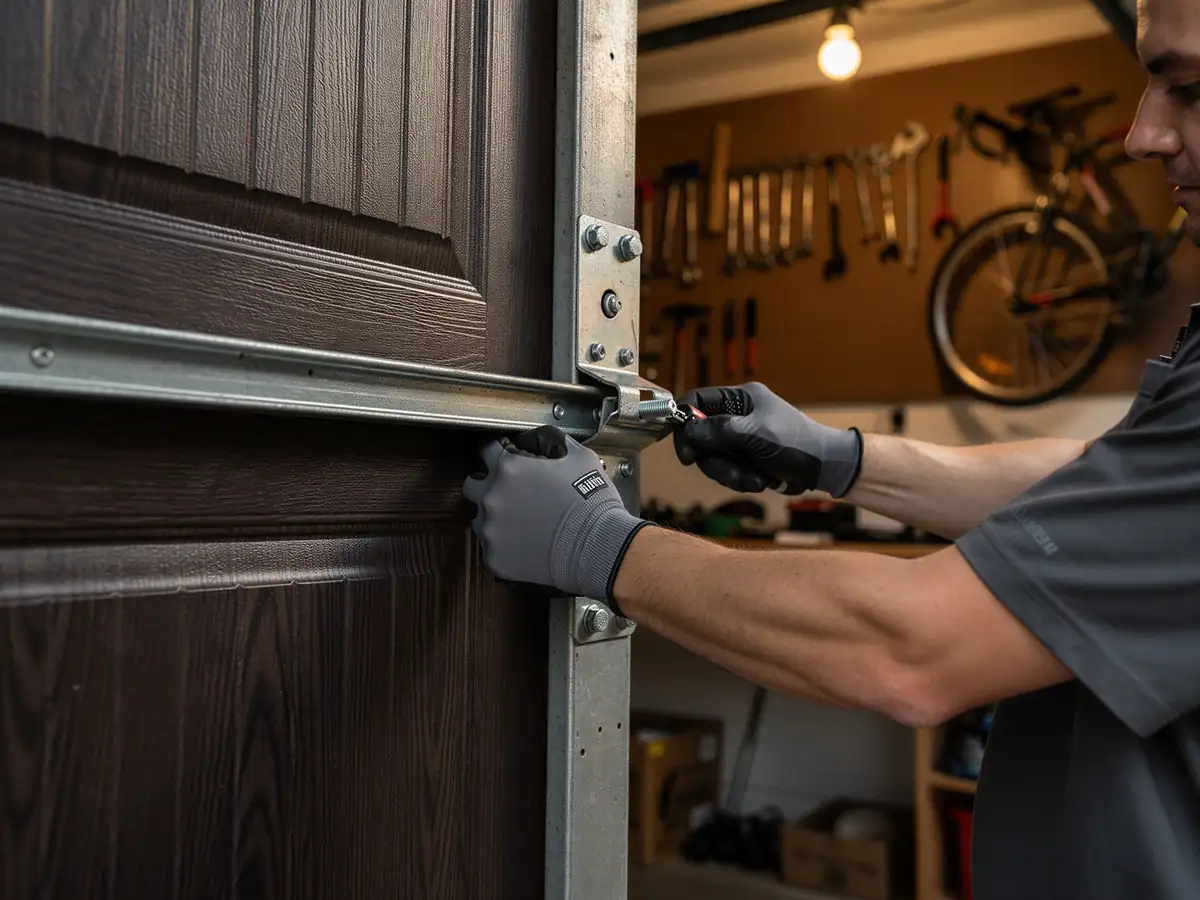
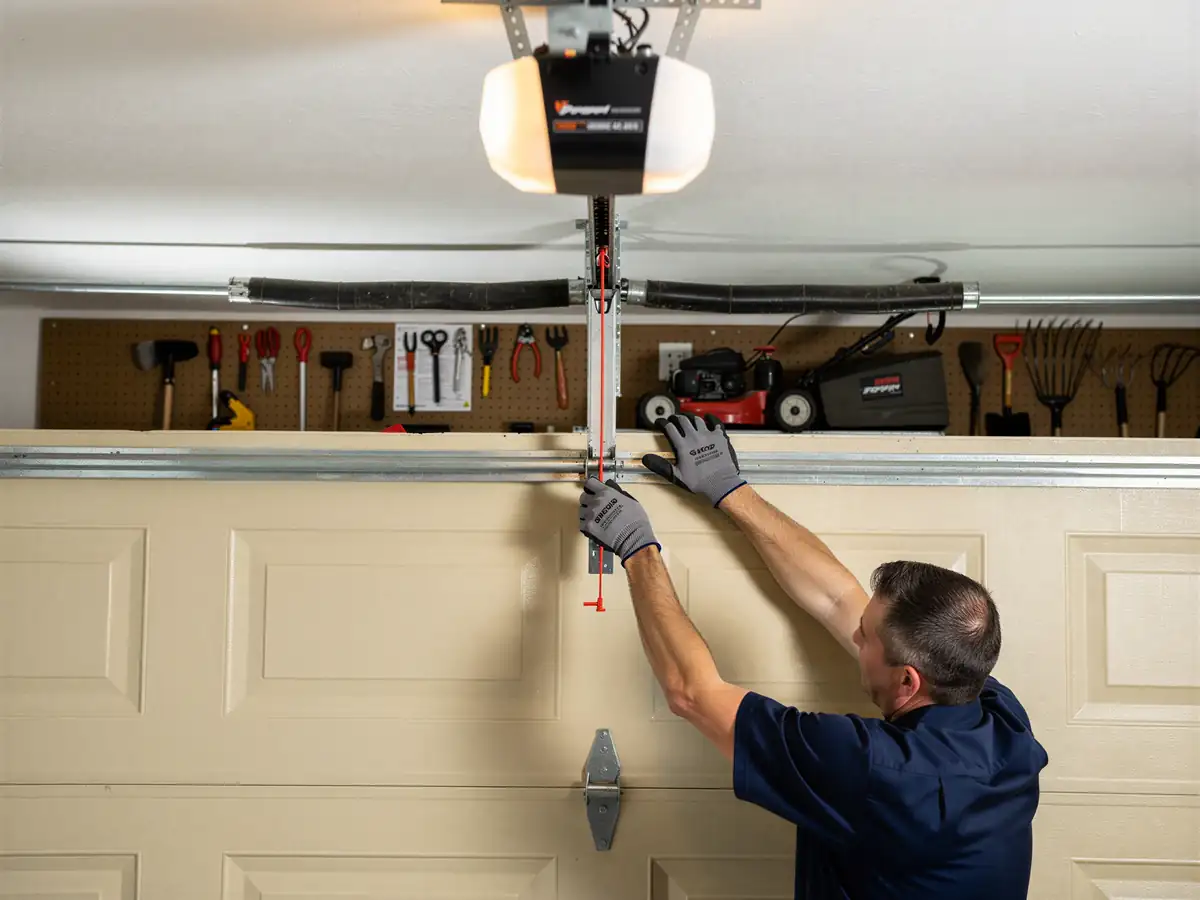
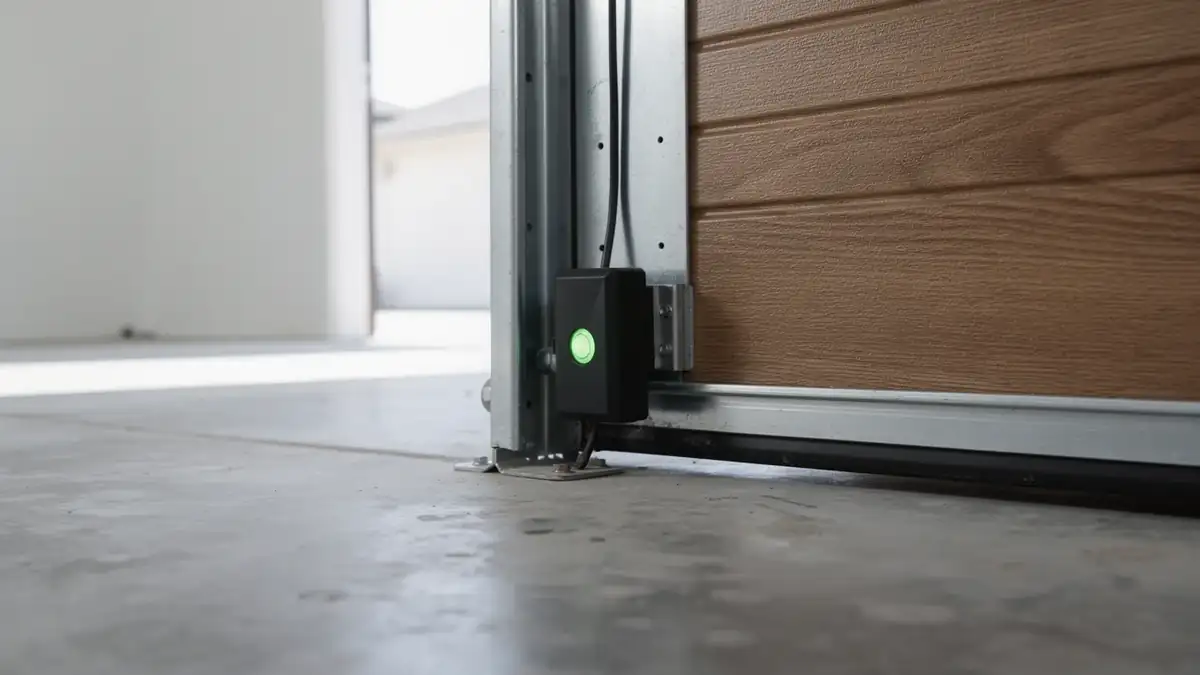
Start with the lenses. Wipe both sensor eyes with a dry cloth - dust and cobwebs read as a false obstruction more often than people think. Next, look at the LED on each sensor. Solid means aligned, blinking means it's hunting for its pair. Stand back and sight down the line between the two units; on older Bristol garages built before the 1980s, the sensors are often mounted at slightly different heights because the framing itself isn't level anymore after decades of settling. Check that the brackets are still screwed tight to whatever they're mounted on - wood jamb, metal track post, or a strip of trim added later. Loose screws let the bracket rotate a degree or two, which is enough to break the beam intermittently rather than constantly, the kind of fault that only shows up when it's windy or the temperature just dropped. If you've checked all of this and the light still blinks, the sensor pair itself may be past realigning and needs swapping - that's a part, not a labor fix, and it's a quick one.
What Local Conditions Do
Bristol sits in a cold, severe climate band, which means real freeze-thaw cycling every winter, not just a few cold snaps. That cycling is the single biggest reason sensor brackets walk out of true here compared to a milder climate. Ground frost pushes up under slabs and footings from roughly to to and as it recedes in spring the concrete doesn't always settle back exactly where it started. Garages in the older sections of town - the ones built when the neighborhood stock was going up in the 1960s and 70s - take this the hardest, since the original framing has had the most winters to work with. Wood jambs also swell with humidity in summer and shrink tight in the dry cold of January, and a sensor bracket screwed into that wood moves with it, a few thousandths at a time, year after year. None of this is dramatic. It's slow, it's seasonal, and it's exactly why a sensor that was dead-on in August can be hunting for its pair by February.