The Symptom
You notice it before you see it. The door grinds instead of glides, or it jerks at the same spot on every cycle. Sometimes a roller pops clean out of the track and the panel drops crooked in the frame. Other times it's quieter but worse - a roller that's worn down to a flat spot on one side, so the door rattles the whole way up and the neighbors notice before you do.
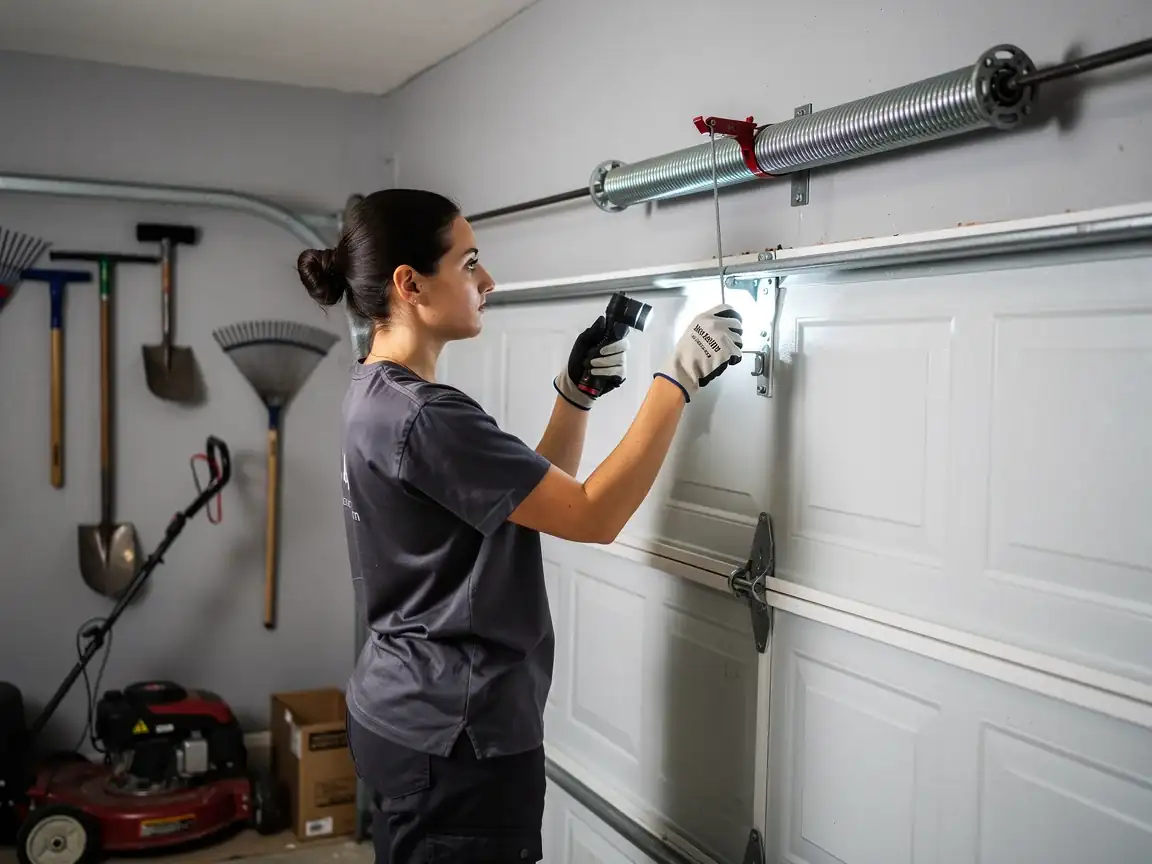
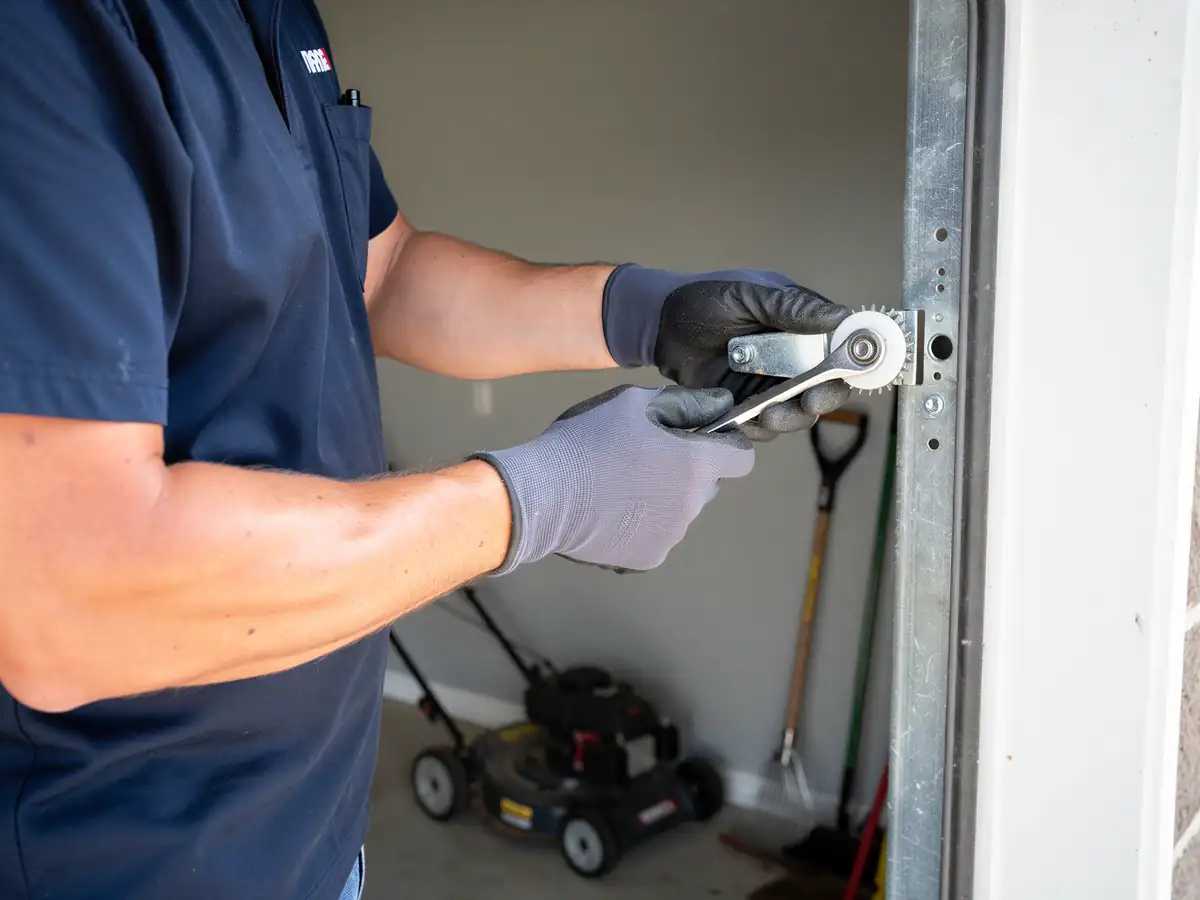
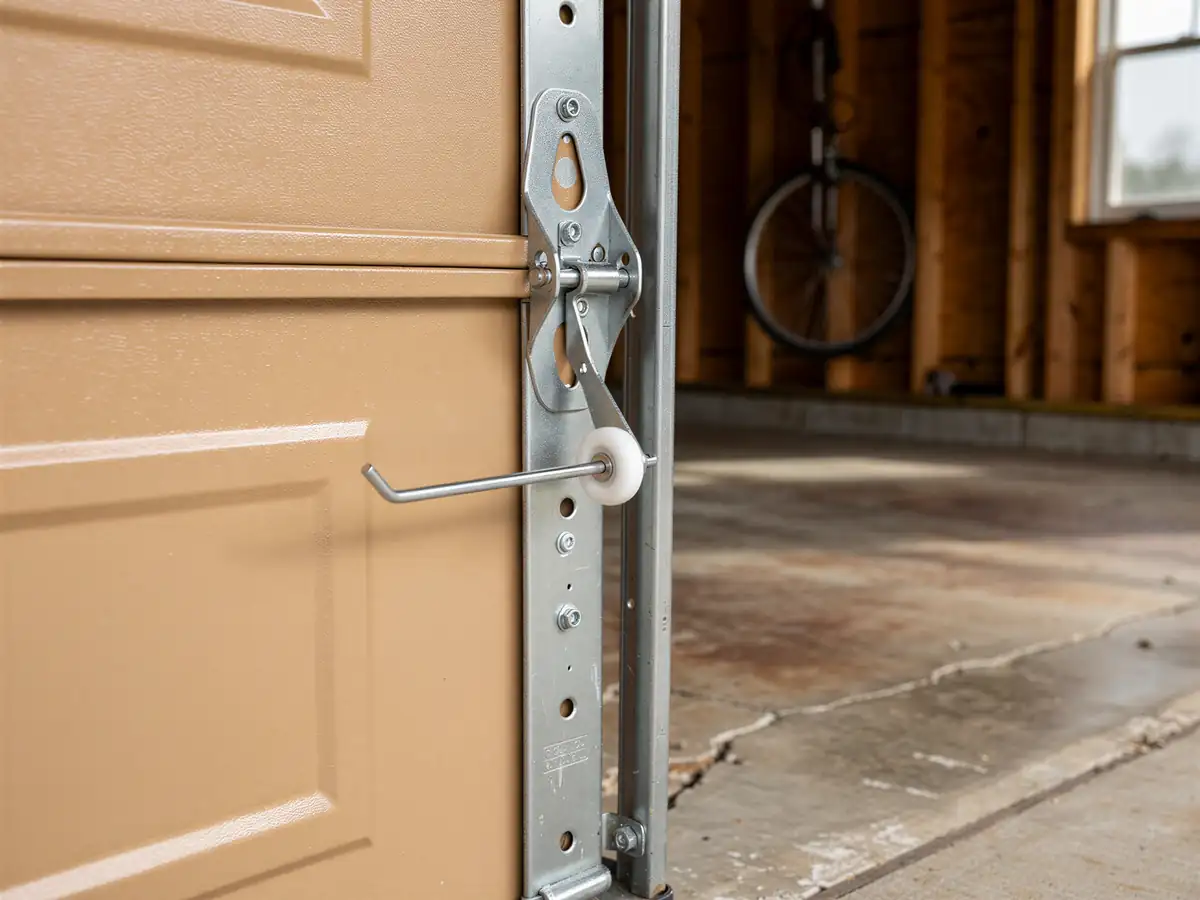
A few signs worth paying attention to: a grinding or squealing sound right at the rollers (not the opener motor), visible rust or chipping on the roller wheel itself, a door that looks like it's riding slightly sideways in the track, or a stem that's bent where the roller bracket bolts to the panel. None of these fix themselves, and left alone they wear a groove into the track that turns a $20 part into a track replacement.
This is a wear item, not a design flaw, but how fast it wears depends a lot on what kind of door and hardware you've got - and that's where the age of the house starts to matter.
Why It Happens Here
Most houses in Bristol's older neighborhoods went up between 1938 and 1986, with the bulk clustered in the 1960s and 70s, median year 1971. Across the 64 named areas we cover, that same 1960s-70s building wave left a lot of garage doors riding on the original steel rollers with plain stem bearings - not the sealed nylon rollers that came standard later on. Steel-on-steel wears fast, and once the bearing dries out, every open-and-close cycle grinds metal against metal.
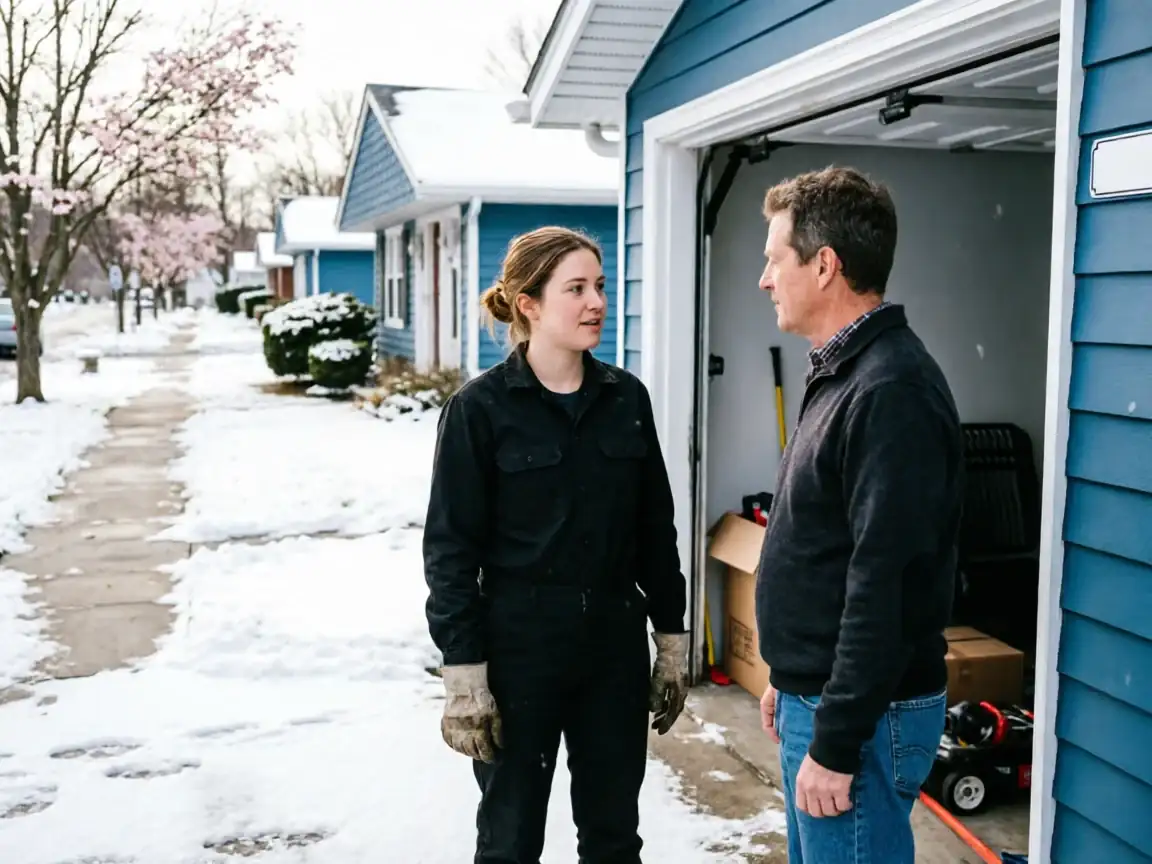
Bristol sits in a cold-climate zone with severe winters, and repeated freeze-thaw cycles work steel roller stems loose faster than in milder regions. Grease stiffens in the cold, water gets into the track and the bearing housing, then freezes and expands overnight. Add road salt tracked in on tires and you get rust pitting on a roller that would otherwise last another decade somewhere warmer.
Put those two things together - older steel hardware plus a hard winter climate - and roller wear shows up here on a shorter cycle than the national average for the part. It's not that the door is bad. It's that the hardware era and the weather both push in the same direction.
How We Fix It
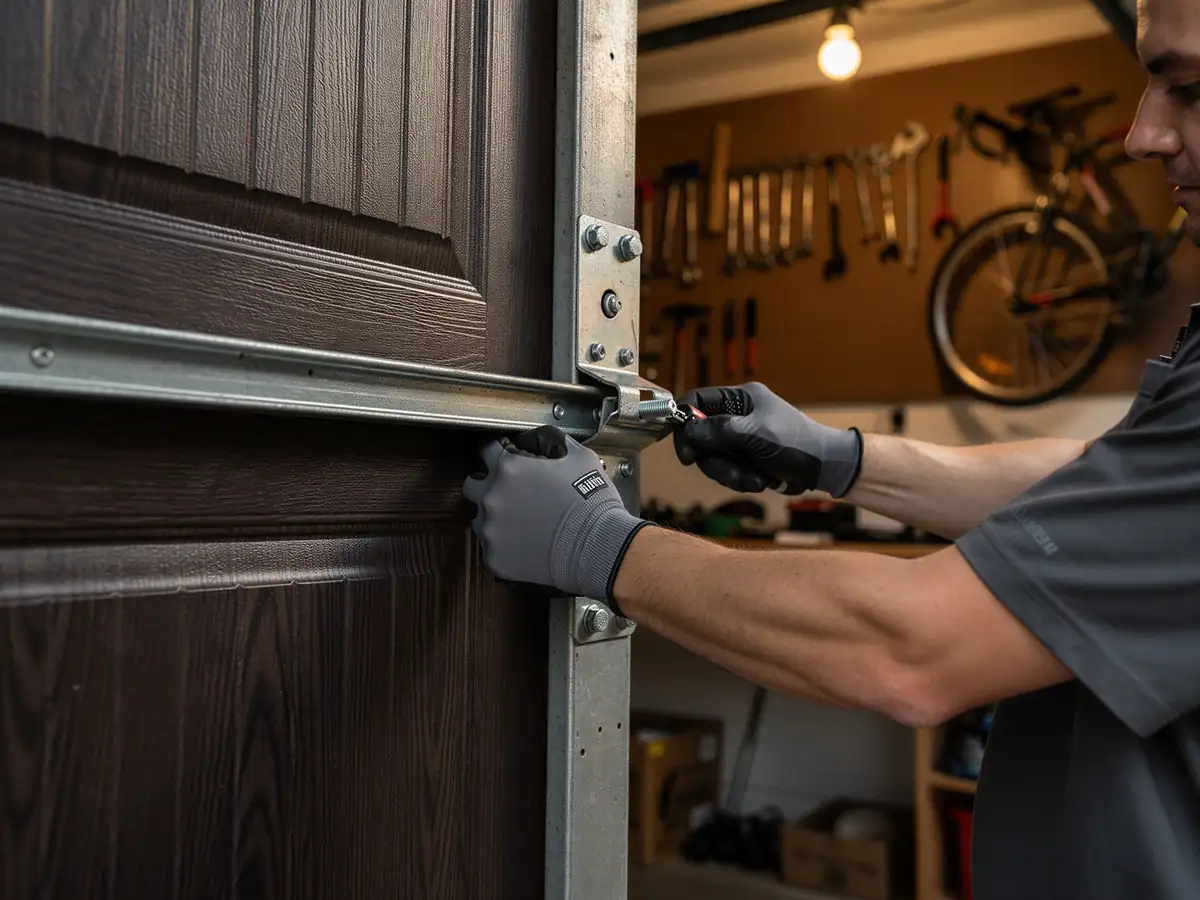
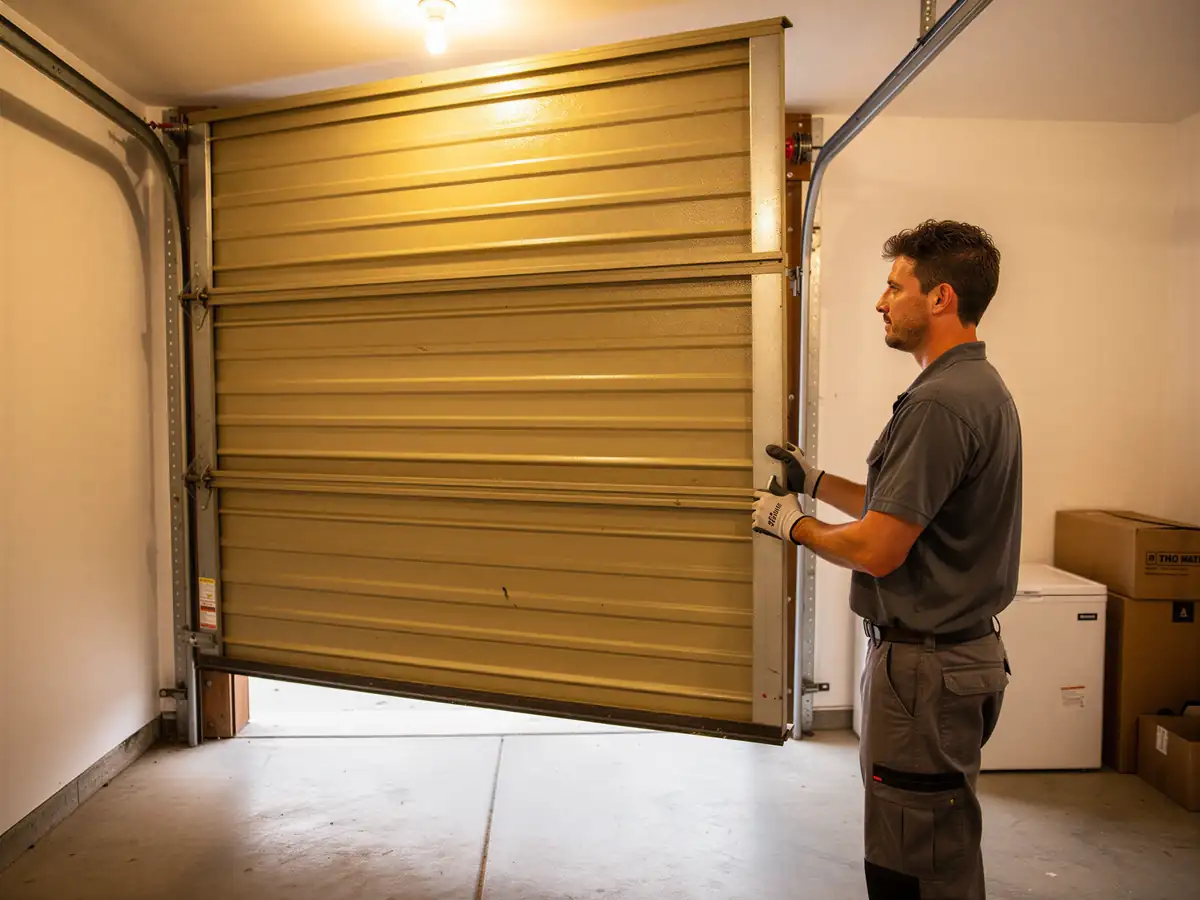
We pull the door off its current rollers one hinge section at a time
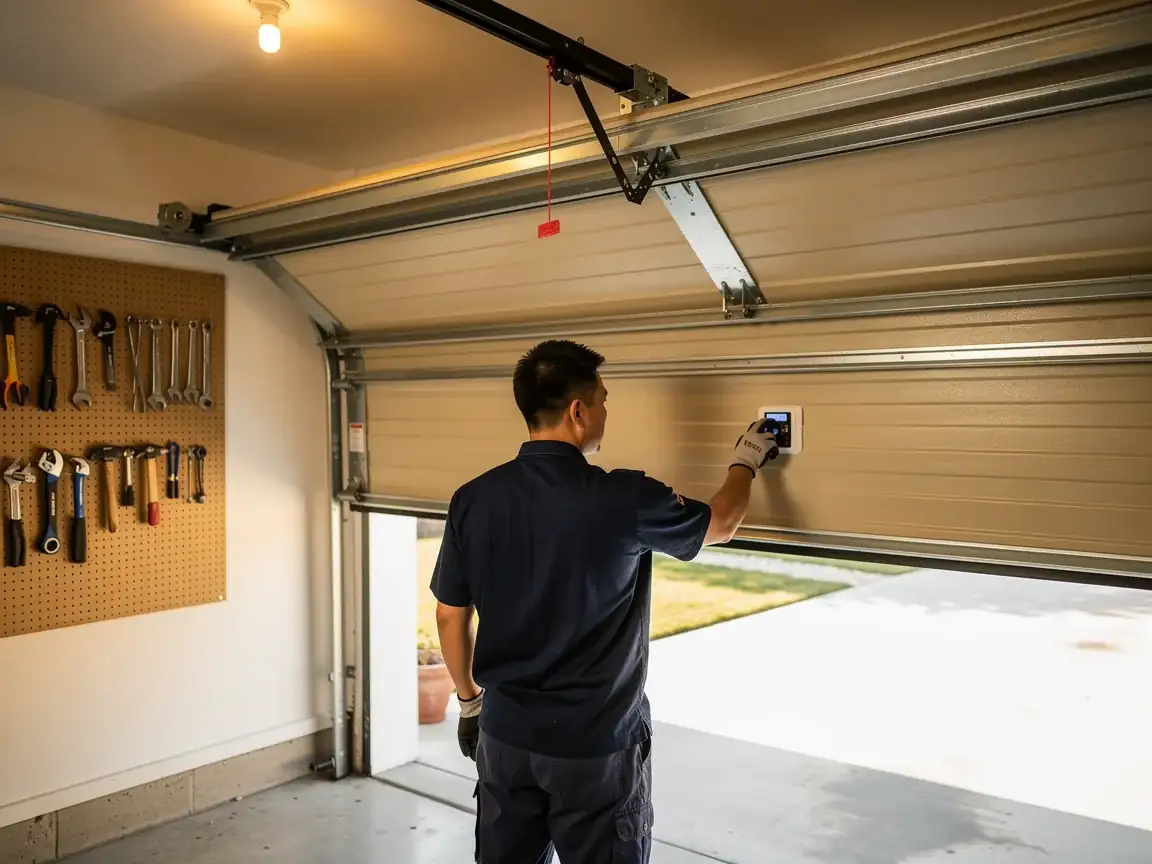
So it never comes fully off the track and the door stays supported. Worn steel rollers get swapped for sealed nylon rollers with ball bearings, which run quieter and don't need the periodic greasing steel rollers do. If a bracket or stem is bent, we straighten or replace it rather than bolt a new roller to bad hardware - a straight roller in a bent bracket wears out again in months.
We also check the track alignment while we're in there
A roller swap on a track that's pulled away from the jamb, or bowed from an old impact, just repeats the problem. If the track needs adjustment or replacement, we'll say so before we close out the job, not after.
Here's the honest limit
If the door is older and the track, rollers, and hinges are all worn together, patching one roller at a time stops making sense. At that point we'll tell you straight that a full hardware set, or in some cases a new door, costs less over a few years than repeat roller calls. We'd rather lose a small repair ticket than have you pay us twice for the same symptom.
How to Book
Call or send a message through the site and tell us what you're hearing - grinding, a door that's off track, a roller you can see is cracked or flat. That's enough for us to bring the right rollers on the first visit instead of guessing. We work Bristol and the surrounding towns, including four miles west, out through Plainville, Plymouth, Burlington, and Southington. Across the roughly 181,634 owner-occupied houses in this service area, roller wear is one of the most common calls we get, right alongside spring and opener work. If you're not sure whether it's the rollers or something else, tell us what you're seeing and we'll figure it out before we show up, not after.