Doing Nothing For Now
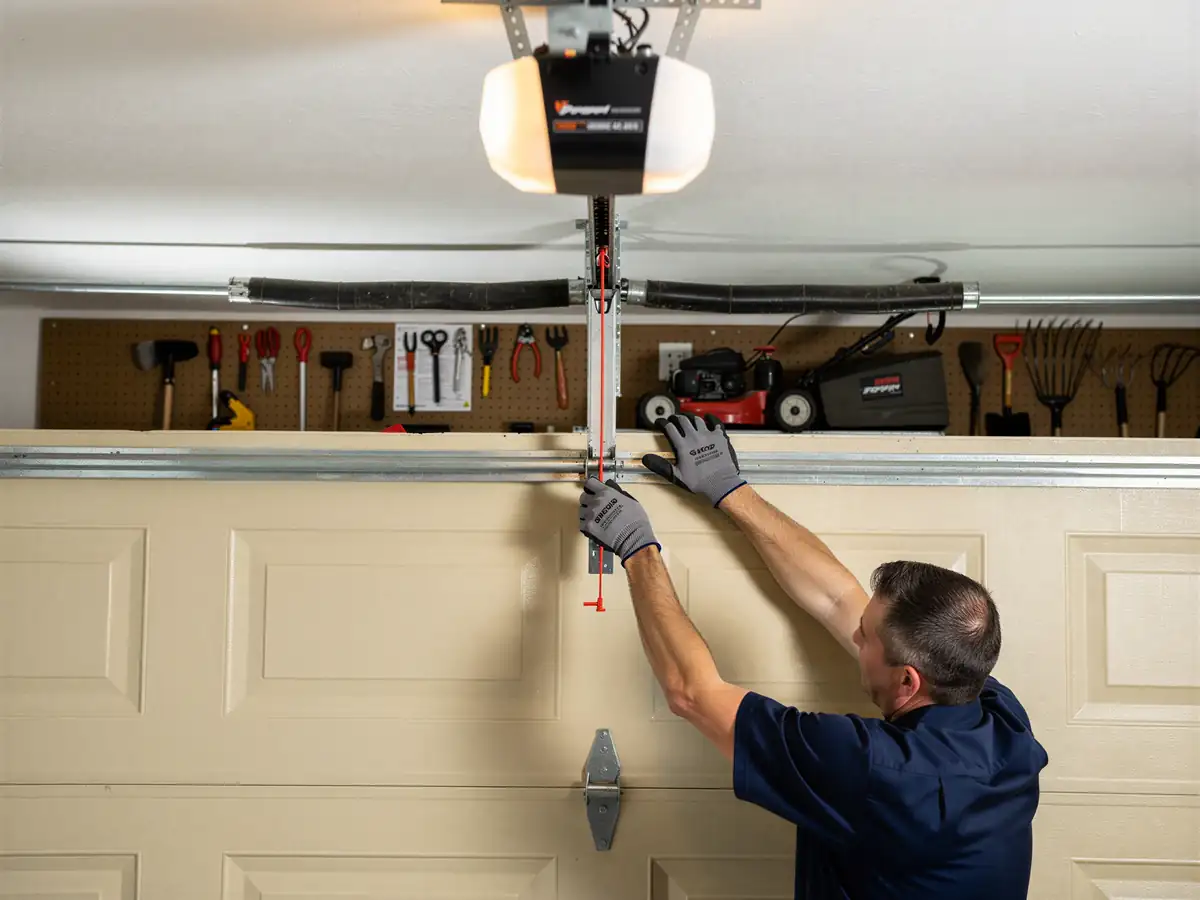
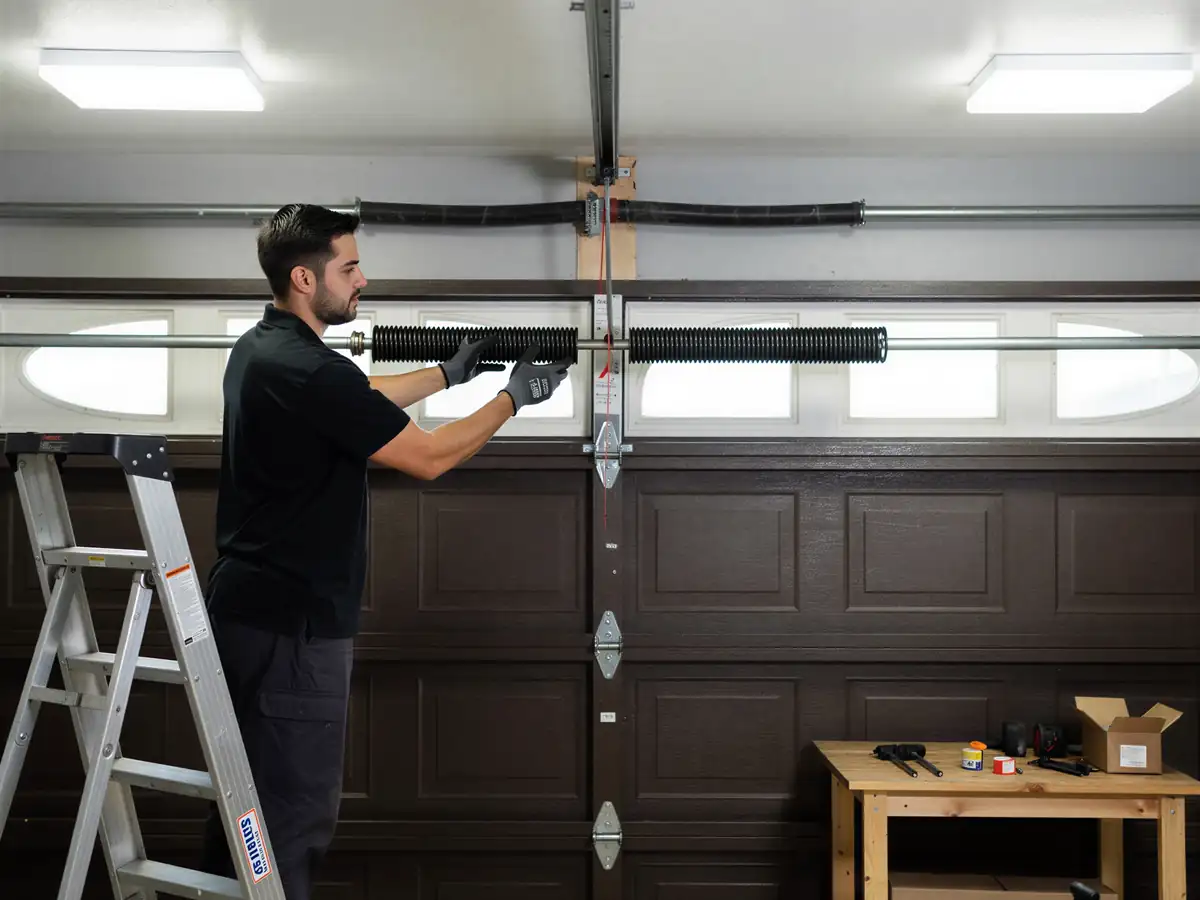
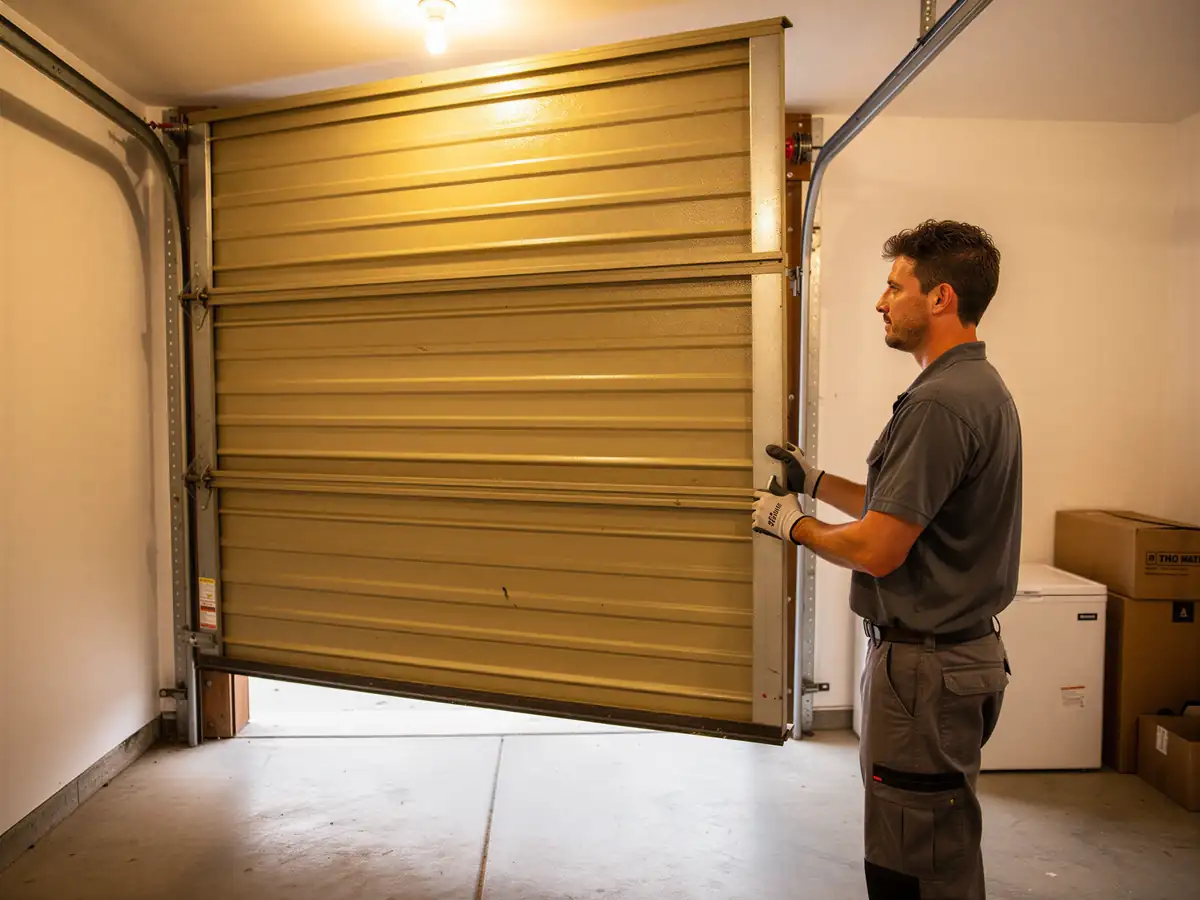
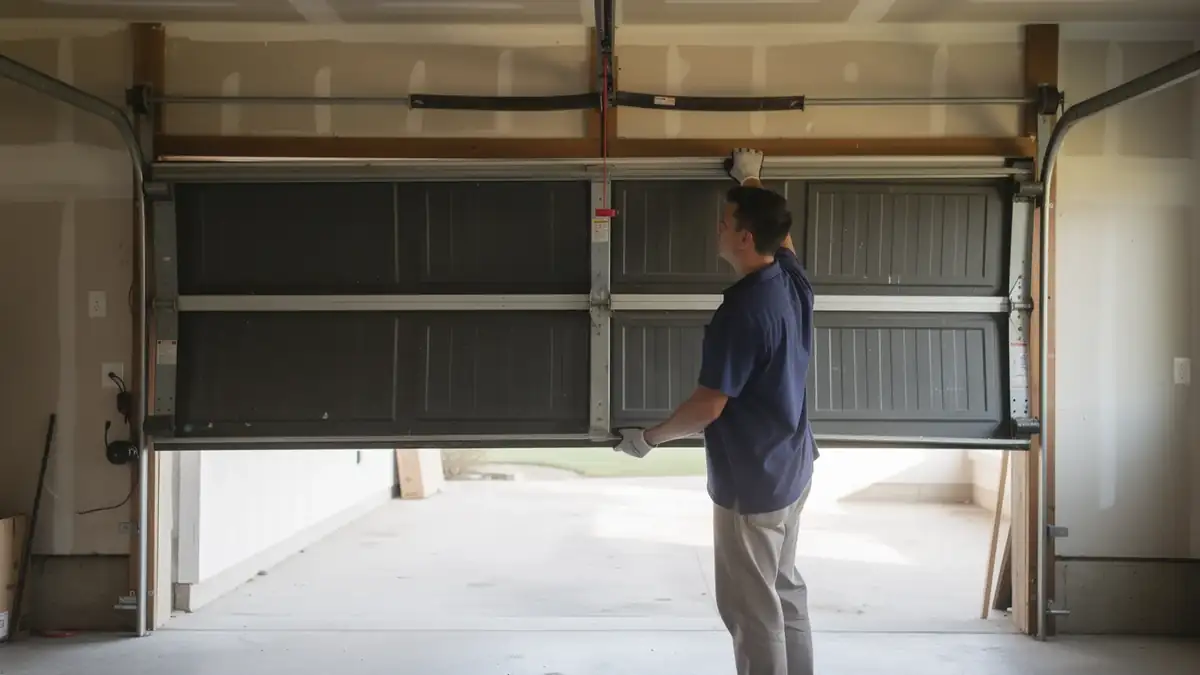
If your door is opening and closing fine and the only thing you've noticed is a little extra noise, you probably don't need a call yet. A lot of houses in this part of Bristol were built between 1938 and 1986, with most of that stock going up in the 1960s and '70s. Original hardware from that era can run years past when a newer part would've failed, as long as the spring tension is still balanced and the tracks are straight. Waiting costs you nothing if the door still lifts smoothly by hand with the opener disconnected. Where waiting does cost you: if the door is noticeably heavier on one side, or the opener strains and reverses before it reaches the floor, that's a spring giving out, not a part that improves with age. We'd rather tell you to hold off on a service call than run one you don't need - we don't do that to pad a truck roll. But once a torsion spring starts to go, it doesn't fix itself over a winter, and in a severe cold climate like this one, a half-broken spring under load is how cables snap.
What to Check
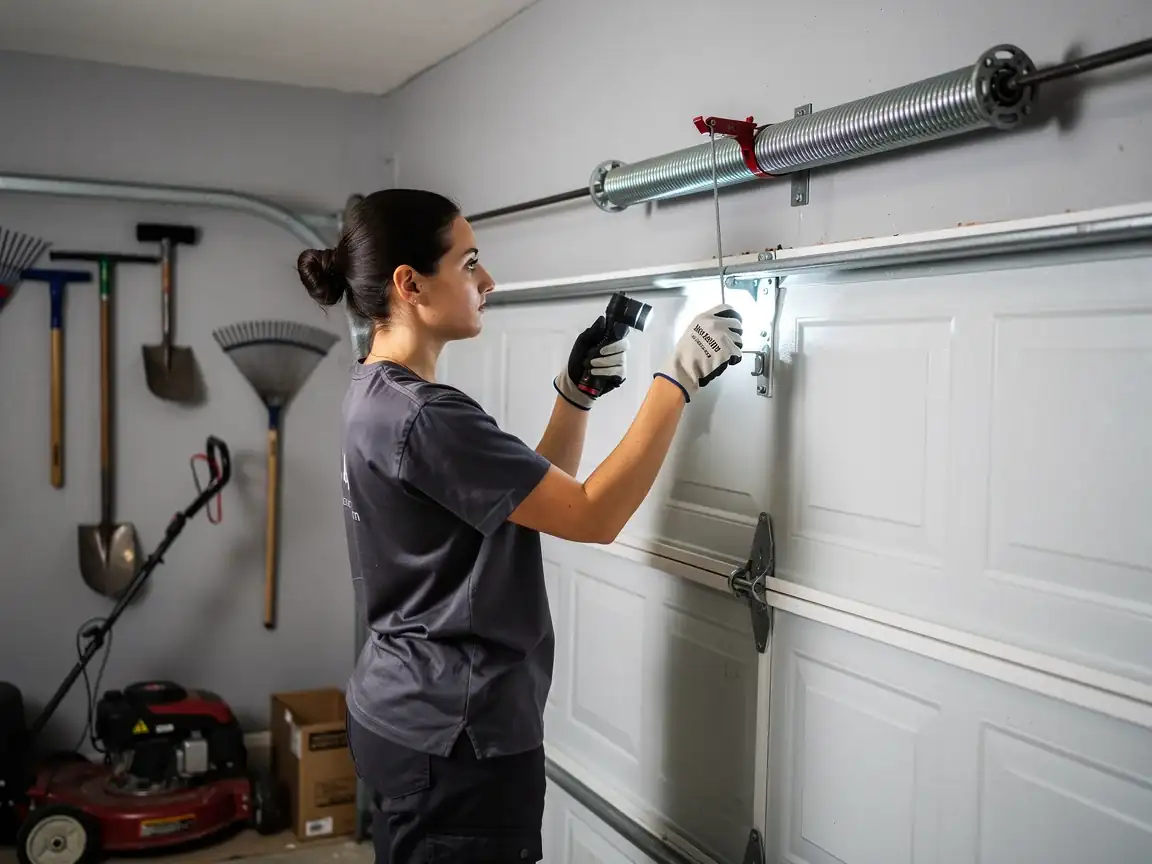
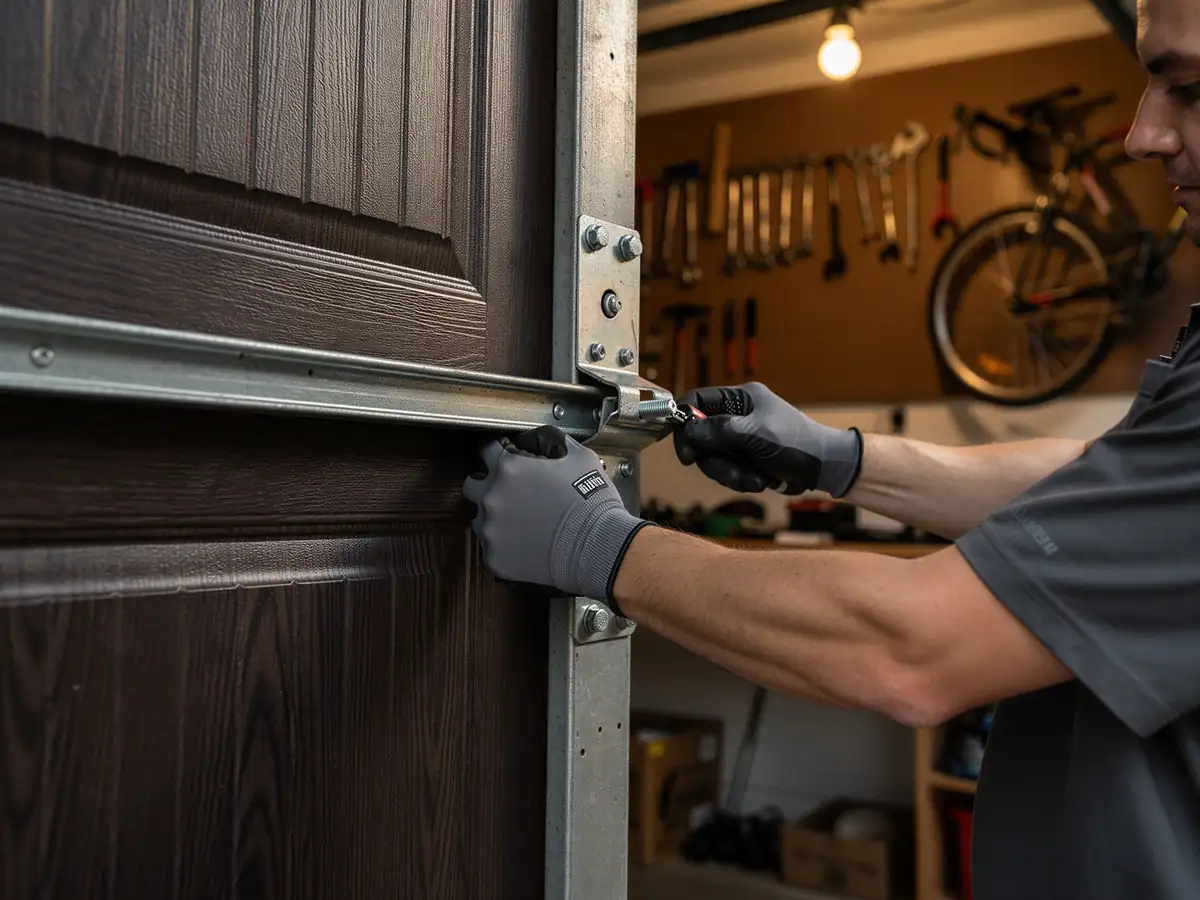
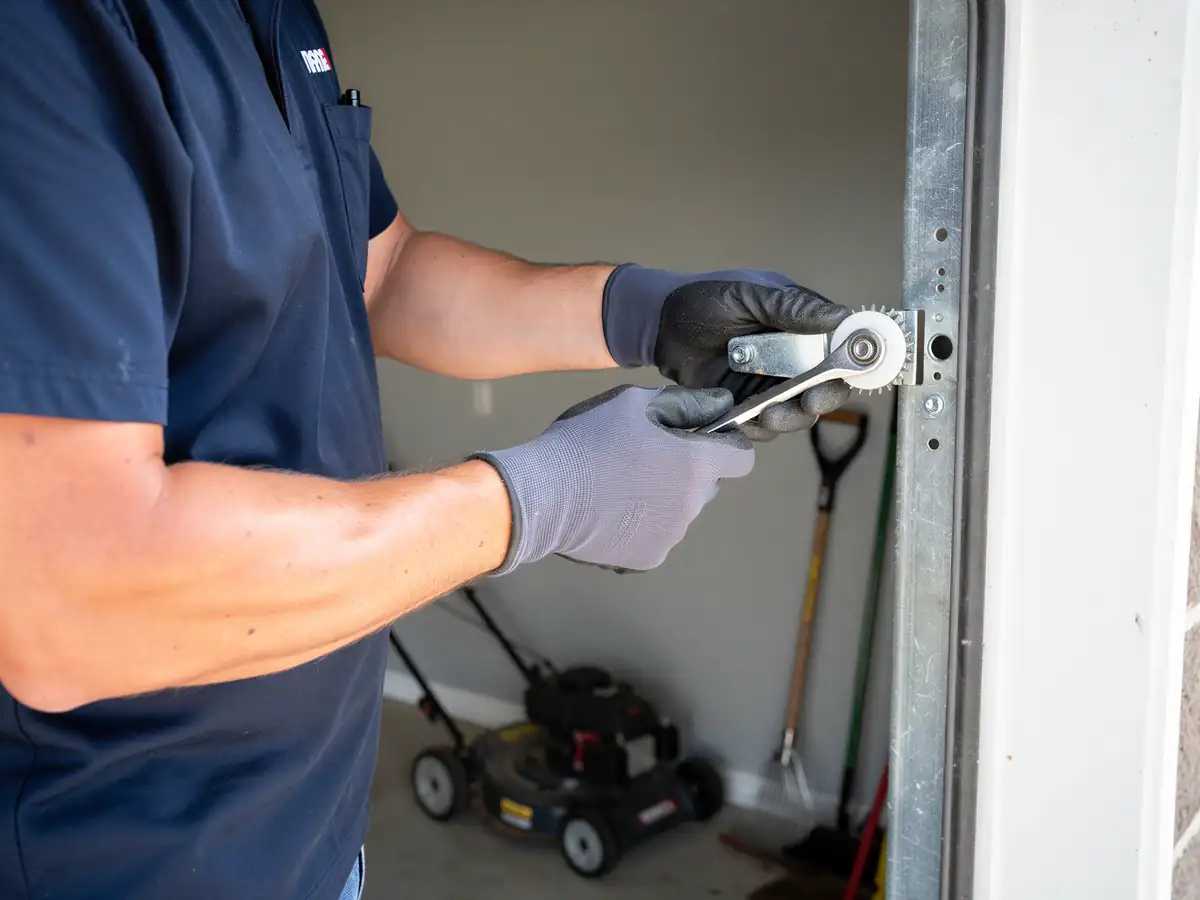
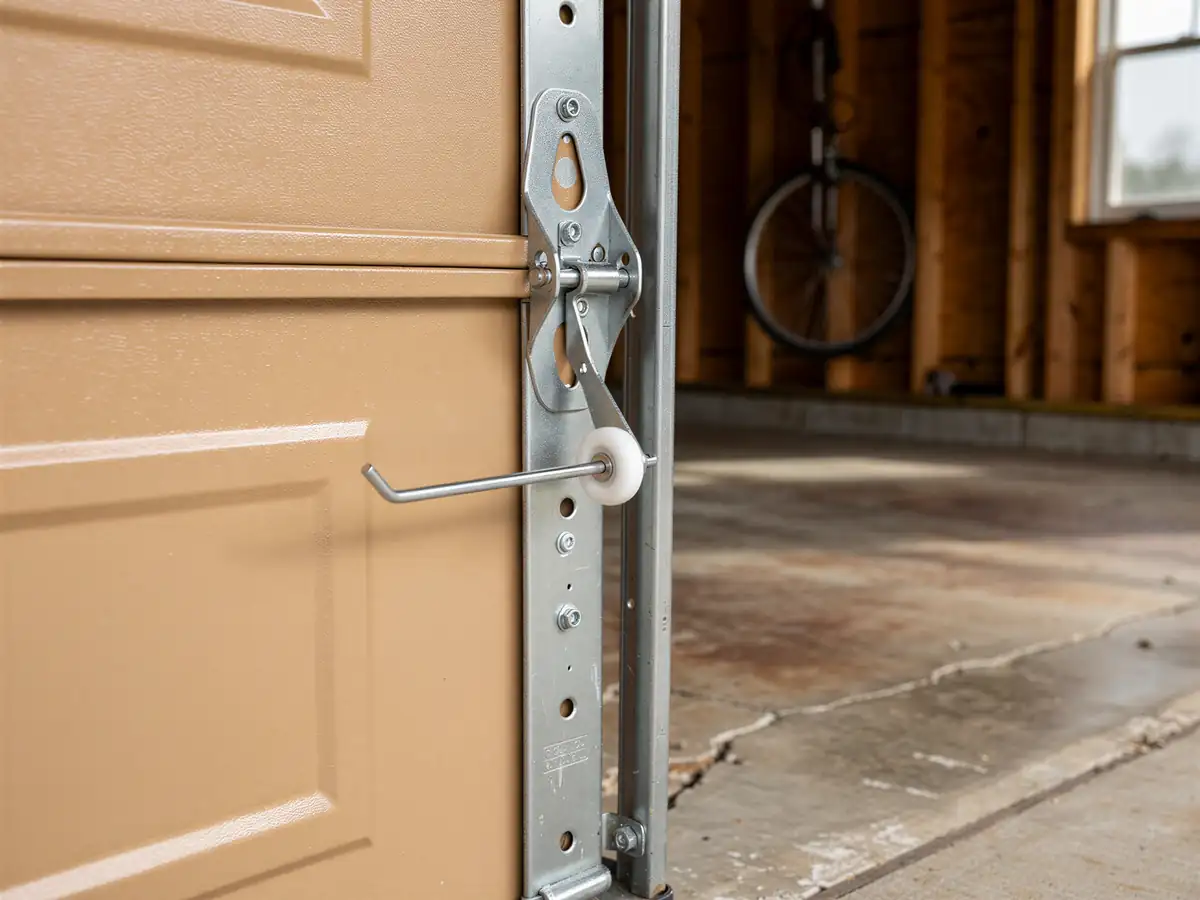
Start with the hardware, not the opener. On houses from the 1960s and '70s stock common across Bristol and areas like you'll often find single torsion springs sized for doors that were lighter than what's on them now, especially if a door's been swapped once already. Check the bottom brackets and the cable drums for rust pitting - this area's winters push a lot of road salt and moisture through garages, and that corrodes galvanized cable faster than the coating is rated for. Look at the rollers next: nylon rollers in steel tracks crack at the edges after enough freeze-thaw cycles, and that's a Connecticut winter problem more than a wear-and-tear one. Last, check the weatherstrip at the bottom panel - on original-era doors it's often the first thing to have been replaced, and if it's gone hard and cracked, cold air is getting under the door and onto whatever's stored against that wall.
What Local Conditions Do
Across the service area - 347,716 households and 181,634 owner-occupied houses - the garage door fleet skews old because the housing does. That's not unique to one street; it's consistent across the roughly 64 named areas we work in, from close by to Plainville, and Plymouth a few miles out. A severe cold climate band means steel springs and galvanized cable see more freeze-thaw stress per year than they would farther south, and that shortens the practical life of hardware even when it looks fine. With a median household income of $107,435 in the area, most of the calls we get are homeowners replacing worn parts on a door they intend to keep, not swapping doors on a whim - which is part of why matching the spring to the actual panel weight matters more here than in newer-stock towns where everything on the door is the same age.