Serving Bristol, CT & nearby
(860) 217-5232
Bristol, CT

Bristol Homeowners: When a Garage Door Repair Isn't Worth It Anymore

Bristol homes mostly date from 1938 to 1986, and our severe-cold climate band pushes old springs and panels hard. Here's how to know when repair stops making sense.

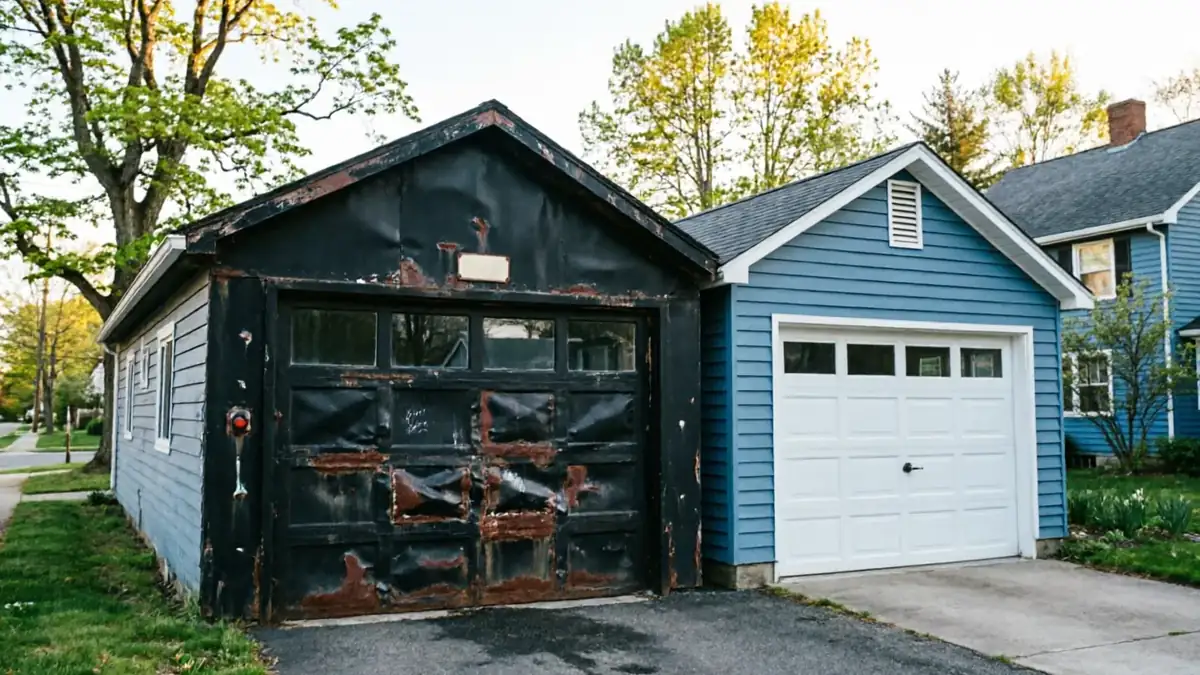
Two garages are side-by-side, one with a rusty black door and one with a white door.

Doing Nothing For Now

If your door still opens and closes, it's tempting to leave it alone. On a lot of Bristol properties that's fine for a while - the houses here mostly went up between 1938 and 1986, with the bulk clustering around 1971, and plenty of those original doors are still hanging on. But doing nothing has a cost curve that isn't flat. A door built in that era wasn't engineered for the freeze-thaw cycling our climate band puts it through every winter, and a spring or hinge that's been flexing since the Nixon or Carter years doesn't fail gently - it fails on the coldest morning of the year, usually with the car trapped inside. Waiting costs you nothing until it costs you a tow truck and a missed day of work. The honest answer is that a door with surface rust, a slow sag in the track, or a panel seam that's started to separate is not a door you want to find out about at 6 a.m. in January. If it's past a decade of visible wear and you're already calling someone out twice a year, doing nothing isn't really a strategy - it's a bet, and the odds get worse every winter it stays unmade.

What to Check

Start with the build year of the house, not just the door - a lot of Bristol's housing stock predates 1986, and original doors from that stretch often ran single-layer steel with no insulation core, which matters a great deal in a severe-cold band like ours. Check the panel seams for separation or rust bubbling at the bottom section, where moisture sits longest. Check the torsion spring for visible gaps between coils when the door is down; that gap widens as the spring loses tension, and cold steel loses tension faster than warm steel. Check the tracks for flex when the door passes - bent track on an older door usually means the rollers have been grinding metal-on-metal for longer than anyone noticed. And check the opener's age against the door's: a newer opener bolted to a 1970s door is often doing more work than the hardware underneath was built for. If you're finding two or three of these at once, you're not looking at a tune-up. You're looking at a door that's telling you something, and it's worth having someone look at the whole system rather than just the part that's currently loud.

The Problem

Repair makes sense when one part fails on a door that's otherwise sound. It stops making sense when you're replacing a second or third part on a door that's already past its working life, and that's a more common situation here than people expect, given how much of Bristol's housing dates to the 1960s and '70s. A door from that era wasn't built to today's panel gauge or insulation standard, so when a section cracks, the replacement part often doesn't match - you end up with a mismatched panel bolted onto an otherwise original door, or a tech quoting you for a custom order with a wait attached. We don't carry match parts for every panel style from that period, and we won't pretend a patch will look or perform like the original. With a median household income of $107,435 in the towns we serve, most owners here aren't stretched by a replacement decision the way repair-versus-replace debates assume - the real question isn't affordability, it's whether you're pouring good money into a door that's already told you, twice, that it's done.

What Local Conditions Do

Bristol sits in a climate band rated severely cold, and that's not a label that changes what we tell homeowners - it changes what actually happens to the hardware. Steel contracts in cold, and a torsion spring that's already fatigued loses tension faster when it's cycling through single-digit mornings than it would in a milder climate. Lubricant that's fine in September turns thick in January, which is why a track that felt smooth in fall starts binding by midwinter on an older door. None of this is unique to one house - it's a function of the climate band itself, acting on hardware that, across this area, mostly dates to the 1960s and '70s. Across the 347,716 households and 181,634 owner-occupied houses in the towns we run trucks to, the pattern repeats: doors installed decades ago, carrying springs and rollers that were never rated for this many freeze-thaw cycles. That's the local condition that matters more than any single part number - the cold doesn't cause the failure, it just finds whatever was already weak and finishes the job faster than a milder winter would.

How it works

From “it’s stuck” to “it’s fixed”

A man stands in a driveway looking at his phone in front of a blue house.

Tell us what’s wrong

Describe the symptom - won’t open, loud bang, opener runs but the door won’t move.

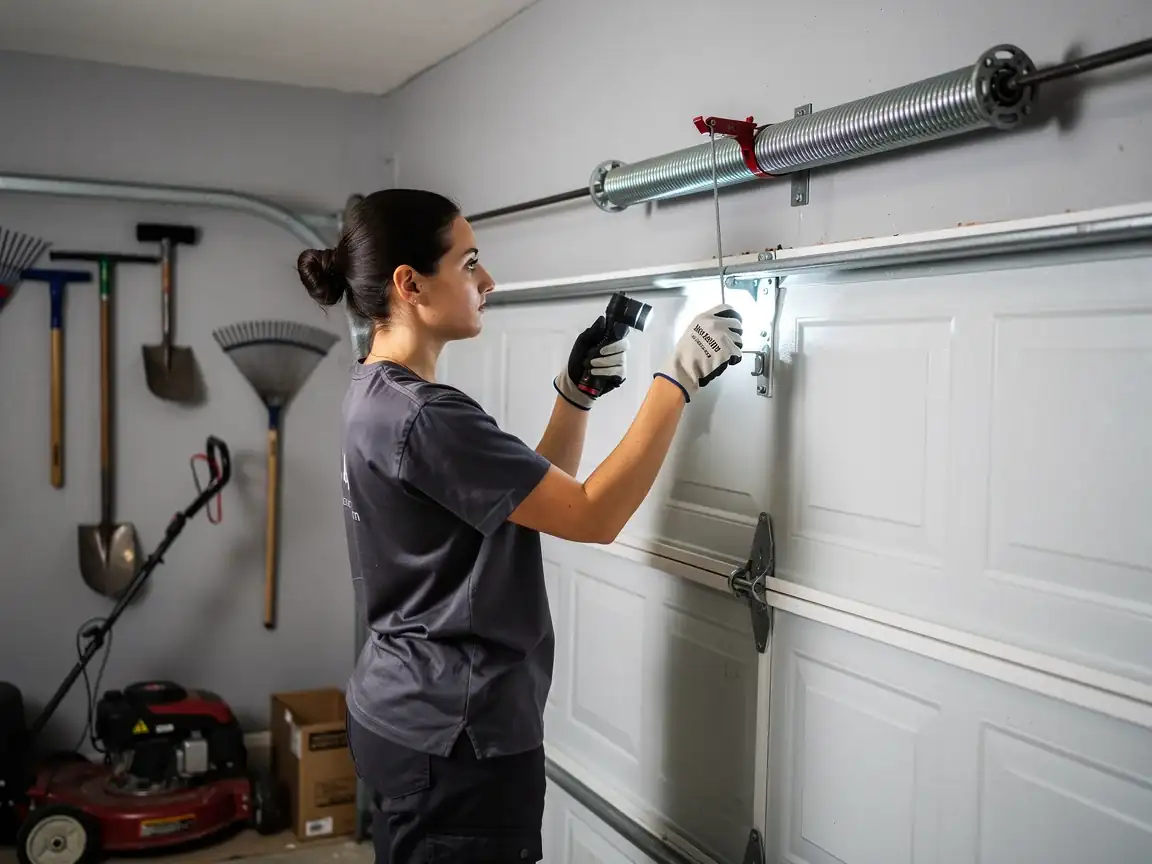
A technician shines a flashlight on a white garage door's top panel and roller.

On-site diagnosis

A technician tests the door under power and by hand and finds what actually failed.

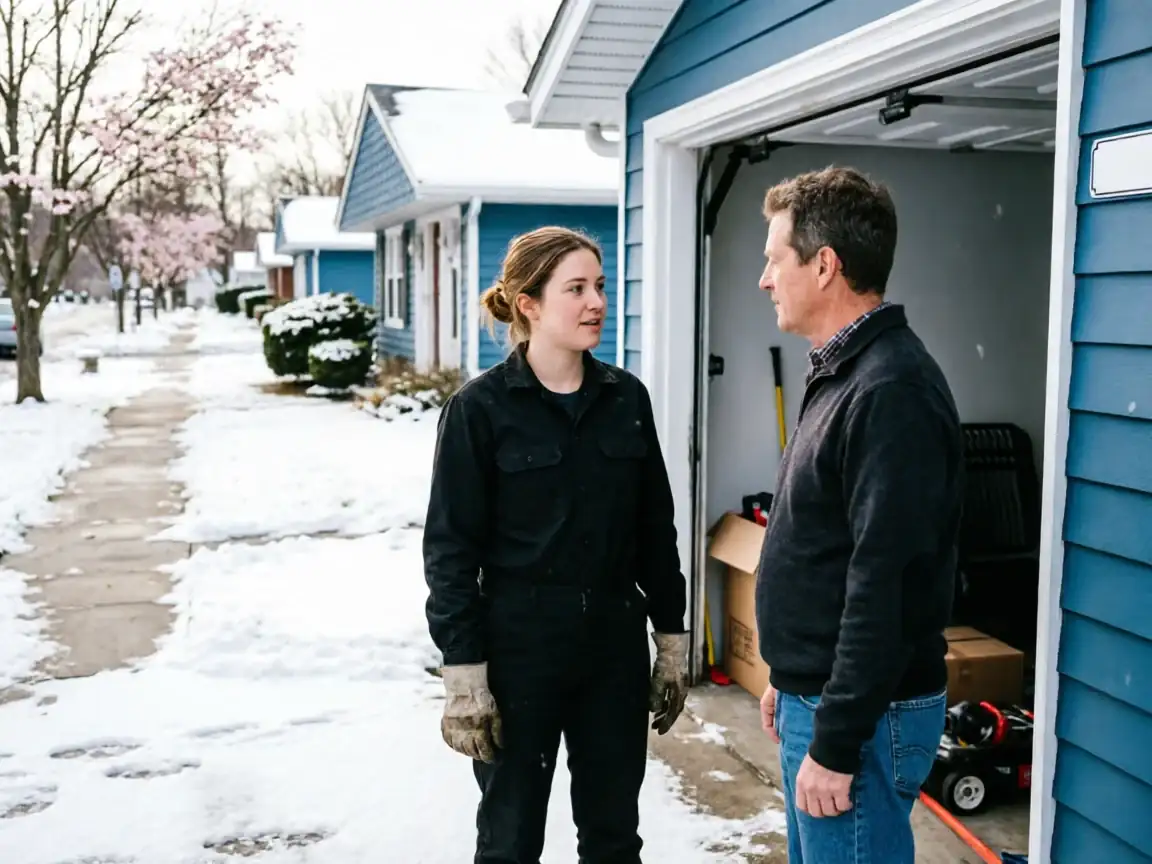
A technician in work clothes talks to a man in front of a blue house with an open garage.

Clear, up-front plan

You get the fix that’s needed and what drives the cost - before any work starts.

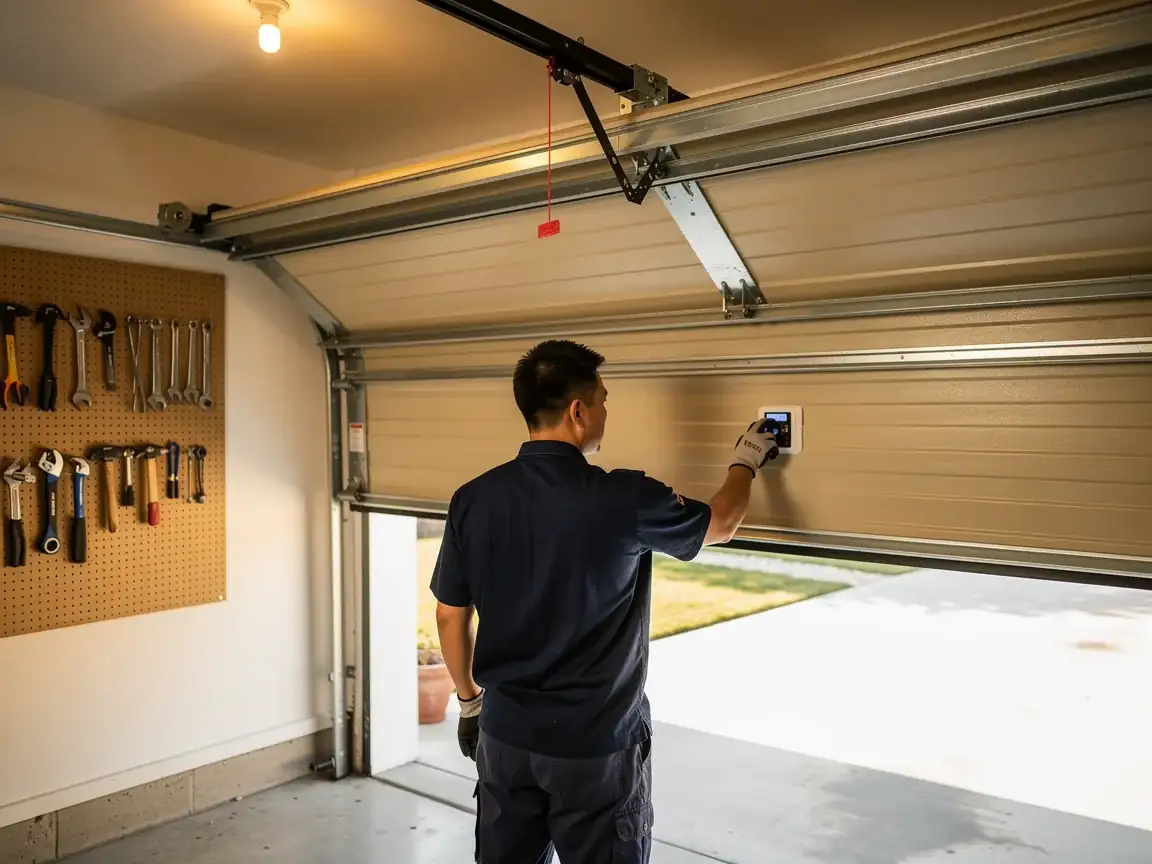
A technician adjusts a wall-mounted control panel on an open garage door.

Repaired & tested

The repair is done, the door is set true and tested, and the work area left clean.

Next step

Not sure which repair your door needs in Bristol, CT? Describe what it’s doing - every job starts with a diagnosis.

How we work

What to expect

Diagnosis firstEvery visit starts by finding what actually failed - not a pre-written parts list.
The right part for the doorSprings and openers matched to the door’s weight and age, so the fix holds up.
Straight answersWhen a repair makes more sense than a replacement - or the reverse - you hear it plainly.
Clean, careful workTension released safely, hardware set true, the door tested under power before we leave.
What we do

Garage Door Services

Repair and installation work for Bristol homes and businesses.

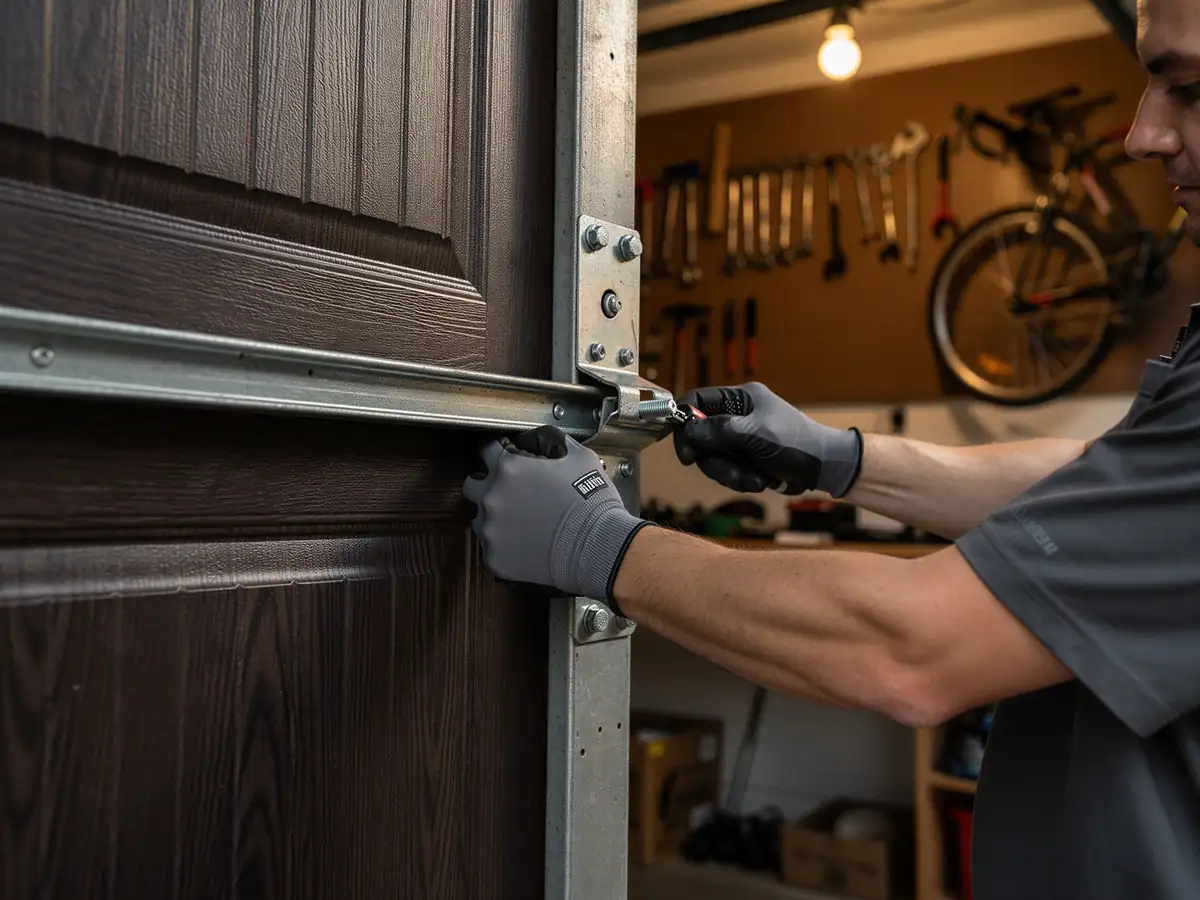
A technician in grey gloves works on a brown garage door track.

Garage Door Repair

Garage door repair for Bristol, CT homes built mostly 1938-1986. We work on the torsion springs and track hardware that cold winters and original 1960s-70s doors wear out.

Learn more
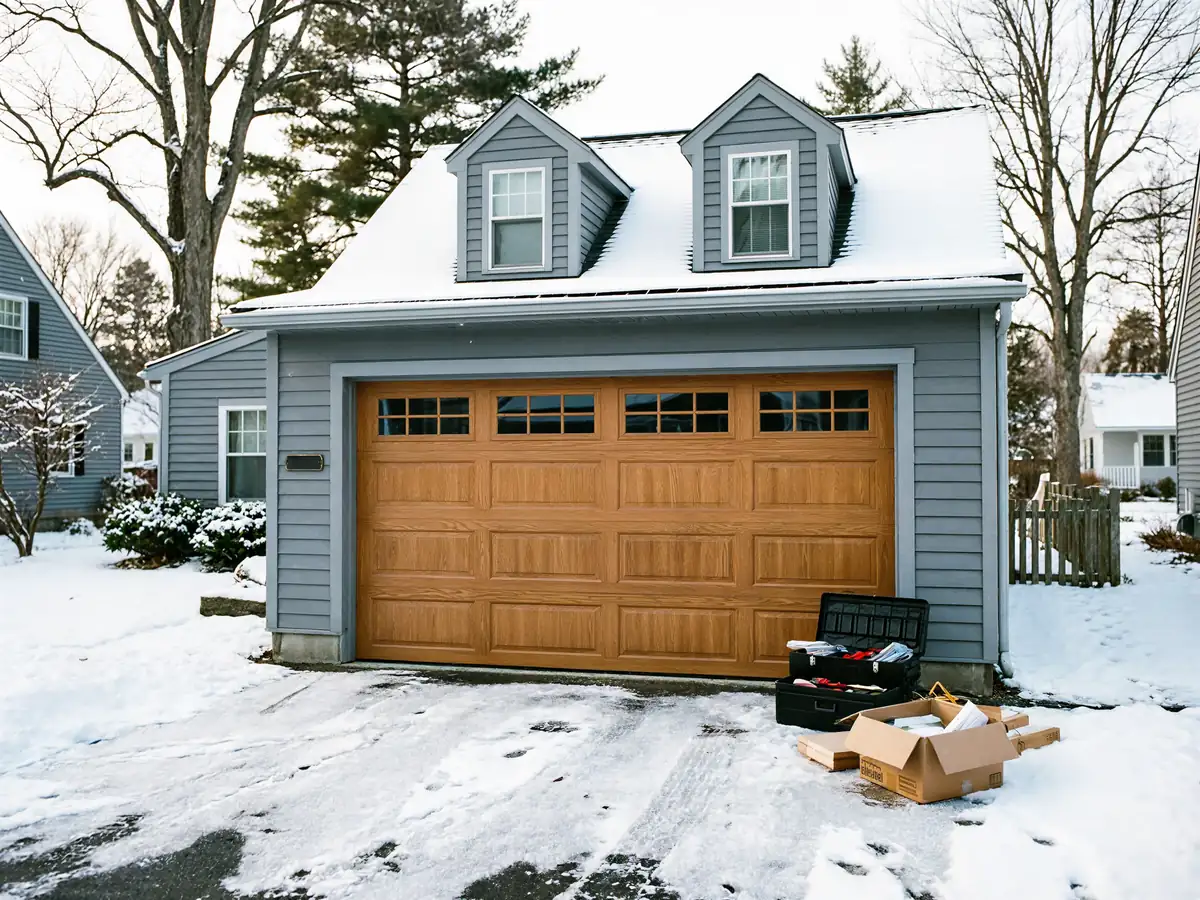
A wooden garage door on a gray house with snow on the roof and ground.

Garage Door Installation

Bristol Garage Door Pros installs new garage doors matched to Bristol, CT's 1960s-70s housing stock and severe cold climate. We measure, order, and install.

Learn more
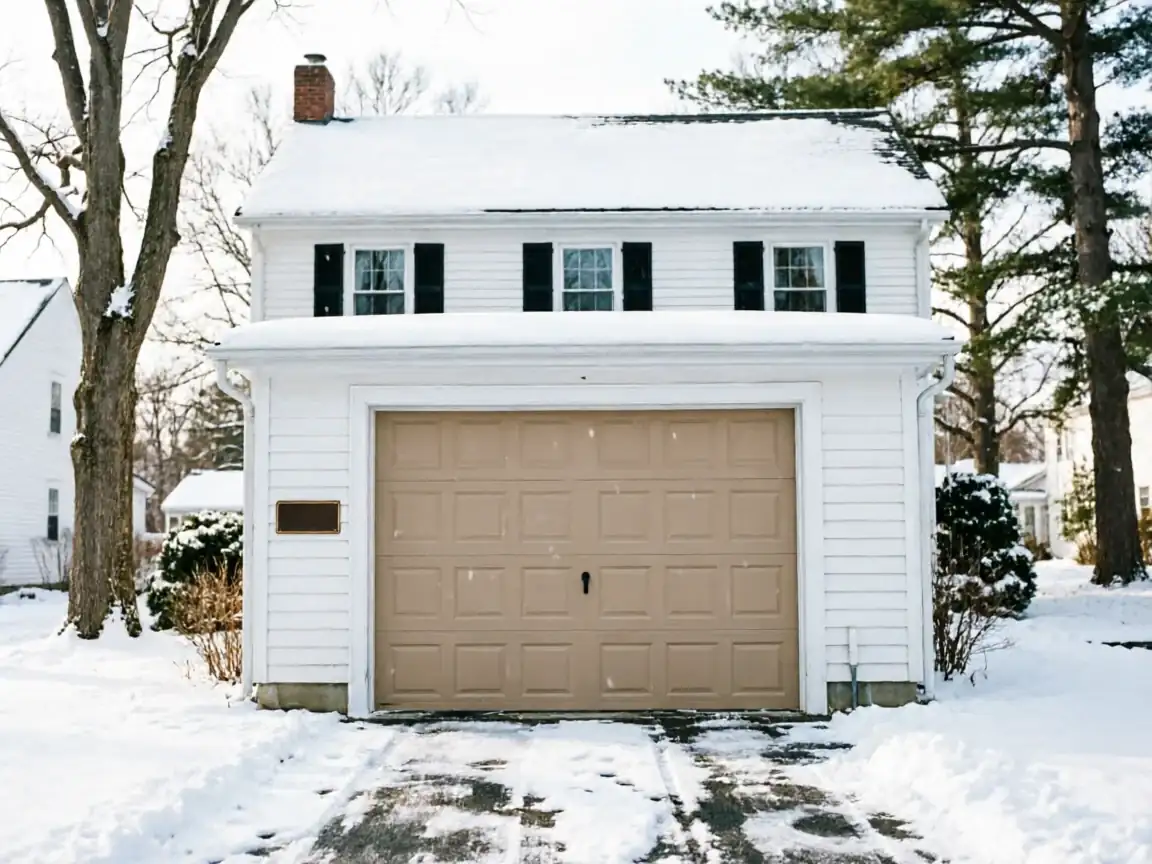
A white house with a tan garage door and black shutters is covered in snow.

Garage Door Service

Garage door service for Bristol, CT homes built 1938-1986. We fix the cold-weather binding and spring failures common to this housing stock. Call today.

Learn more
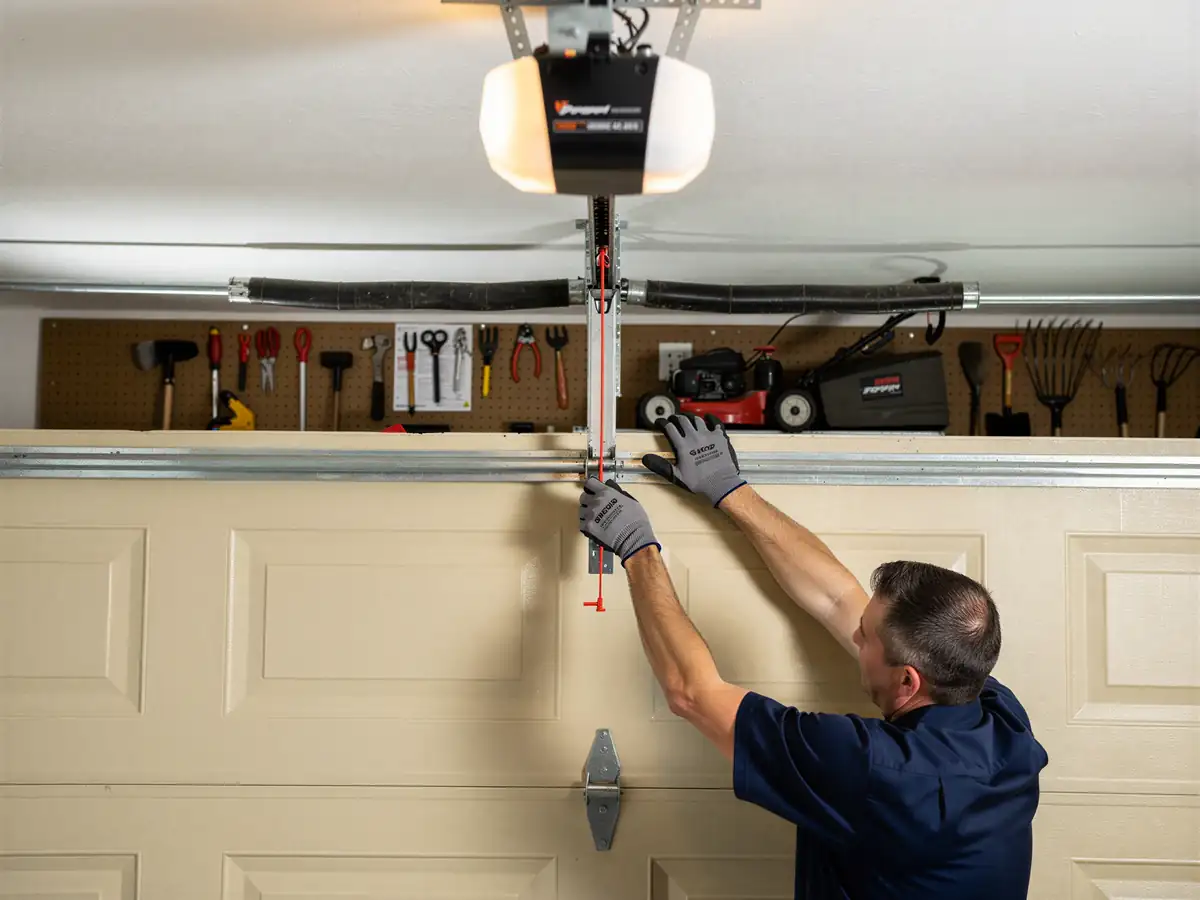
A technician in a blue shirt and gloves works on a garage door opener.

Opener Installation

Opener installs for Bristol, CT homes built between 1938 and 1986, sized to heavier original doors and the track wear Connecticut's cold winters bring on.

Learn more
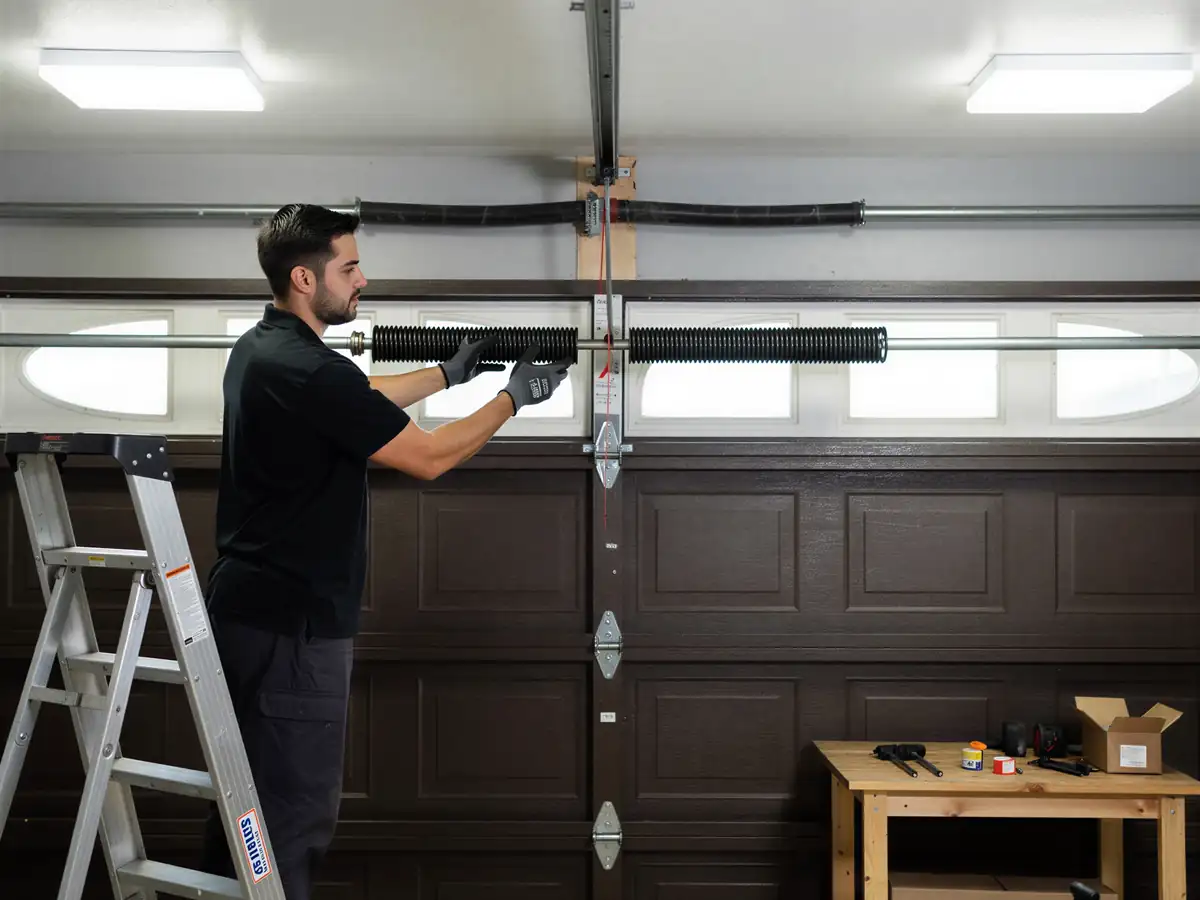
A technician installs a torsion spring on a brown garage door.

Spring Repair

Broken torsion spring on a Bristol house built between 1938 and 1986? We fix the snap, re-tension the door, and explain why this area's cold winters wear springs faster.

Learn more
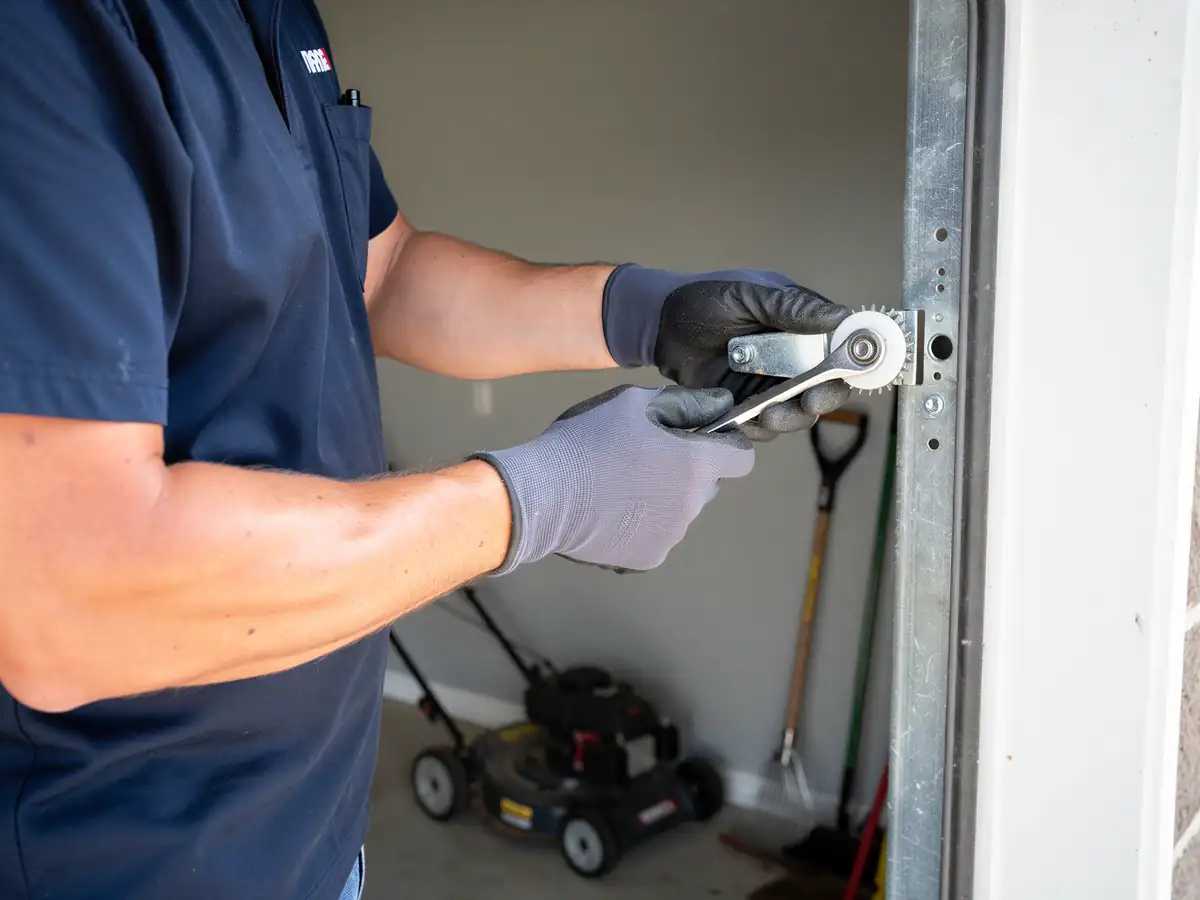
A technician in gloves adjusts a garage door roller with a wrench.

Off-Track Repair

Door jumped the track in Bristol, CT? We fix bent track, dropped rollers, and misaligned doors on the 1960s-70s housing stock common across this part of Connecticut.

Learn more
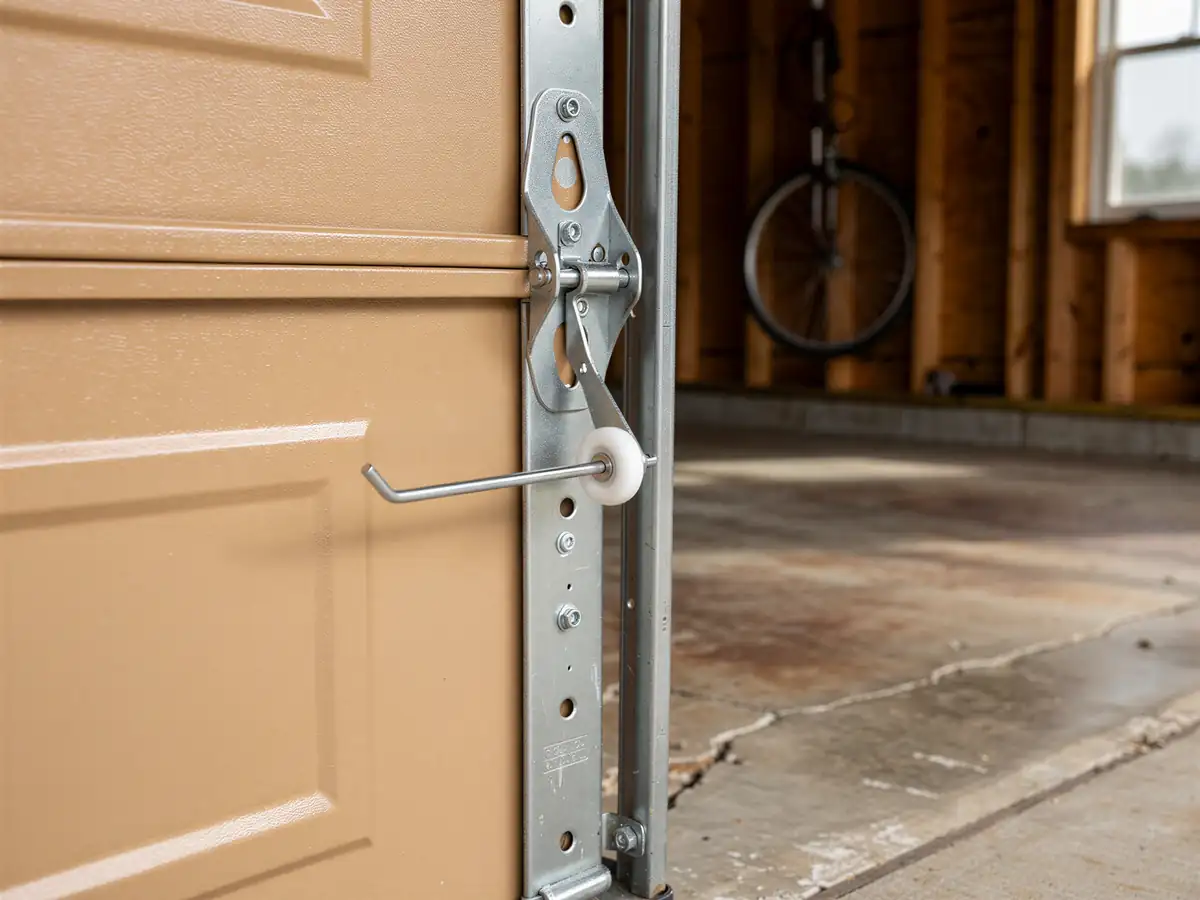
A tan garage door is open, showing a roller and track with a concrete floor.

Roller Replacement

Worn or jumping garage door rollers are common in Bristol, CT's 1960s-70s housing stock, especially through hard winters. Here's why, and how we fix it.

Learn more
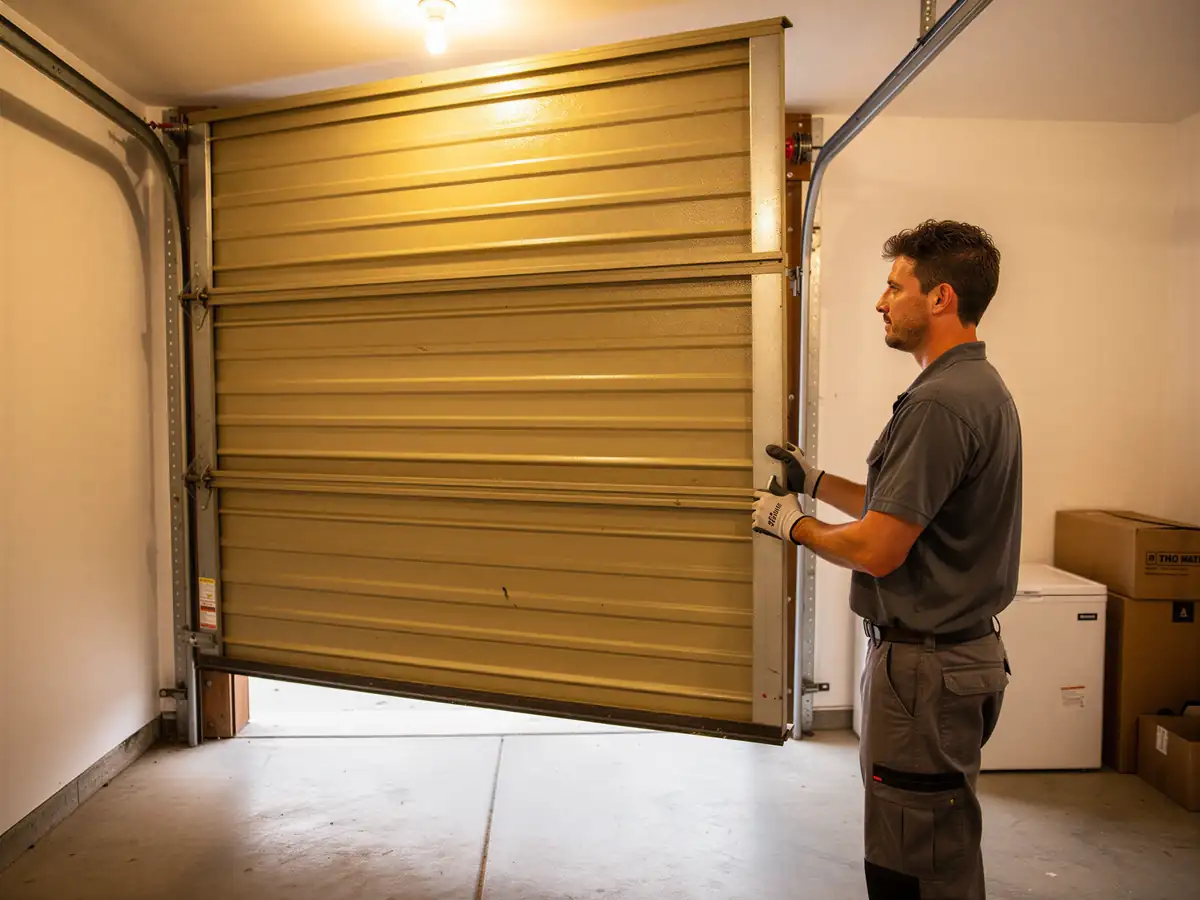
A technician in gloves is working on a partially open tan garage door.

Maintenance

Garage door maintenance built for Bristol's 1938-1986 housing stock and cold winters. We service original hardware, worn rollers, and torsion springs that age fast here.

Learn more
Questions

Frequently asked

Straight answers about garage door repair in Bristol. Still unsure? Ask us directly.

01How old does a garage door have to be before replacing beats repairing?

There's no fixed year, but if your door dates from the 1960s-80s stock common in Bristol and you're already on a second or third repair, replacement usually wins. Original panels from that era often don't have a matching replacement part available, so a repair can turn into a mismatched patch rather than a real fix.

02Why does my spring keep failing in winter specifically?

Bristol's climate band is rated severely cold, and steel springs lose tension faster as temperatures drop and cycle repeatedly through freeze-thaw. A spring that's already fatigued from age gets pushed over the edge by a hard cold snap rather than failing on a mild day.

03Can you always find parts for an older door?

Not always. Doors from the 1938-1986 stock common here sometimes used panel styles and spring sizes that are no longer produced. When that happens we'll tell you straight rather than force a mismatch, and replacement becomes the more honest option.

Ready to get your garage door sorted?

Tell us what it’s doing and where you are in Bristol - we’ll take it from there.

Request a QuoteCall