Doing Nothing For Now
If your door is opening and closing without noise, without jerking at any point in the travel, and the opener isn't straining, you can leave it alone for now. A lot of homeowners hear about garage door maintenance and assume something needs doing every season. It doesn't. The honest answer is that a torsion spring on a well-adjusted door, even an original one from a house built in the 1960s or 70s, can run for years without attention once it's properly balanced.
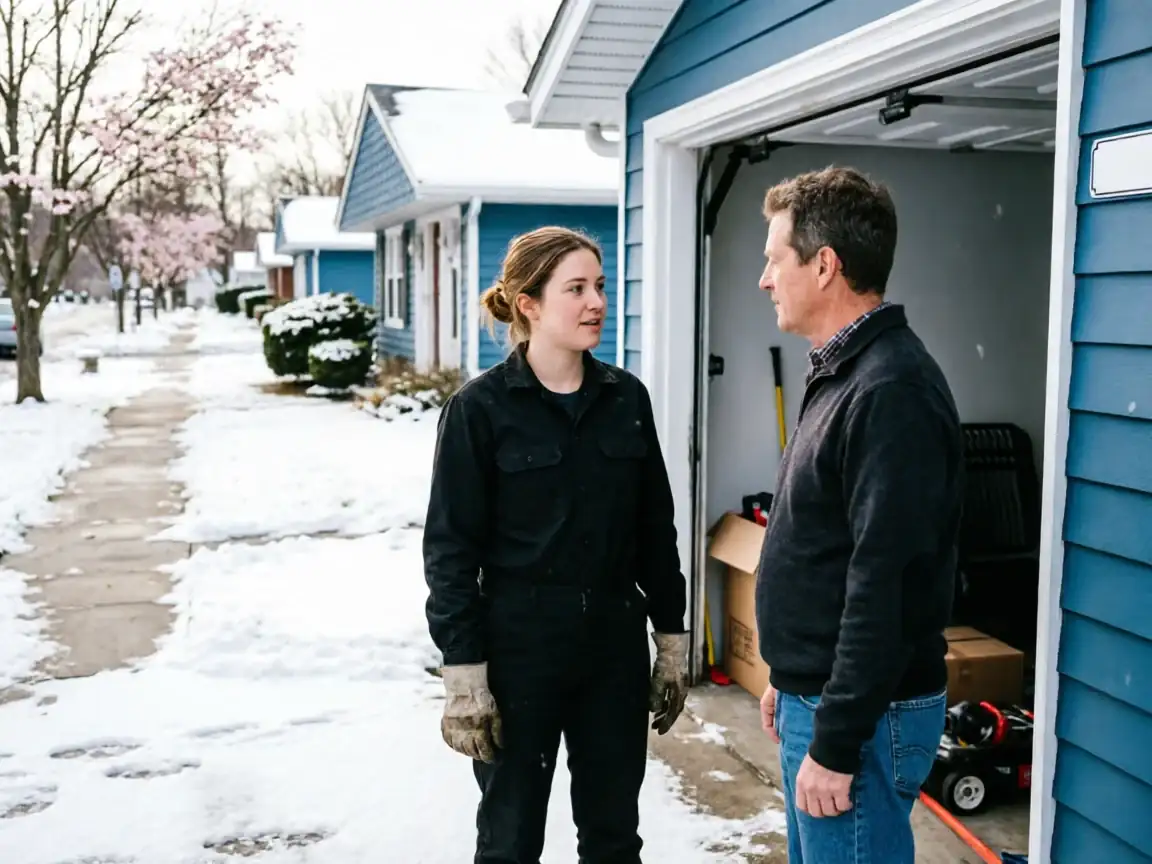
What changes that calculus here is the age of the housing stock. Bristol-area homes mostly date from 1938 to 1986, with the median landing around 1971, so a large share of the doors still in service are original equipment or a direct replacement on original hardware. That's not a reason to panic, but it is a reason to actually look rather than assume the door is fine because it was fine last winter. Cold-climate stress doesn't announce itself until a spring lets go, usually on the coldest morning of the year.
If you just want the door to get through the season, a five-minute check beats an afternoon of full maintenance you don't need yet.
What to Check
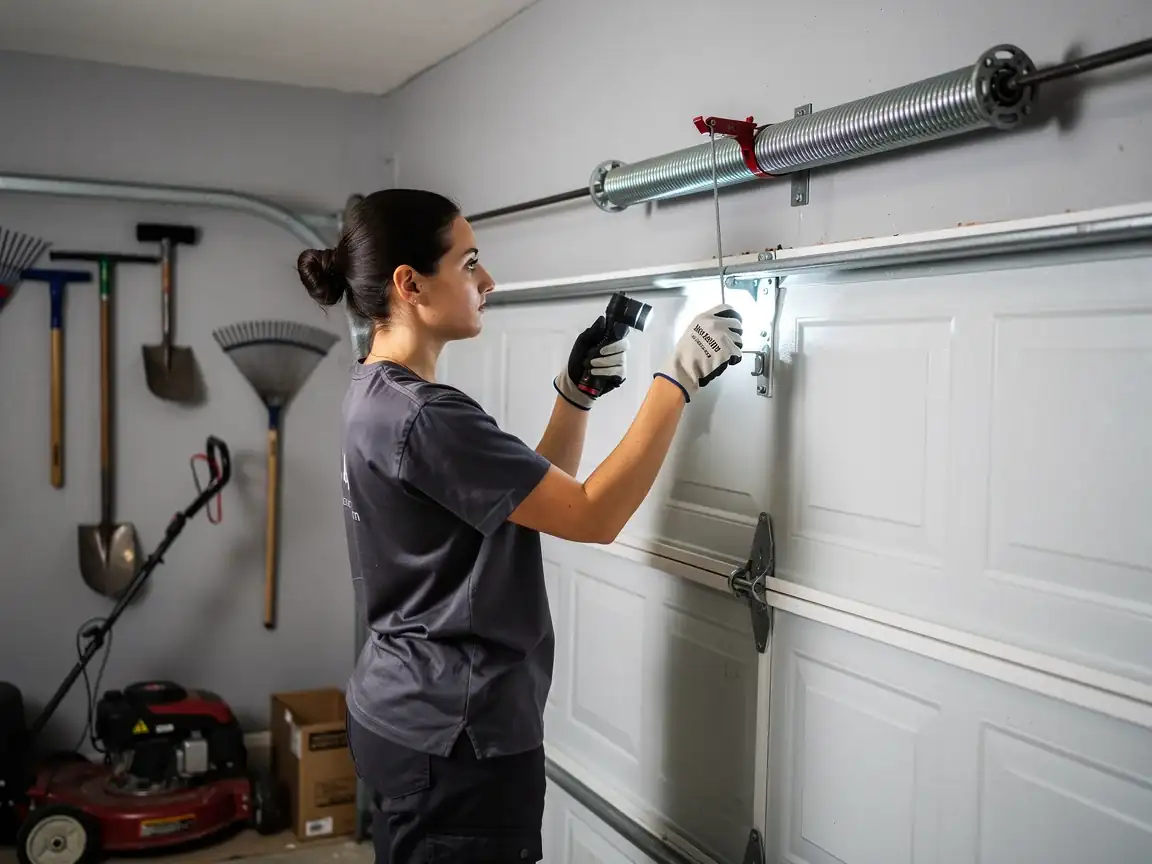
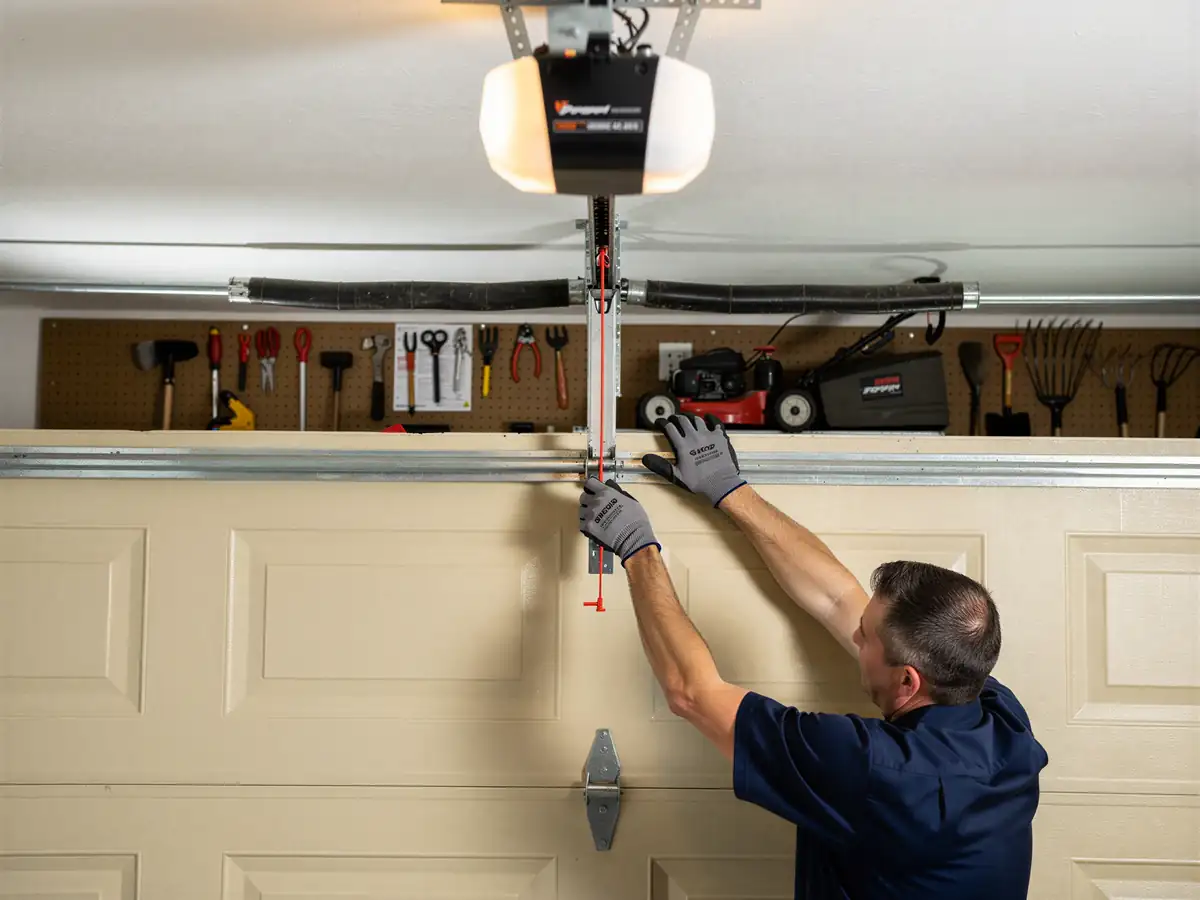
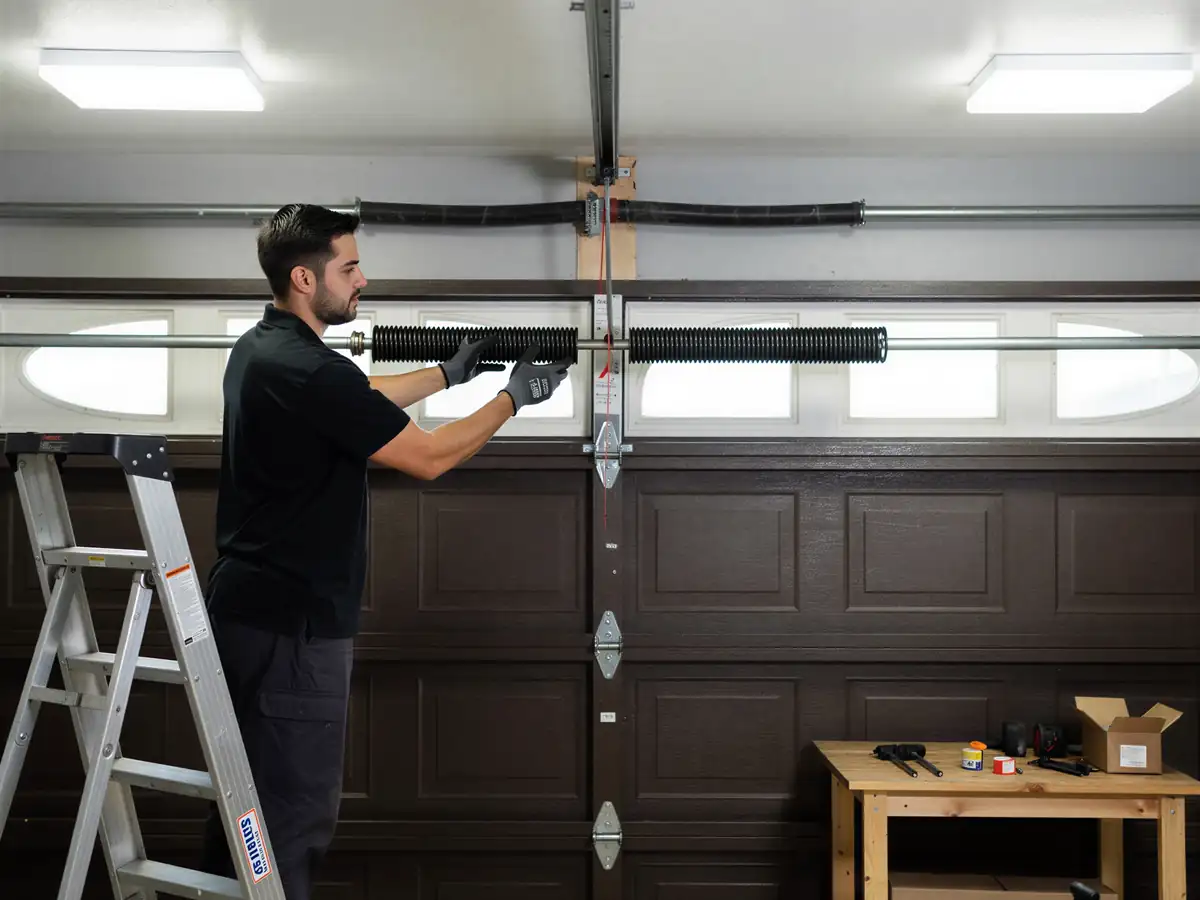
Start with the springs. On a door built to the specs common in this area's 1960s-70s housing, you're usually looking at a single torsion spring over the header, or two on a wider double door. Look for a visible gap in the coil - that's a broken spring, not a worn one, and it means don't run the opener again until it's replaced.
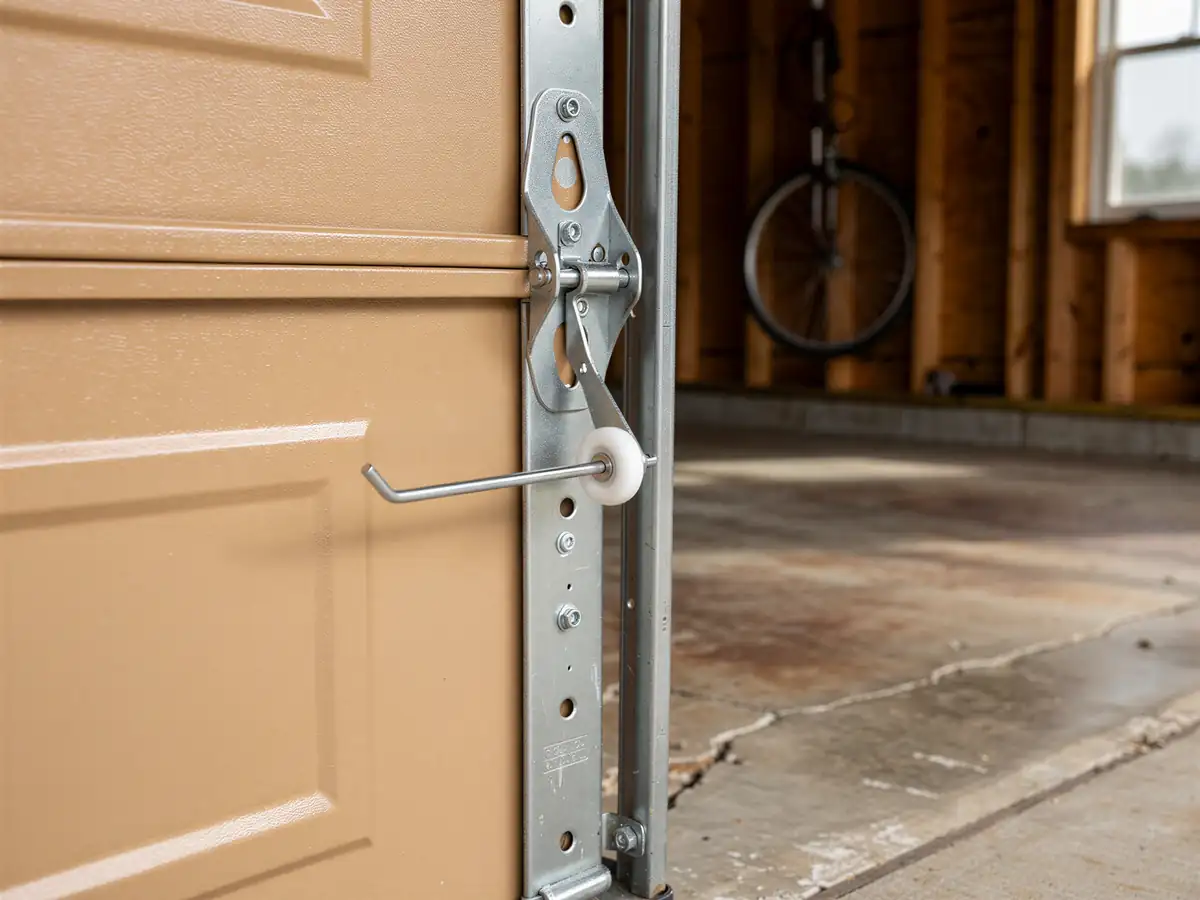
Next, the cables at the bottom brackets. Cold makes steel cable more brittle over time, and on a door that's original to a house from this era, those cables have had decades of expansion and contraction to fray a strand. Frayed wire near the drum is a sign to stop using the door, not to lubricate and hope.
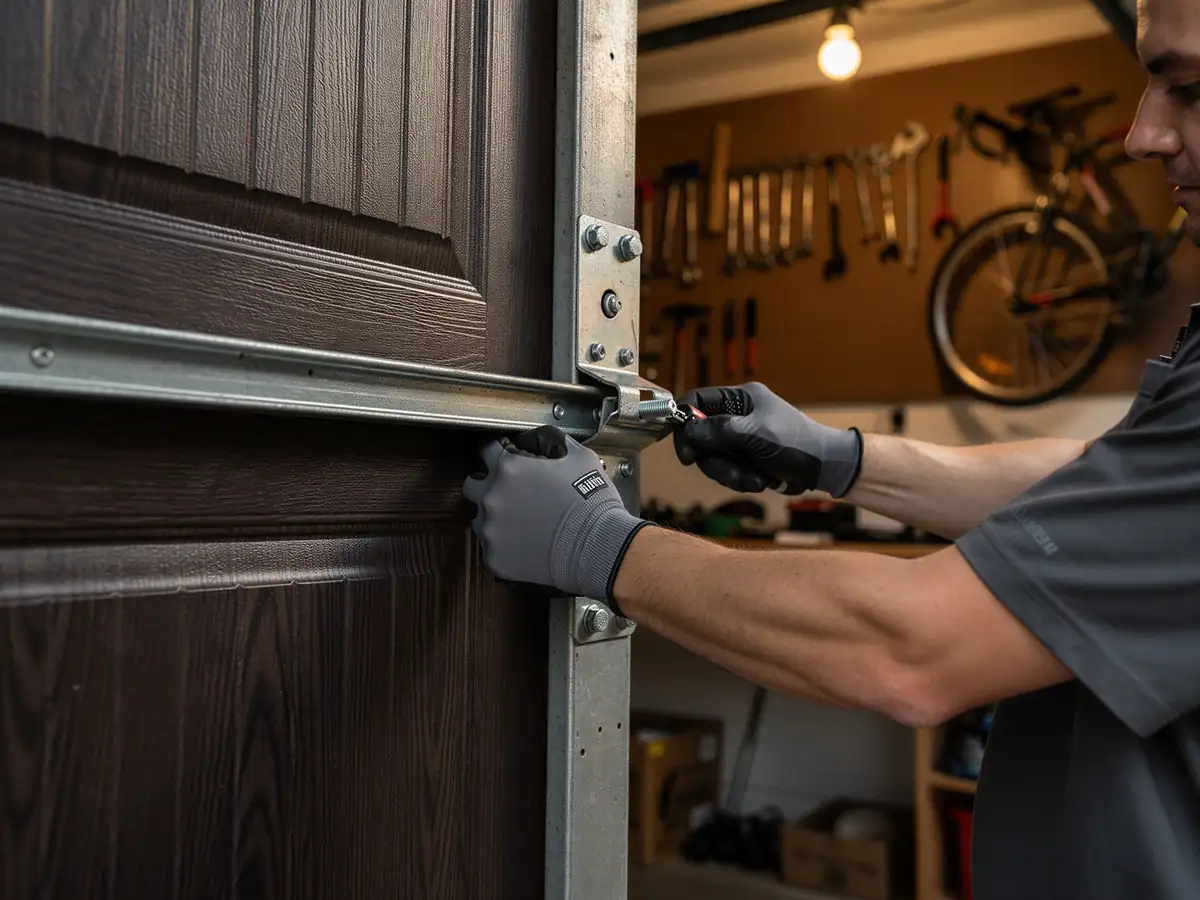
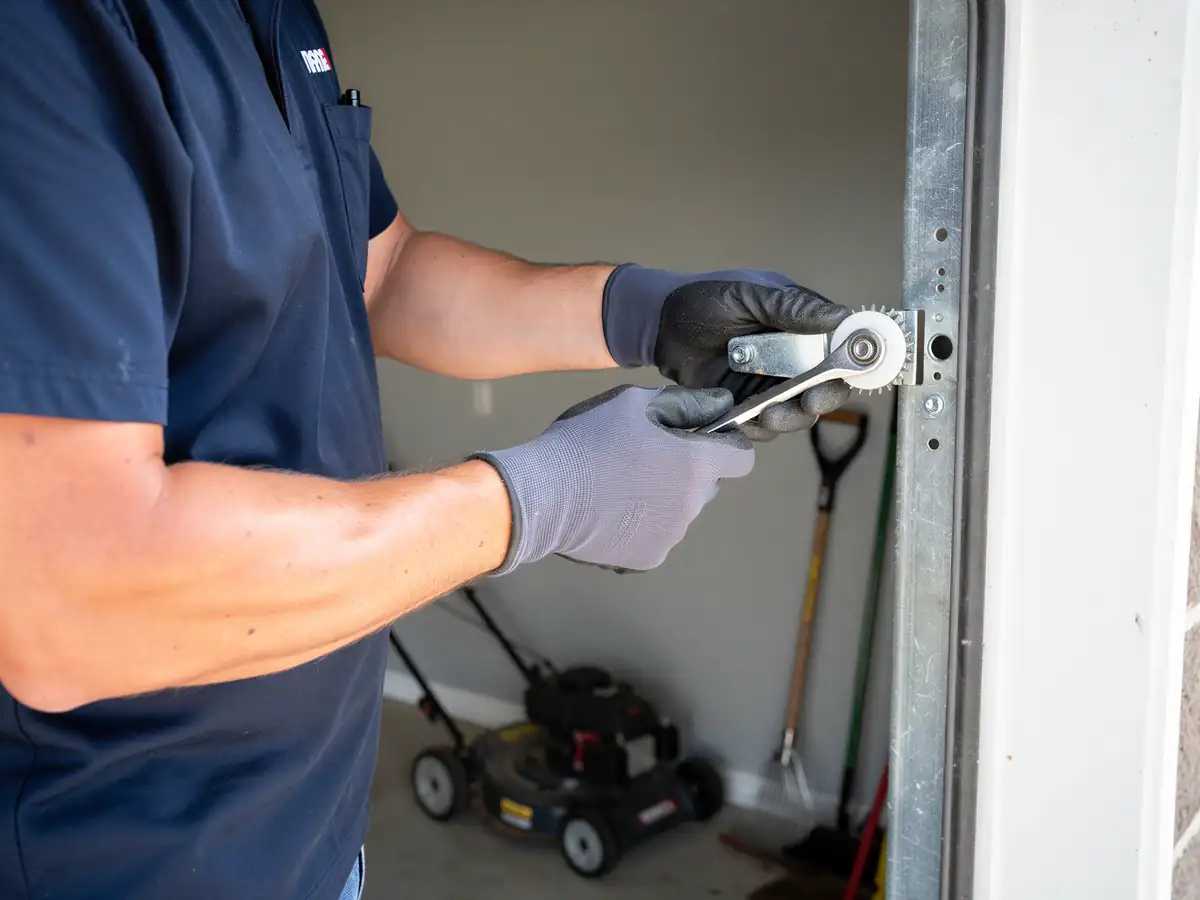
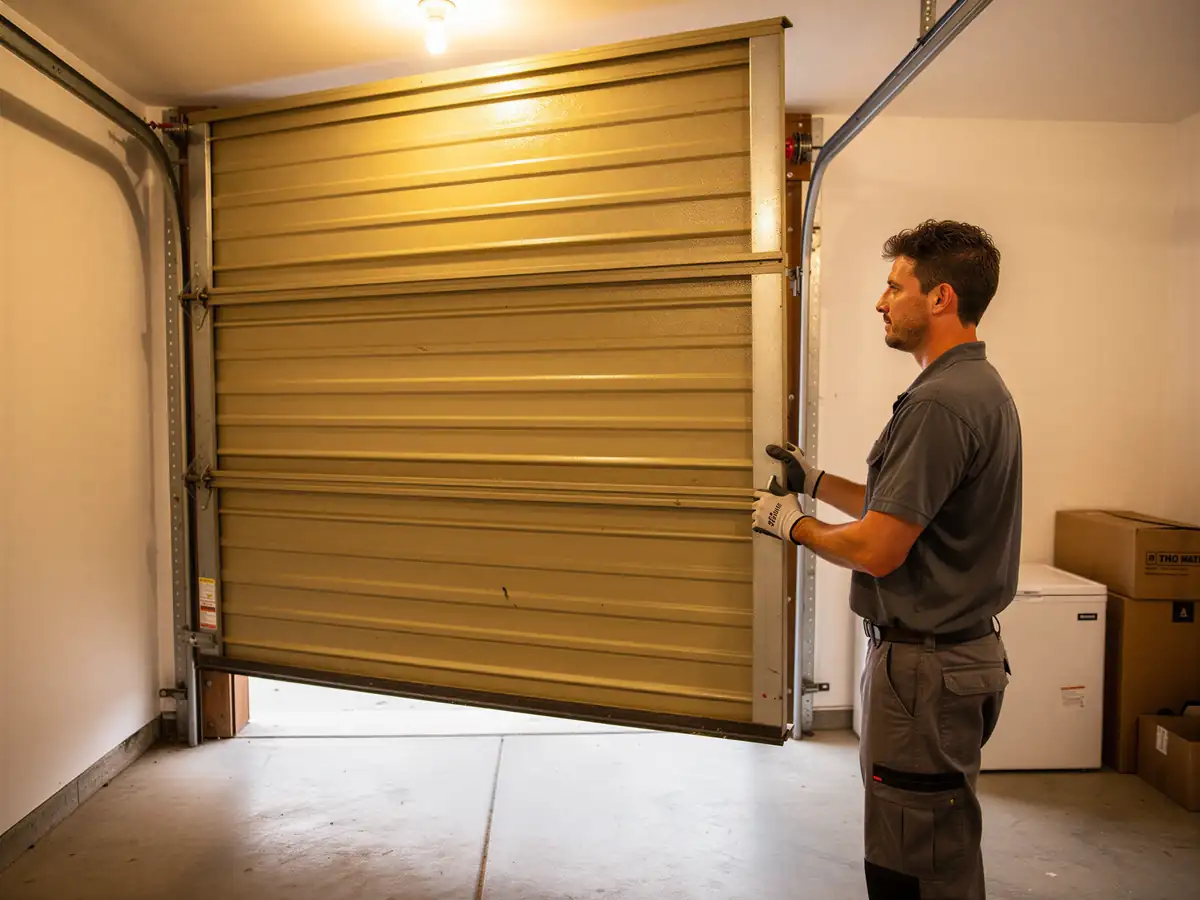
Check the track bolts and the header bracket for movement. Houses built before 1986 often have track mounted directly to framing that's shifted slightly over fifty-plus years, and a half-inch of play at the top bracket is enough to throw the whole door out of travel.
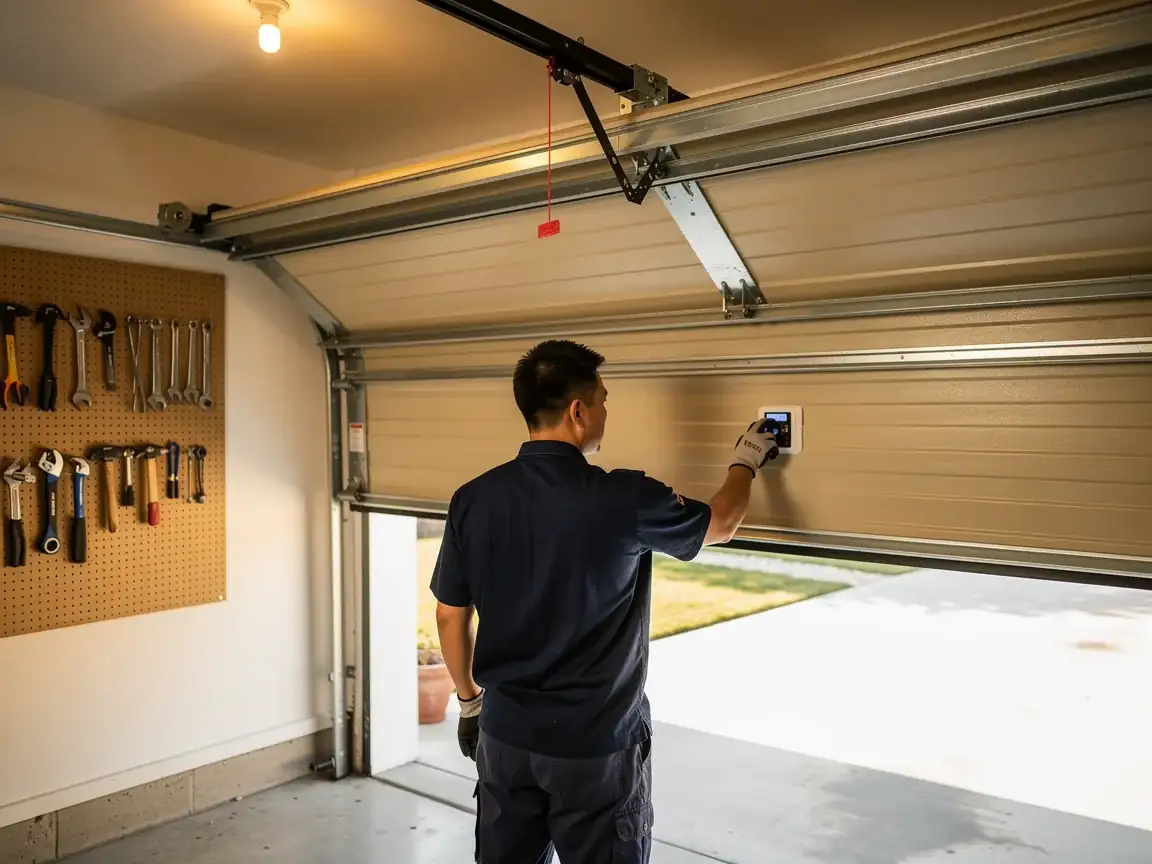
Last, listen to the opener under load. A motor that strains going up but runs fine coming down is doing the spring's job for it, which means the spring is already weak even if it hasn't visibly failed.
The Problem
The core issue in Bristol isn't the door itself
It's the mismatch between original 1960s-70s hardware and a climate that's classified as cold-severe. Steel springs were engineered for a certain number of cycles at a given temperature range, and that range assumes some seasonal give. In a severe cold band, the metal contracts further and the lubricant inside the coil thickens more than it would in a milder zone, which shortens the realistic service life of hardware that was already pushing fifty years old on a house built around the 1971 median for this area.
This shows up most on doors that haven't been touched since installation
Nobody opened the door, repainted it, or had a tech out to re-tension the spring, so the hardware has been quietly losing capacity every winter without anyone noticing. By the time it fails, it's usually at the worst moment - first cold snap of the year, when the door gets used heavily for the first time in months.
We don't push full replacement on a door that only needs a spring and cable set
If the track and opener are sound, a repair is the right call. Replacement only makes sense when the panel itself is cracked, rusted through, or the opener is original equipment and failing alongside the springs.
What Local Conditions Do
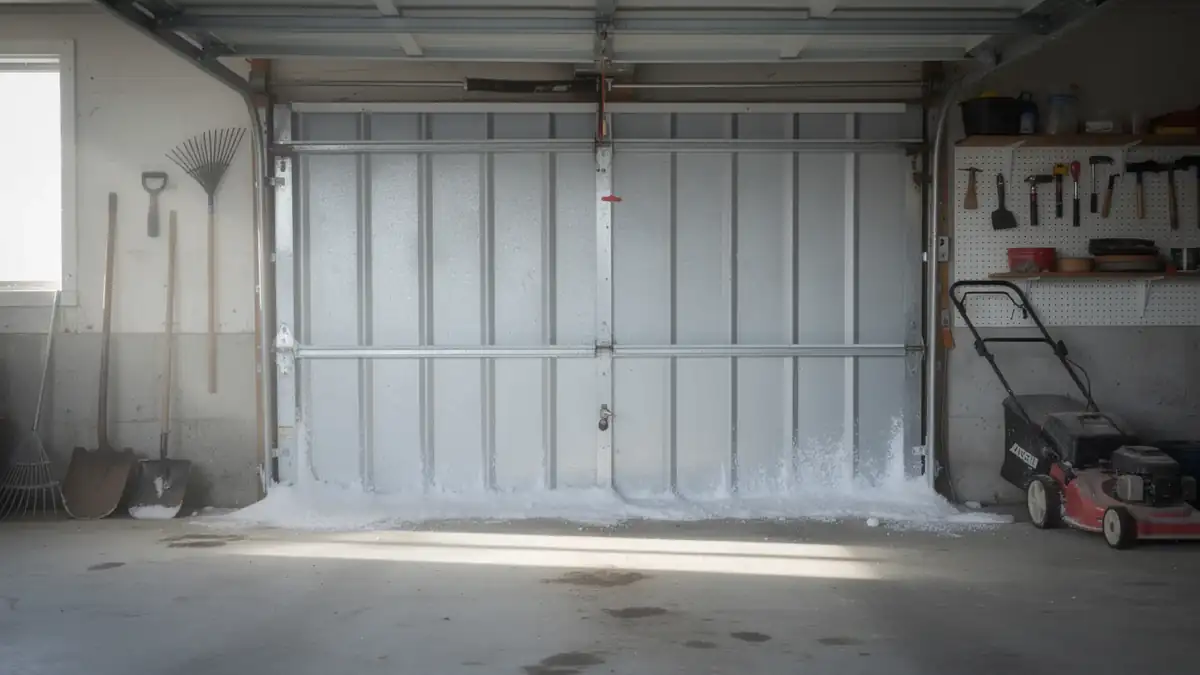
Cold-severe conditions do two specific things to a garage door system. First, they stiffen the lubricant in torsion springs and roller bearings, which raises the force needed to lift the door and puts extra load on an opener that was never oversized to begin with. Second, repeated freeze-thaw cycles work at any gap in the weatherstripping or at the bottom seal, and on a door from the 1938-1986 building era, that seal is often a decades-old strip that's hardened and cracked rather than flexible rubber.
Across the towns within a few miles of Bristol - Plainville, Plymouth, Burlington - the same cold-severe exposure applies, and the housing stock runs the same age. That's not a coincidence; it's why the checklist above holds across this stretch rather than being specific to one street. A door that's fine in a mild climate on the same hardware would likely still be fine here into its fourth decade. Here, the margin for ignoring a worn cable or a slightly underpowered opener is smaller, because the cold adds load exactly when the hardware has the least capacity left to give.