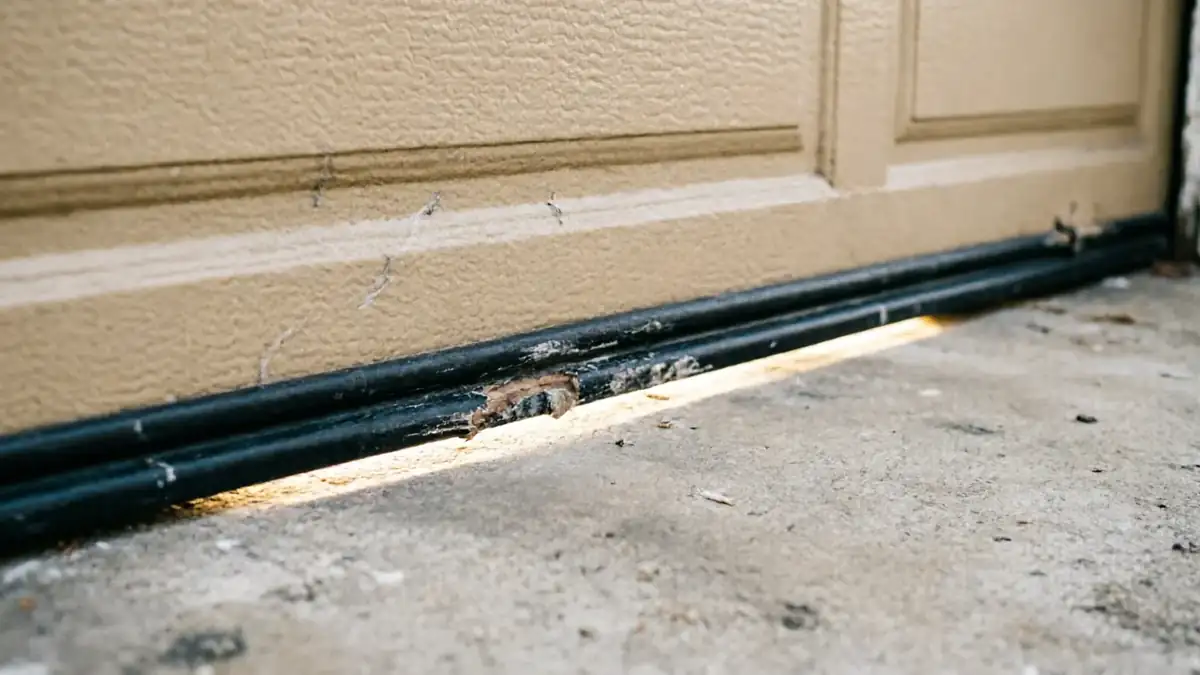
Doing Nothing For Now
If your bottom seal is cracked but the door still closes flat, you can usually wait a season. Most of the housing in this area went up between 1938 and 1986, with the bulk of it dating to the 1960s and 70s, which means the garage slab, the door frame, and the seal channel have all settled together for fifty-plus years. A seal that's been compressing the same way that long often still does its job even when it looks rough. What you shouldn't wait on is a seal that's pulled loose from the track entirely, or one where you can see daylight at the corners when the door is down. That gap lets cold air sit against the slab all winter, and in a severe cold climate that's a real heat loss, not a cosmetic one. If the draught is new and the door is newer than the house, check the installation before you assume the seal itself failed. Doing nothing is a reasonable call when the wear is even and slow. It's the wrong call when the gap is sudden, one-sided, or growing.
What to Check
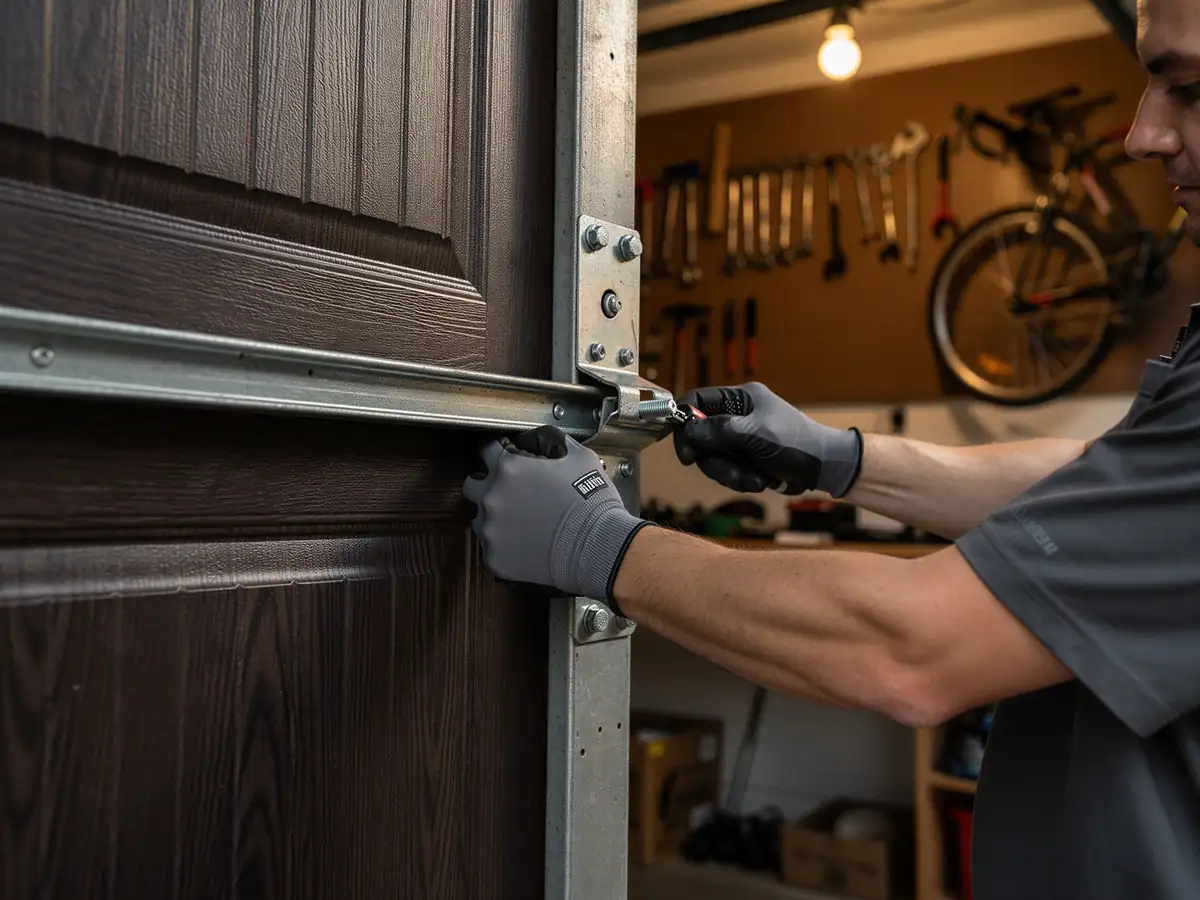
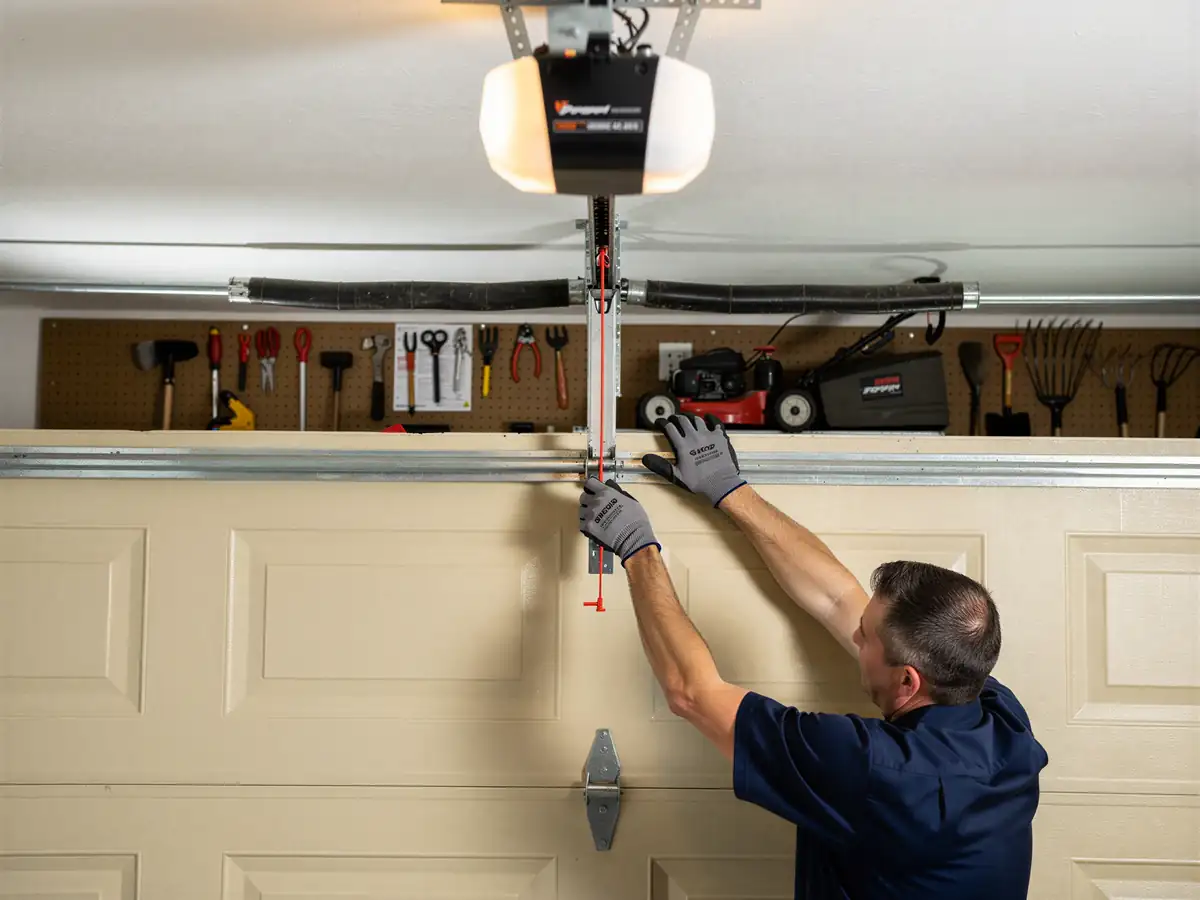
Start at the bottom seal, since that's the part doing the most work and taking the most abuse from the slab. Run a hand along the full width with the door down; any spot where you feel air moving is a spot where the vinyl has hardened or the channel has bent. Next check the side and top seals where the door meets the jamb - on houses from the 1971 median build year, these jambs have often shifted slightly out of square over the decades, so a seal that fit tight when installed may now gap on one side only. Look at the astragal (the seal between double doors, if you have one) for the same uneven wear. Check the bottom corners specifically, since that's where rodents and debris tend to work a seal loose first. Finally, look at the weatherstripping around the opener's wall button conduit and any gaps where the track bolts to the frame - small, but they add up. None of this takes tools beyond a flashlight and a flat hand. What it takes is doing it once a year before the cold sets in, not after the first hard freeze finds the gap for you.
What Local Conditions Do
Cold here isn't occasional - it's a severe cold climate rating, which means repeated freeze-thaw cycling against the slab all winter, not just a few cold weeks. That cycling is hard on vinyl seals specifically: they stiffen in the cold, lose flexibility, and stop closing the small gaps they were designed to close right when you need them most. In the neighborhoods around Bristol - garages built to the codes and tolerances of that era were never sealed to a modern standard, so the seal is doing more of the work than it would on a newer build. That's not a flaw in any one house; it's the baseline for housing this age in this climate. The practical result: seals here wear faster than the ten-year-fit-and-forget number printed on some packaging, and a seal that's three or four years old may already need a look if the door sees a north or west exposure. We don't stock every seal profile for every frame depth, so on an older or nonstandard jamb, measuring before you buy saves a second trip.