What Can Go Wrong
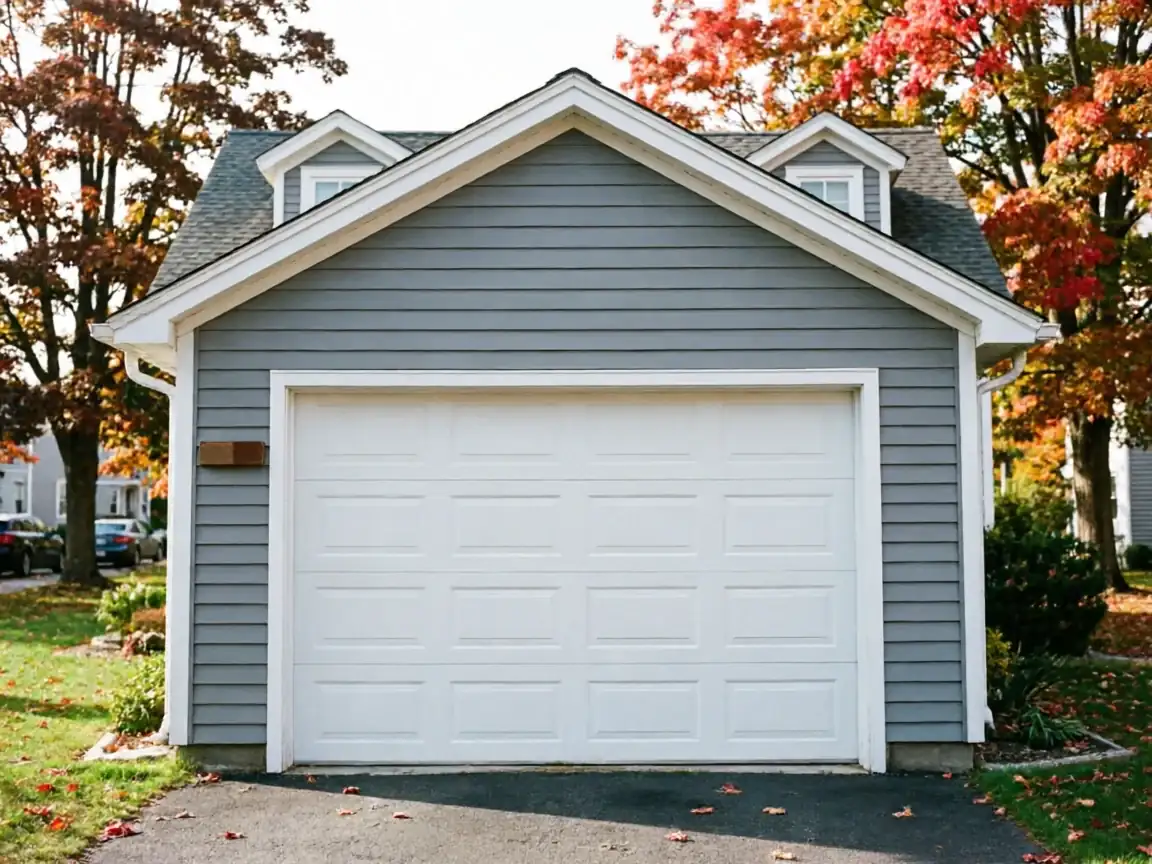
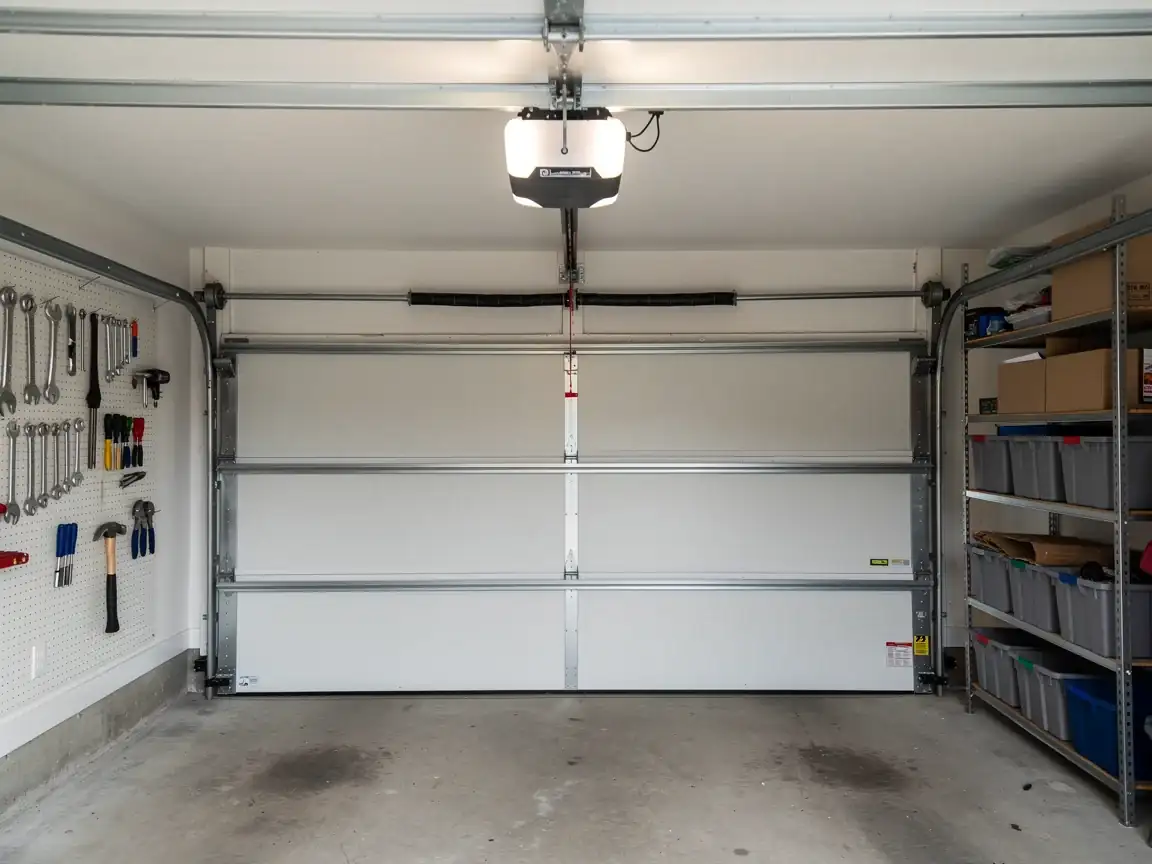
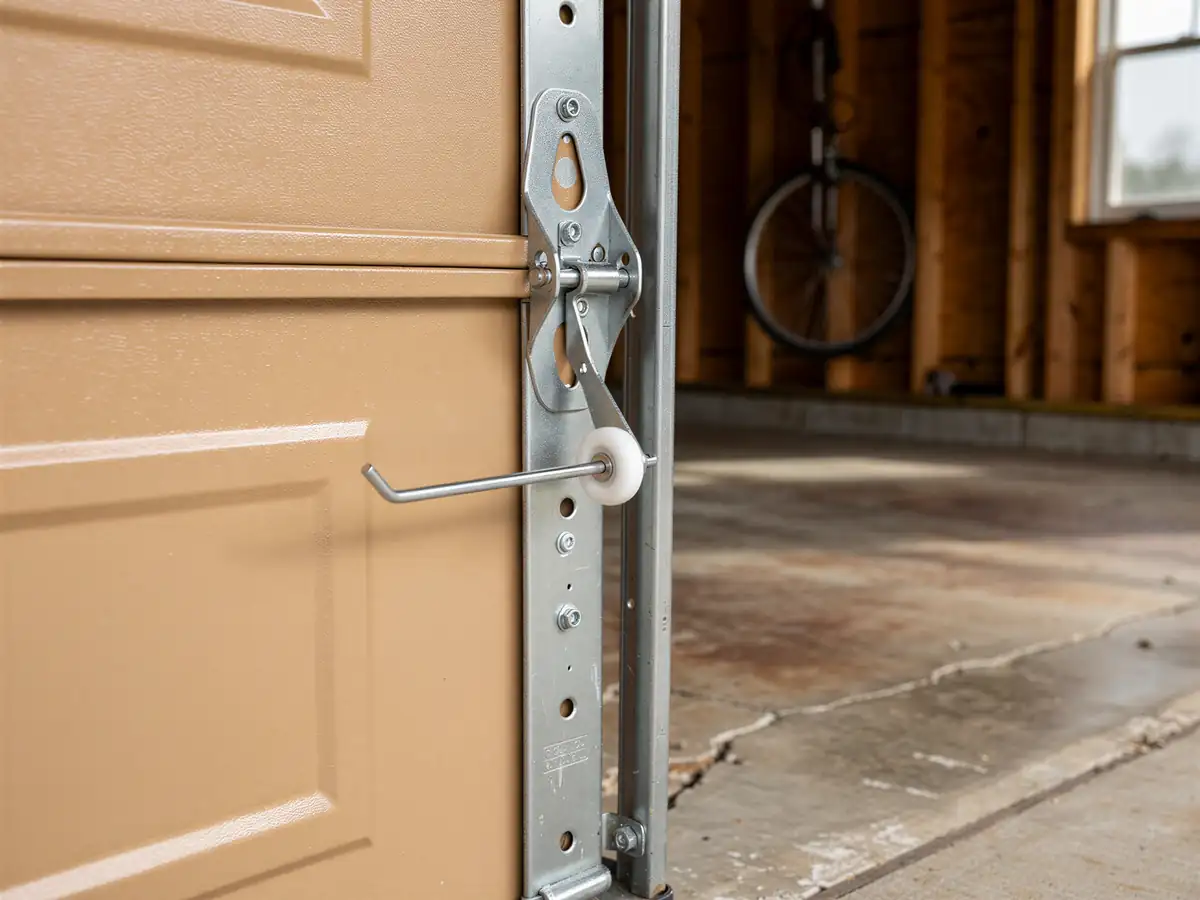
Wolcott's median house went up in 1973, and a lot of what's bolted to those garages has never been touched. One-piece doors on side-mounted torsion springs were standard build in that era, and the track geometry, the jamb brackets, the lift cables - all of it is sized for a door panel that doesn't match anything sold today. When one of those doors finally gives out, you're not swapping a panel. You're usually pulling the whole assembly, because the replacement sectional door uses a different track run, different headroom, and different spring placement than what's in the opening now.
The other failure mode is simpler: the door still closes, but the bottom panel has rotted or rusted through from fifty winters of road salt and snowmelt sitting against it, and the insulation value (if there ever was any) is long gone. Either way, the decision isn't really about fixing - it's about whether the opening itself still makes sense for a modern door, which on a lot of these 1970s-built garages, it does with some bracket work.
The Symptom
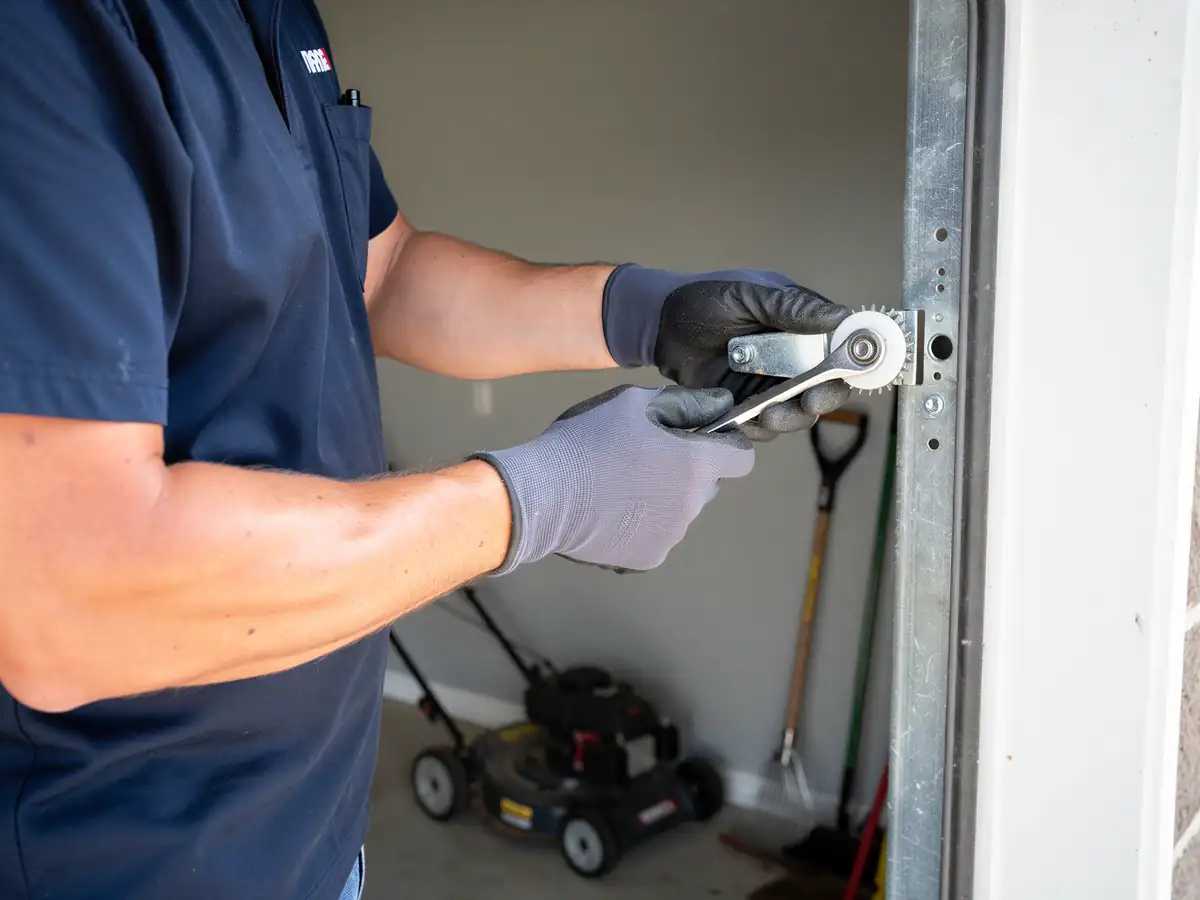
The giveaway in houses from this build year is usually the sound before the look. The original hardware runs rollers in steel tracks with no nylon, so a door that's starting to bind sounds like metal dragging on metal, not a clean roll. You'll also see daylight at the bottom corners where the old weatherstrip has hardened and cracked - it was never designed to flex through winters this cold for five decades straight.
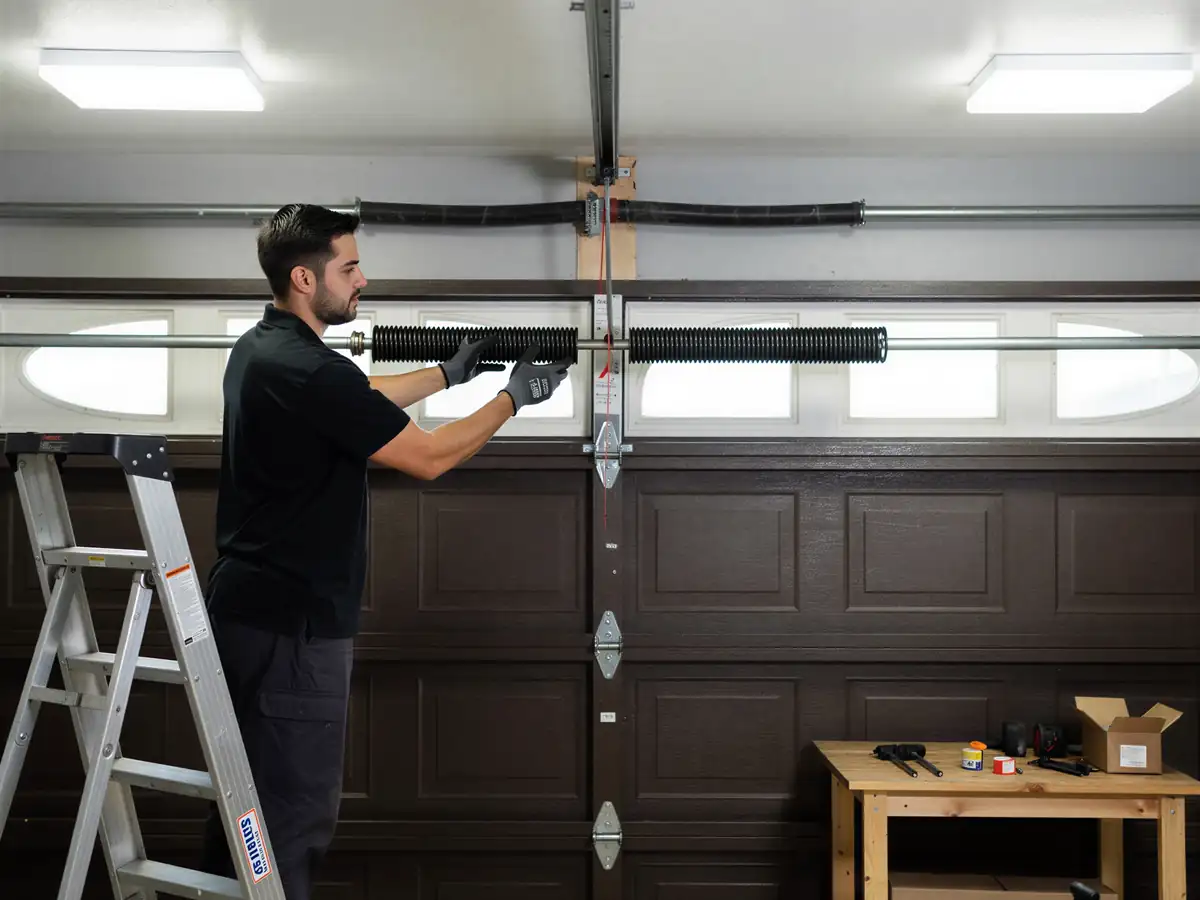
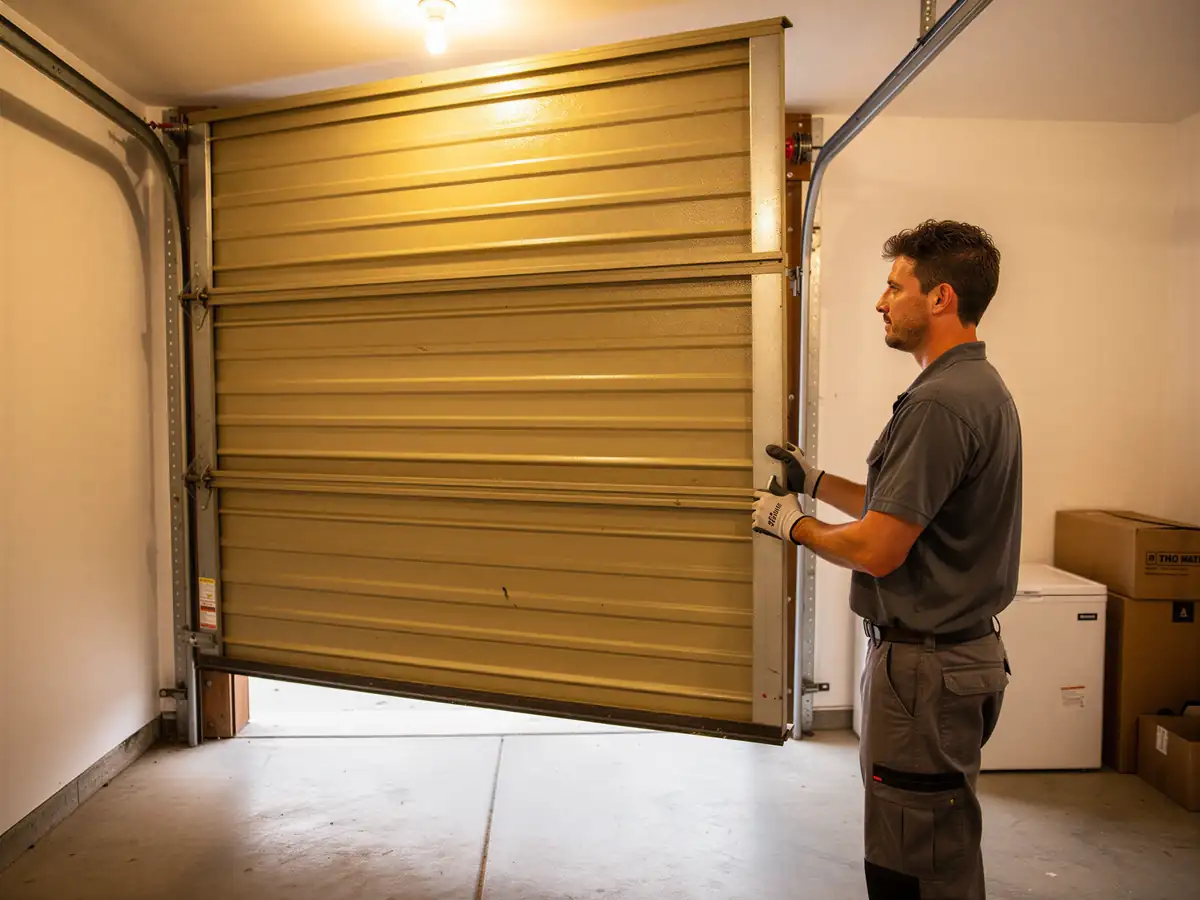
A lot of owners also notice the door is just heavy to lift by hand when the opener is disconnected. That's the torsion spring losing tension after years of cycling in a severe-cold climate, where the steel contracts harder and wears the coil faster than it would somewhere milder. None of that is dangerous by itself, but it tells you the door is at the end of its service life, not just due for an adjustment.
How We Fix It
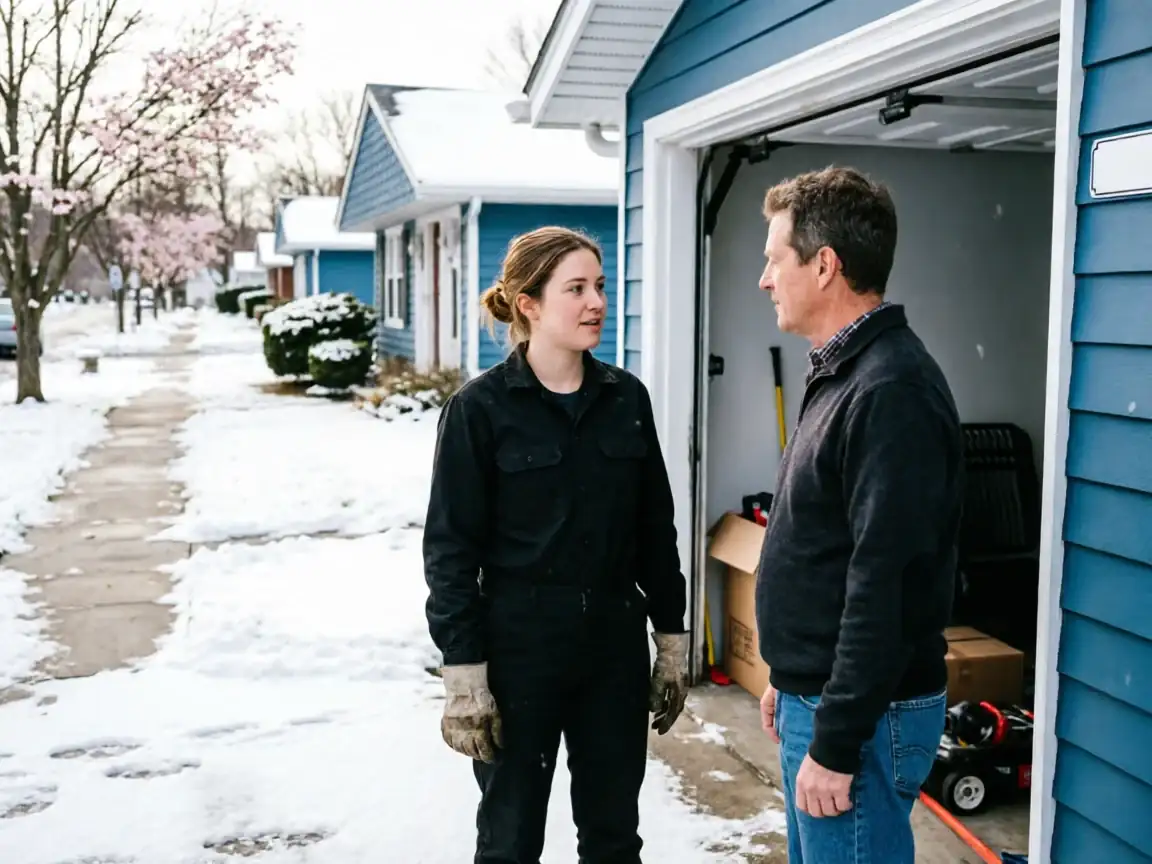
We come out from Bristol, about 6 miles in, measure the actual opening
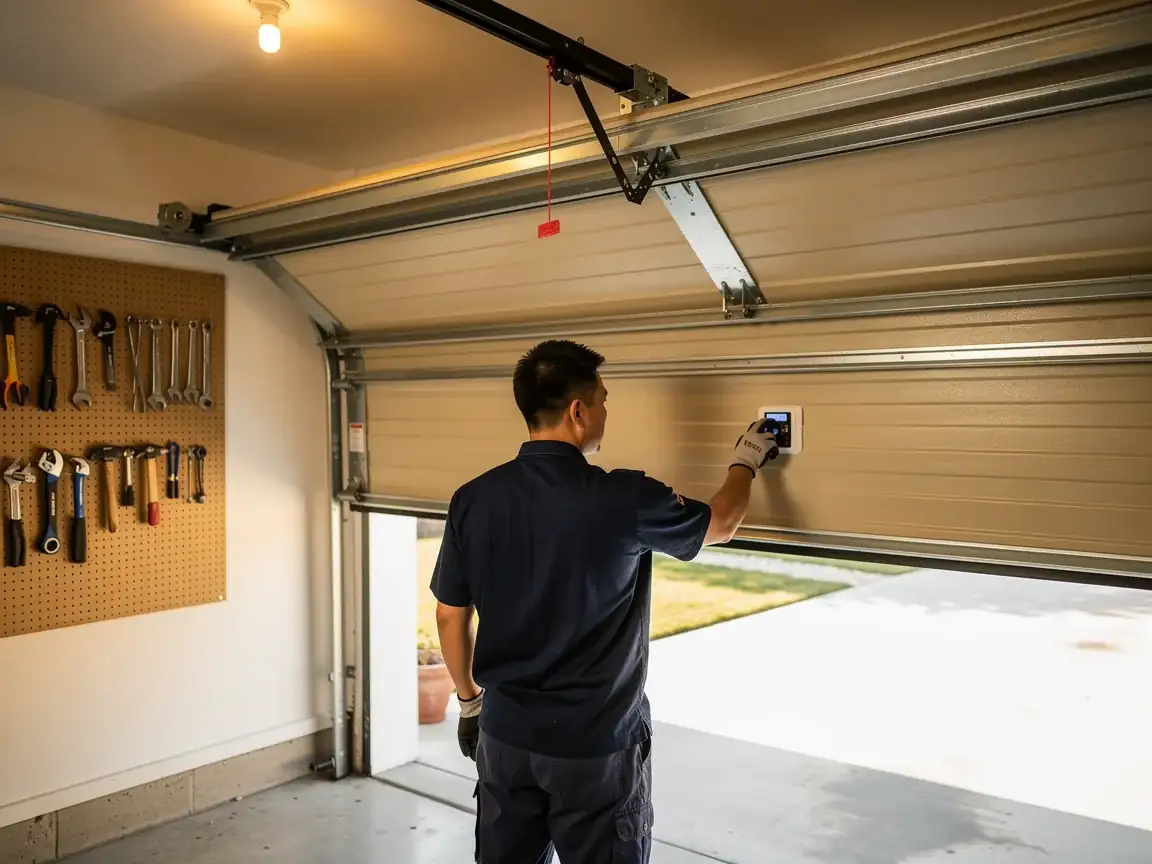
Not the door that's in it now - and spec hardware for current code and current climate load, not 1973 load. On most of these jobs that means replacing the track run and spring system along with the panel, since the old mounting points don't line up with new sectional door standards.
- 6 miles
We size the install around what's actually there
Headroom, jamb condition, and whether the opener (if it's been replaced since) is worth keeping or needs to go with the door. We don't push a full teardown on openings where the existing frame and headroom are sound - plenty of garages here only need the door and spring system replaced, with the jamb brackets reused.
One limit worth saying plainly
Custom widths or specific color matches on doors can run into longer lead times than a stock sectional door, and we won't promise a date before the order's confirmed with the supplier.
Doing It Yourself
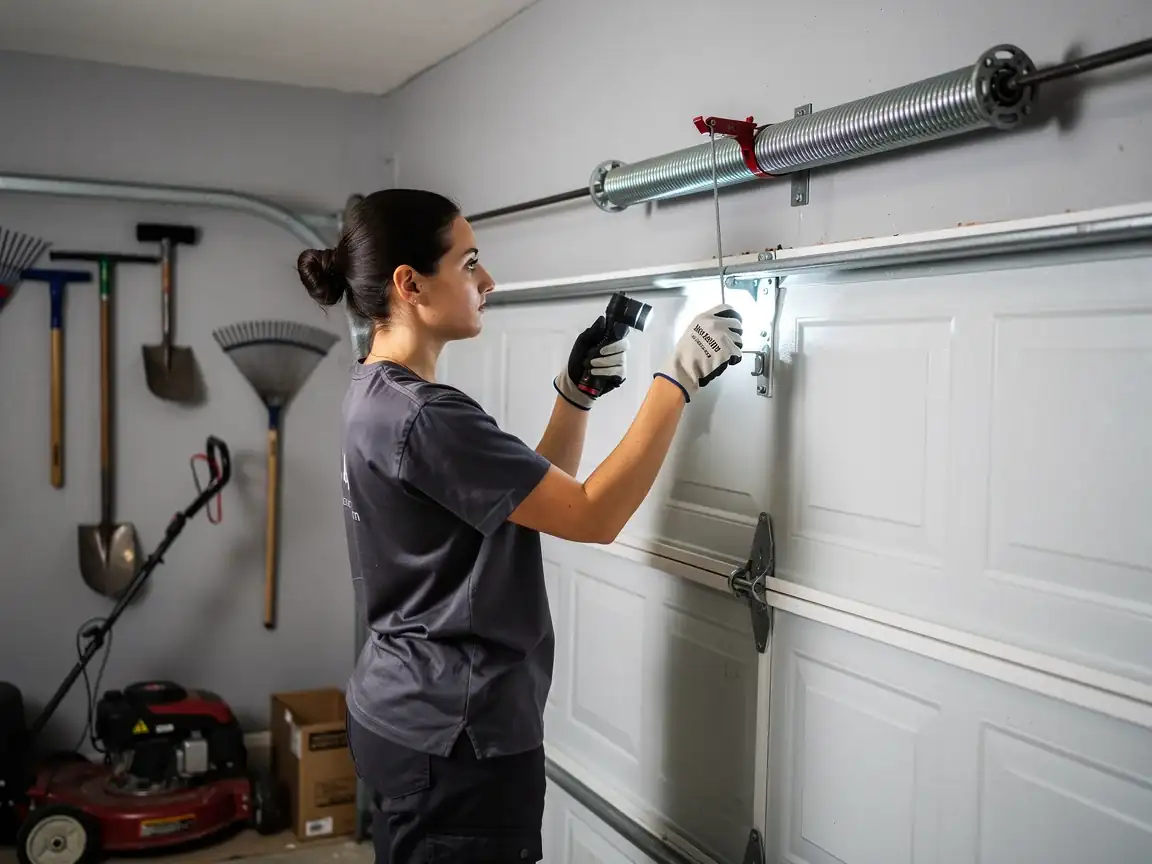
A full door swap on 1970s-era hardware isn't a reasonable solo weekend project, and we'd say that about any build year. The torsion spring on a double door built to that era's spec holds enough stored force to break a jaw or worse if it lets go while you're working on it, and the side-mounted systems common in Wolcott's housing stock don't have the modern safety cable that newer torsion setups use.
What you can reasonably check yourself: whether the bottom weatherstrip is cracked, whether the panel has visible rust-through, and whether the door is noticeably harder to lift by hand than it used to be. Those are good data points to have ready when you call, because they tell us a lot about which parts of the original 1973-era assembly are still doing their job and which ones aren't.