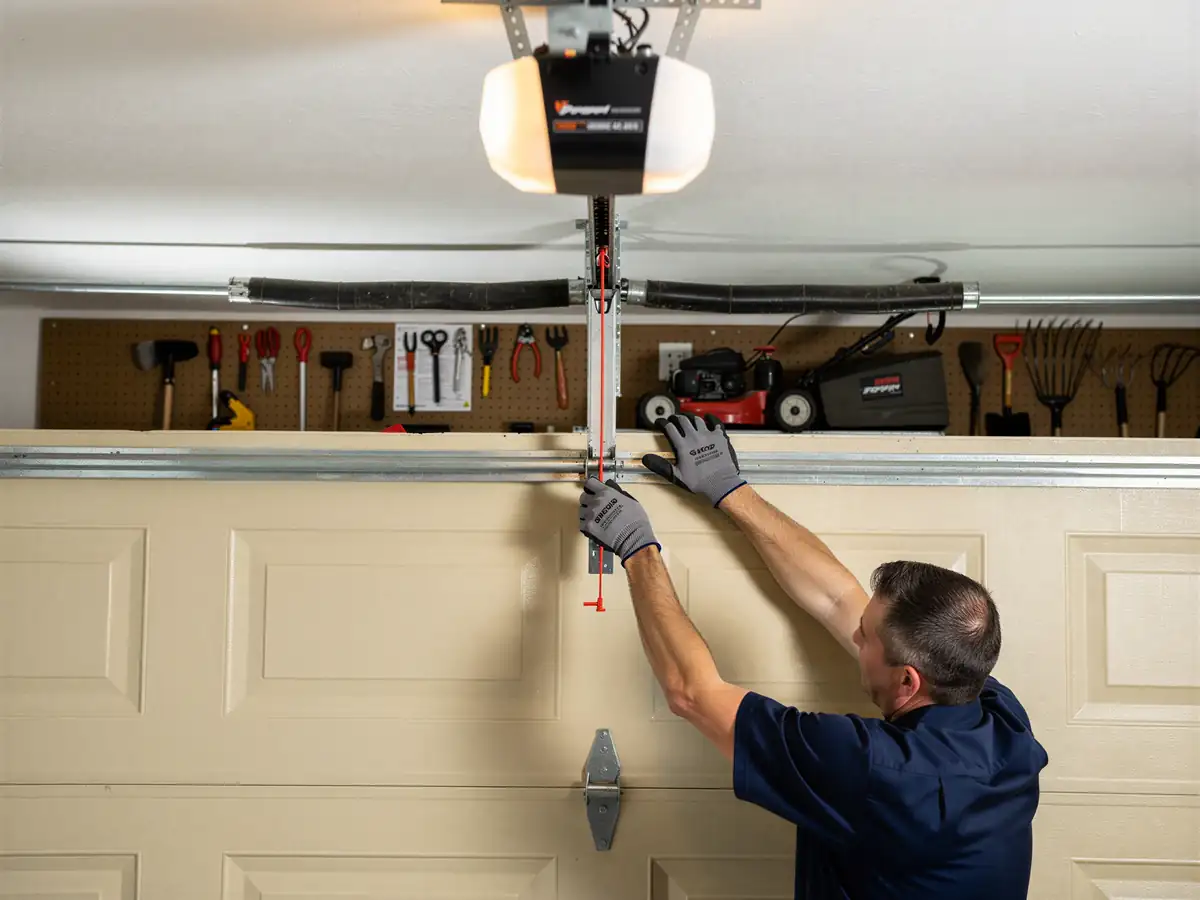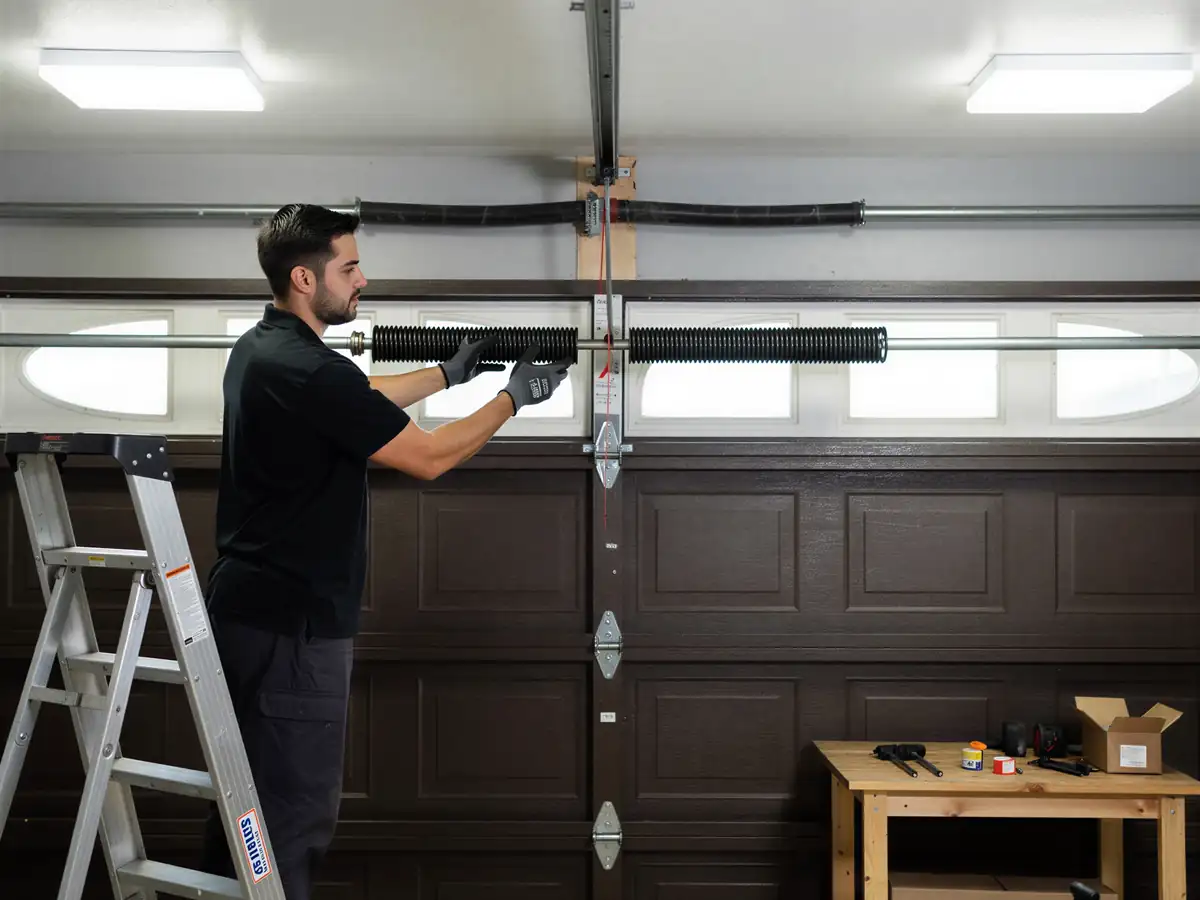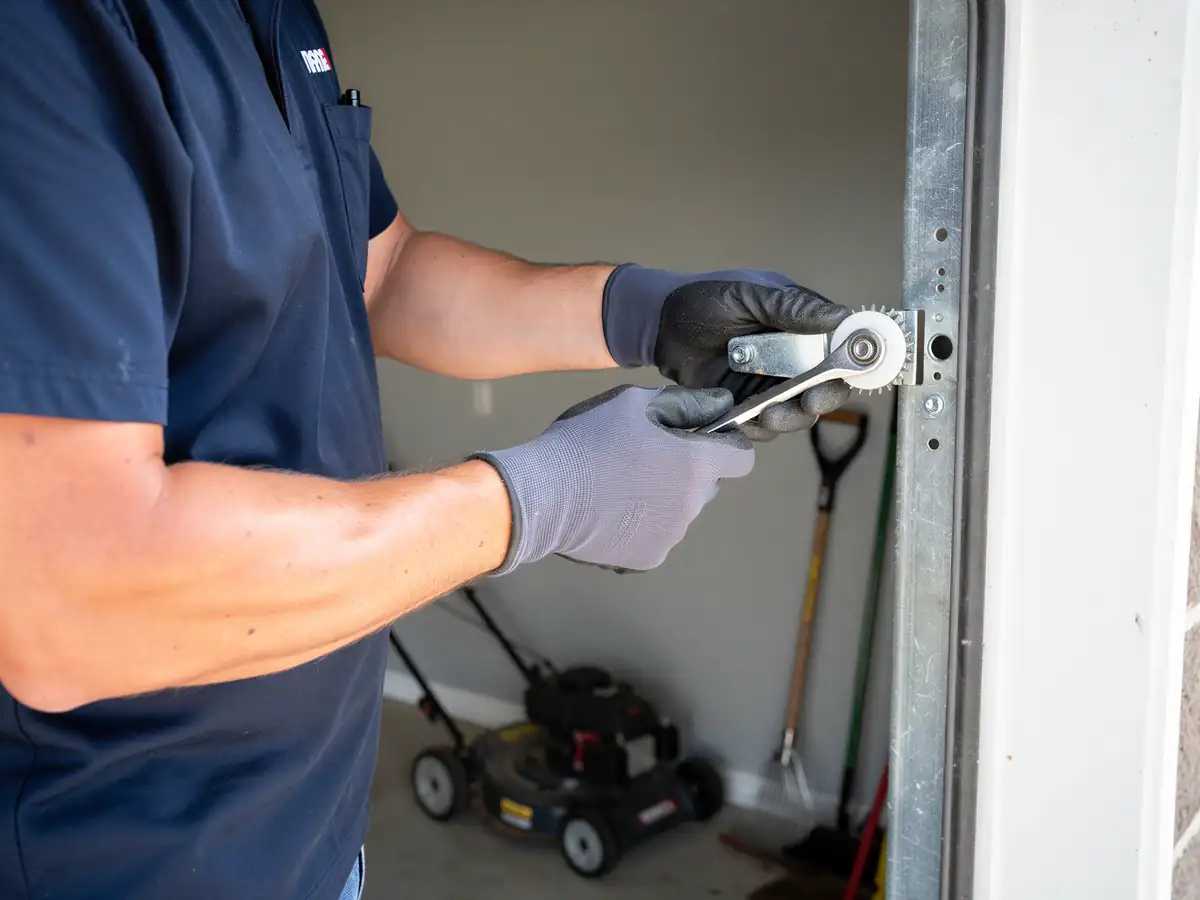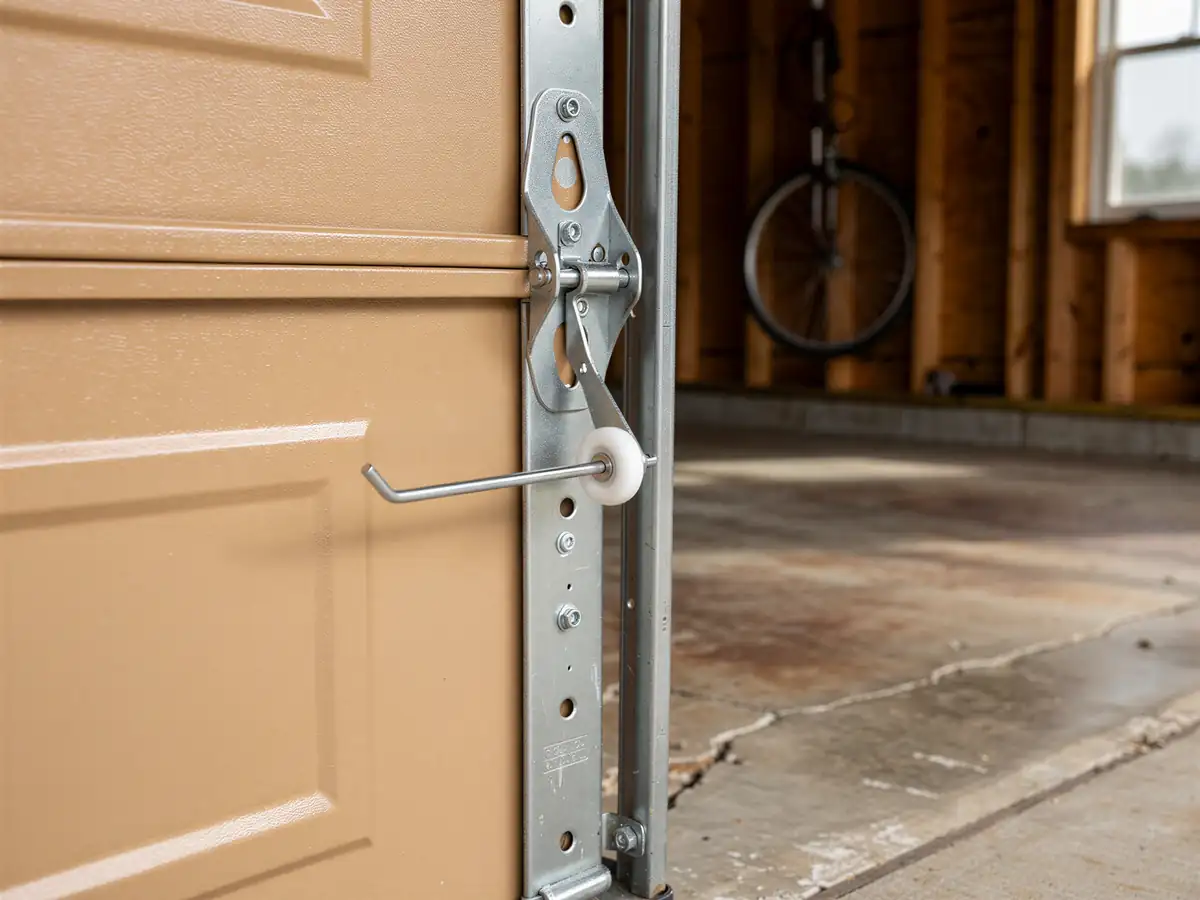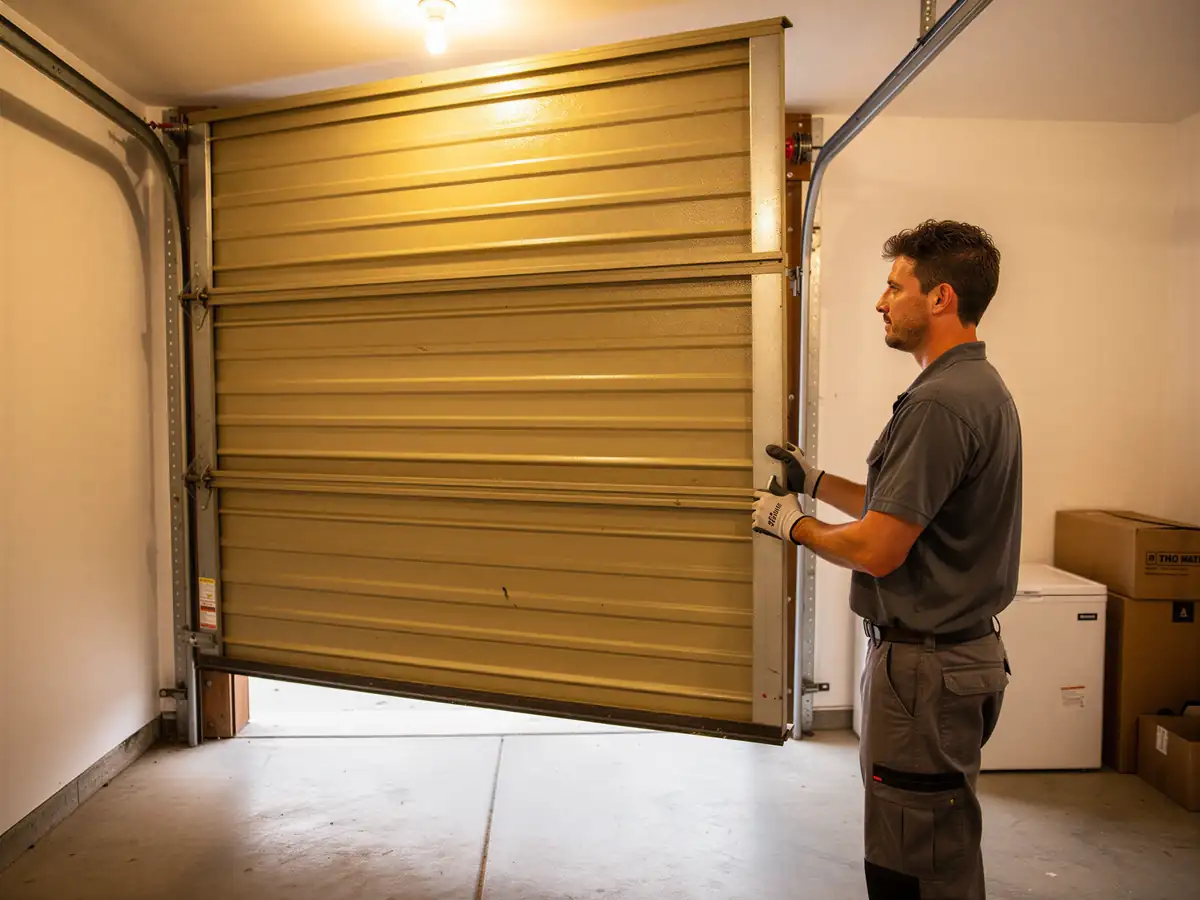
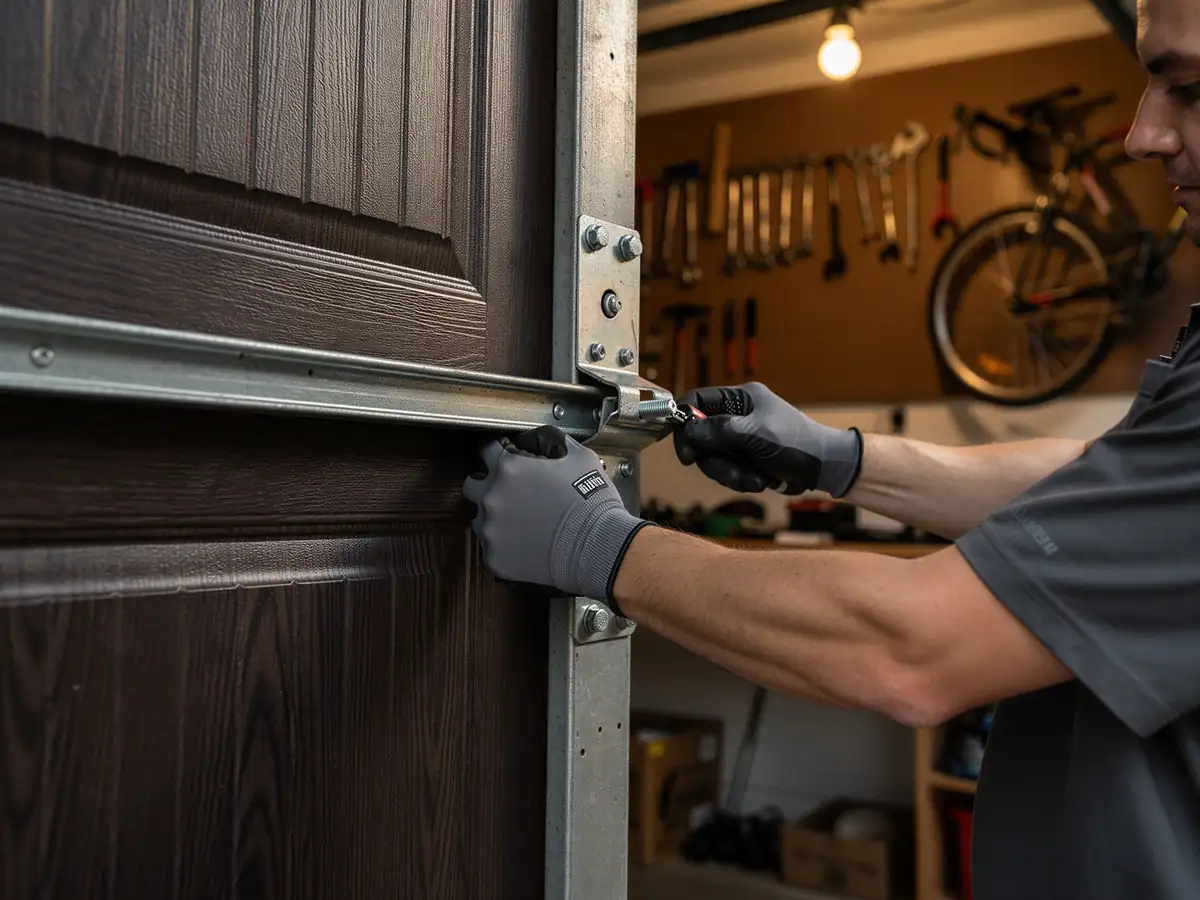
What Can Go Wrong
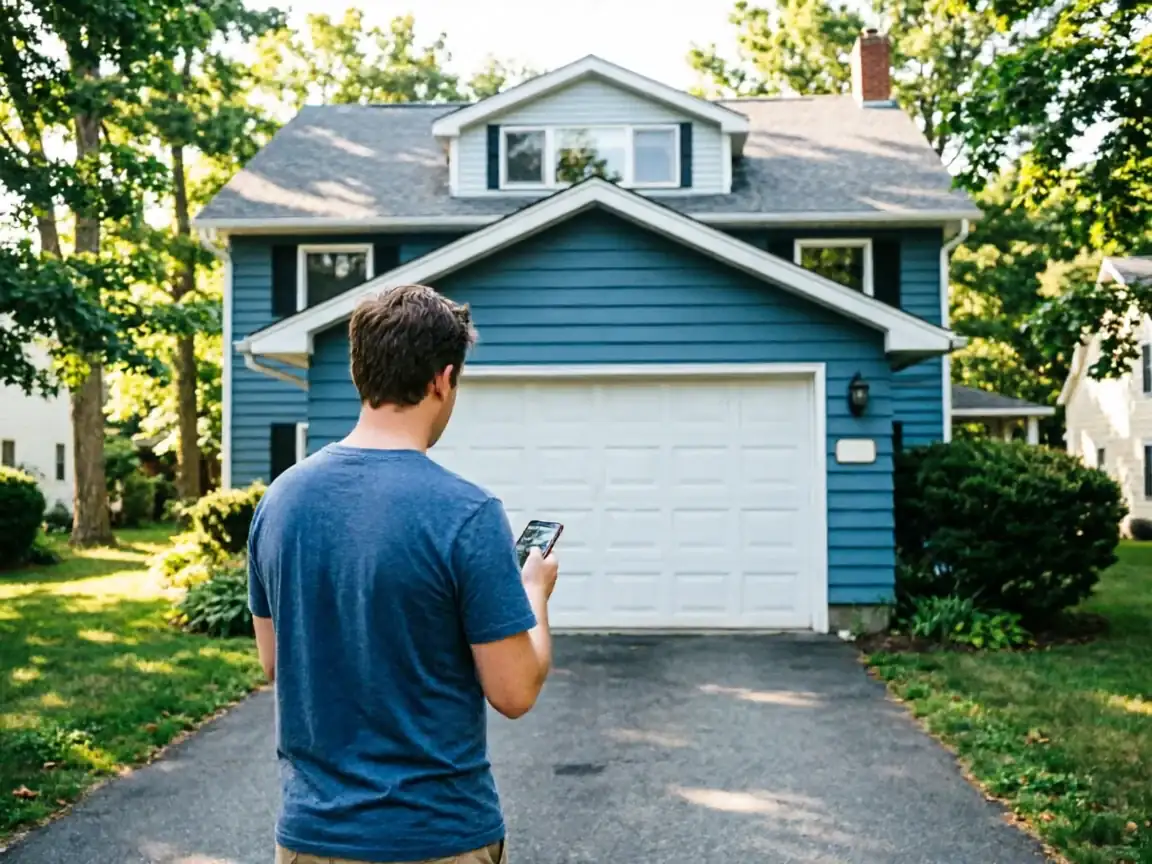
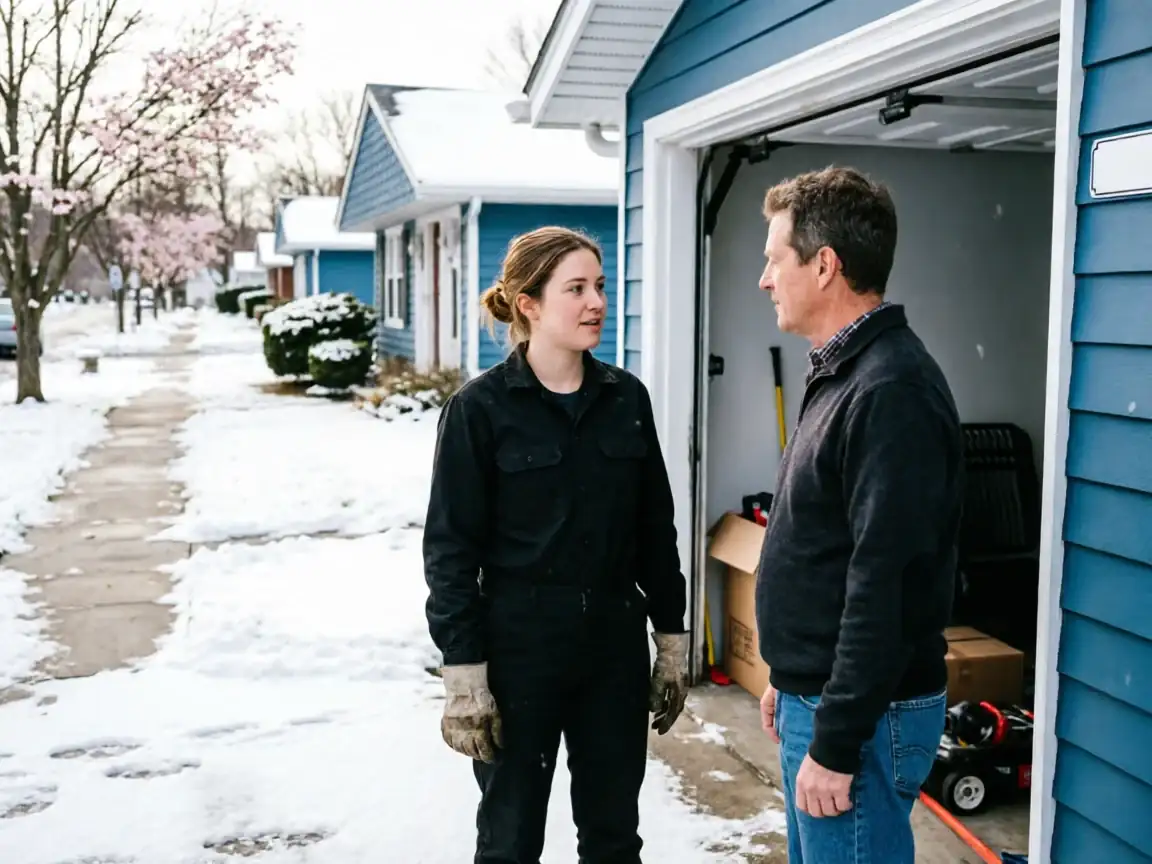
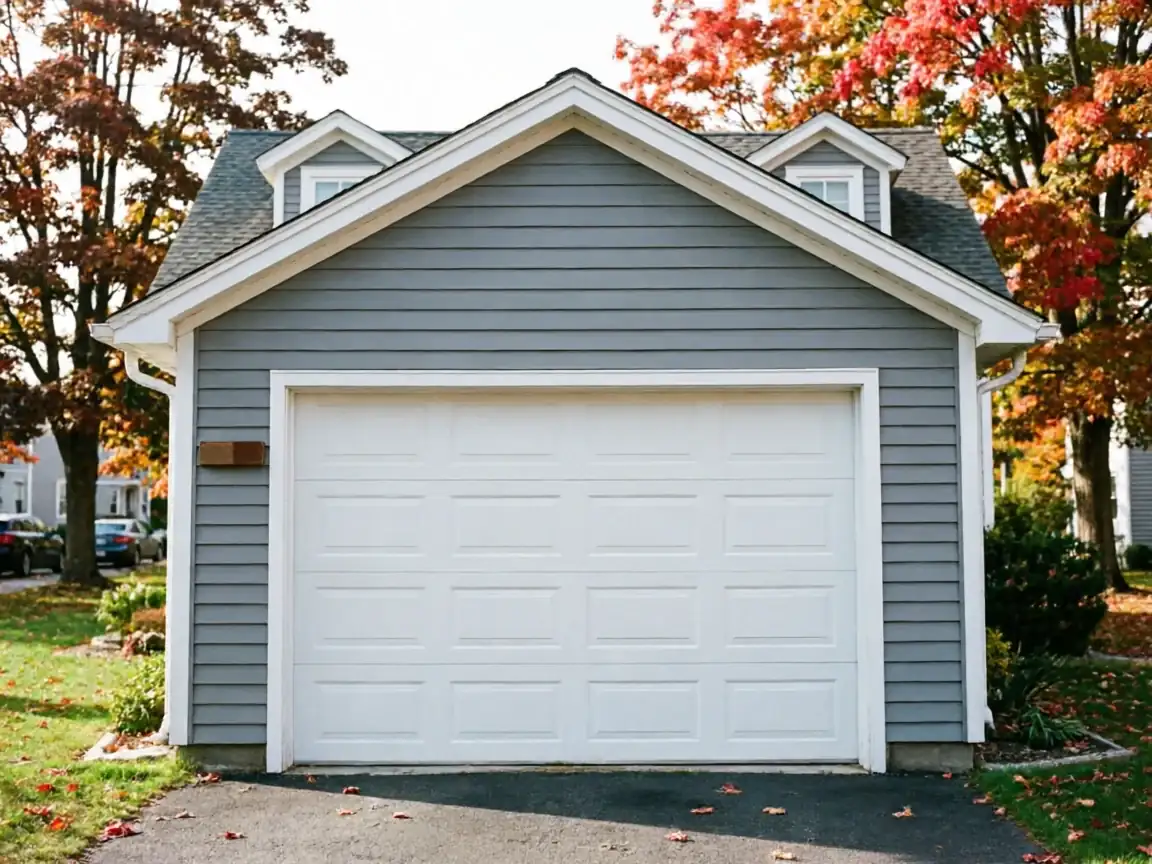
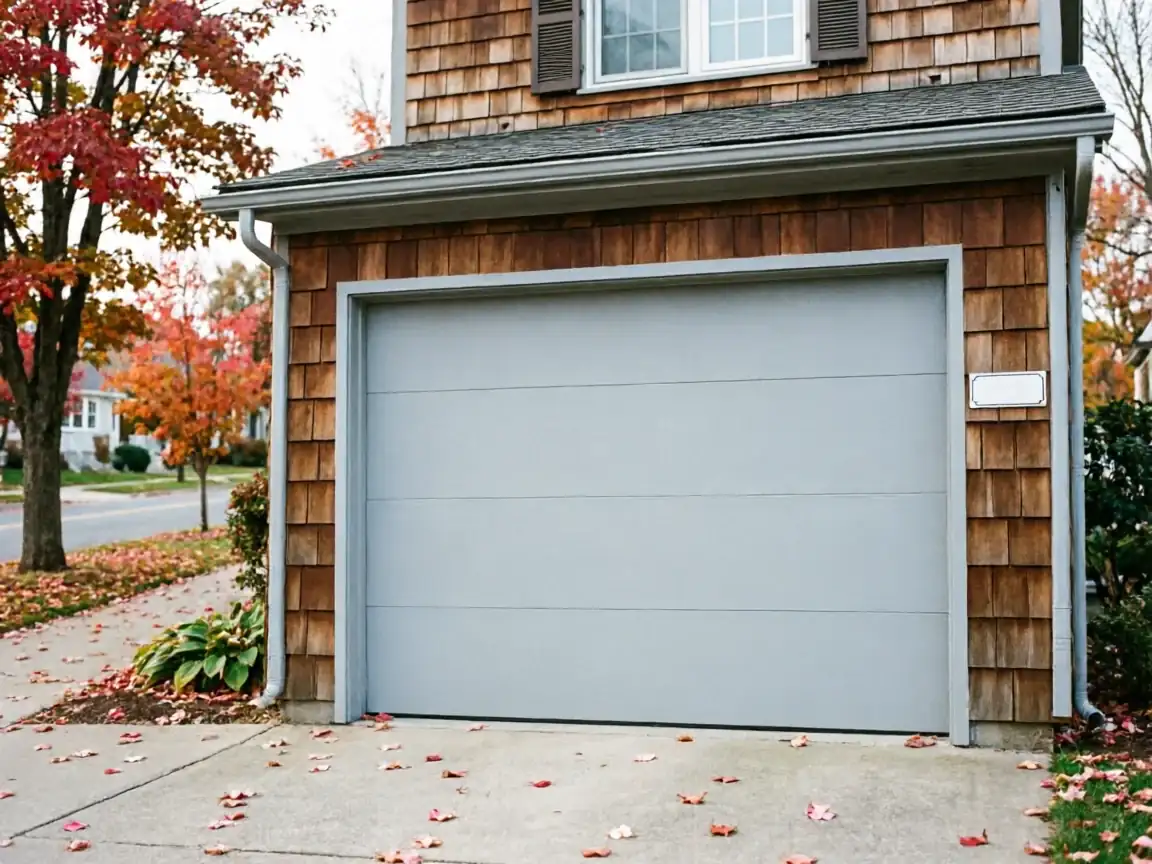
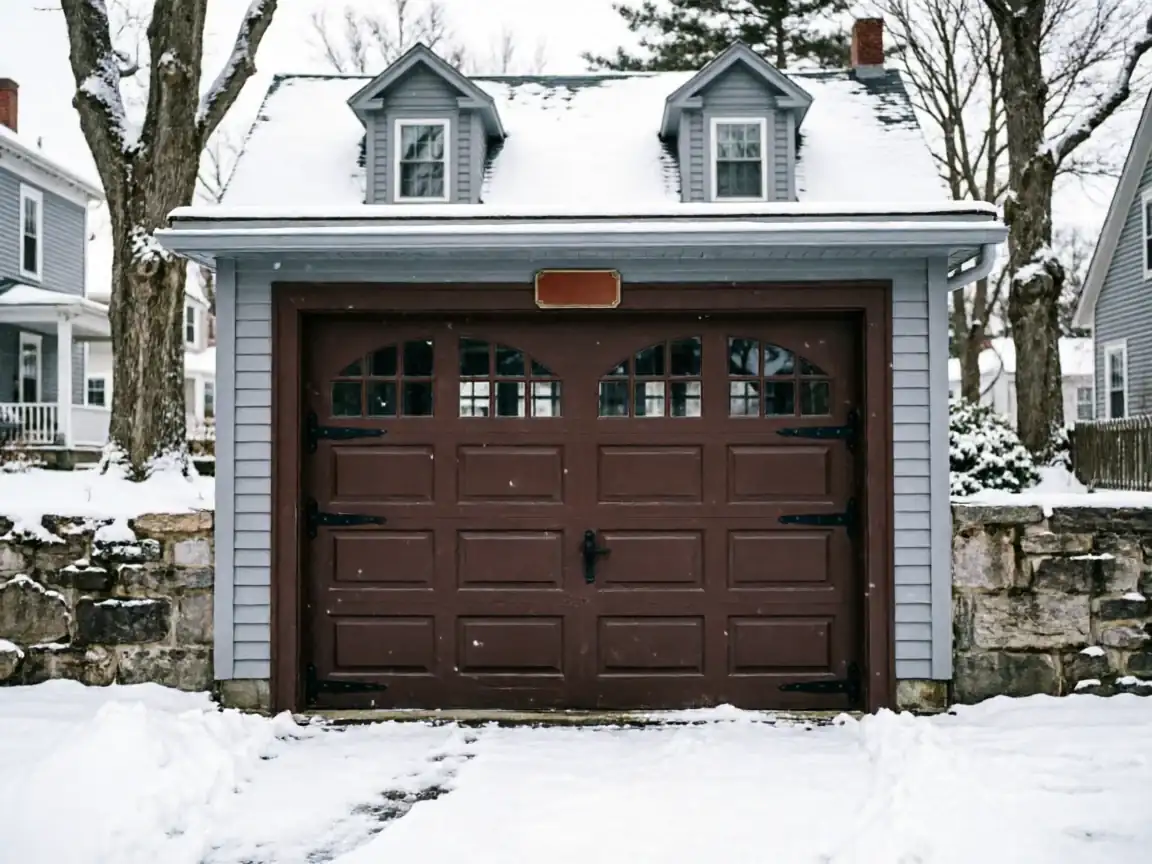
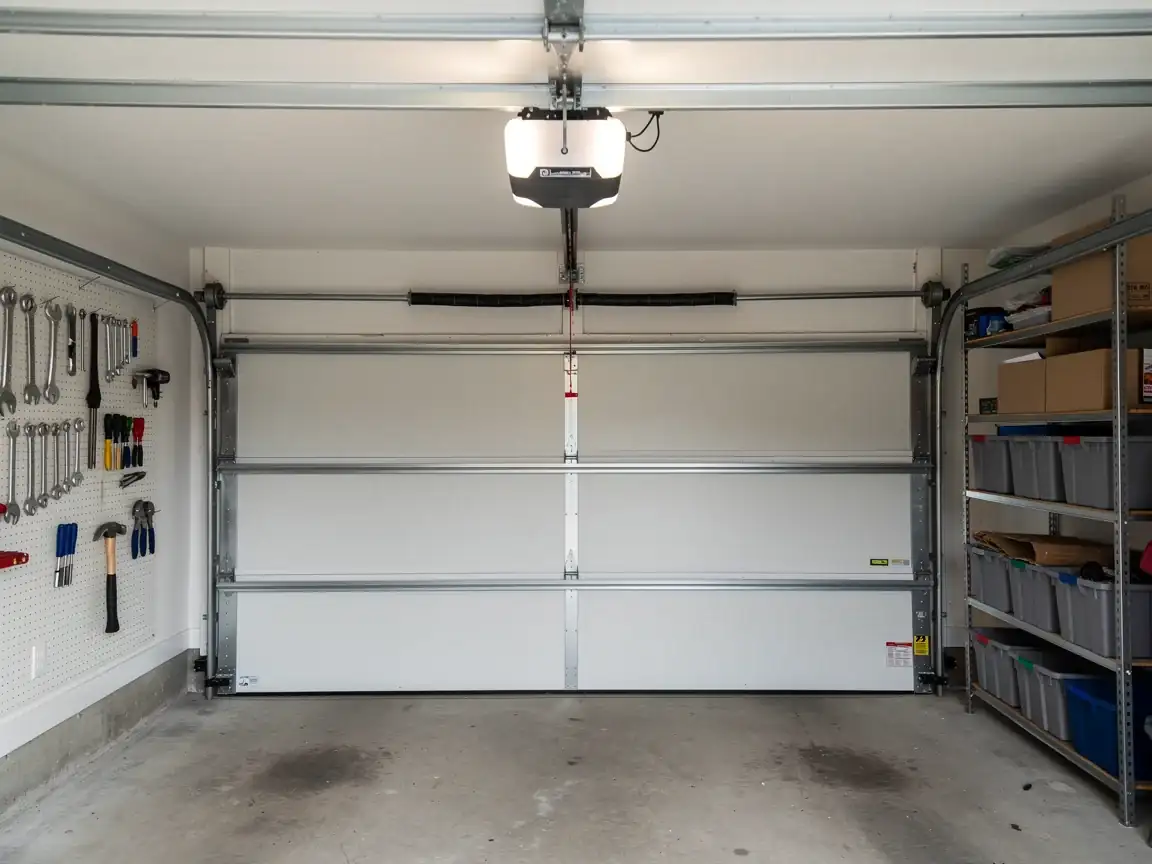
Wolcott's housing stock centers on 1973, right in the middle of the broader 1938-1986 build window we see across this service area. That puts most garage doors here a notch newer than some of the older pockets we cover, but it still means original torsion springs, steel panel doors from the 1970s, and openers that have been swapped out once or twice since the house was built. A door built around 1973 wasn't speced for the openers and safety sensors that came later, so brackets get drilled wherever they fit, not where they should. We also see rollers worn down to the stem and cables fraying at the drum from decades of use, especially on doors that have never had a spring replaced. The cold here does its own damage - a steel panel door that sits unopened through a hard freeze can crack a bottom seal or bind a track that's gathered ice at the base.
The Symptom
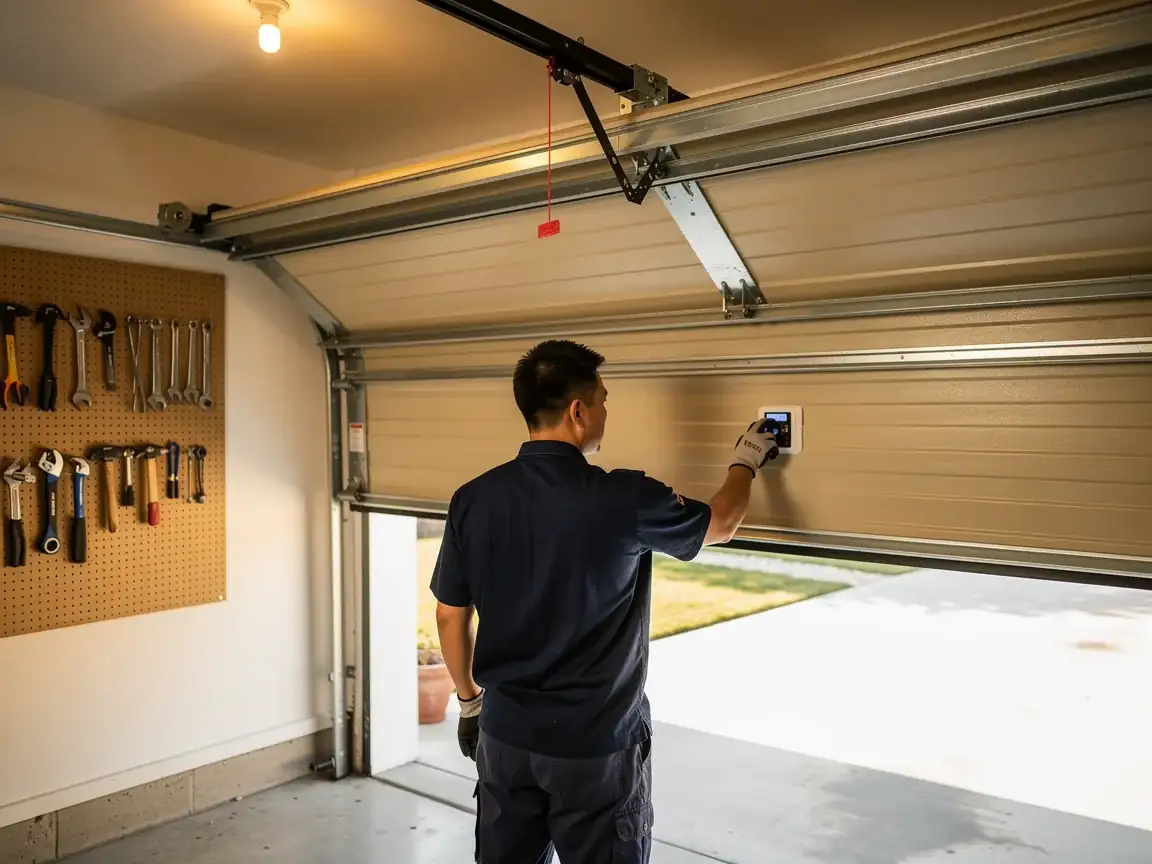
The most common call from this side of our coverage area is a door that gets partway up and reverses, or one that won't budge at all when the opener clicks but the door doesn't move. On a house from the early '70s, that's almost always a spring that's lost its tension - the door is too heavy for the opener to lift alone once the spring can't carry its share. You might also hear a loud bang from the garage, which is usually the spring letting go rather than something falling. Noisy, grinding travel along the track points to rollers that have outlived their lifespan, which is common once a door has been in daily use for fifty years.
Doing It Yourself
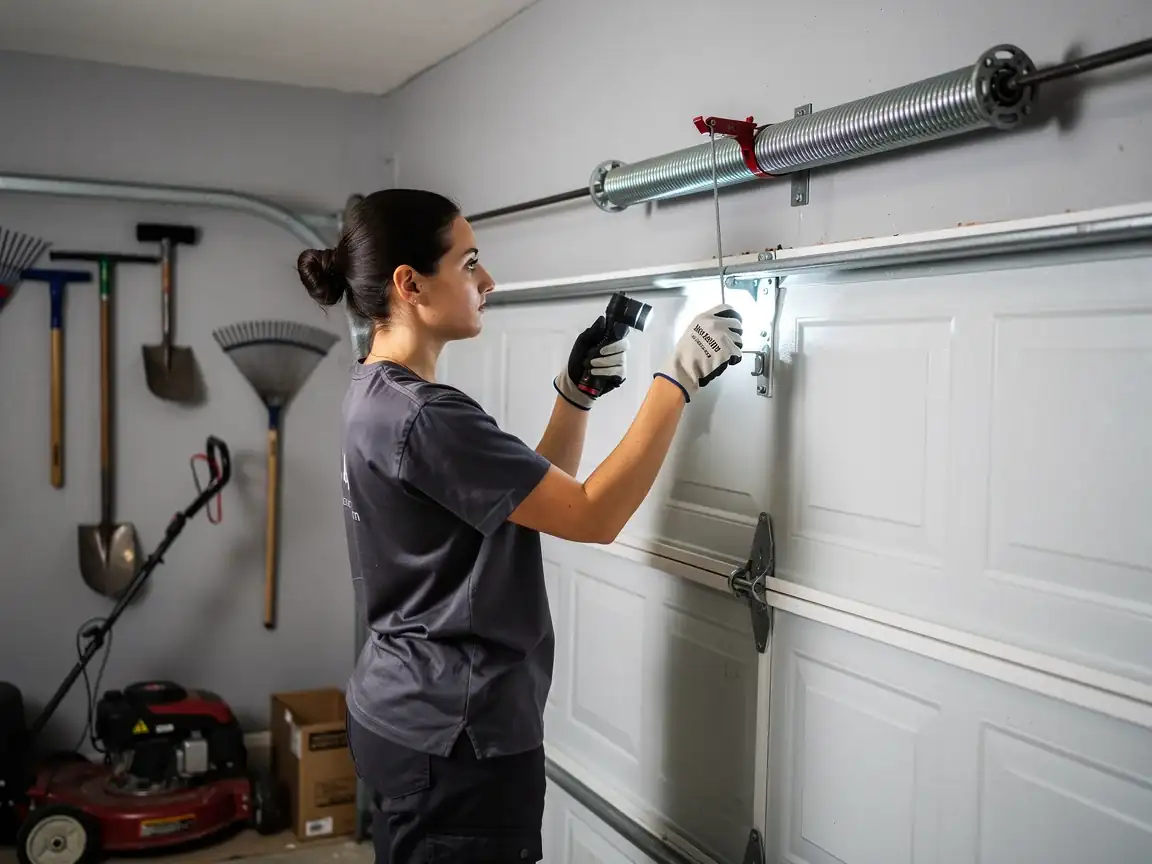
A torsion spring is not a safe DIY project - the tension stored in one is enough to cause serious injury, and that's true whether the door is five years old or fifty. What you can check yourself: look at the cables for fraying near the bottom bracket, listen for grinding when the door travels, and test the auto-reverse safety feature by placing a piece of wood in the door's path. If the door reverses before touching the wood, that's working correctly. If it doesn't, stop using the opener and call someone. We'll be honest if a repair isn't worth it - on a door old enough that parts are hard to source, replacement sometimes costs less in the long run than patching a hardware setup that was never built for today's openers.