What Can Go Wrong
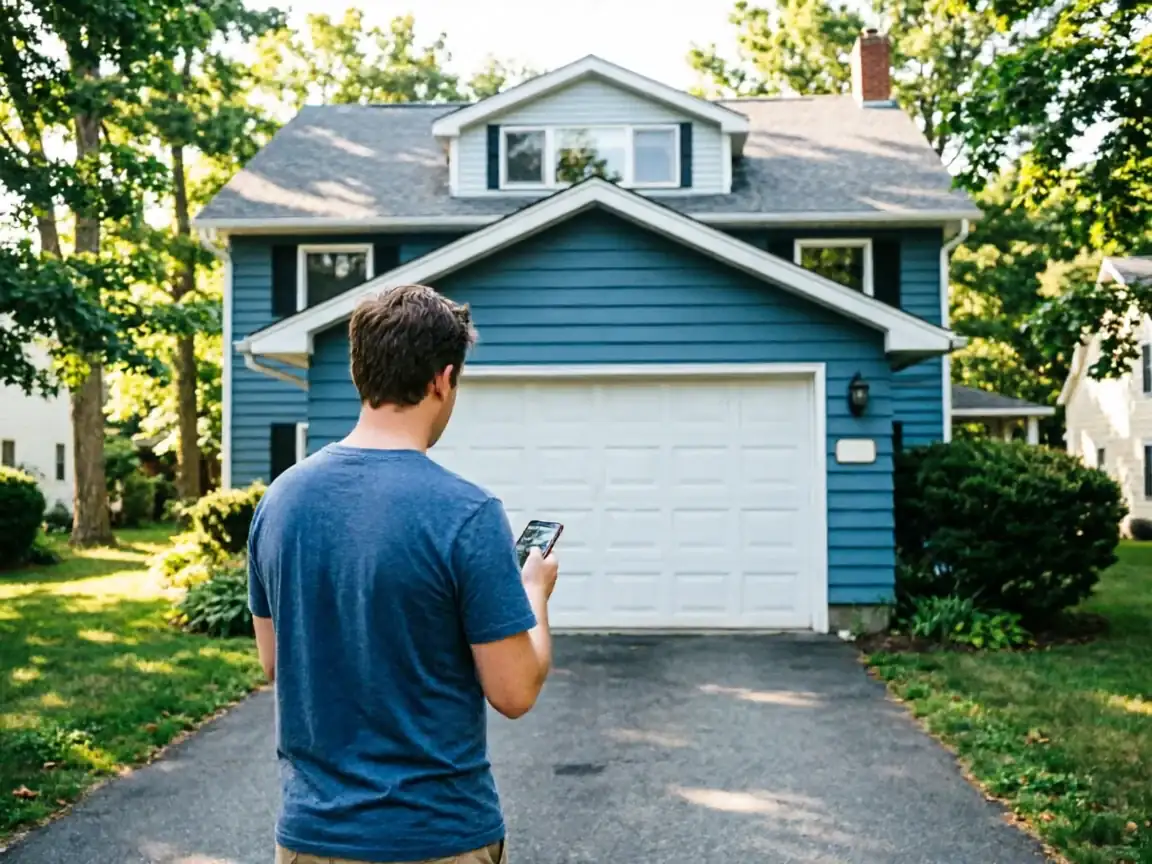
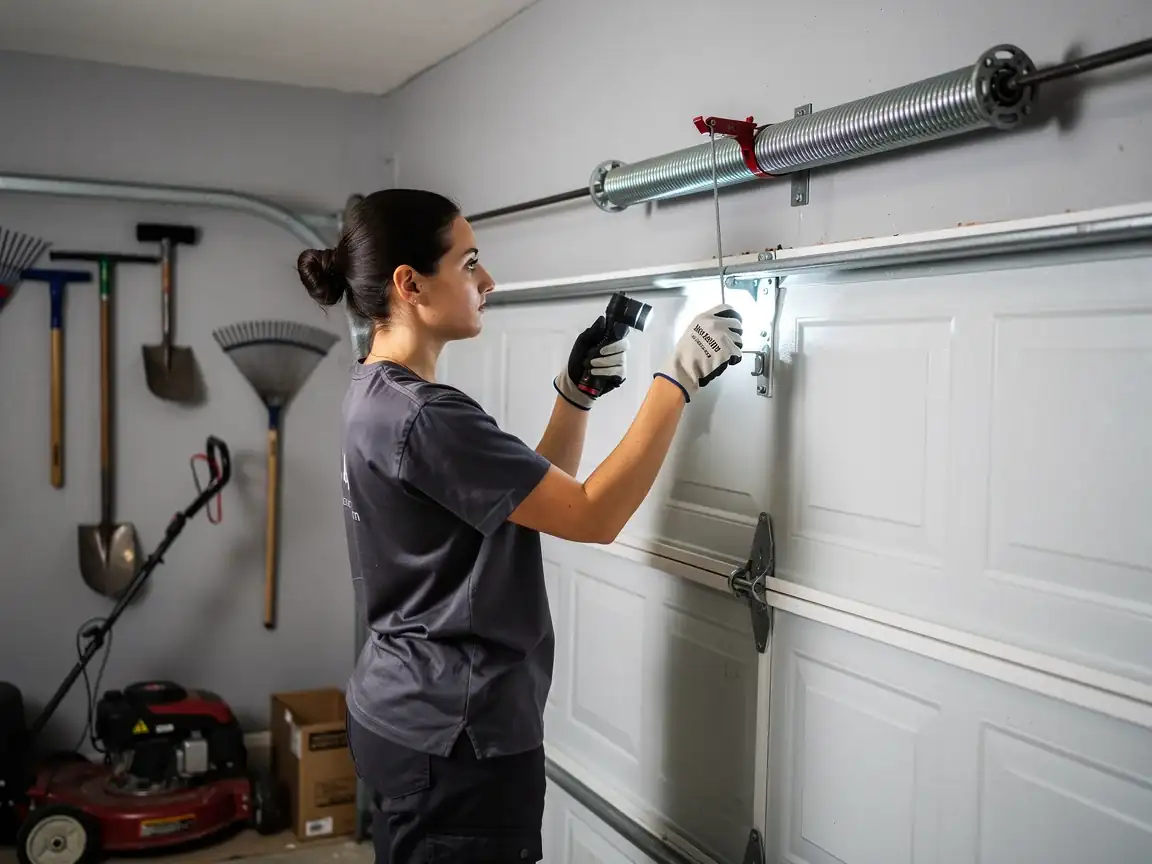
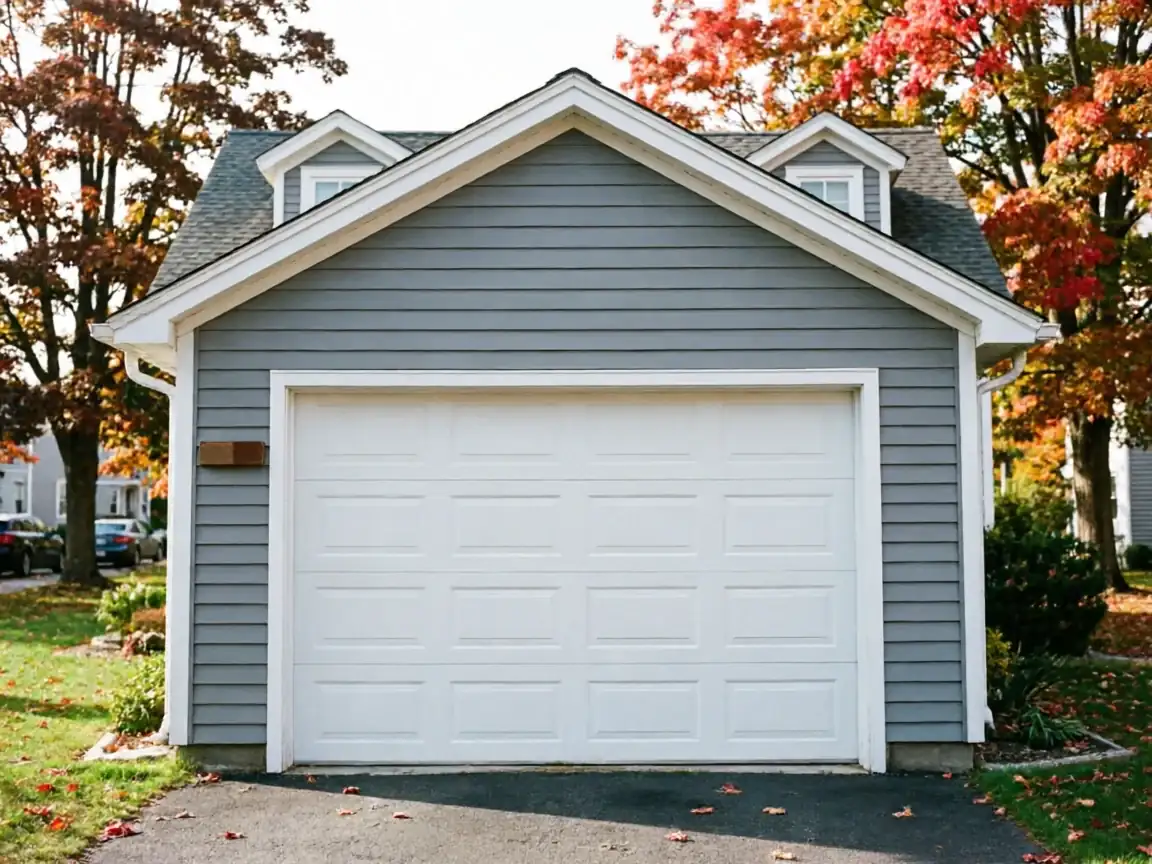
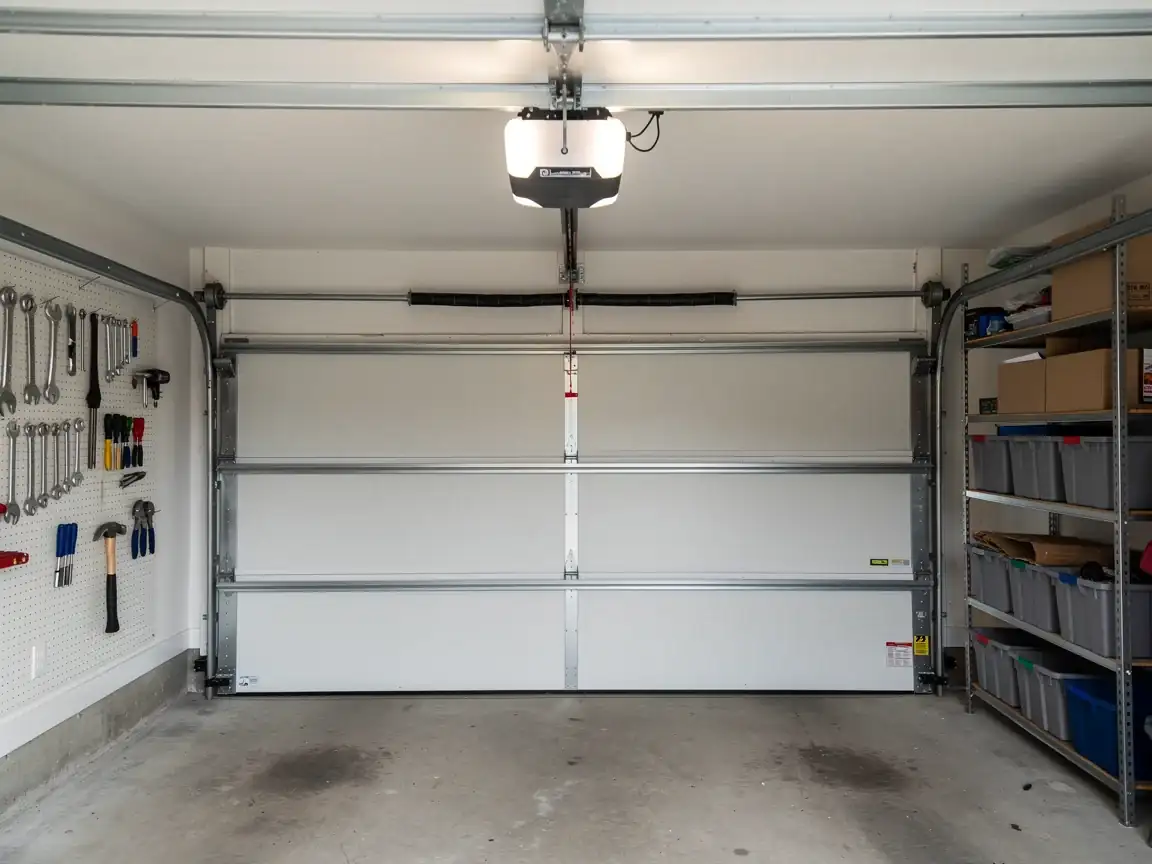
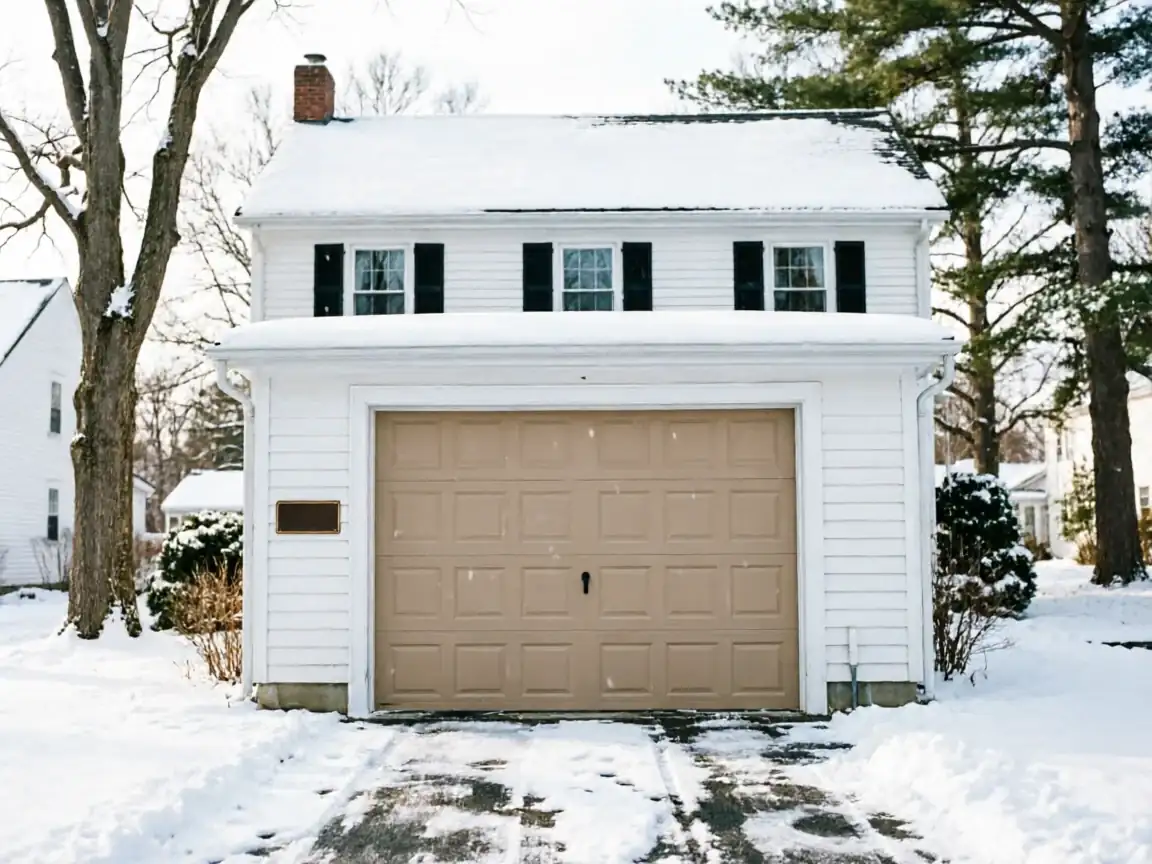
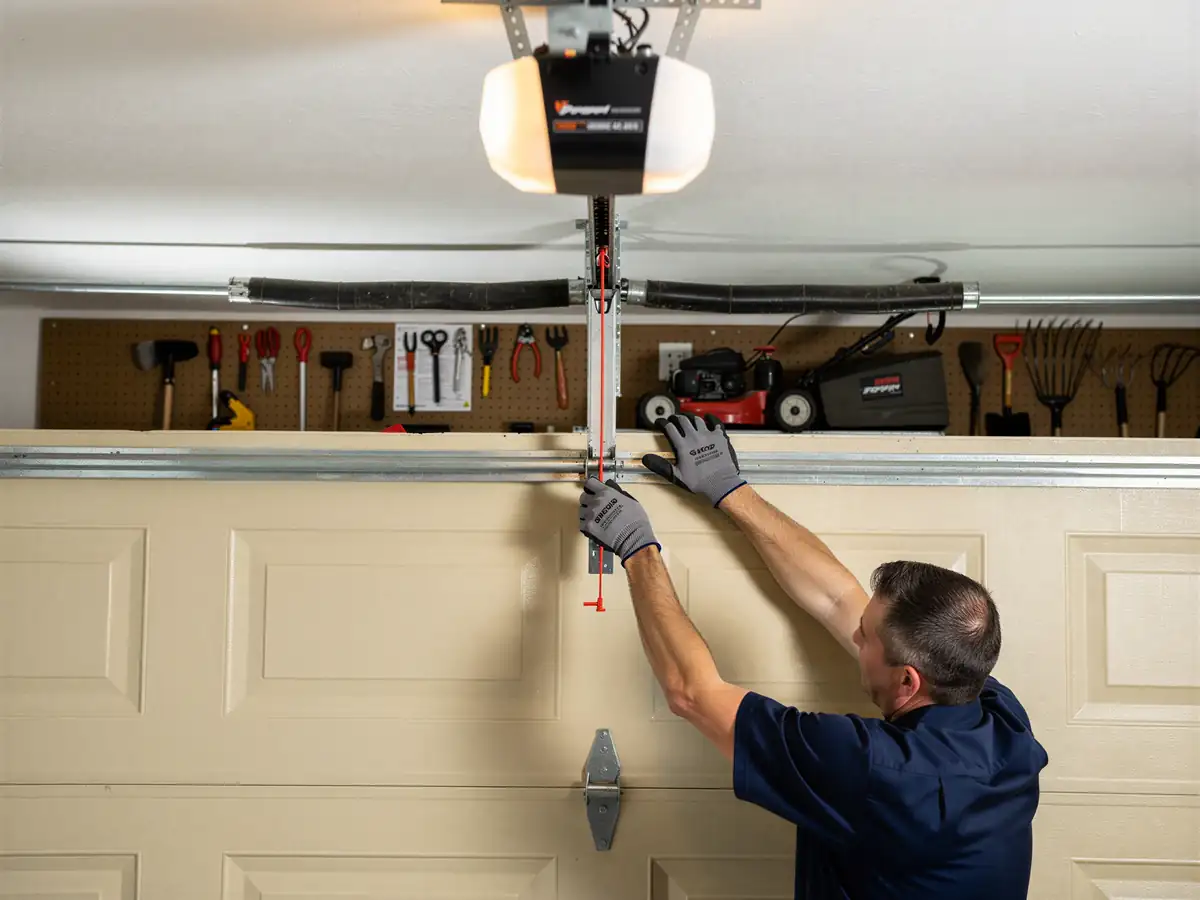
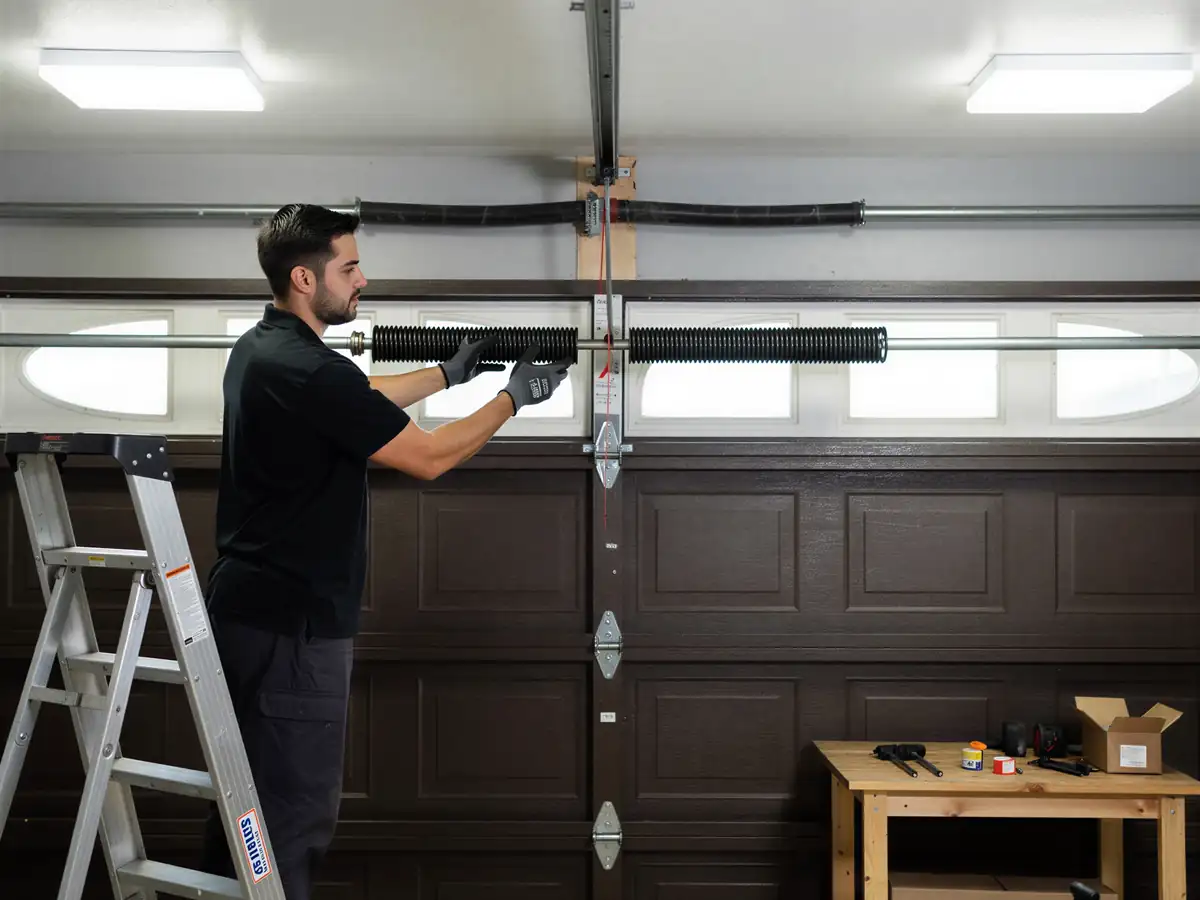
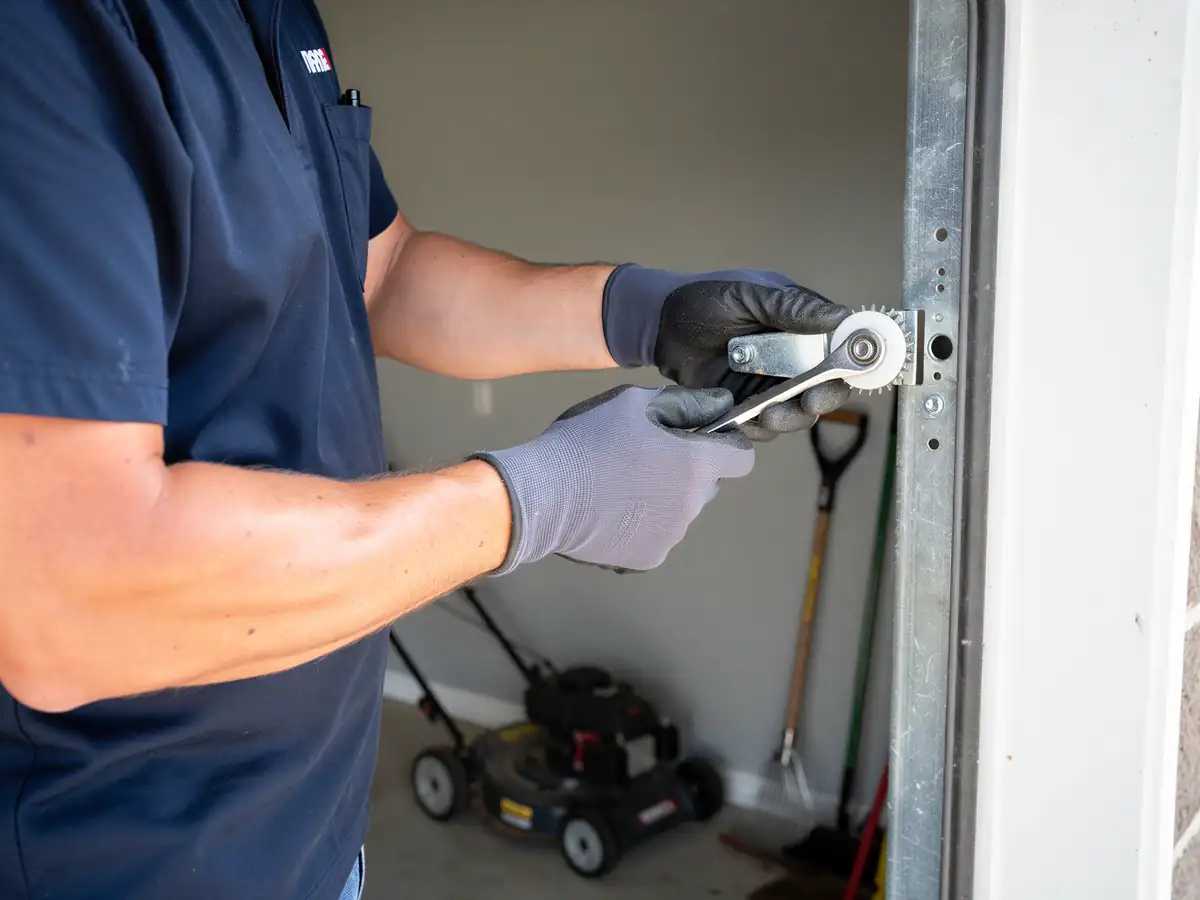
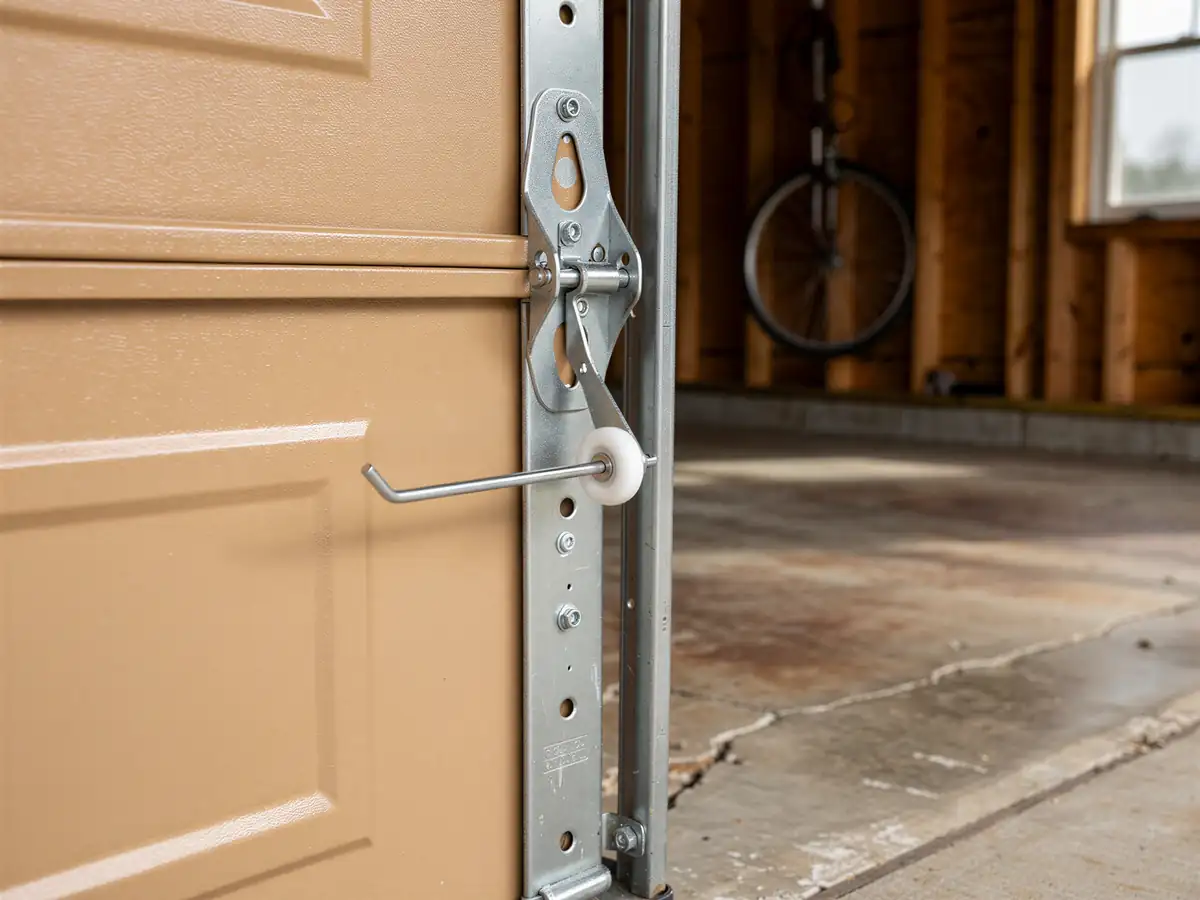
Most garages in Wolcott went up around 1973, which means the original door on a lot of these houses was a steel sectional, not the wood swing-up doors you still see on older stock closer to Bristol's center. That steel panel was a standard 16-by-7 or 9-by-7, hung on a torsion spring mounted on the header above the opening rather than the older side-mounted extension springs. Fifty years in, the spring on that door has been cycled somewhere between 10,000 and 15,000 times, which is past the rated life of most torsion springs sold in that era. The steel itself has usually held up fine - it's the galvanized cable, the stamped-steel rollers, and the end bearing plates that wear first. On a lot of these doors the weatherstripping at the bottom panel has also hardened and cracked, which matters more here than it would in a milder climate because Wolcott sits in a cold-band region where winter cycling - freeze, thaw, freeze - works that rubber harder than summer heat ever does. A door that's never been serviced since the Nixon administration is carrying a spring, a set of cables, and a set of rollers that are all original and all near the end of their rated cycle count at the same time.
The Symptom
The door that's about to go usually tells you first with sound, not failure. A torsion spring nearing the end of its life makes a grinding or creaking noise on the way up, and the door feels heavier to lift by hand than it used to - that's the spring losing tension gradually rather than snapping all at once. Rollers that are original to a 1973 install are often steel, not nylon, and steel rollers on steel track get louder every year as the track wears a groove. If the door shudders or jerks at roughly the same point in its travel every time, that's usually a bent track section or a roller that's starting to bind, not the opener. Cold mornings make all of this worse: the lift takes more effort when the lubricant in a fifty-year-old hinge has gummed up in low temperatures, and in a cold-climate area like this one that effect shows up for a good four or five months of the year, not just on the occasional hard freeze.
Doing It Yourself
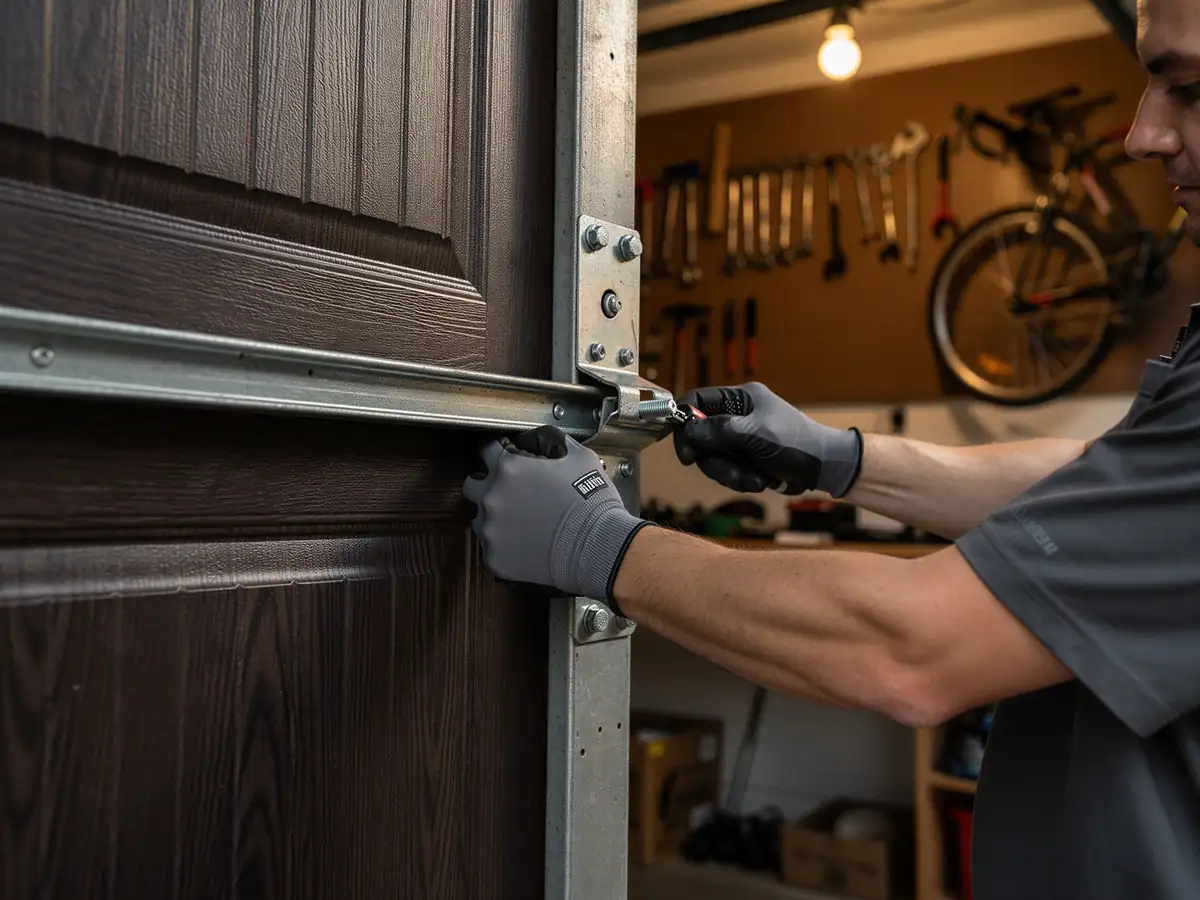
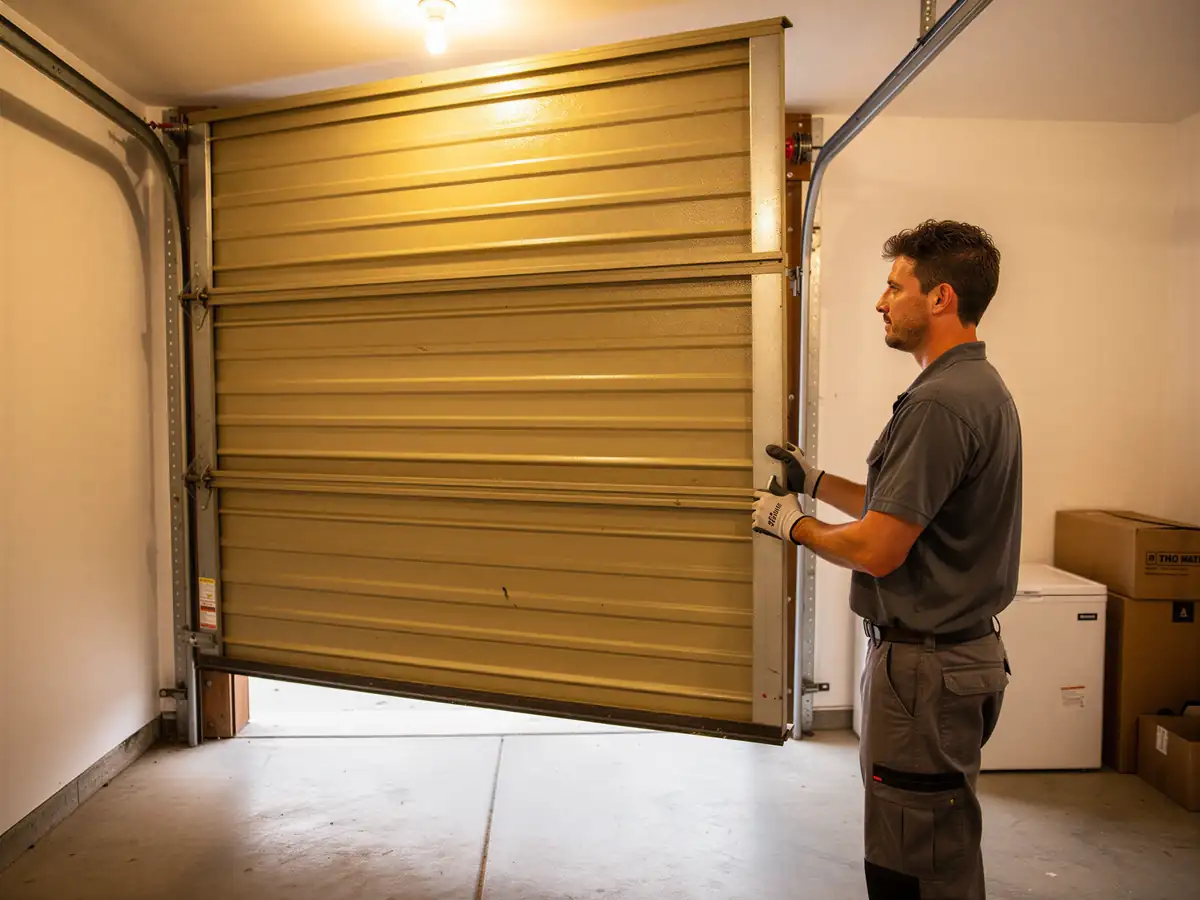
Lubricating hinges and rollers with a garage-door-specific silicone or lithium spray a couple times a year is reasonable to do yourself, and it's the single best thing a homeowner can do between visits. Checking the weatherstrip at the bottom panel for cracking, and the photo-eye sensors near the floor for dust or misalignment, also takes five minutes and no tools. What we don't recommend doing yourself: touching the torsion spring. It's under enough tension on a door this size to cause serious injury, and on an original 1973 install there's no way to know the exact wind count without unwinding it first - that's not a job to learn on your own driveway.