Serving Bristol, CT & nearby
(860) 217-5232
Bristol, CT

Spring Repair for Plymouth's 1970s-Era Garage Doors

Plymouth homes mostly went up around 1970, which means doors built for a different spring standard. We drive the 4 miles from Bristol with the parts that era actually needs.

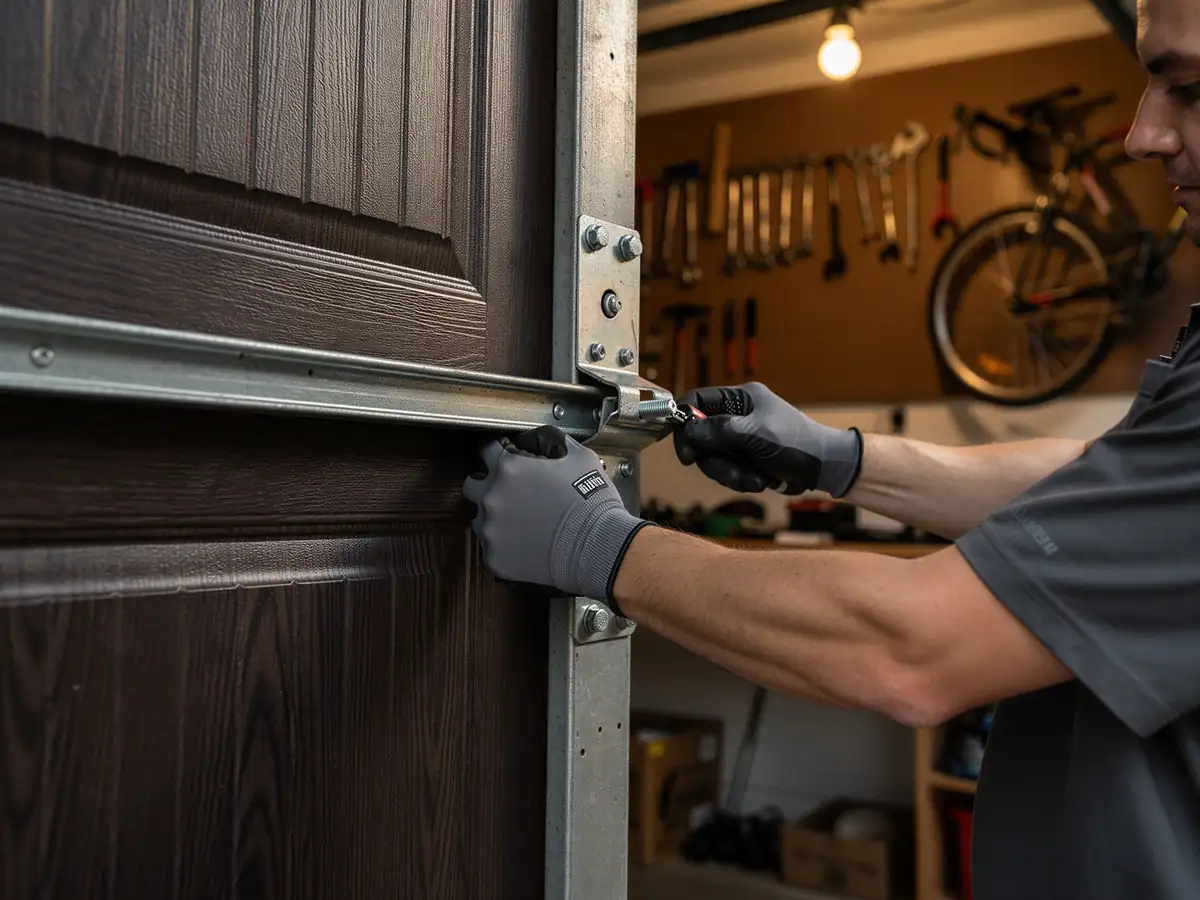
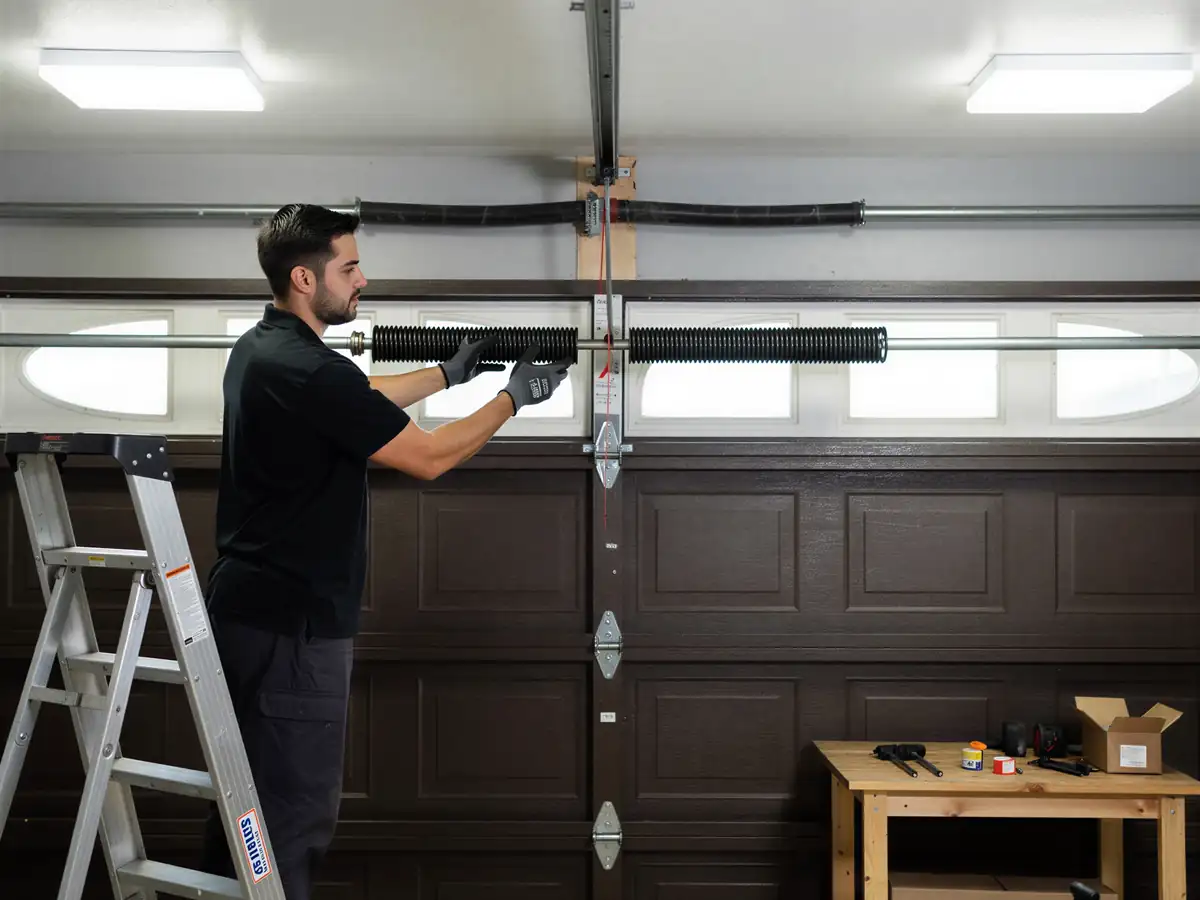
A technician installs a torsion spring on a brown garage door.
Bristol, CT
8 services
7 service areas
Diagnosis first, then the fix

The Symptom

If your door in Plymouth won't lift, or it lifts a few inches and stalls, you're almost certainly looking at a broken torsion or extension spring, not the opener. Most houses in this part of town were built around 1970, and a door of that age has usually been through at least one spring already - sometimes two. The giveaway is a loud bang from the garage at some point before the trouble started, or a door that feels twice as heavy as it used to when you lift it by hand with the opener disconnected. A cable that's slipped off its drum can mimic the same symptom, and on older torsion setups the two often fail close together because the hardware's been working harder than it was sized for. We won't guess over the phone - we look at the spring, the drums, and the cable before we quote anything.

Time on the Job

A straight spring swap on a single door usually goes fast once we're on site, since the job is mechanical and the parts are common sizes. What takes longer in Plymouth specifically is matching the drum and shaft setup on a door that's original to a 1970-built house - those sometimes used wind counts and wire gauges that newer kits don't replace one-for-one, so we carry a range rather than one standard spring. We travel the 4 miles from our Bristol location for every call here; there's no separate branch or crew based in town, so what's on the truck when we arrive is what determines how fast the repair happens, not anything we can stage locally ahead of time.

Why It Happens Here

Housing in this part of the service area runs from 1938 to 1986, with Plymouth's own stock centering right around 1970 - squarely in that window. Doors from that era were built with torsion hardware sized for lighter materials than what often sits on the track now, after a panel replacement or an added insulation kit raised the door's weight without anyone re-rating the spring. Add a climate band that runs cold and severe for the winter stretch, and steel spring wire that's already fatigued from decades of temperature swing gives out faster, often on the first hard cold snap of the season. It's a pattern we see across houses of this age, not a fluke tied to one door.

What Is on the Truck

For Plymouth calls we stock torsion springs across the wind and wire-gauge range that 1960s-70s builds commonly used, plus the standard cable and drum sizes that pair with them. What we don't carry is custom millwork for a door panel itself - if the spring failure cracked a stile or warped a section on an old wood door, that's a separate repair we'll flag rather than try to patch on the truck. Honest limitation: if your opener has been straining against a broken spring for a while, we may find a burnt-out motor gear underneath the spring problem, and that's a second conversation, not something we fold into the spring price without telling you first.

How it works

From “it’s stuck” to “it’s fixed”

A man stands in a driveway looking at his phone in front of a blue house.

Tell us what’s wrong

Describe the symptom - won’t open, loud bang, opener runs but the door won’t move.

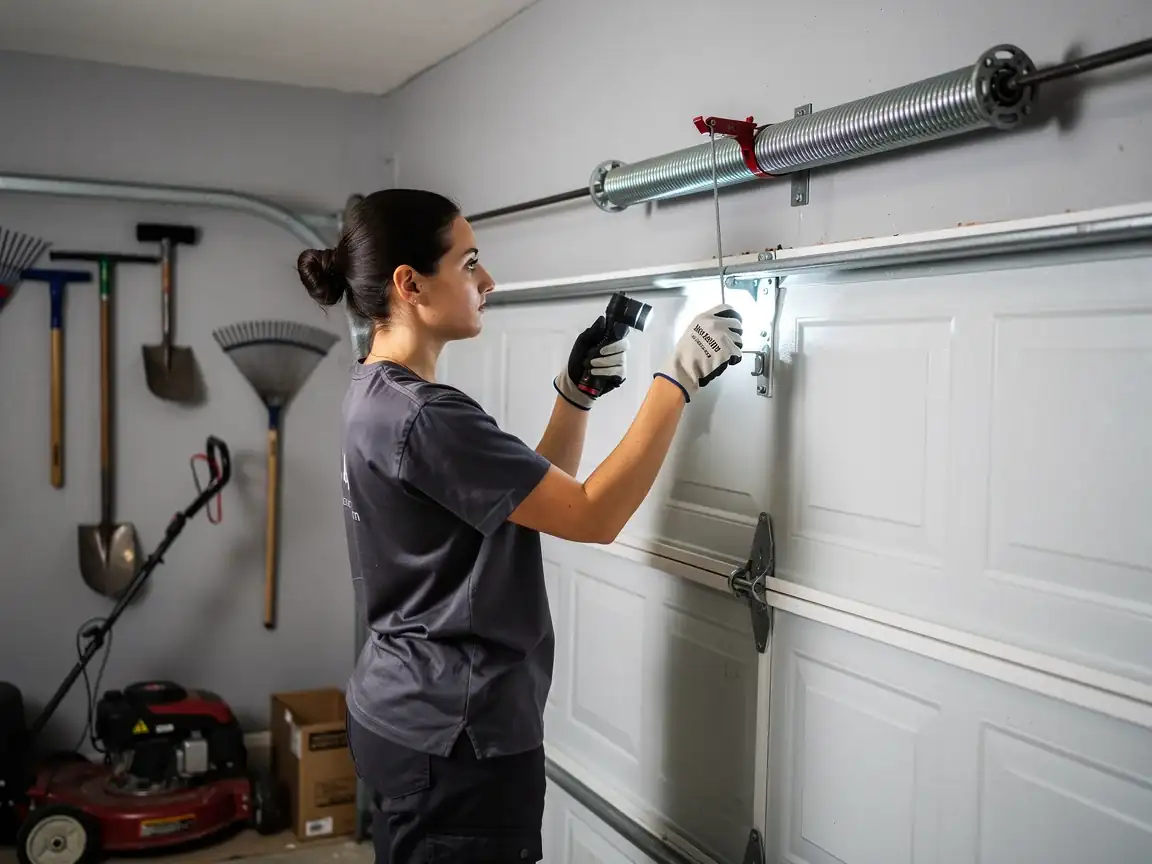
A technician shines a flashlight on a white garage door's top panel and roller.

On-site diagnosis

A technician tests the door under power and by hand and finds what actually failed.

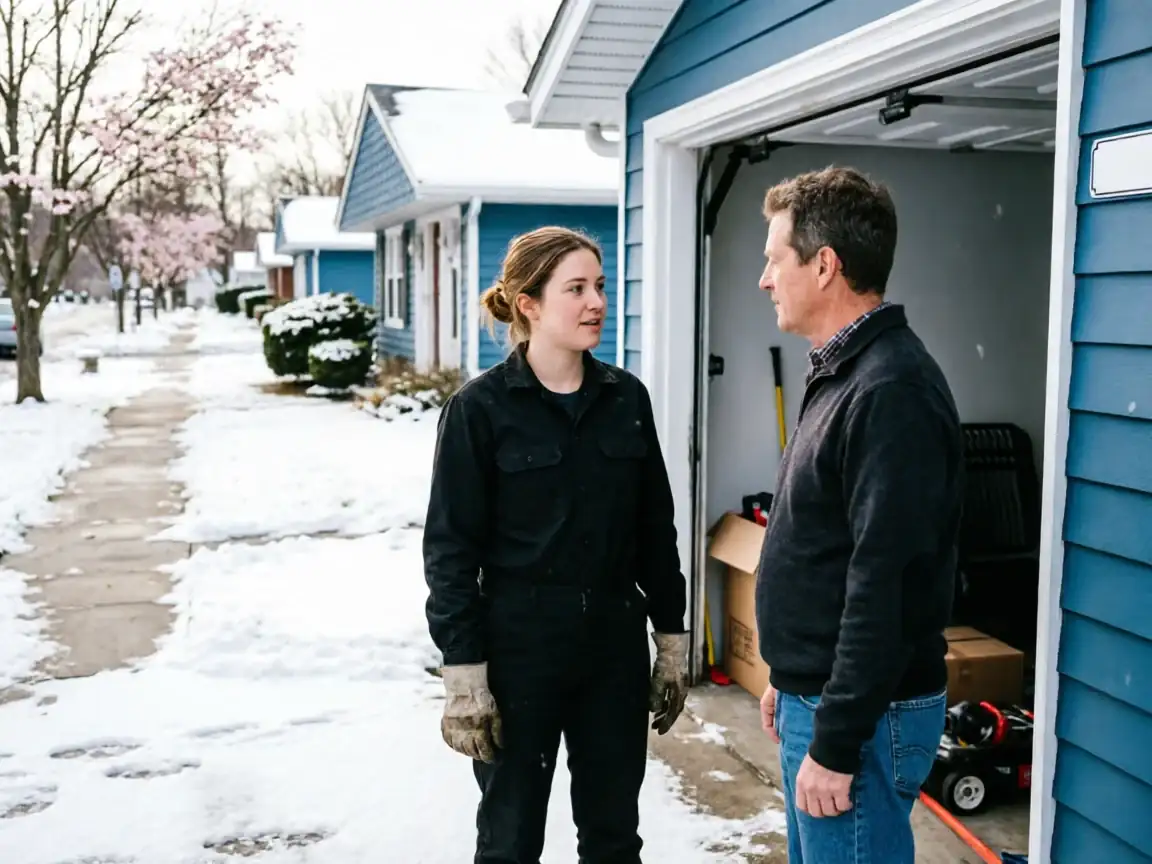
A technician in work clothes talks to a man in front of a blue house with an open garage.

Clear, up-front plan

You get the fix that’s needed and what drives the cost - before any work starts.

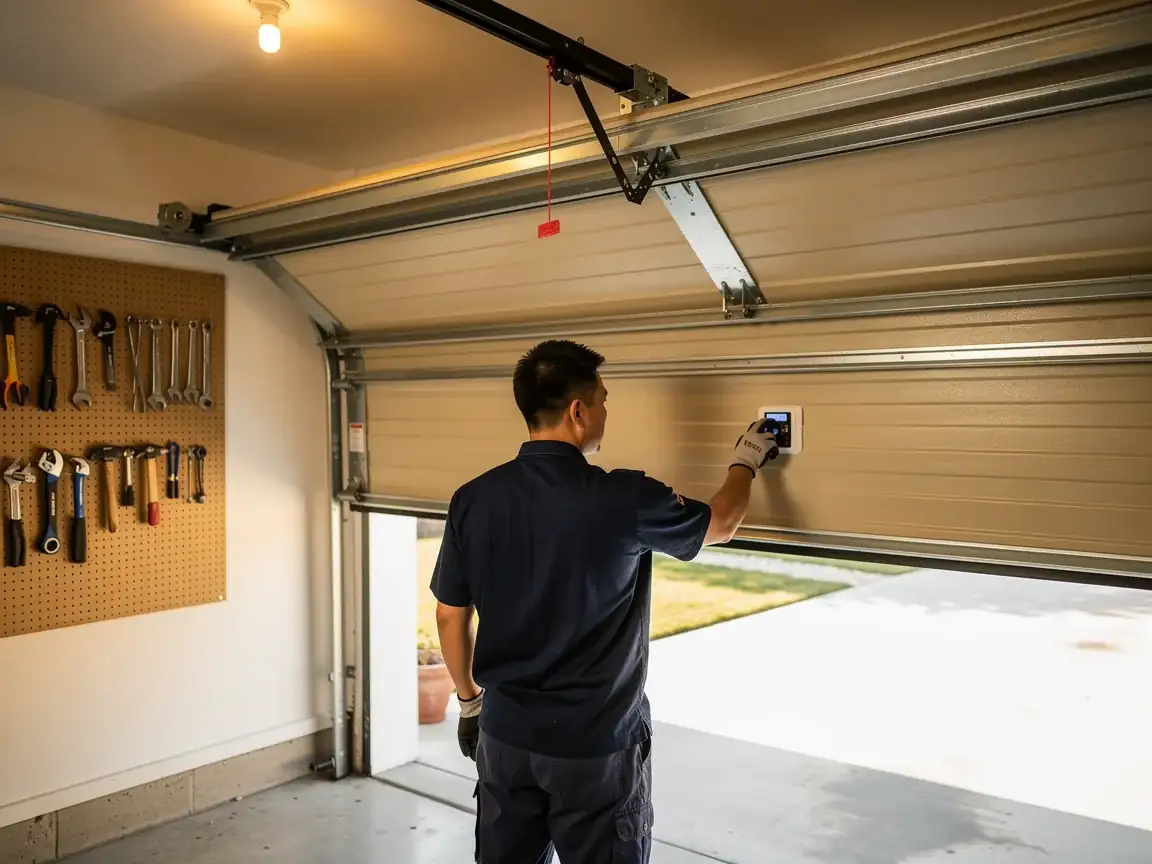
A technician adjusts a wall-mounted control panel on an open garage door.

Repaired & tested

The repair is done, the door is set true and tested, and the work area left clean.

Next step

Not sure which repair your door needs in Bristol, CT? Describe what it’s doing - every job starts with a diagnosis.

How we work

What to expect

Diagnosis firstEvery visit starts by finding what actually failed - not a pre-written parts list.
The right part for the doorSprings and openers matched to the door’s weight and age, so the fix holds up.
Straight answersWhen a repair makes more sense than a replacement - or the reverse - you hear it plainly.
Clean, careful workTension released safely, hardware set true, the door tested under power before we leave.
60,452
Residents in Bristol
8
Garage door services
7
Neighborhoods & suburbs
CT
Serving Bristol, CT
Questions

Frequently asked

Straight answers about garage door repair in Bristol. Still unsure? Ask us directly.

01Why did my spring break in cold weather?

Steel spring wire gets more brittle as temperatures drop, and this area sits in a cold, severe climate band for a good stretch of winter. A spring that's already fatigued from age - common on doors from the early 1970s build era here - is far more likely to snap on a cold morning than in mild weather.

02Do you have a crew based in Plymouth?

No. We cover Plymouth from our Bristol location, about 4 miles away. There's no separate branch here, so response depends on what's loaded on the truck, not a local depot.

03Can I replace just one spring if I have a two-spring door?

You can, but we generally don't recommend it. On a door that's been in service since the 1970s, the second spring is usually close behind the first in wear, and replacing both at once saves you a second service call down the line.

Ready to get your garage door sorted?

Tell us what it’s doing and where you are in Bristol - we’ll take it from there.

Request a QuoteCall