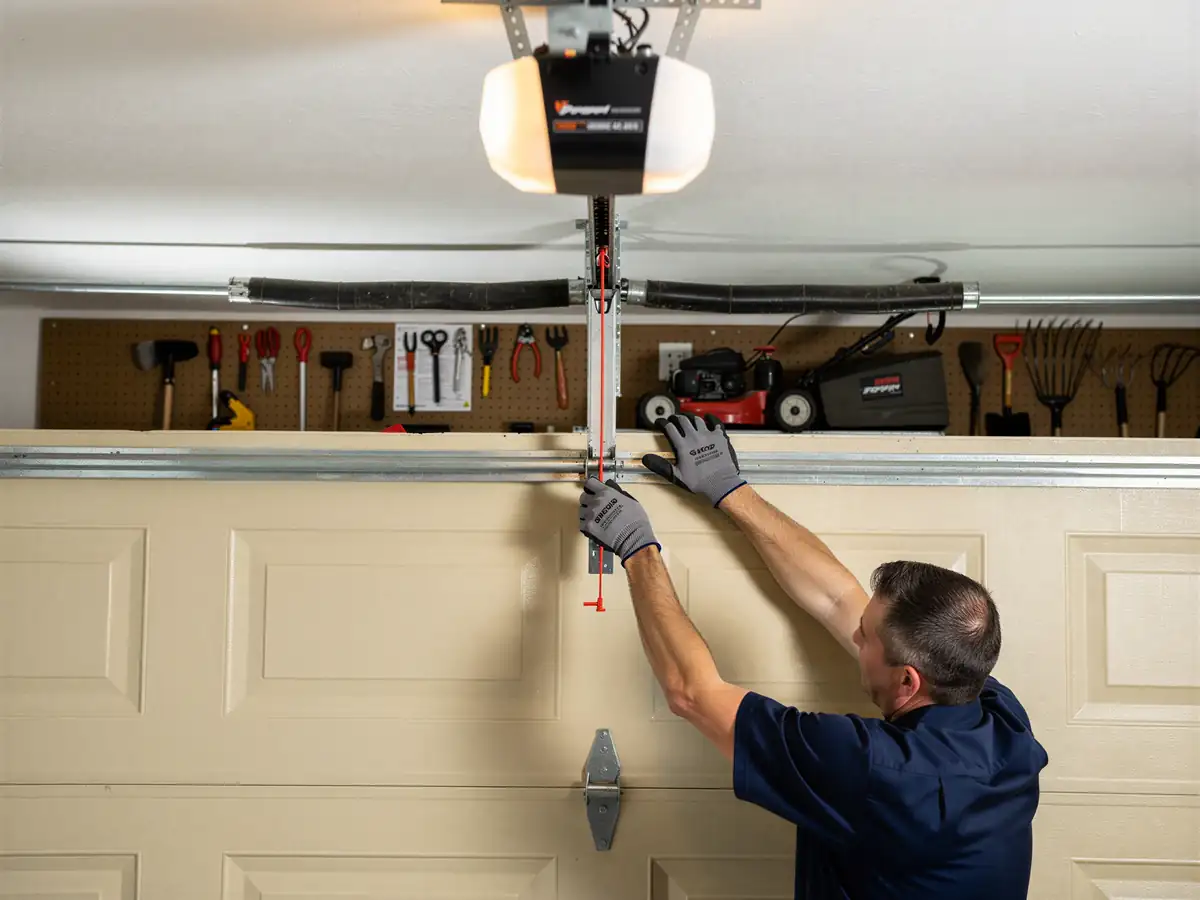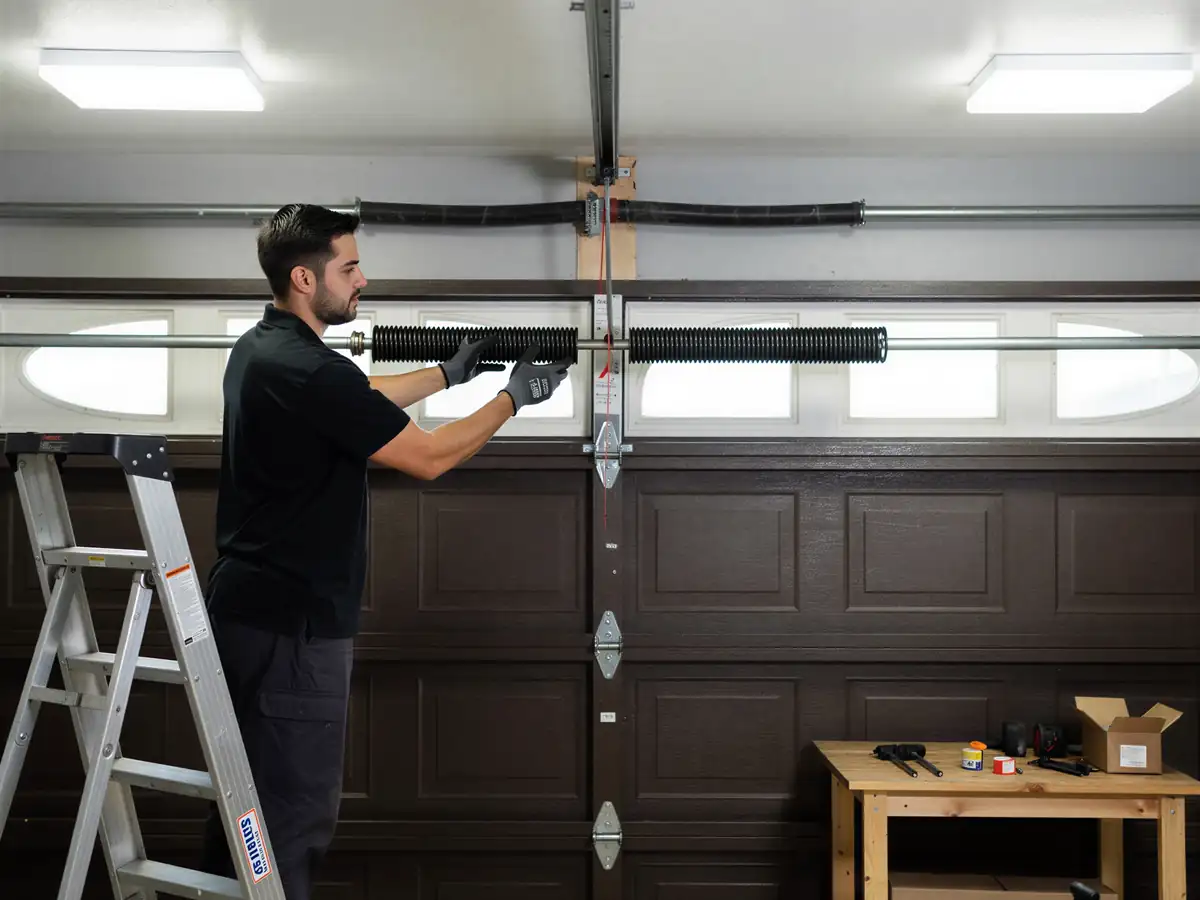
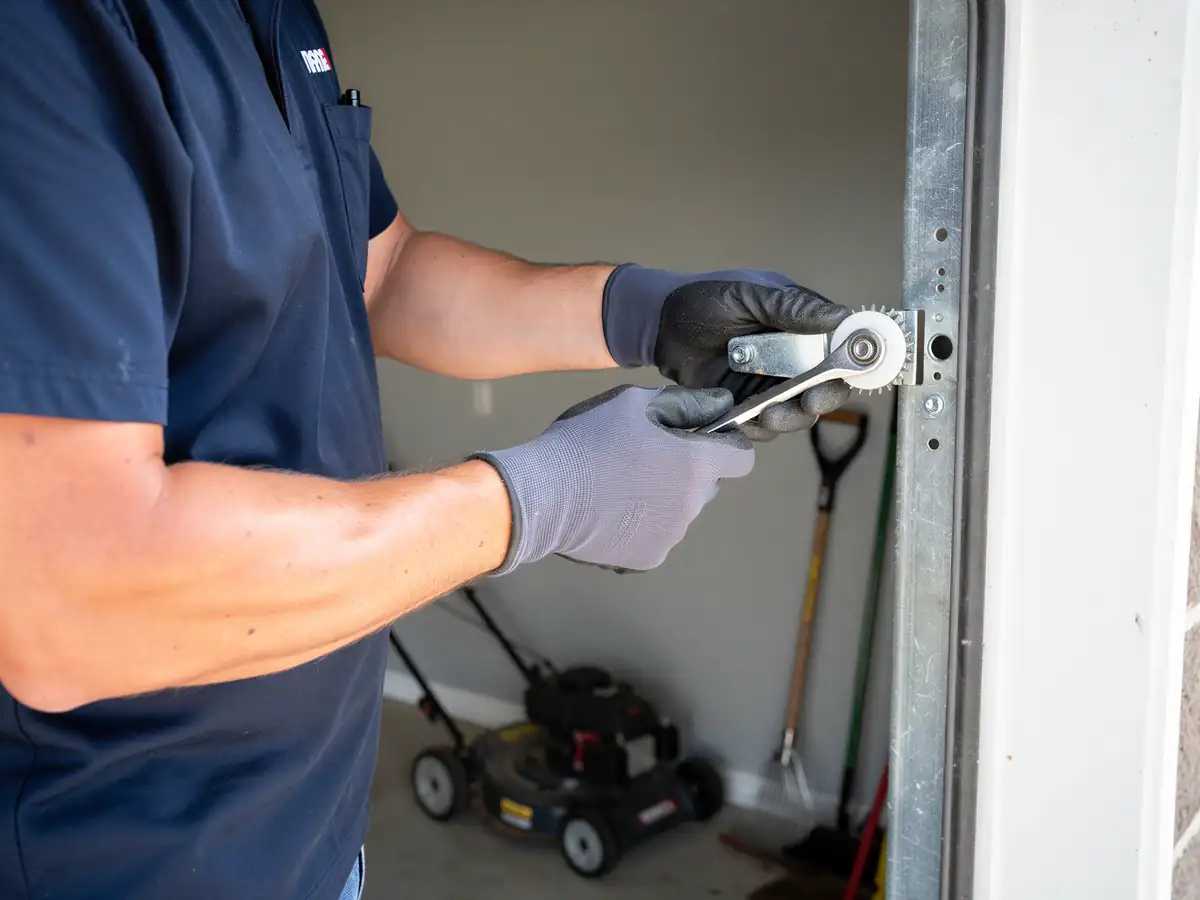
The Symptom
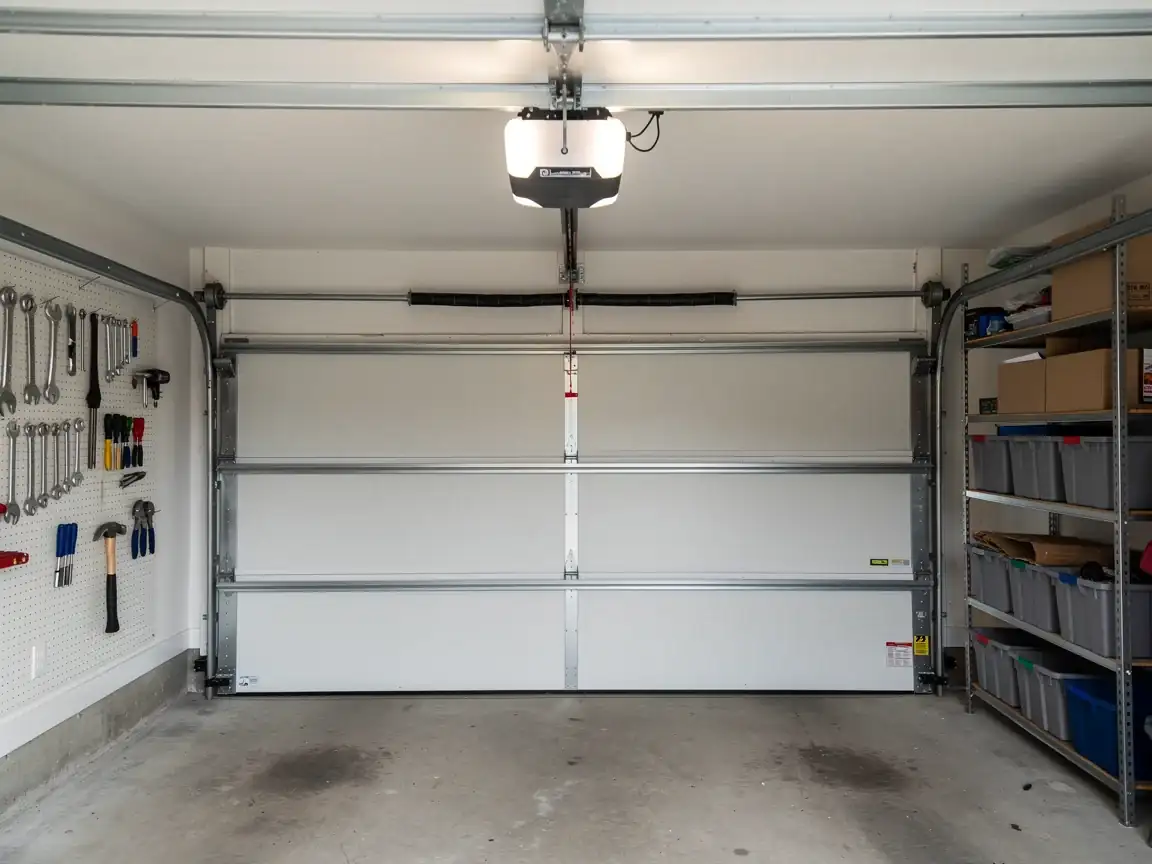
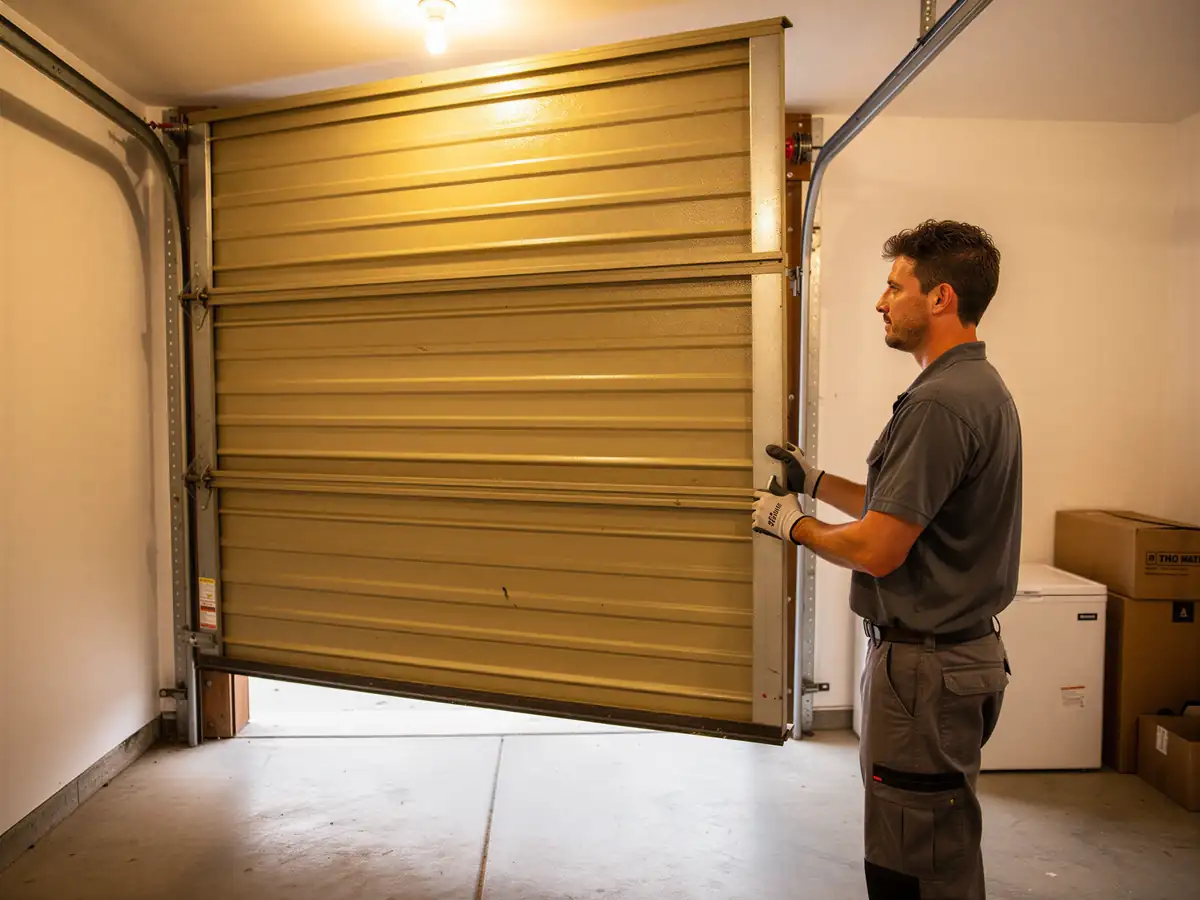
The door jumps the track on one side, usually right as it's closing, and either stops dead halfway down or drops crooked with one corner low and the other still up near the header. Sometimes you'll hear it before you see it - a scrape or a bang as a roller pops the lip of the track instead of riding inside it. On a double door, this often happens on the side closer to the opener, where the extra pull puts the most load on whichever roller has already worn thin.
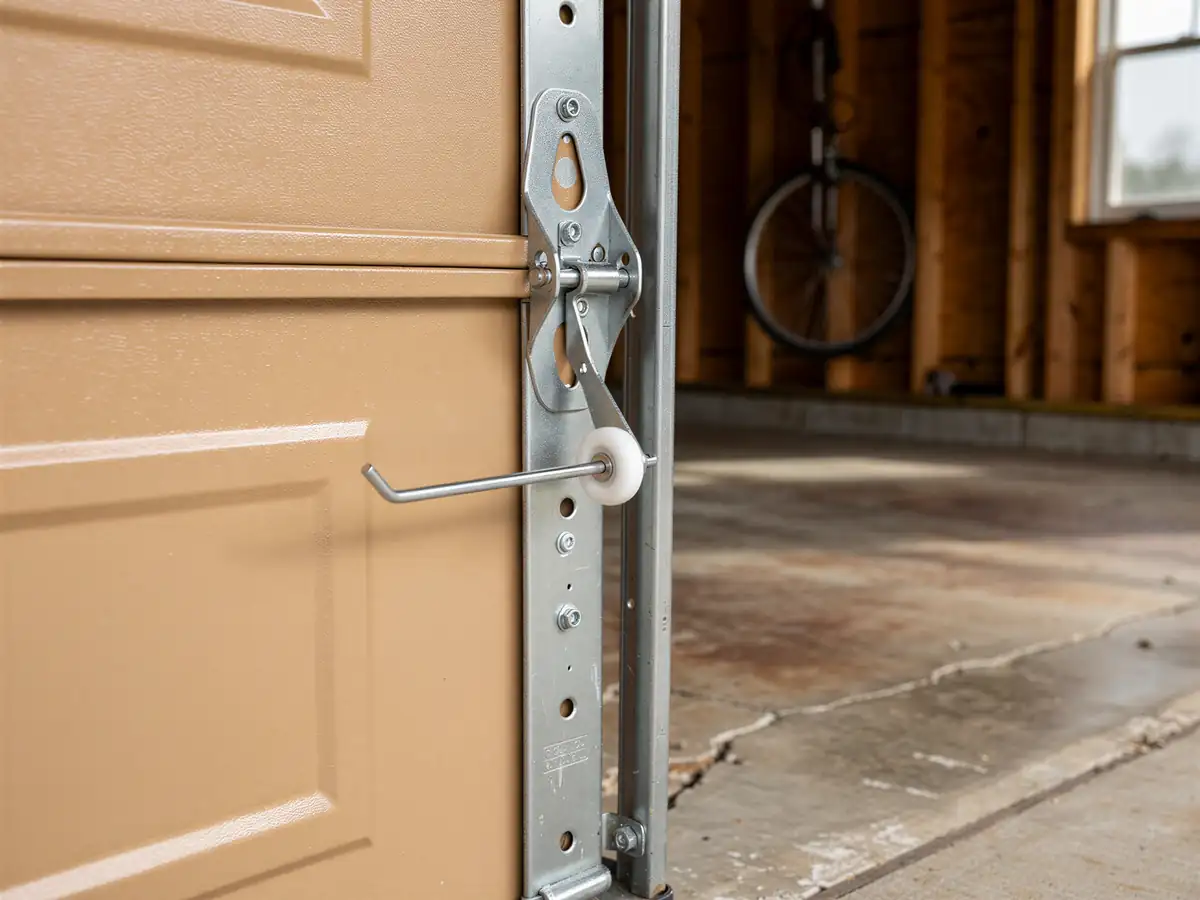
In Plymouth, the pattern leans heavily toward one cause: the housing stock here centers on 1970, which puts a lot of these doors squarely in the era of steel rollers running in narrow, stamped-steel track. That hardware was standard practice at the time and it held up fine for decades, but the tolerances are tight by today's standard, and a roller that's worn even an eighth of an inch undersized has enough play to walk itself out of the track under load. It's not a workmanship problem. It's an age-of-house problem.
Time on the Job
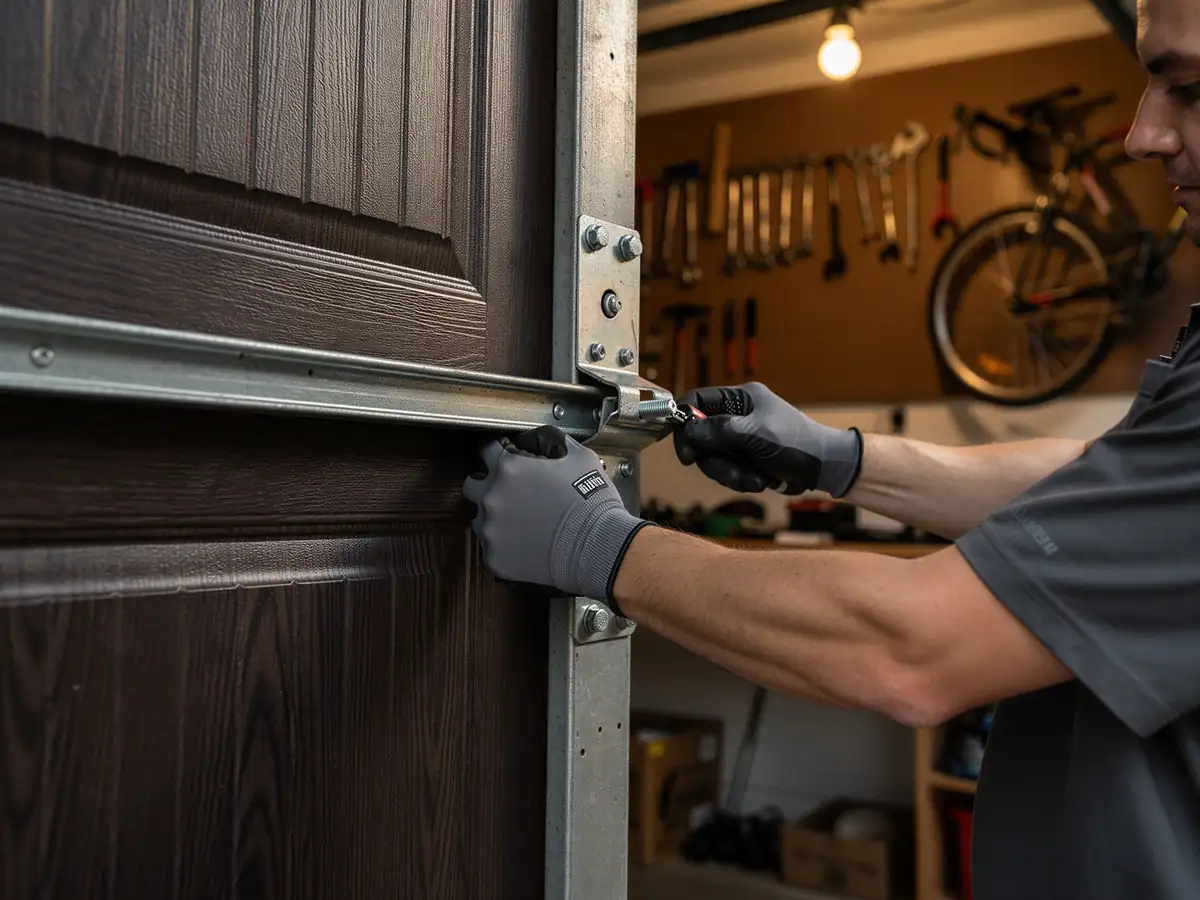
An off-track call is rarely a quick wiggle-it-back-in job, even though that's what most owners hope for on the phone. If the door is still on its rollers but sitting crooked in the track, that's usually a bent track or a loosened bracket, and it's a matter of loosening the bracket bolts, squaring the track back to the jamb, and retightening - done right, that's a focused repair, not a tear-out.
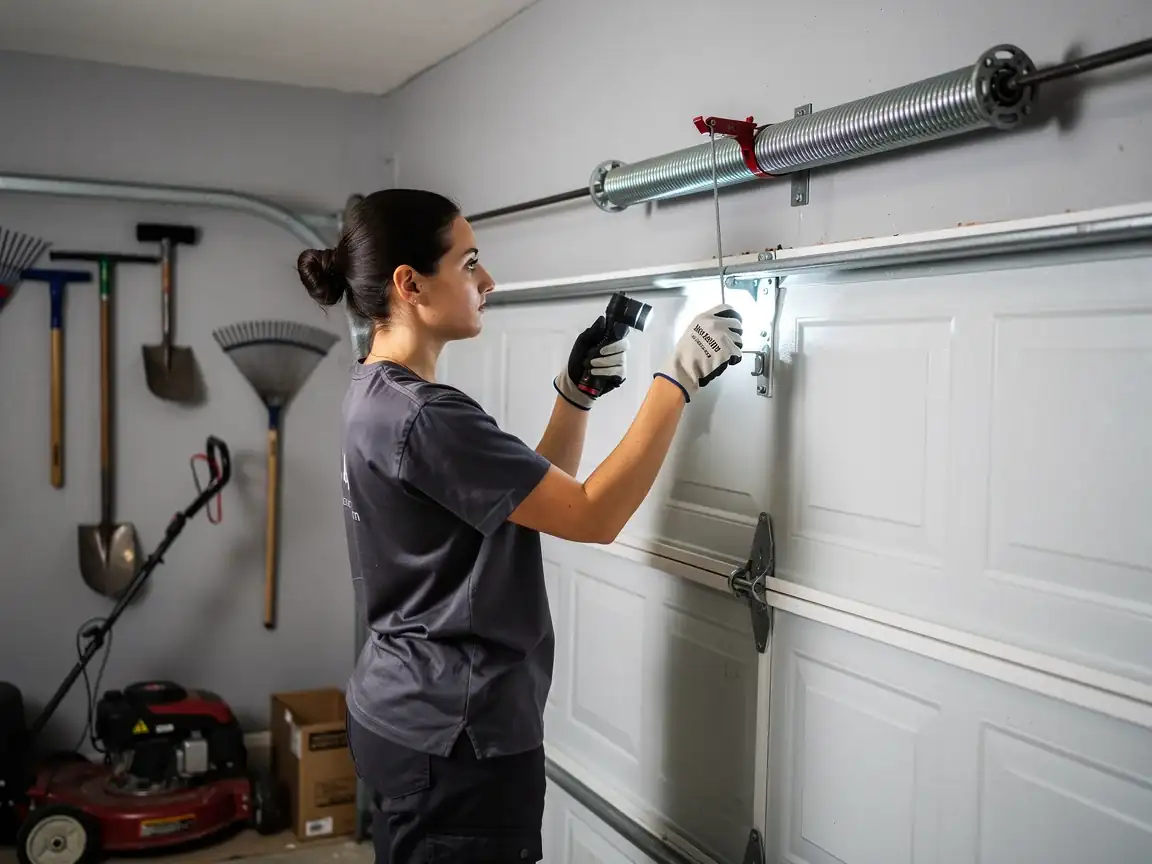
If a roller has actually left the track and the door is hanging at an angle, the job slows down. We have to check whether the cable jumped the drum at the same time, whether the bottom bracket took any of the load wrong, and whether the panel itself racked. On the 1970s-era doors common in Plymouth, the track gauge and roller stems don't always match what's sold off the shelf today, so part of the job is confirming fit before anything gets reinstalled. We come from Bristol, four miles east, and that short drive means the parts on the truck matter more than the trip - there's no second run back to a shop if the first guess is wrong.
Why It Happens Here
Three things stack up in Plymouth specifically
First, the build year: with the service area's housing running 1938 to 1986 and this town sitting right at the 1970 mark, a large share of doors here were installed with steel rollers in narrow track - the setup that preceded today's wider track and nylon rollers by a long stretch.
Second, the climate
This is a severe-cold band, and steel rollers don't forgive that the way nylon does. Cold stiffens the grease in an old roller bearing, the roller starts to skip instead of rolling smooth, and a skipping roller is what climbs the track lip instead of riding inside it.
Third, scale
Plymouth has about 4,609 households, which is a small enough base that the calls we get here don't span a wide mix of eras and track styles - they cluster hard around this same 1970s hardware, year after year. That's useful, because it means we're not guessing at what's likely to be on the wall when the call comes in. The median income in Plymouth, $99,797, sits close to the wider service area's $107,435, which tells us most of these jobs are repair-or-realign decisions, not replace-with-the-premium-option decisions.
- 4,609 households
What Is on the Truck
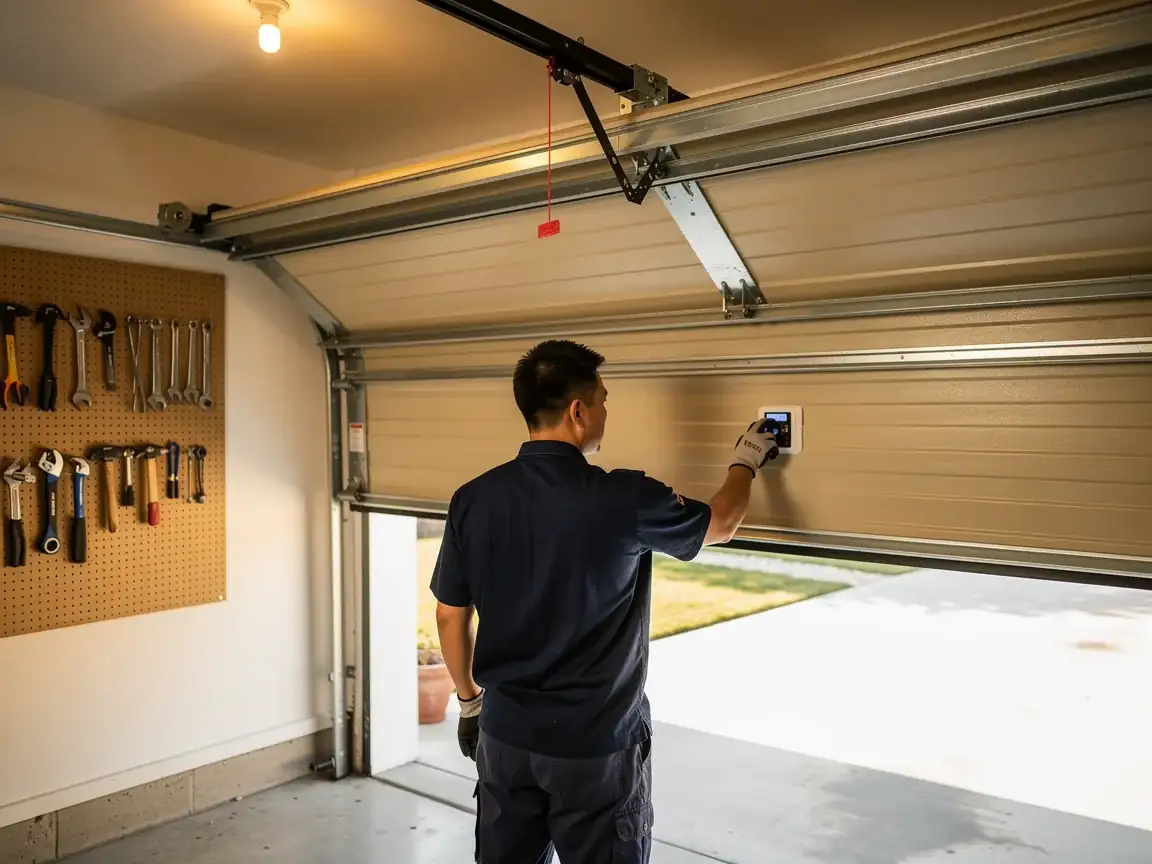
For Plymouth calls we carry steel rollers in the sizes that fit 1970s narrow track, along with the nylon upgrade for owners who want quieter operation going forward - nylon doesn't bind the same way in cold, which matters here. We stock track brackets, lag bolts, and the hardware to square a track back to the jamb without pulling the whole run off the wall.
What we don't carry, and what sometimes has to wait, is a replacement track section cut to an odd width. Most of what we see fits standard stock, but once in a while an older install used a nonstandard gauge, and that piece has to be ordered rather than pulled off the truck. We'll tell you straight if that's the case rather than forcing a fit that won't hold. On a door that's racked badly - bent panel, bent track on both sides, or a bottom bracket torn loose - realigning the track is sometimes just delaying a bigger job, and we'll say so instead of patching it twice.