The Symptom
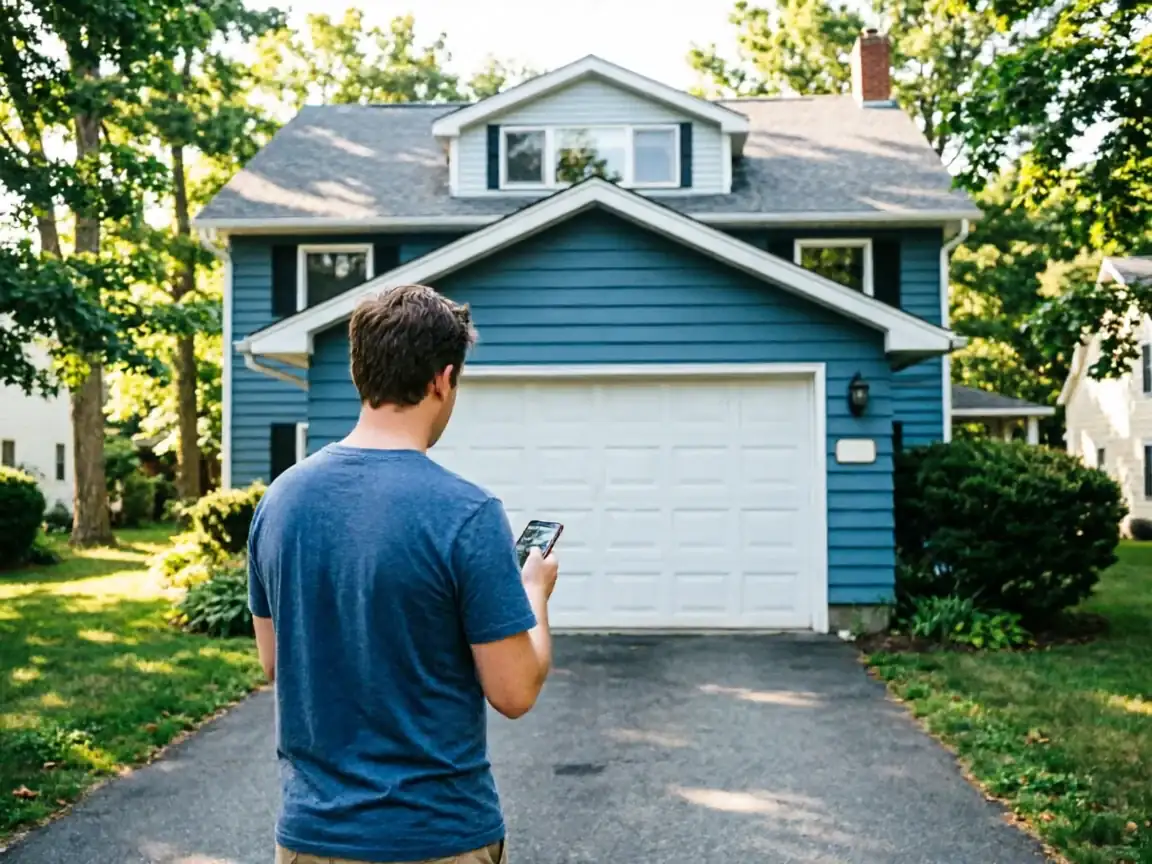
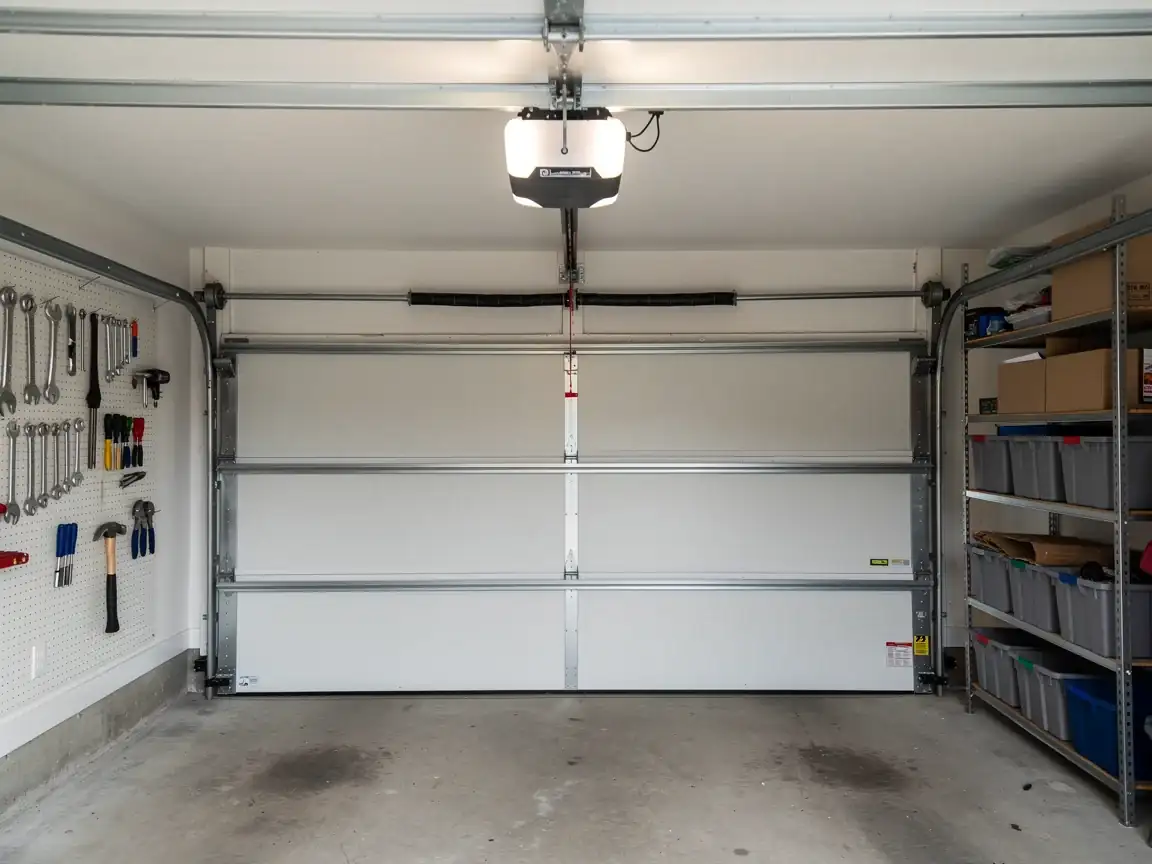
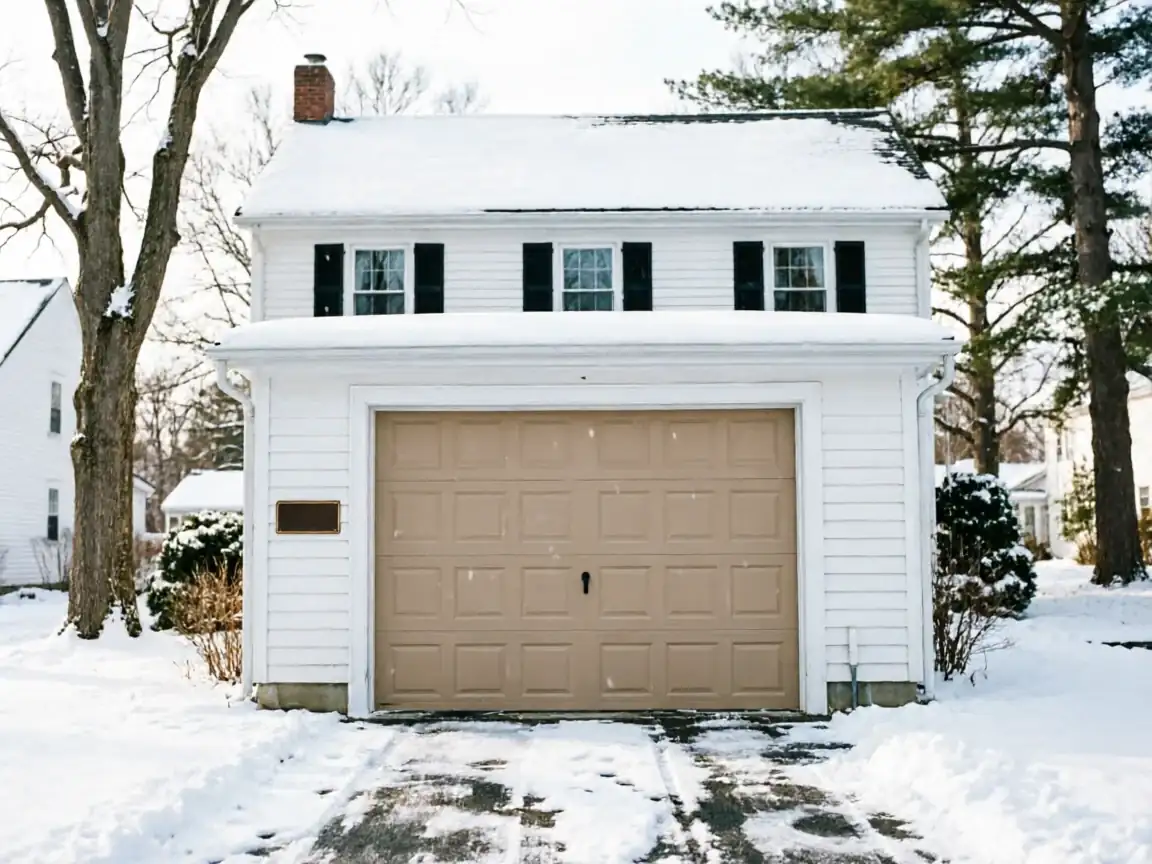
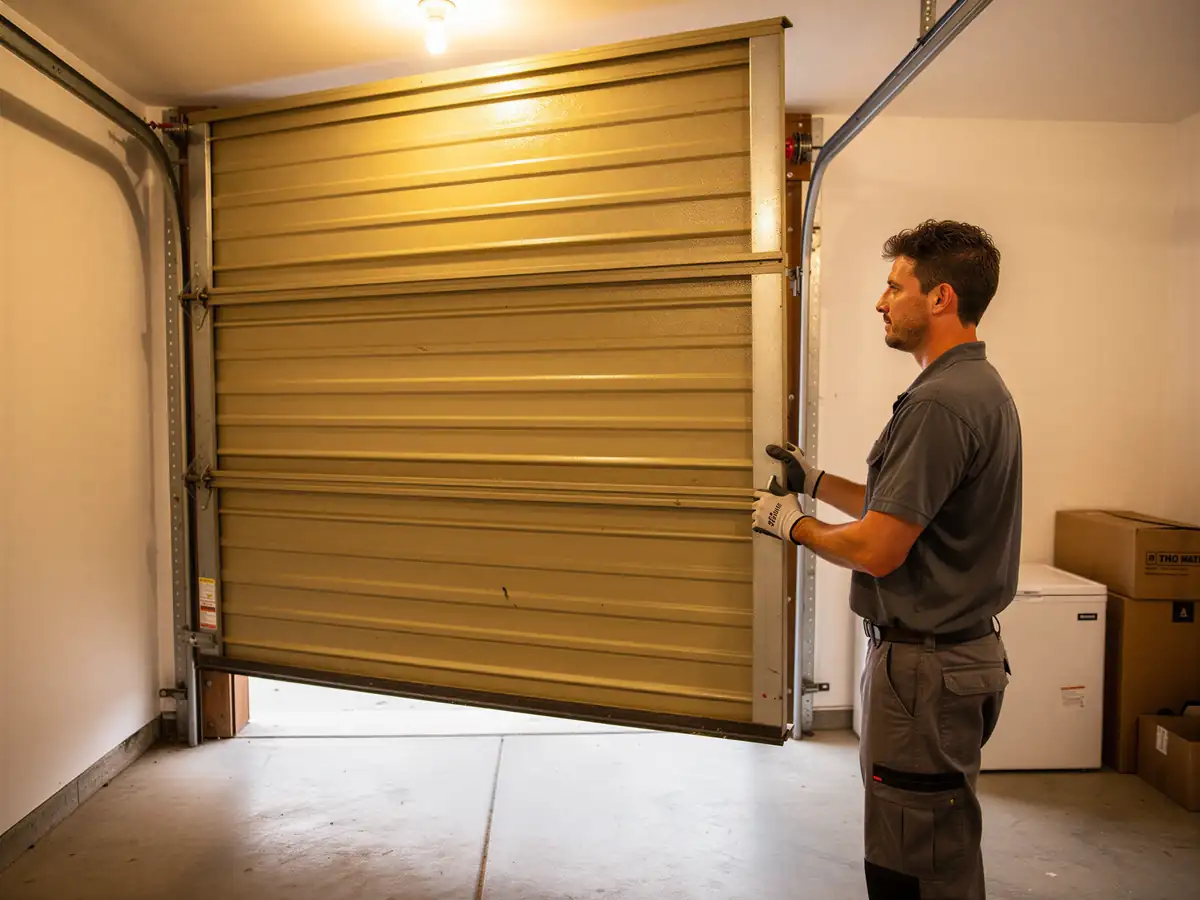
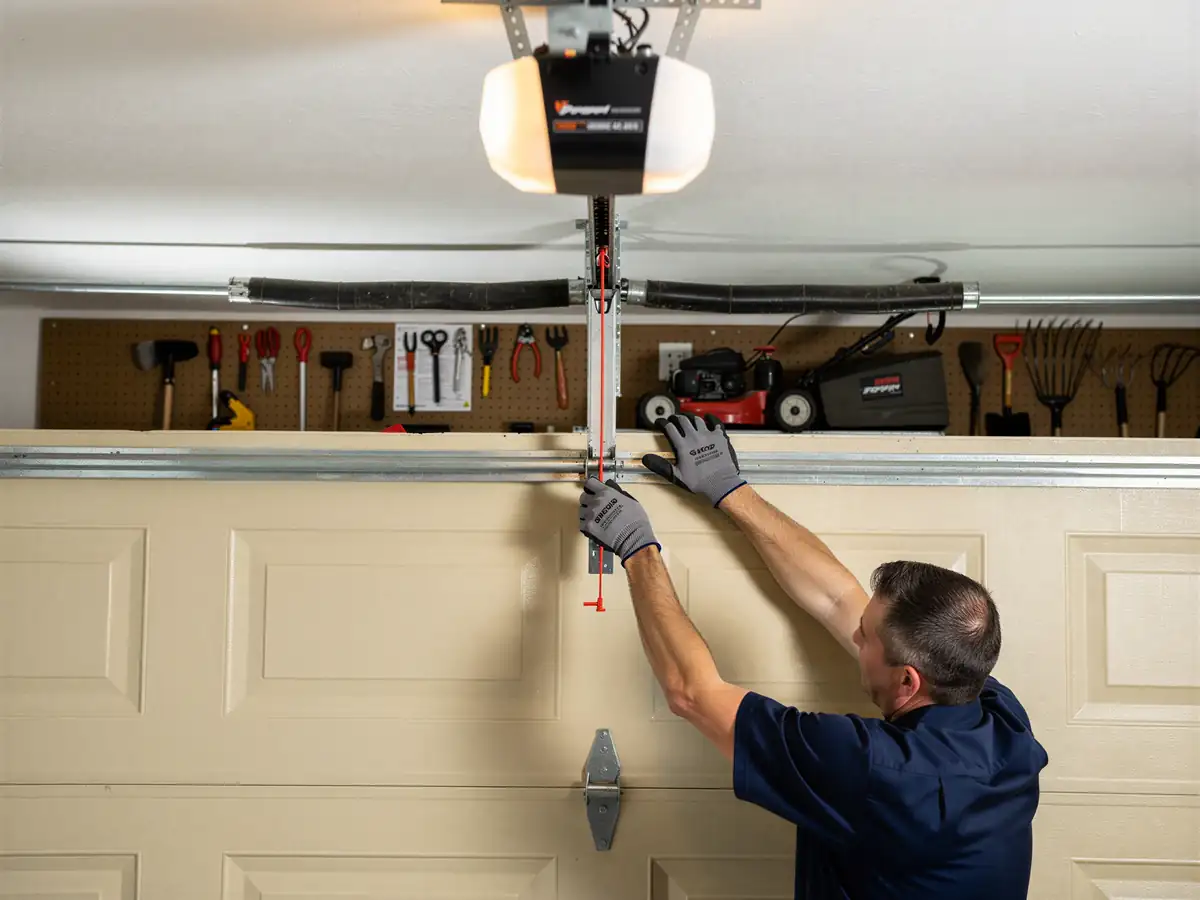
In a lot of Plymouth garages, the opener on the ceiling is not the second or third one - it's the first. Houses here cluster around a 1970 build date, and if a family never had a reason to call anyone, that chain-drive unit from the Nixon era is still bolted to the same ceiling joist. You'll know it by the sound: a grinding, straining pull on startup, a light that doesn't come on anymore because the bulb socket corroded, or a remote that only works if you stand directly under it. None of that means the door itself is bad. It usually means the opener has quietly outlived its gears, its capacitor, or both, and nobody's replaced it because it never fully died - it just got worse by inches.
Sometimes the symptom is simpler: the opener still runs fine, but it's not compatible with anything newer. No smartphone app, no battery backup, no rolling code security - because those features didn't exist when the unit was installed. That's a different kind of failure. The motor works. The house has moved on without it.
Time on the Job
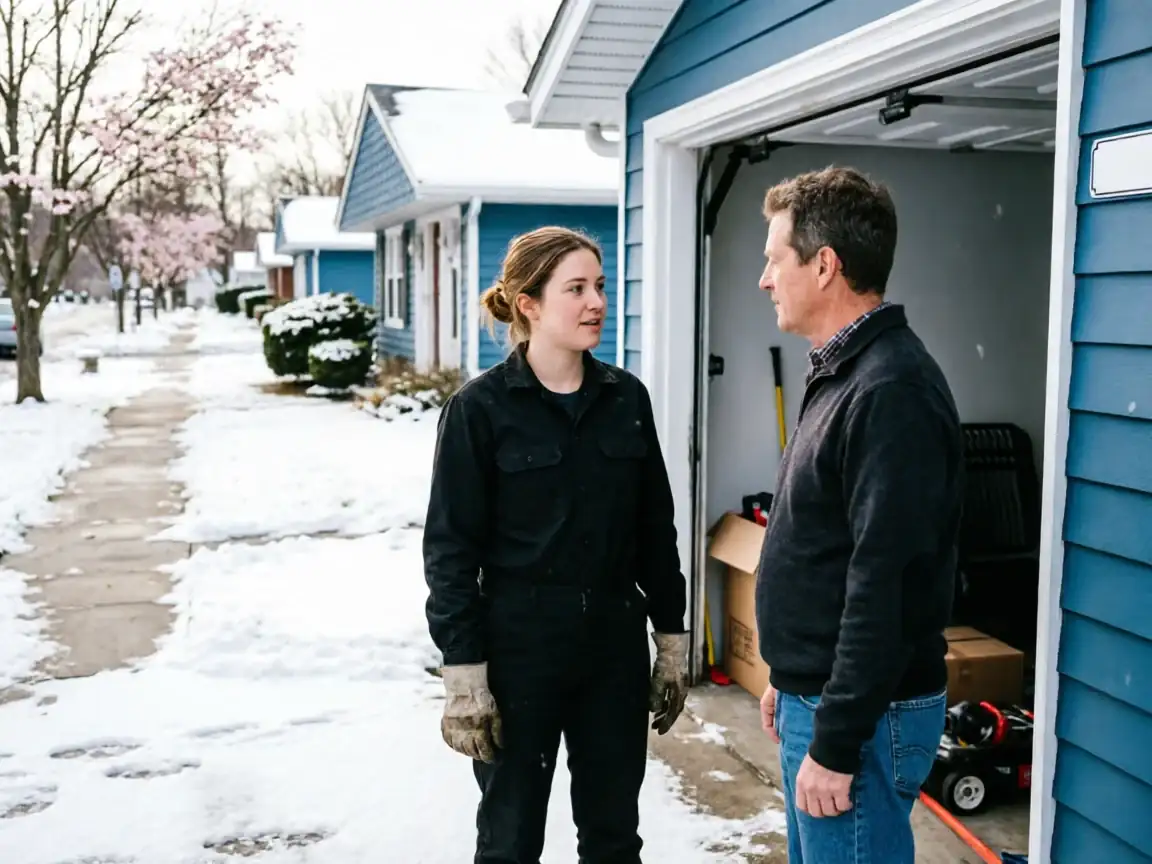
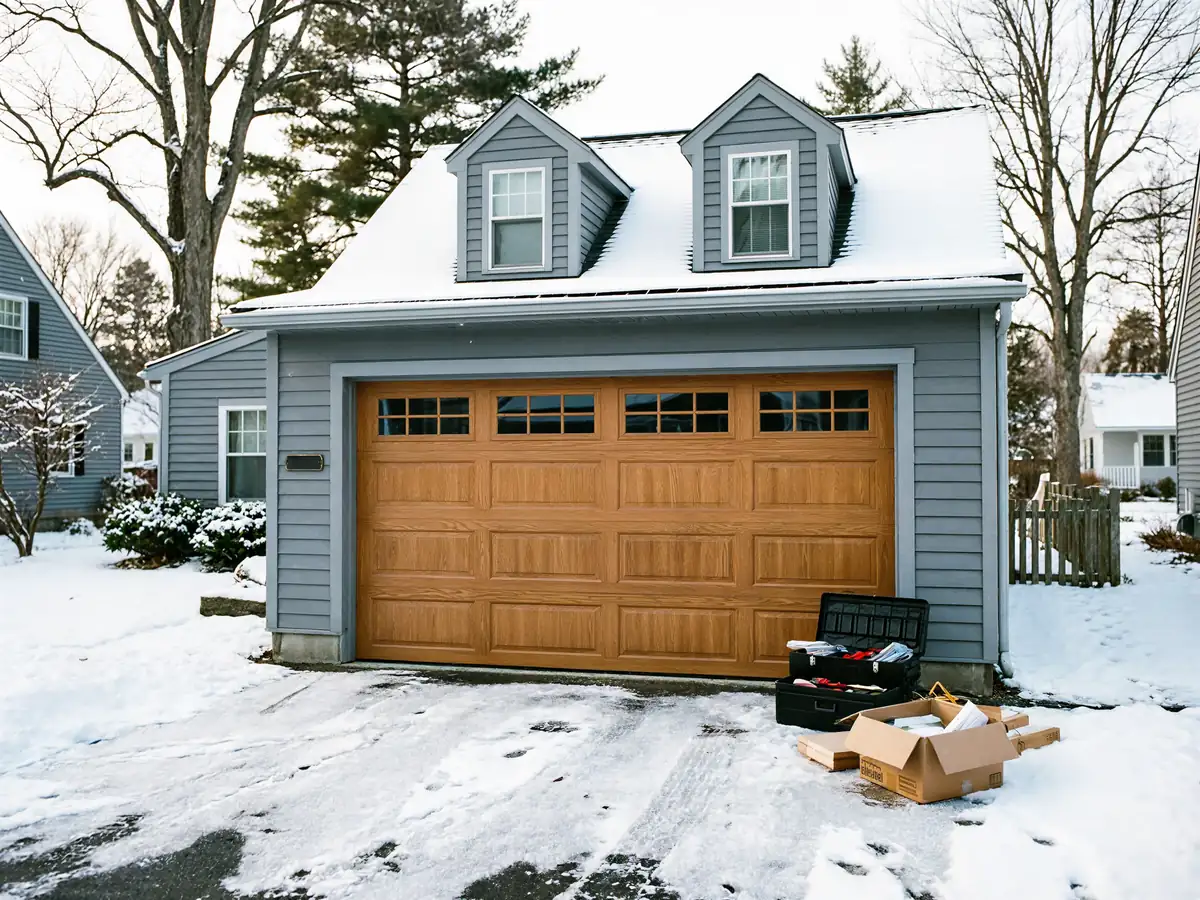
We're coming from Bristol, about 4 miles out, so there's no separate dispatch or branch to route through - one crew, one truck, same-day scheduling depending on what's already on the board. A straight opener swap, where the existing track and door are sound, is a half-day job. If we're also replacing a worn track or adding a battery backup because the original wiring predates it, plan on it taking longer, since we're working around infrastructure installed before a lot of today's code requirements existed.
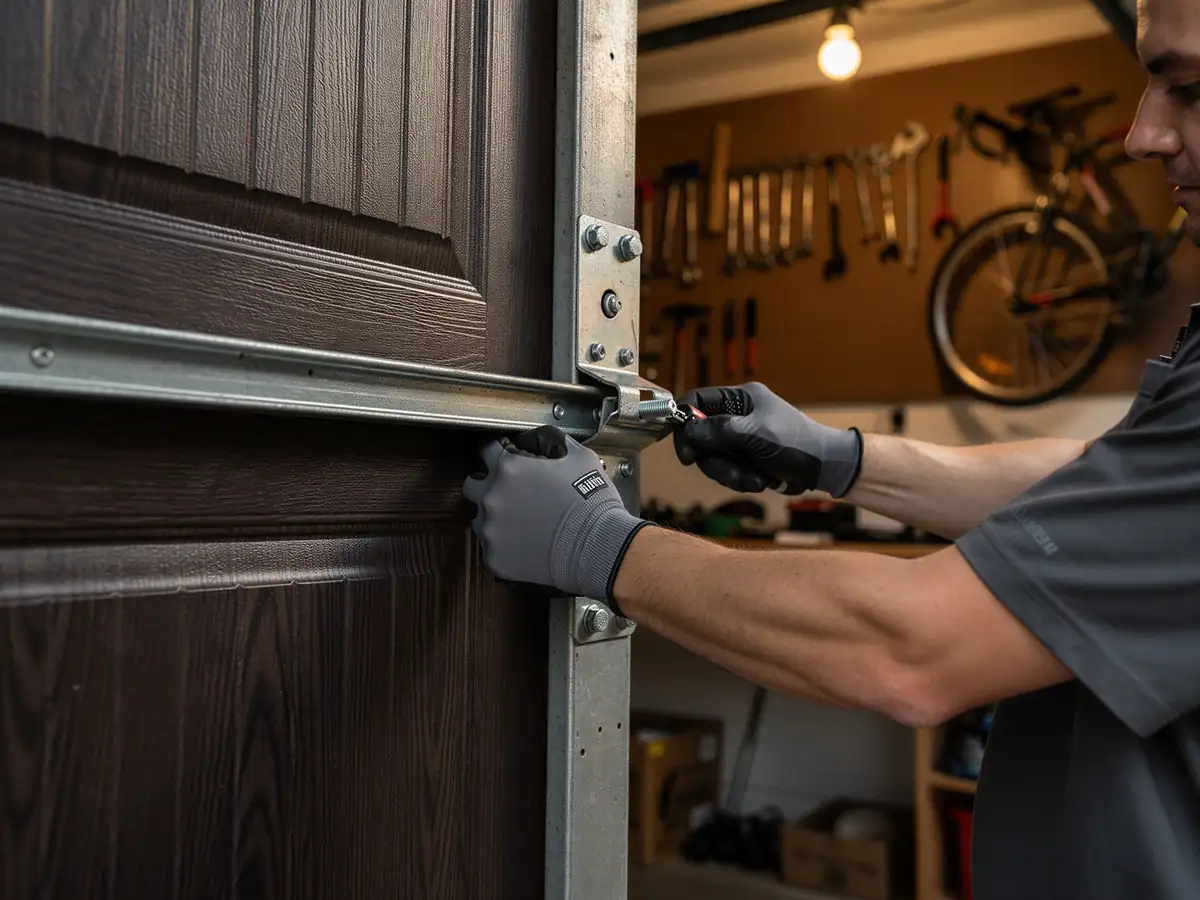
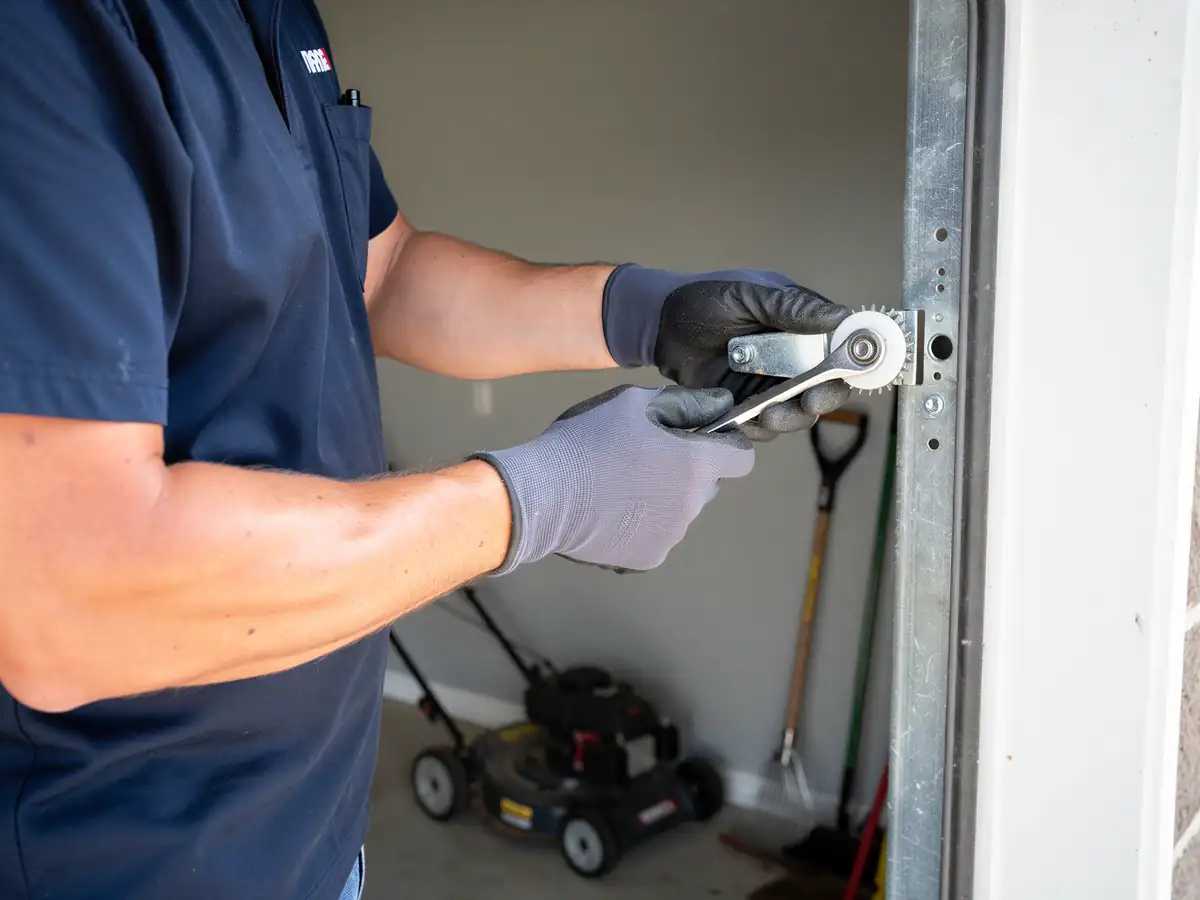
We won't pretend every opener swap is tidy. On a house this age, the bracket that held the old unit might not line up with a new one's mounting pattern, and the ceiling framing isn't always where you'd guess from the garage floor. We check that before we quote the job, not after we've drilled holes.
Why It Happens Here
Plymouth's roughly 4,609 households sit in a pocket where the housing stock leans older
Median build year around 1970, consistent with the wider area's 1938 to 1986 range. That matters for openers specifically because garage door openers didn't become a standard builder add-on until later in that window. A lot of these garages were built with a door and a track and nothing else; the opener, if there is one, got added after the fact, sometimes by a previous owner, sometimes by whoever was cheapest at the time.
- 4,609 households
The cold matters too
This is a severe cold climate band, and openers installed in unheated garages take a beating every winter - grease in the drive gears thickens, chain tension changes with temperature swings, and the whole unit works harder in January than July. An opener rated for a mild climate, or one that's simply old enough that its lubricant has broken down, shows its age fastest right here, not in a garage that stays warm year-round.
What Is on the Truck
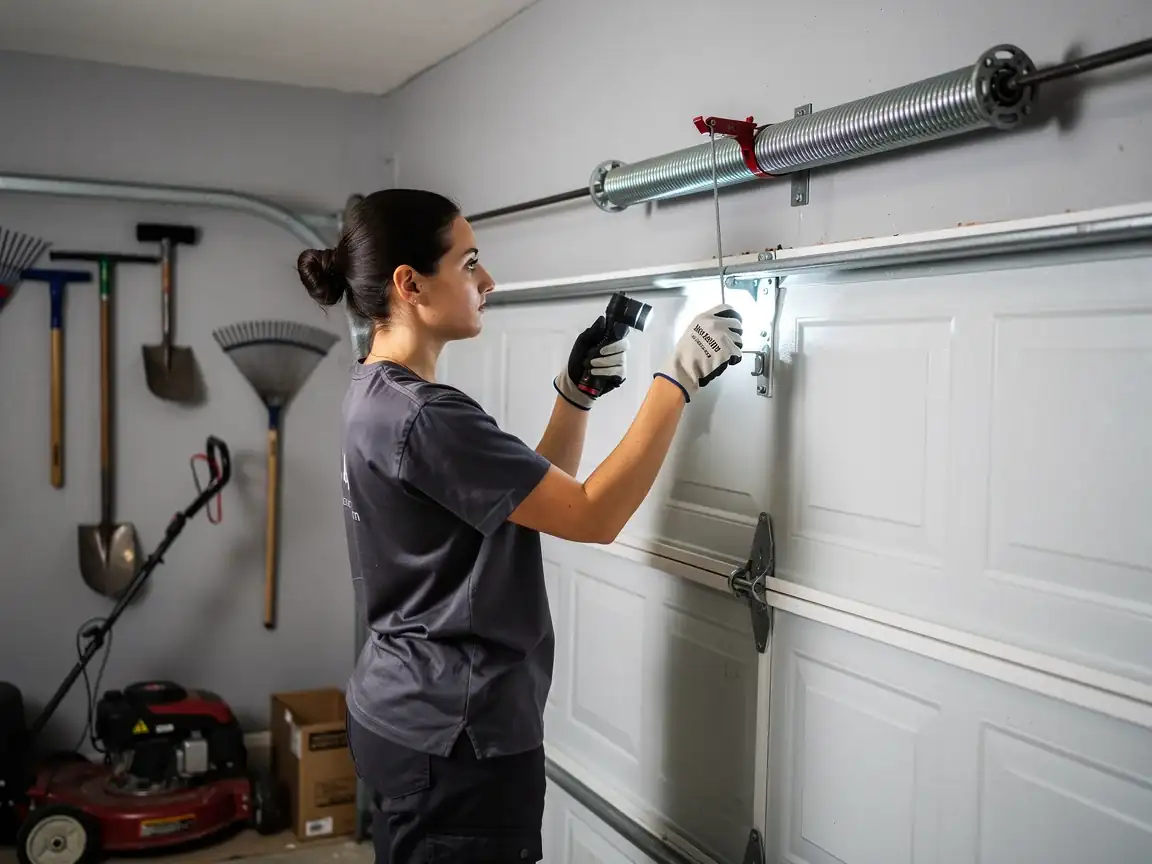
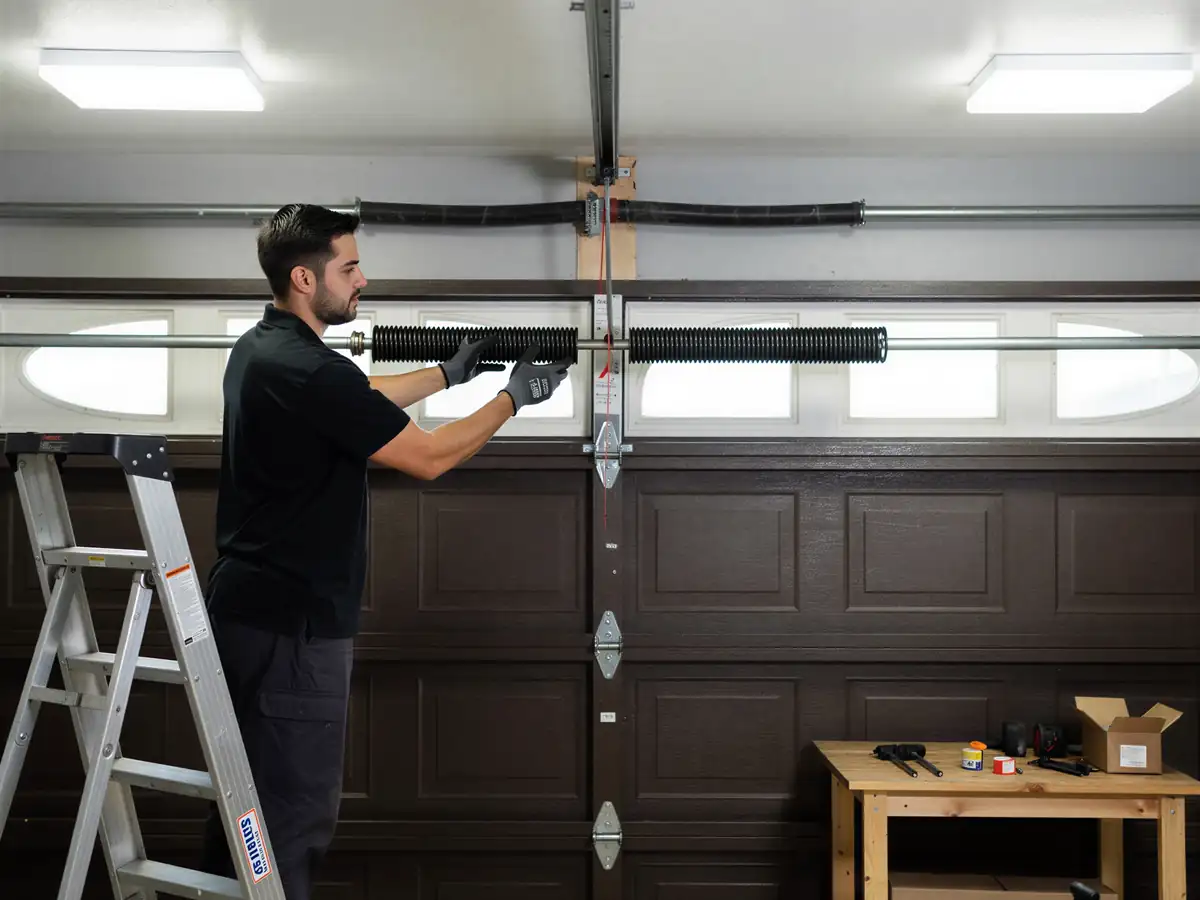
We carry belt-drive and chain-drive openers suited to the kind of torsion and extension spring setups common on houses from this build era, along with the battery backup units that newer code expects but 1970s installs never had. What we don't carry is a universal bracket kit that fits every ceiling from every decade - on an older Plymouth garage, that part sometimes has to be sourced after we've seen the framing in person, which can mean a short wait on parts rather than a same-visit fix.
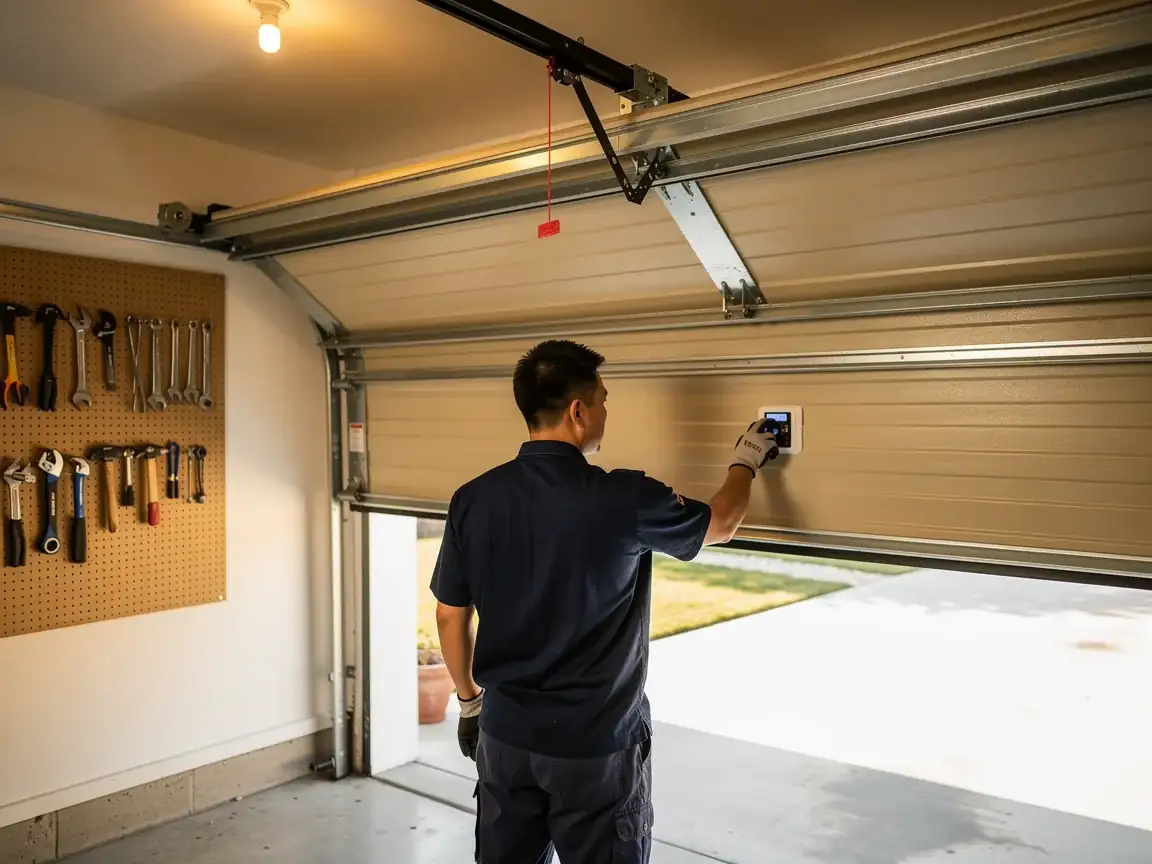
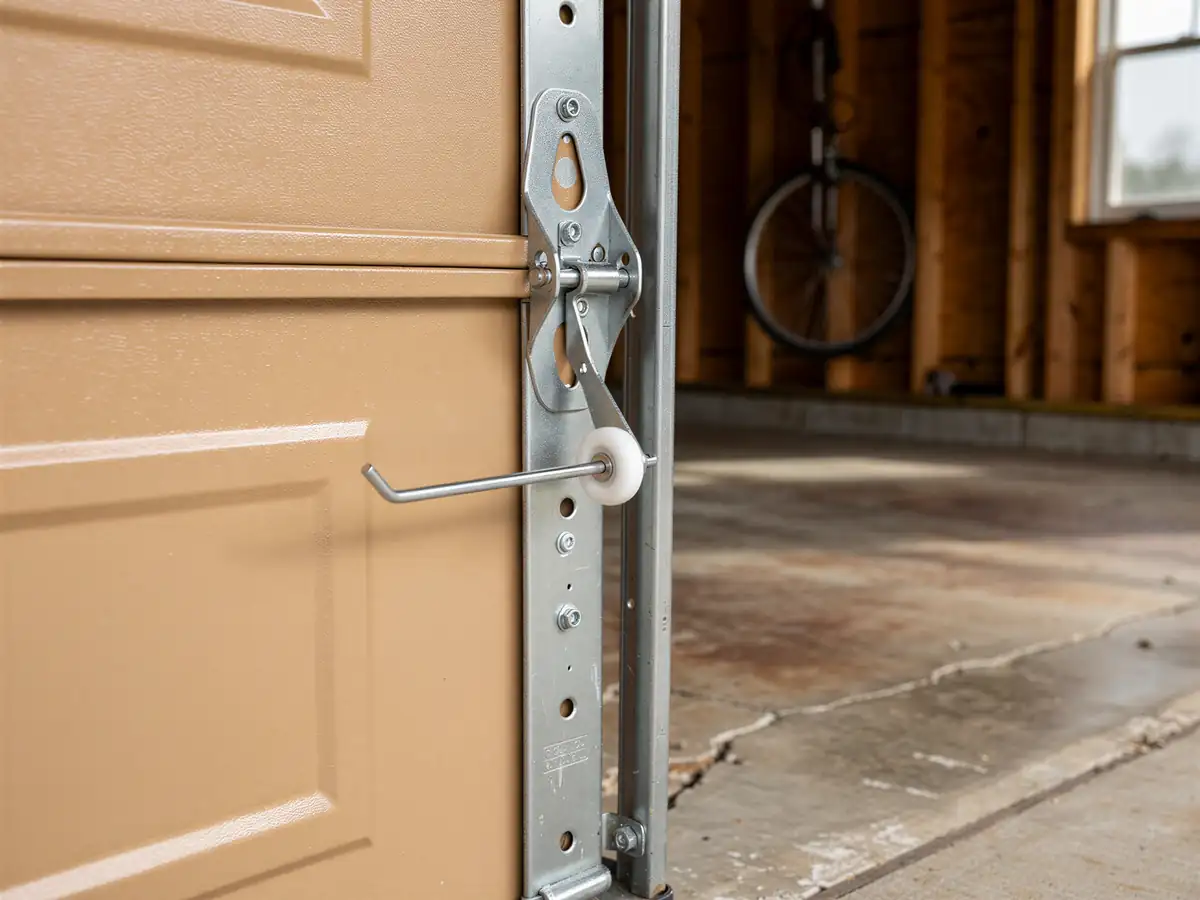
We also bring the wiring and safety-sensor hardware to bring an older setup up to current standards, since a lot of these original installs predate the photo-eye sensors required now. If the existing track or springs are shot too, that's a conversation we have on-site, not a surprise on the invoice.