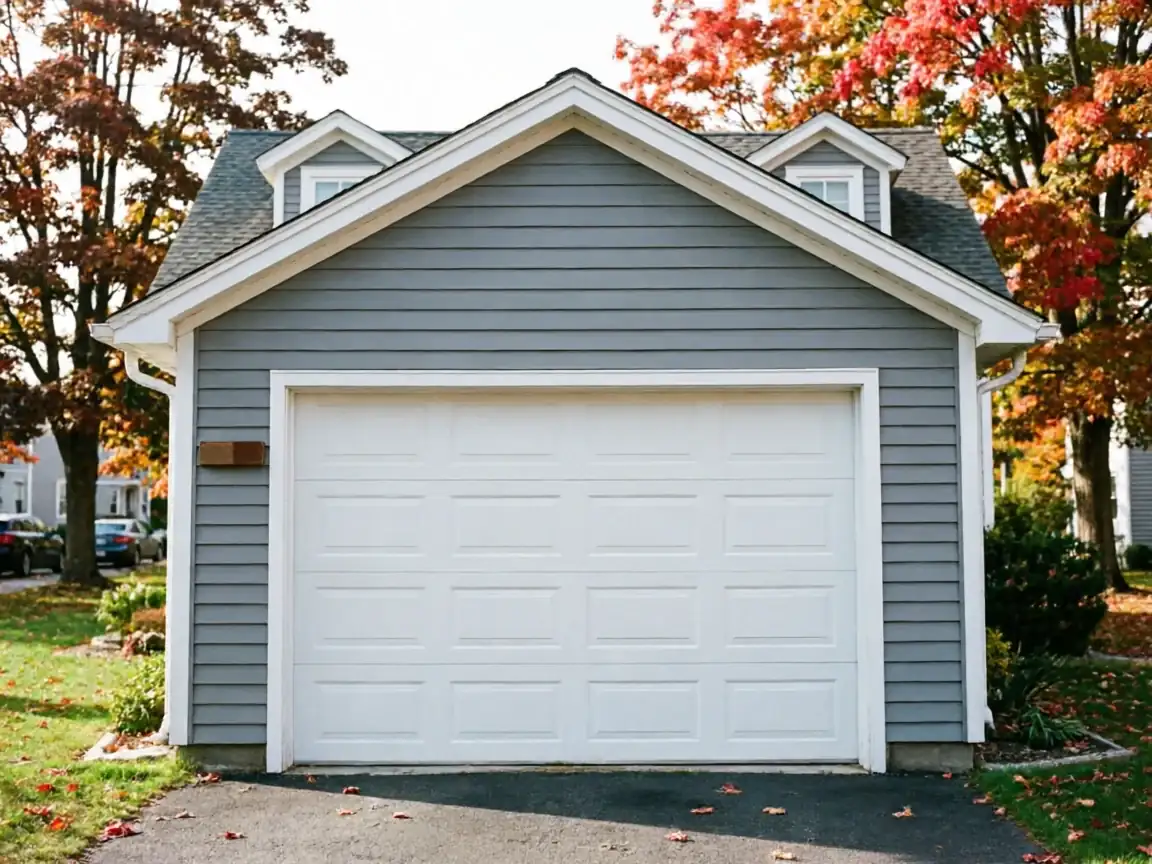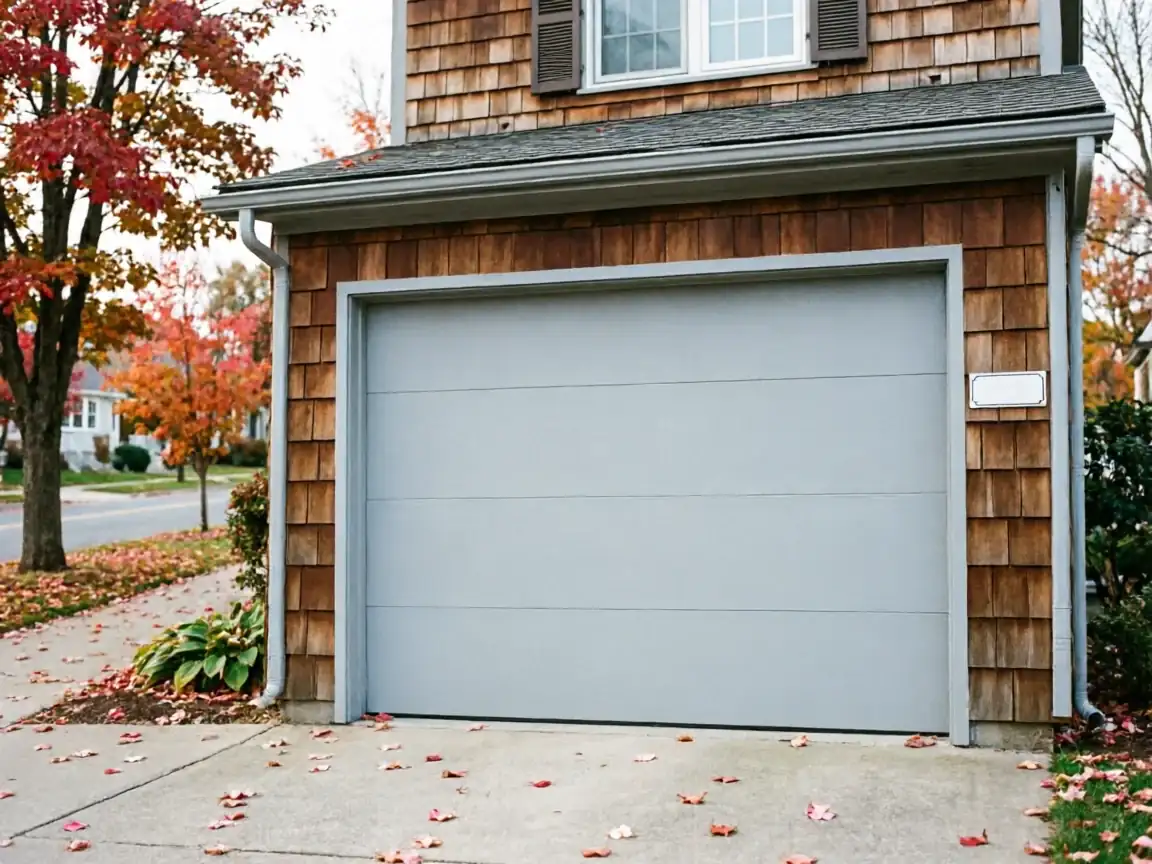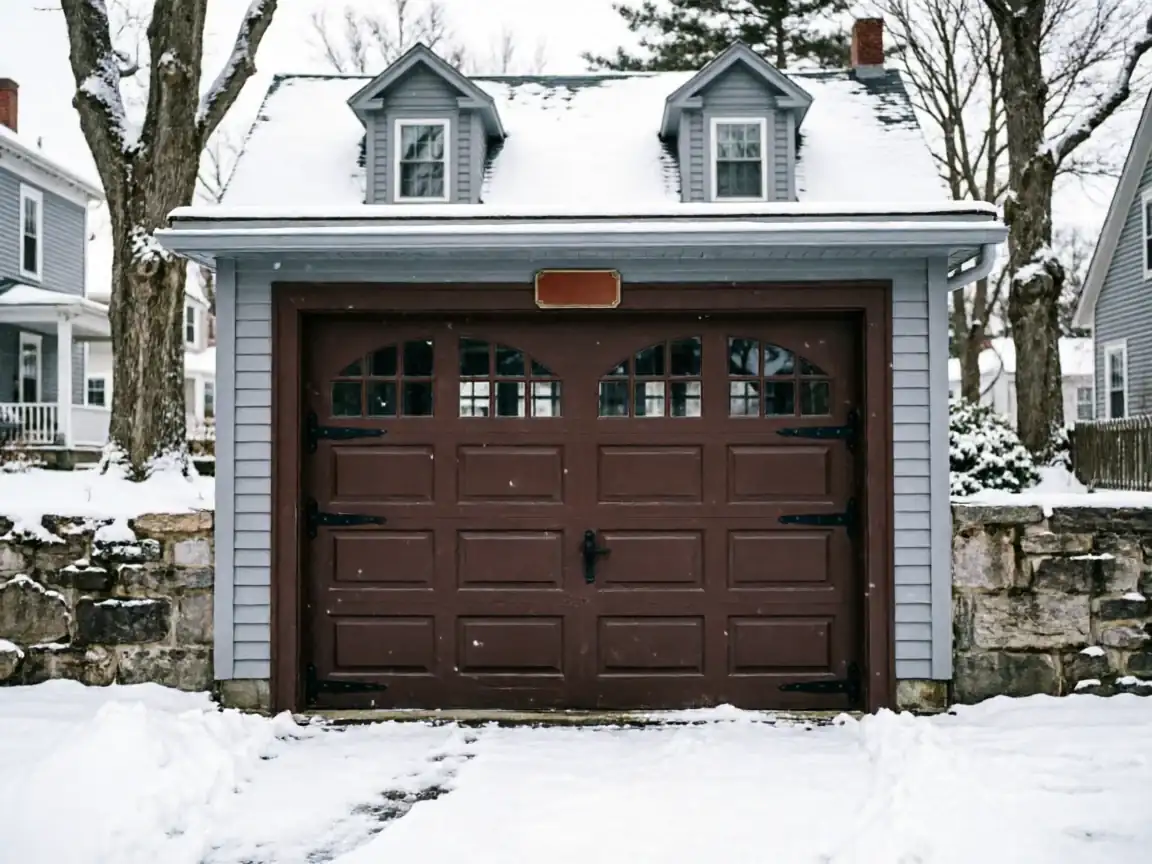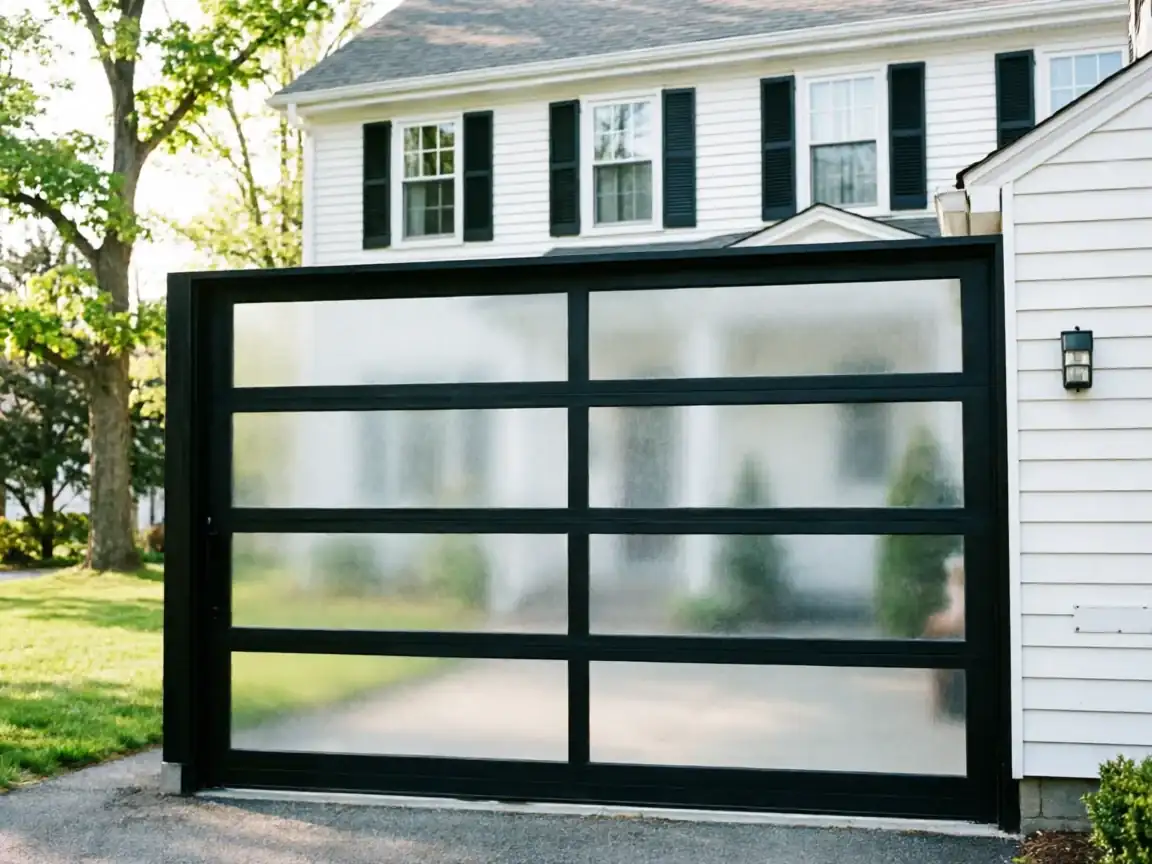
The Symptom
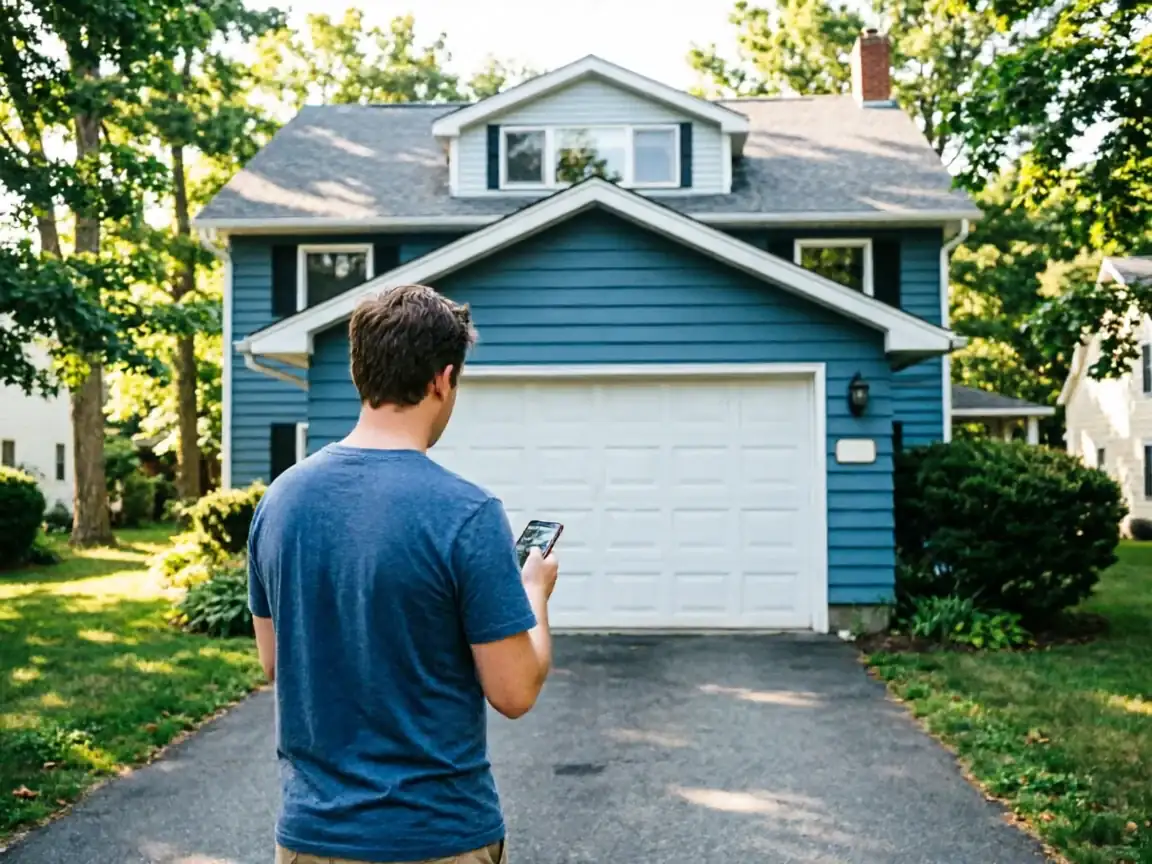
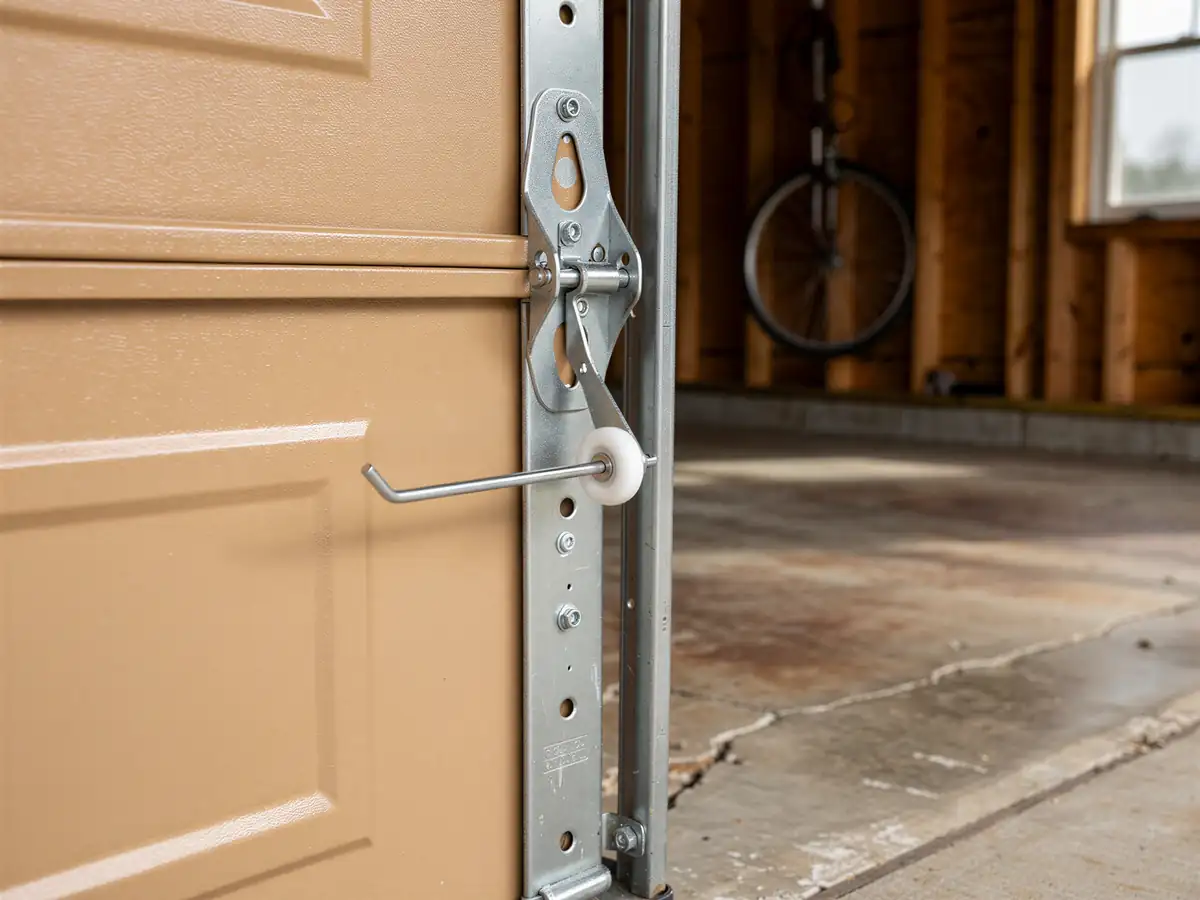
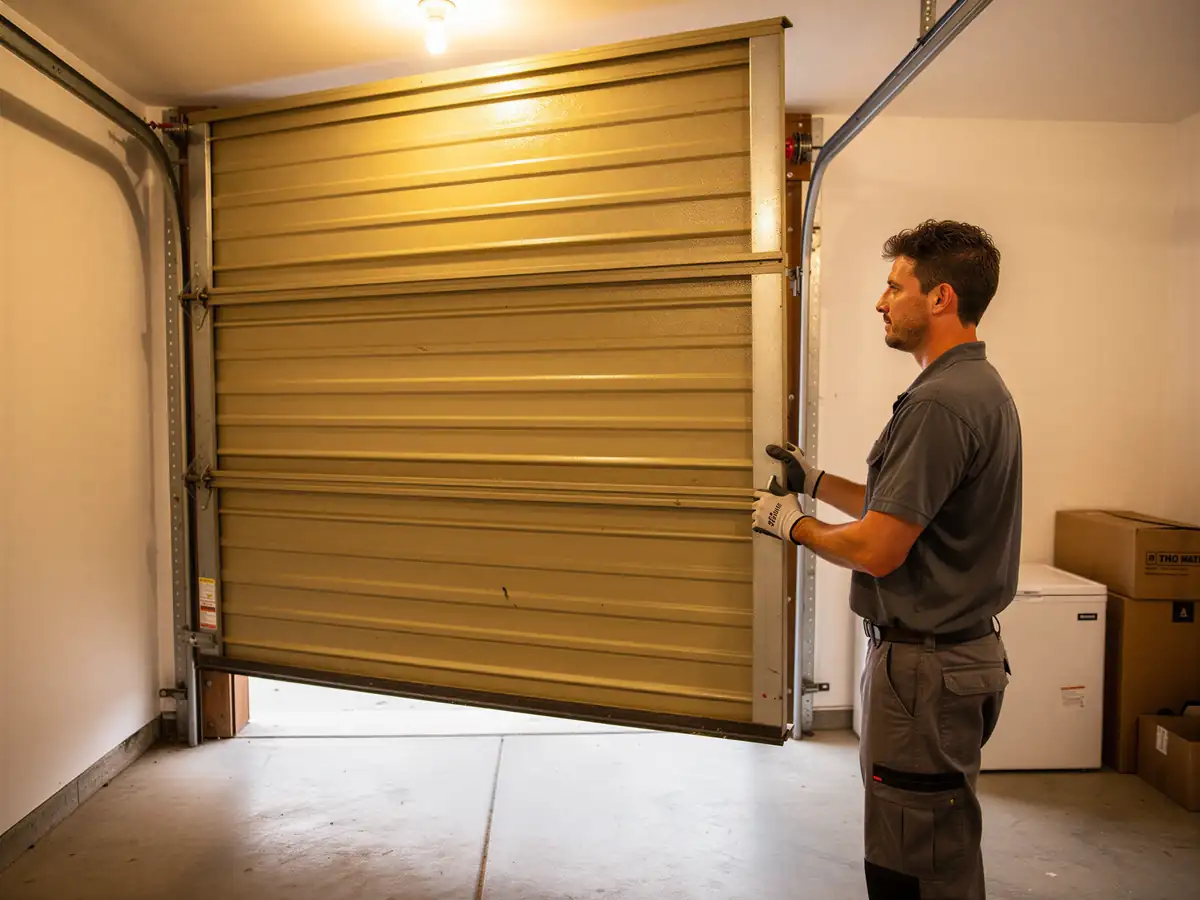
When a door comes off its track in Plainville, it usually isn't a dramatic derailment. One roller walks out of the channel, the door racks sideways a half inch, and it either jams halfway down or grinds against the track edge every time it moves. Sometimes you'll hear a bang first - a cable snapping or a bottom bracket letting go - and the door drops crooked and stops.
Homes in Plainville were mostly built right around 1970, a much narrower window than the 1938-to-1986 spread you see across the wider Bristol service area. That matters for this symptom specifically: it means the track gauge, the bracket spacing, and the roller stem length on a Plainville off-track call are a lot more predictable than on a job in a town with a wider mix of construction eras. We're not guessing what's behind the door before we open the truck.
If you can still see daylight between the roller and the track, or the door is wedged at an angle in the opening, don't force the opener again. Running it further usually bends the track or tears the bottom bracket loose from the panel, and that turns a repair into a replacement.
Time on the Job
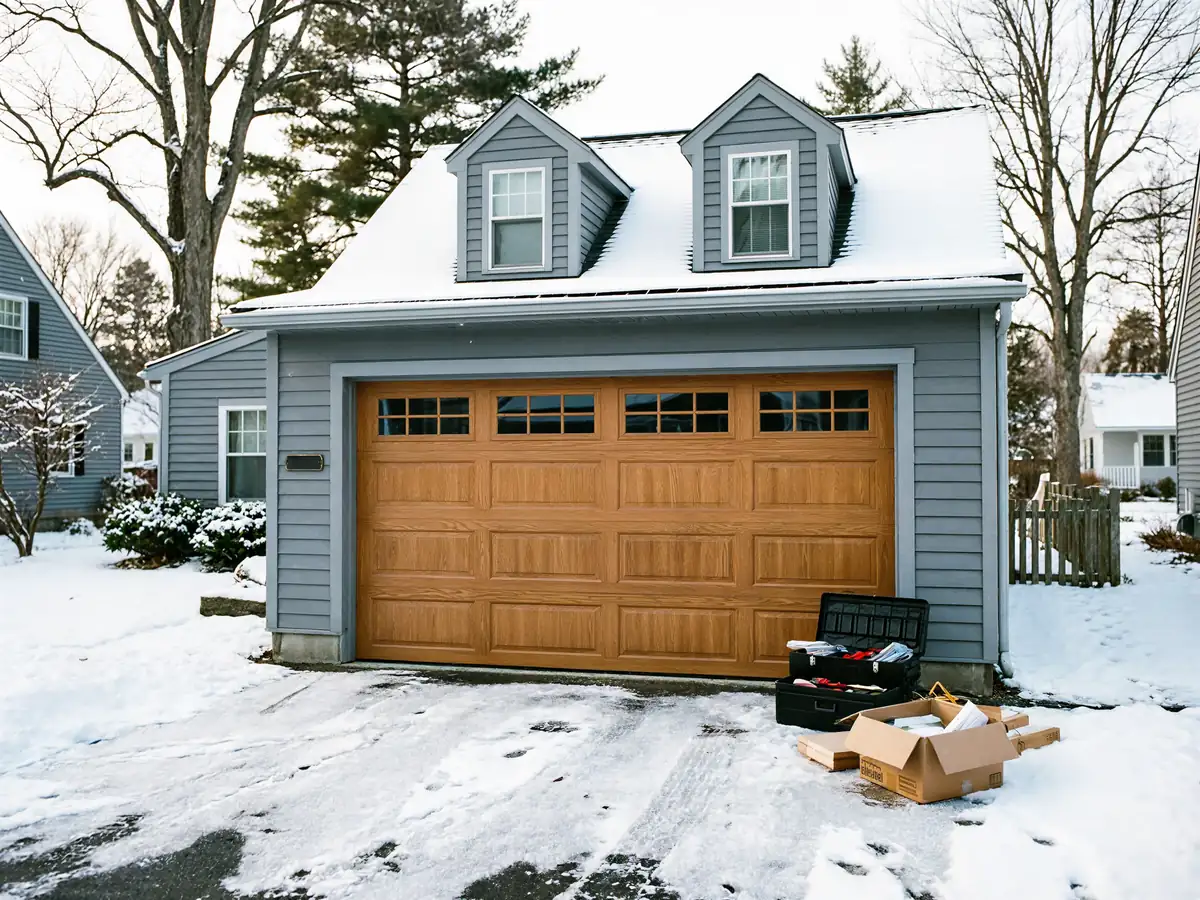
We travel from Bristol, about 4 miles to reach Plainville, so there's no local branch or dispatch point to factor in - just the drive. Once on site, a straightforward off-track fix (one or two rollers, a track section bent back into alignment, hardware re-torqued) is a same-visit job on most doors from this era.
What slows it down is when the track itself is bent rather than just the roller pulled free. On the older end of Plainville's stock, track brackets were often fastened directly to jamb wood that's shifted over fifty-plus years, and realigning the track means shimming the bracket, not just tightening a bolt. We check for that before we start swinging a hammer on the track, because forcing a bent rail straight on crooked framing just means it bends again in a season or two.
What It Costs
We don't post a flat number here because off-track repairs split into two very different jobs
A roller back in its channel with hardware tightened, or a bent track and damaged bracket that needs new rail stock. The second costs more in parts, not just labor.
One thing worth knowing if you're in Plainville specifically
Median household income here runs around $81,920, noticeably lower than the roughly $107,435 median across the broader Bristol service area. That's not a discount we offer - it's context for a decision we see often, which is whether to repair an off-track door on an older unit or put that money toward a new door and opener instead. On a door already near the end of its life, a second off-track repair in a few years can end up costing more than replacement would have.
What Is on the Truck
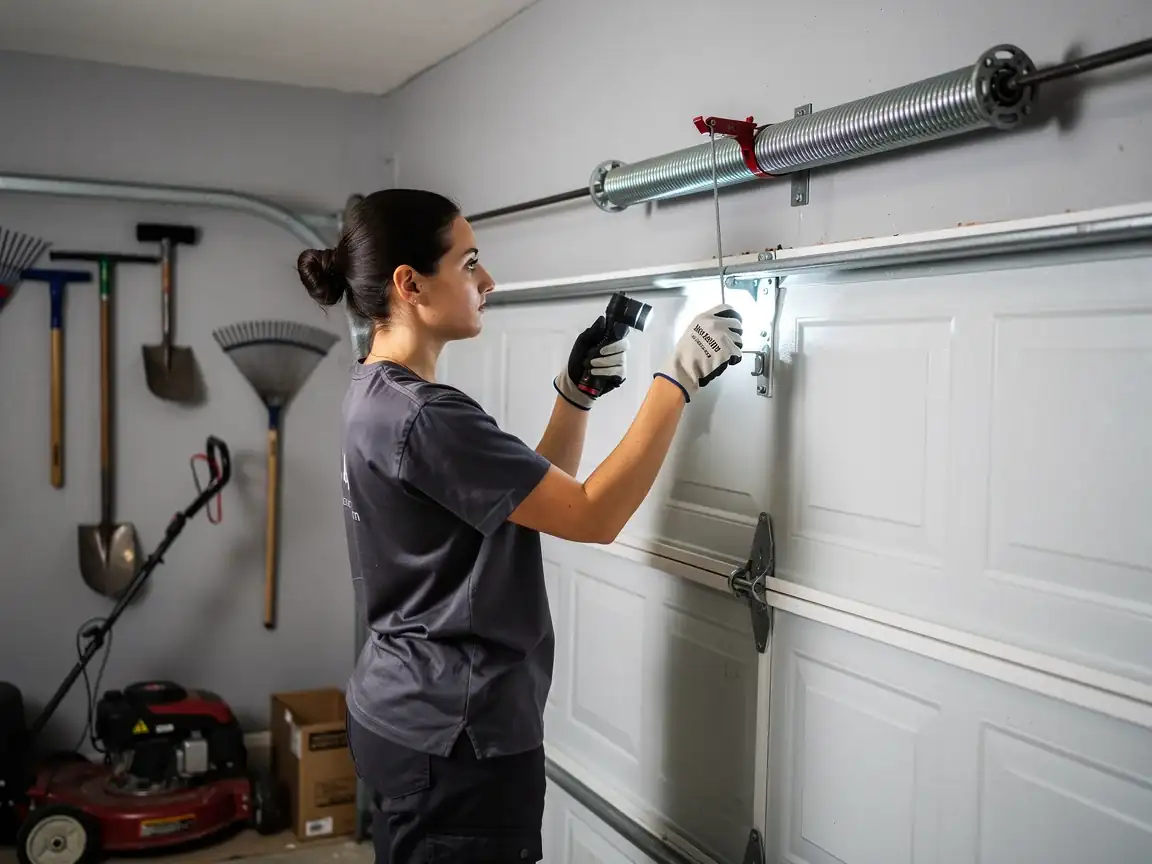
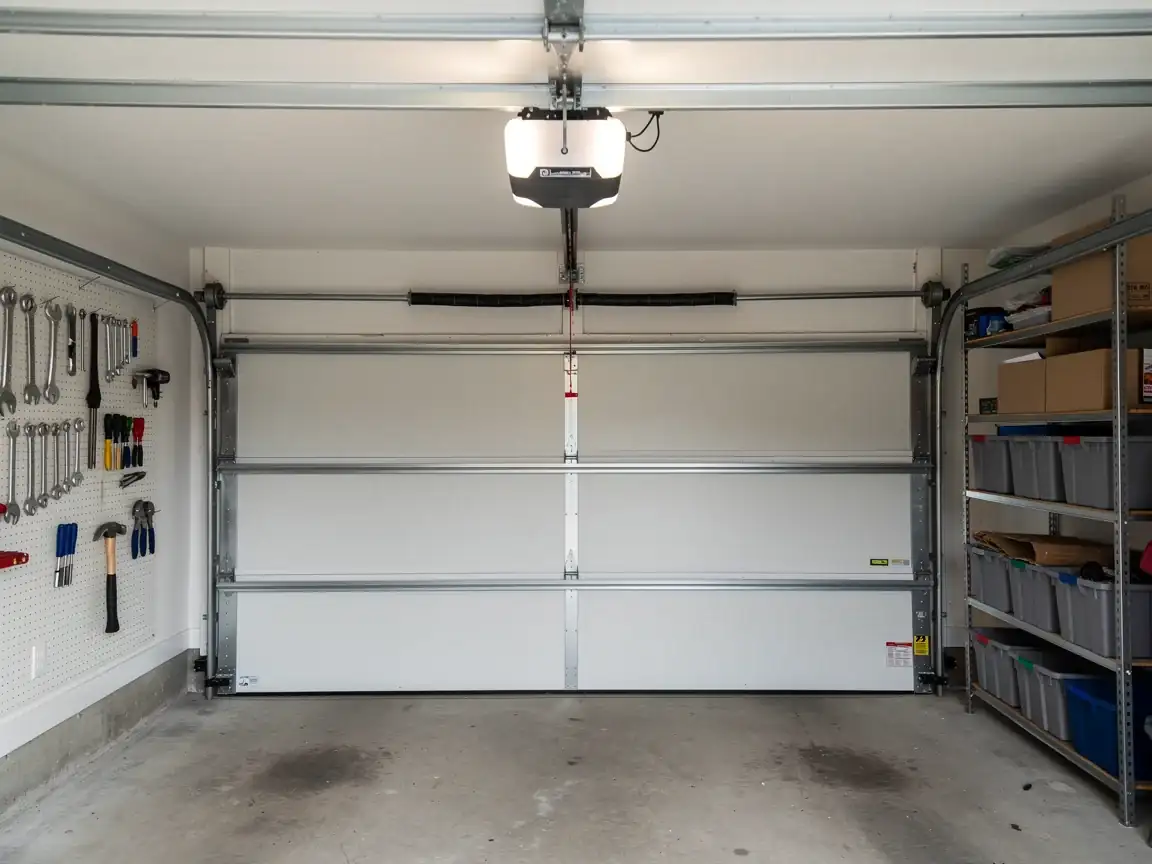
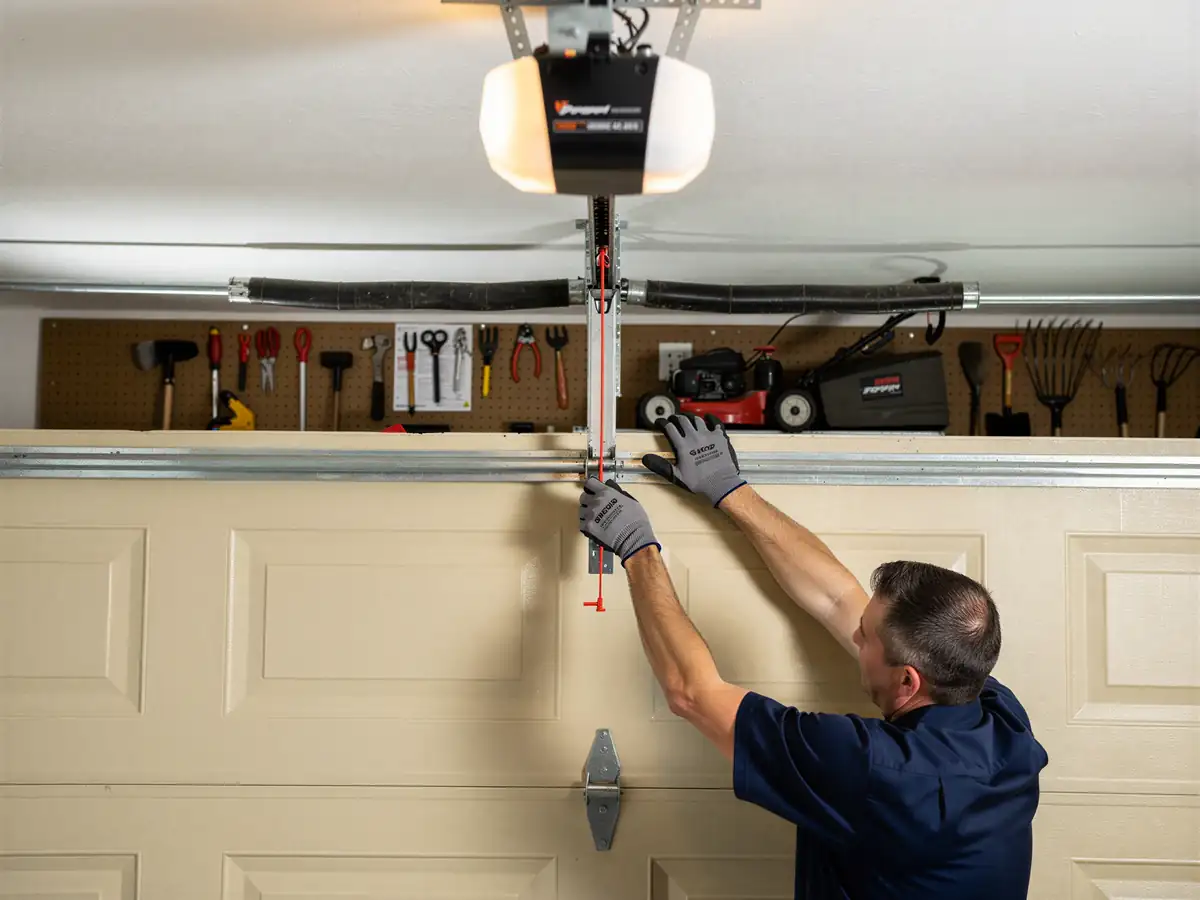
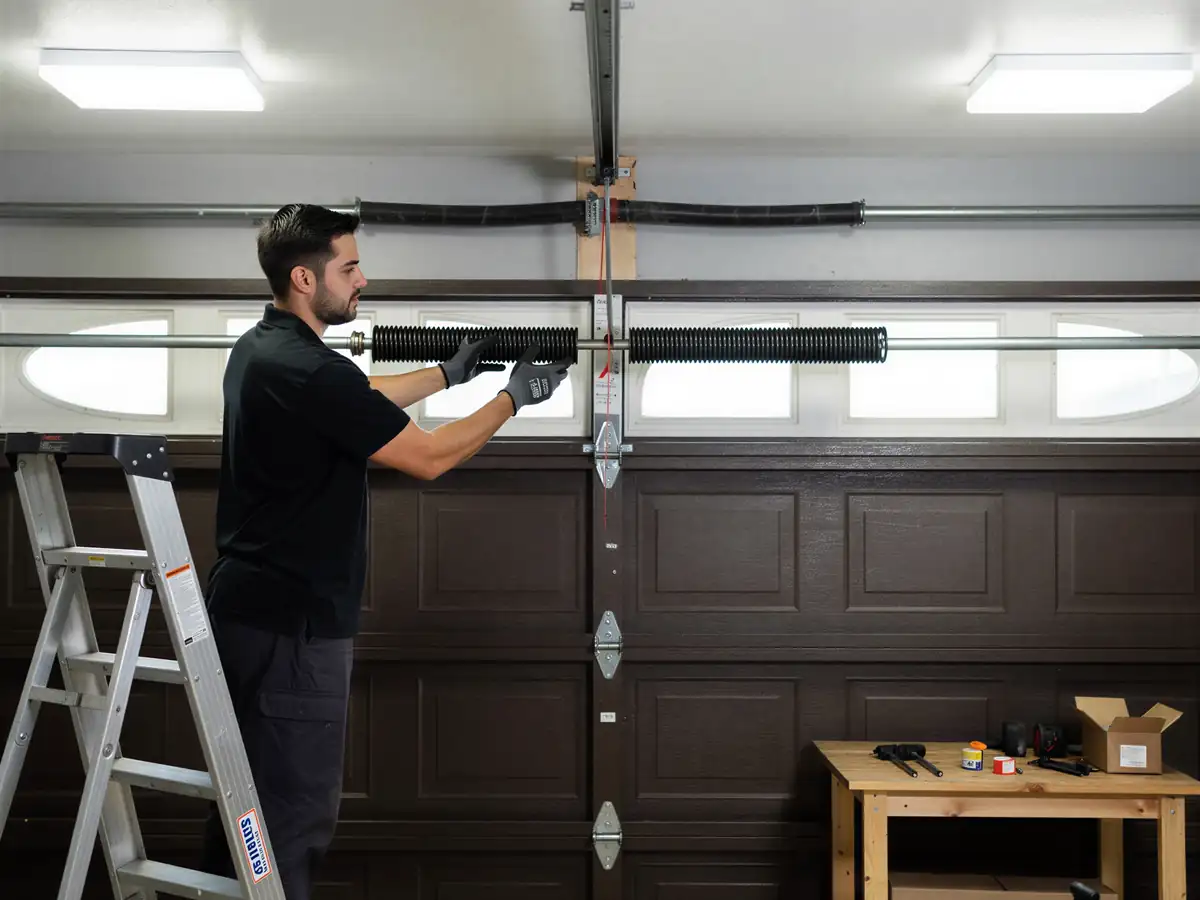
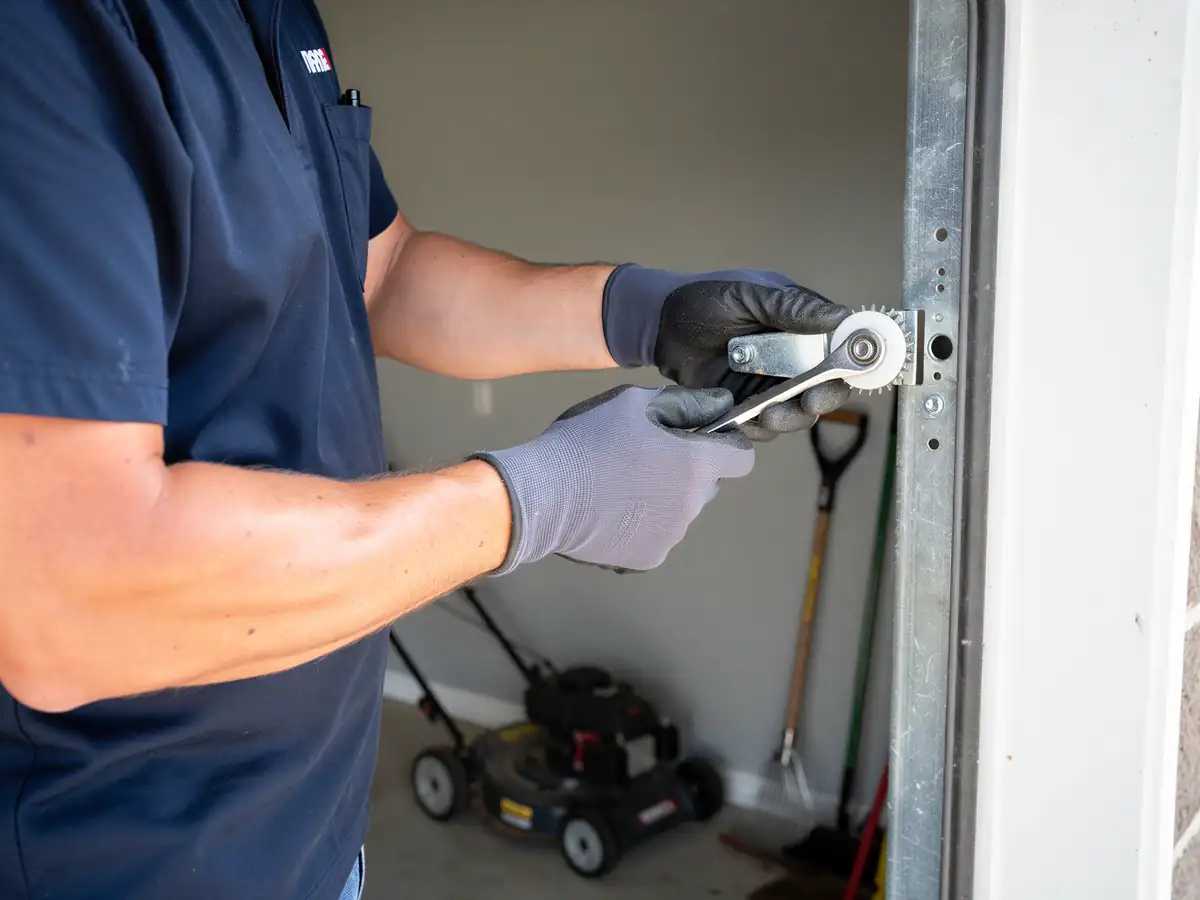
For off-track calls we carry replacement rollers in the common stem lengths, track sections in standard widths, bottom brackets, and the safety cables that are supposed to catch a bracket if it fails under spring tension. We also carry torsion spring winding bars and clamps, because a door that's come off track with the spring still fully wound is not something to touch by hand.
What we don't carry is custom-width track or oversized commercial door hardware - those get special-ordered, and that adds days, not hours, to the job. On a standard residential double door built to the dimensions common in this era, we're usually equipped to finish in one trip.
Why It Happens Here
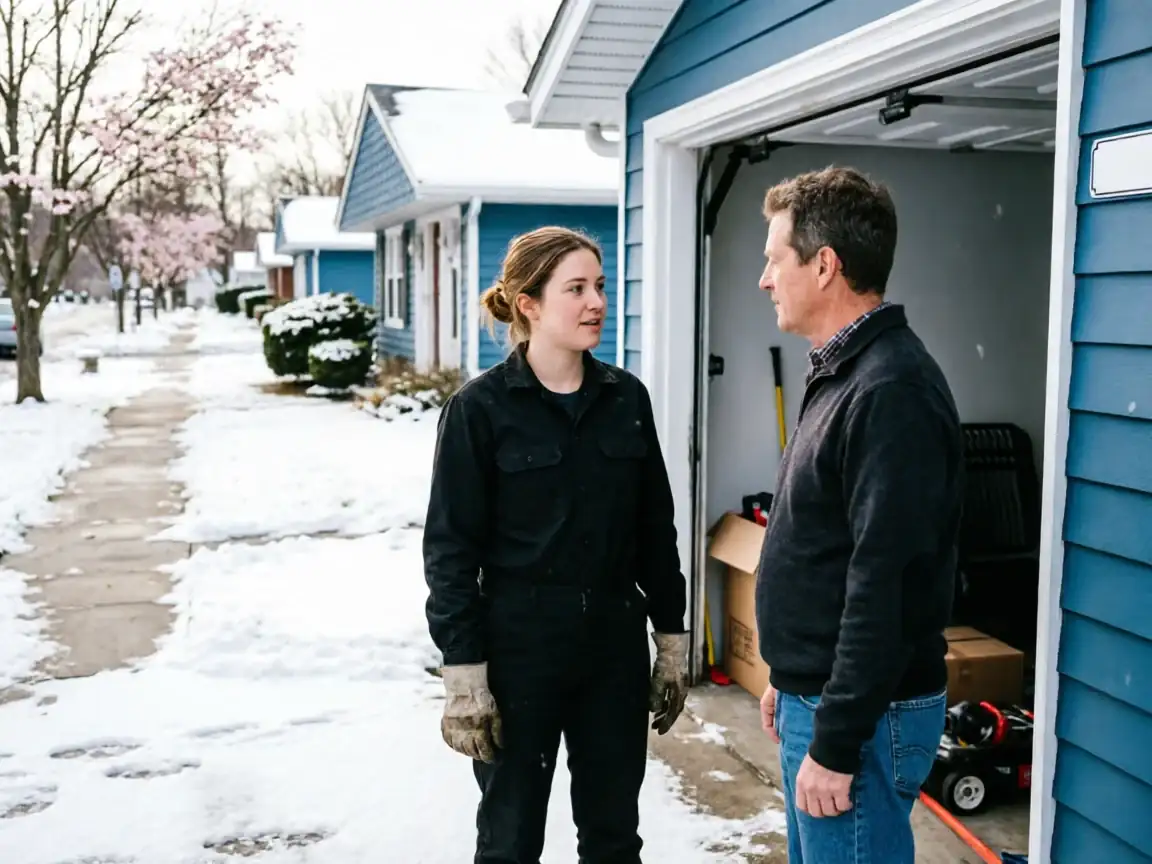
Two things line up to make off-track failures a recurring call in Plainville. First, the age: doors and openers installed when these houses went up in 1970 are now well past the service life of their original rollers and cables, even on units that have had a spring replaced at some point. Second, winter. This area sits in a cold climate zone with severe conditions, and steel track contracts in deep cold while nylon or steel rollers don't contract at the same rate. That mismatch is enough to walk a roller a fraction of an inch out of alignment, and once it's out, every open-close cycle makes it worse.
We also see it after a door's been forced past an obstruction - a bike, a storage bin, ice built up at the threshold. The track survives the first hit but the roller doesn't stay seated, and the door runs rough for weeks before it finally jumps clear.
How We Fix It
We start by releasing tension
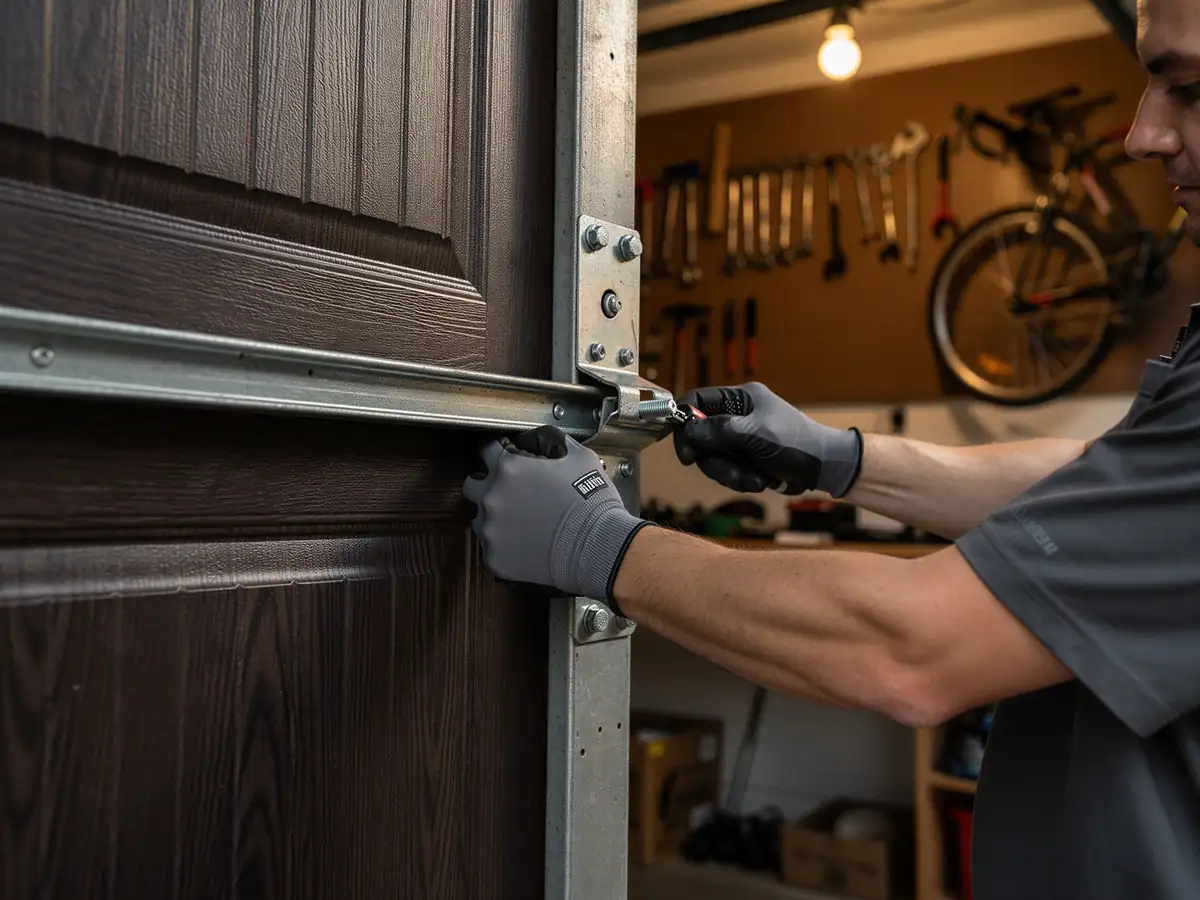
If the spring is still wound and the door is sitting crooked, we secure it before anyone touches the track. Then we check the track for bends versus a clean miss (roller just out of the channel, track itself straight). A clean miss is fast: reseat the roller, check alignment with a level, tighten the bracket bolts.
A bent track gets cut back to the first clean bracket point rather than hammered straight
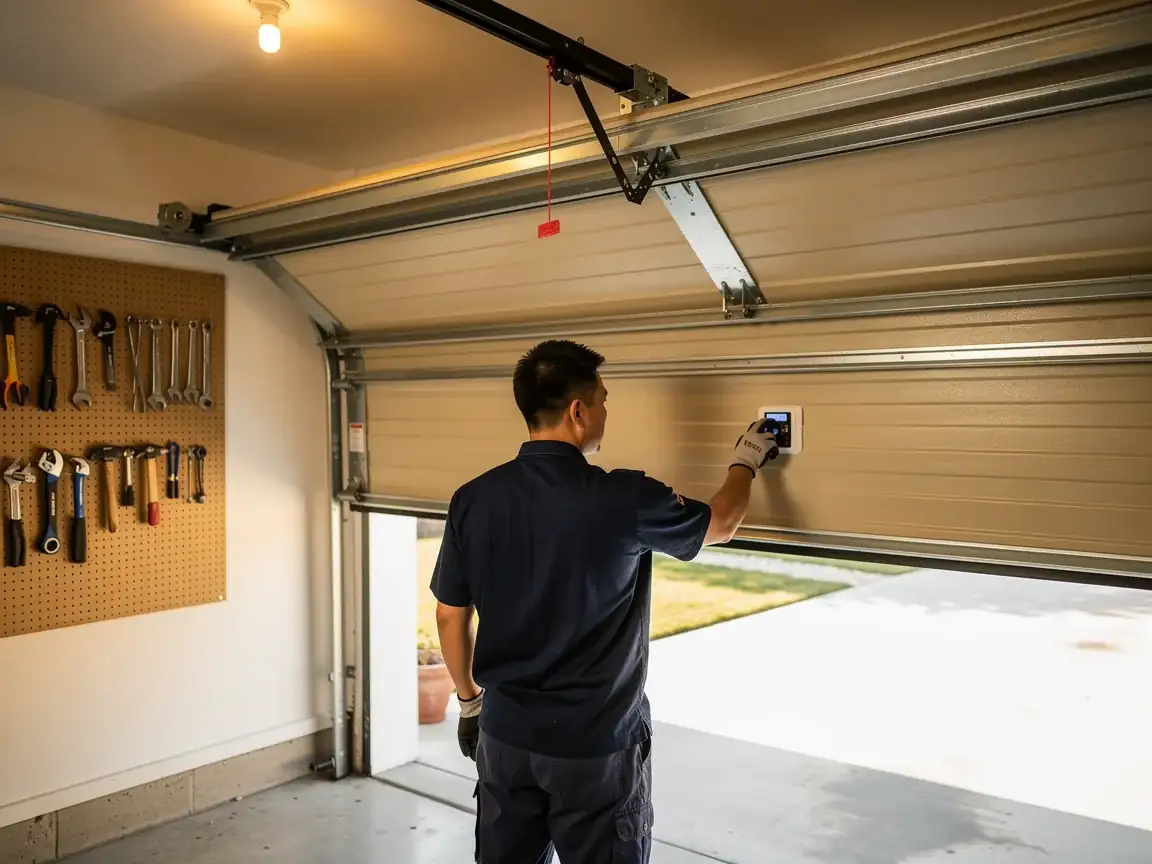
Because a track that's been bent once is weaker at that spot even after it looks correct again. We replace the damaged section and re-anchor it to solid framing, shimming where fifty years of settling have pulled the jamb out of square. Last step is running the door through a few full cycles by hand before we hand it back to the opener, so we catch any remaining drag before it becomes next winter's call.