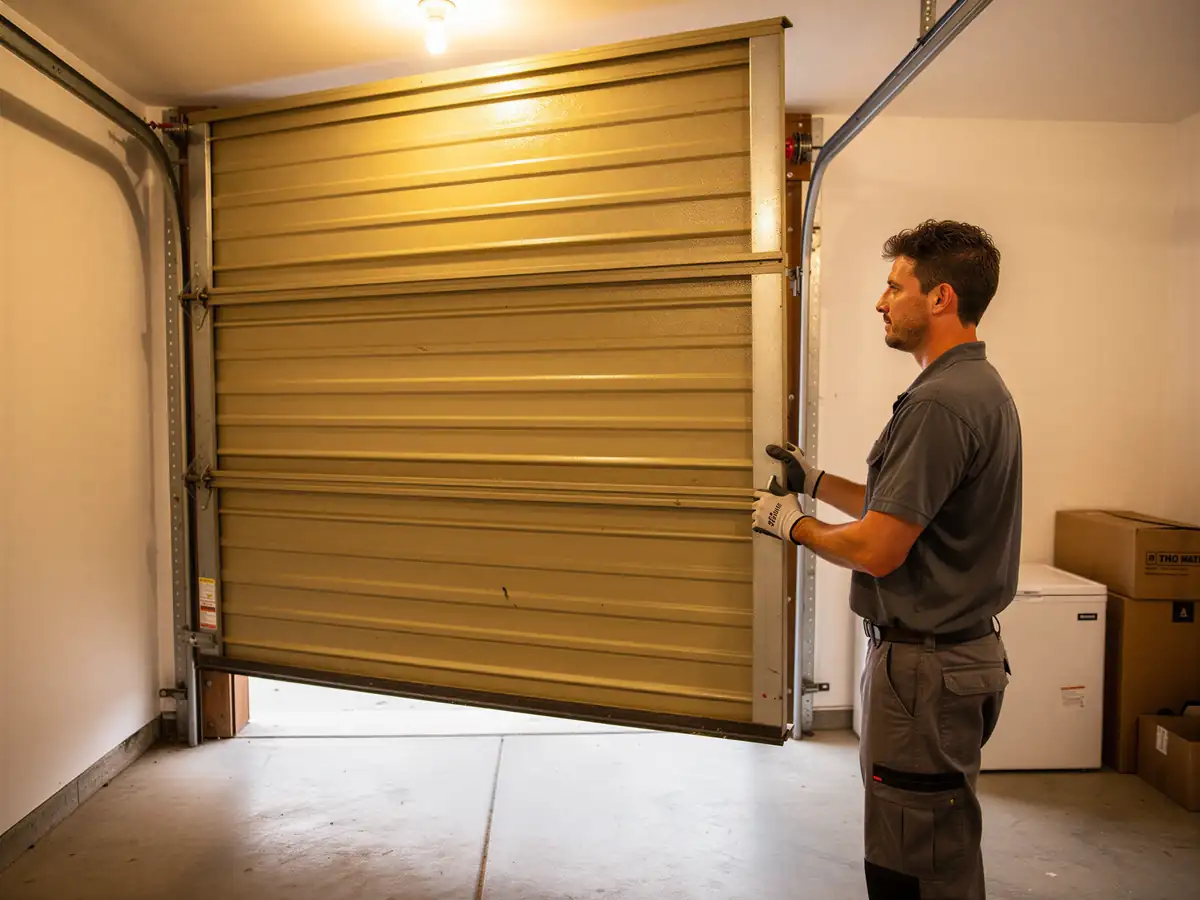
The Symptom
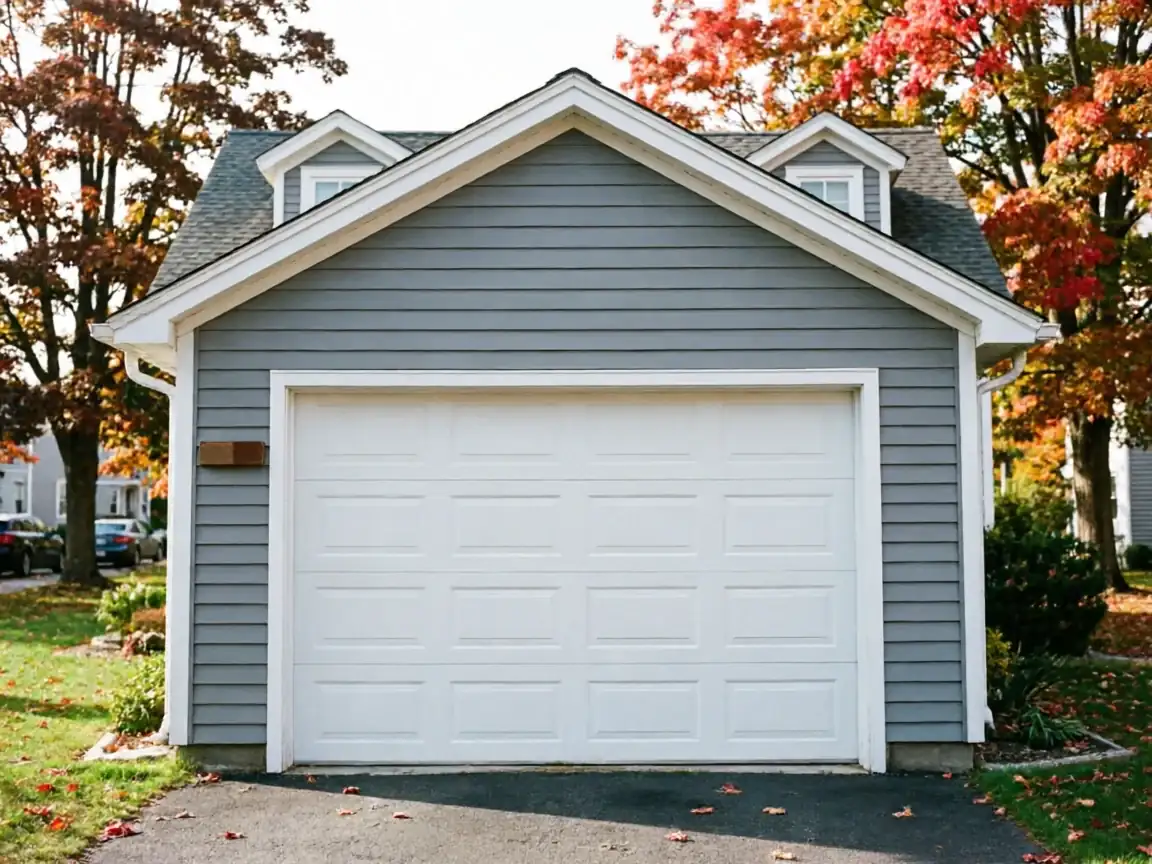
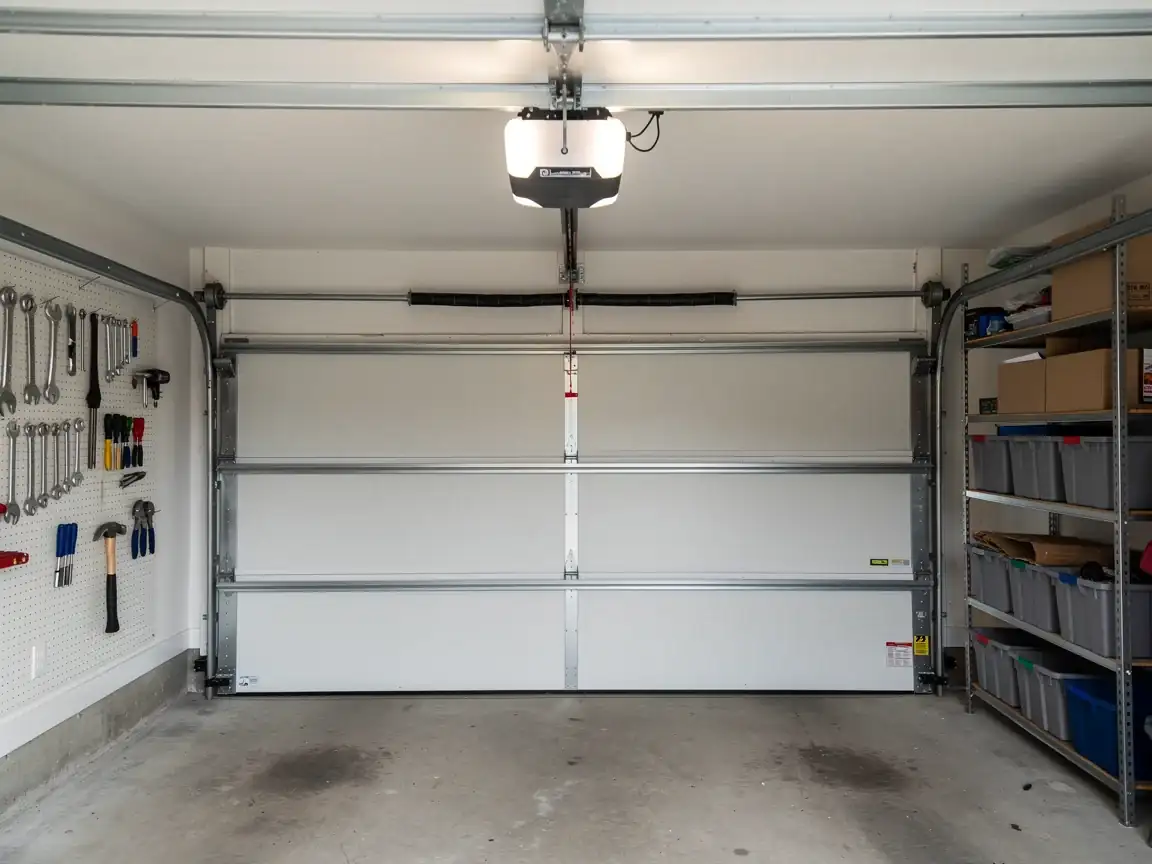
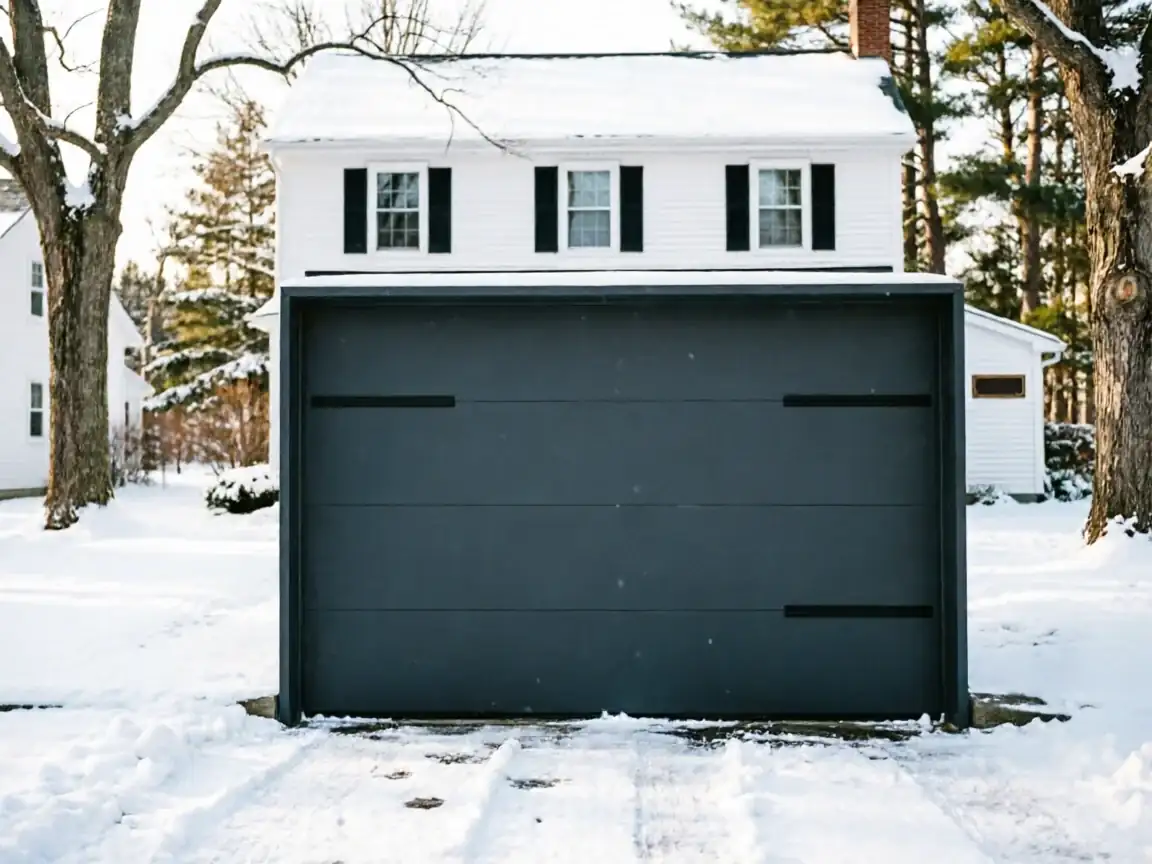
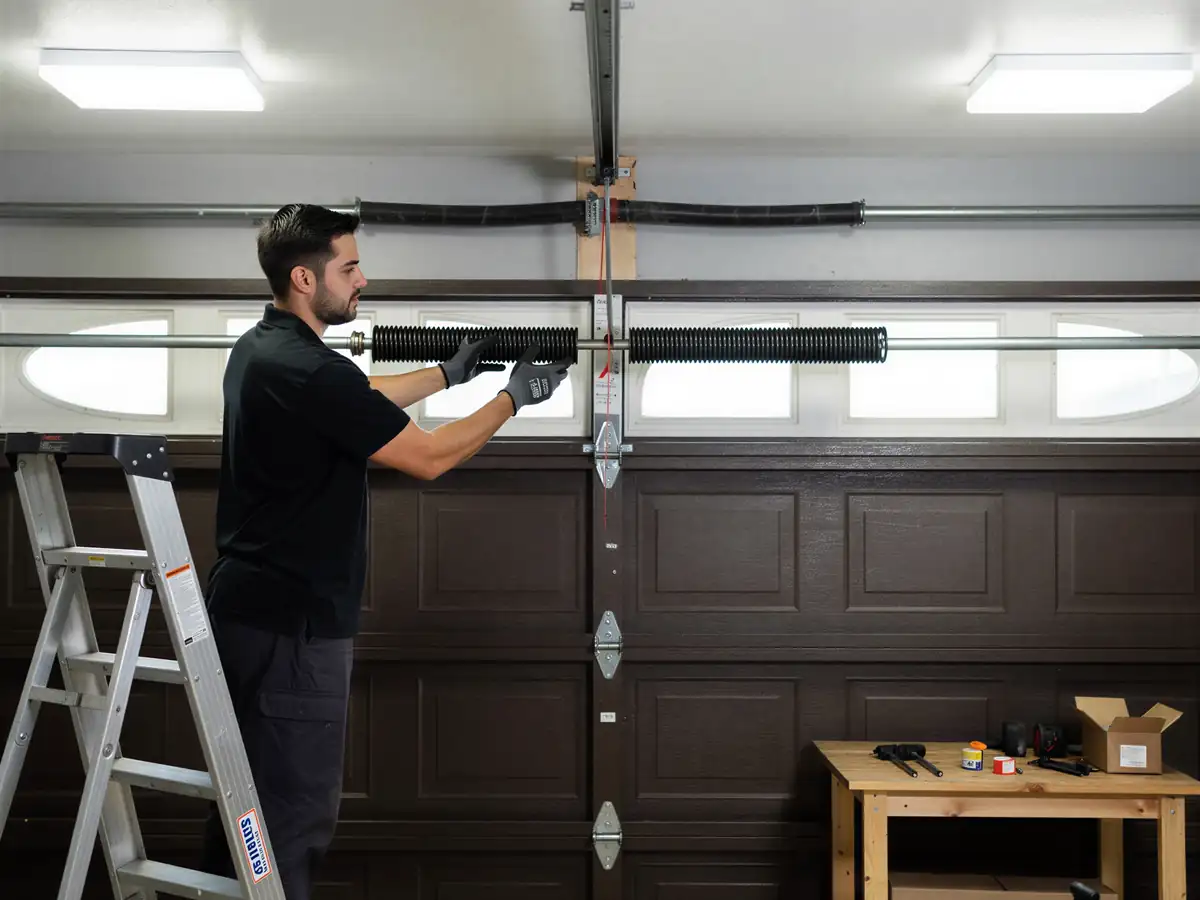
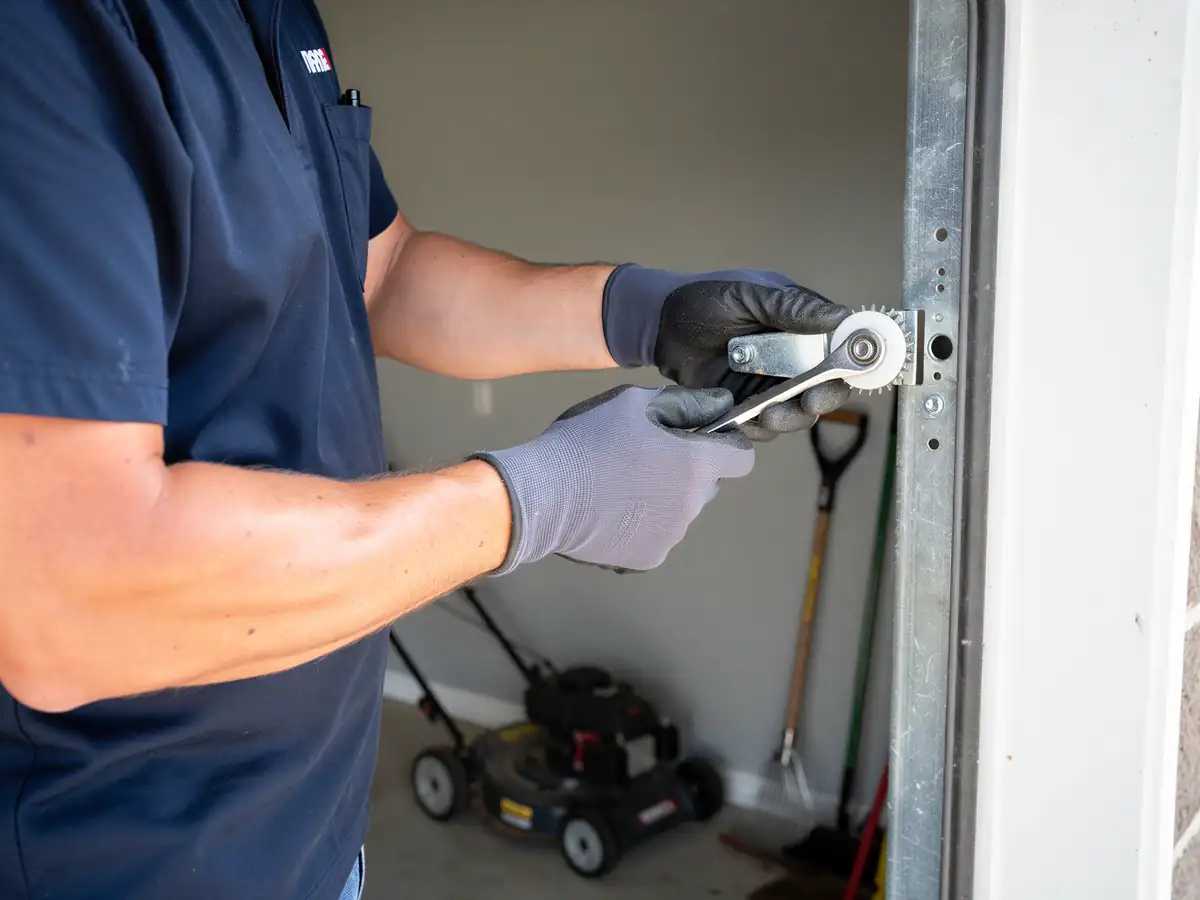
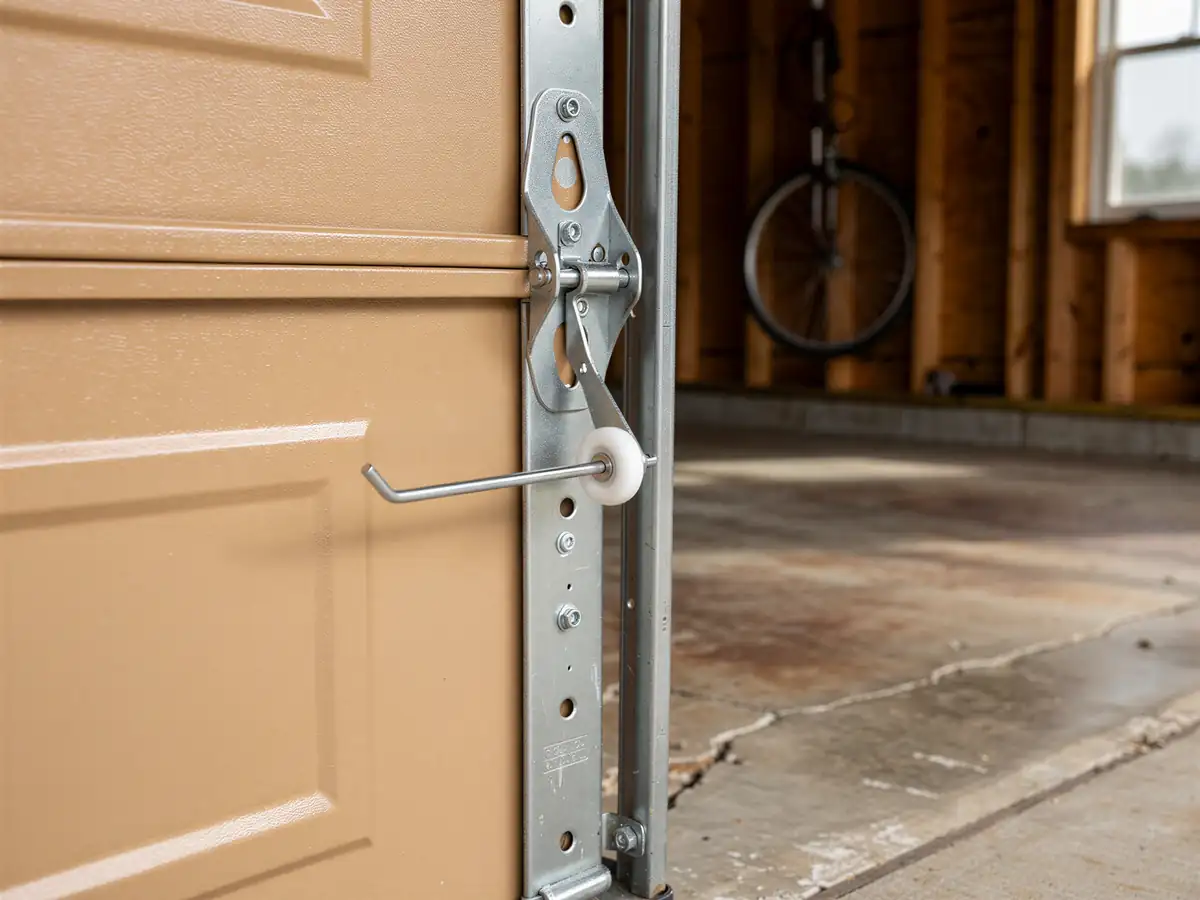
Most Plainville houses went up around 1970, and that era shows up in the doors we get called on. A lot of them still run original overhead extension springs, the kind mounted on either side above the track rather than a single torsion shaft over the header. Some got converted to torsion springs decades later with bottom brackets that were never sized right for the door weight. Either way, the symptoms are the same: the door drops faster on one side than the other, the opener strains and reverses partway up, or a frayed cable lets go without warning. On a door built to a 1970s profile, you also see rollers that have worn an hourglass shape into the track from fifty-plus years of use. None of this is exotic. It's just what happens to hardware that's been doing its job since before most of us were driving. The fix is rarely glamorous - balance, lubrication, bracket tightening - but skipping it on a door this age is how a sticky morning turns into a snapped cable on a Saturday.
Time on the Job
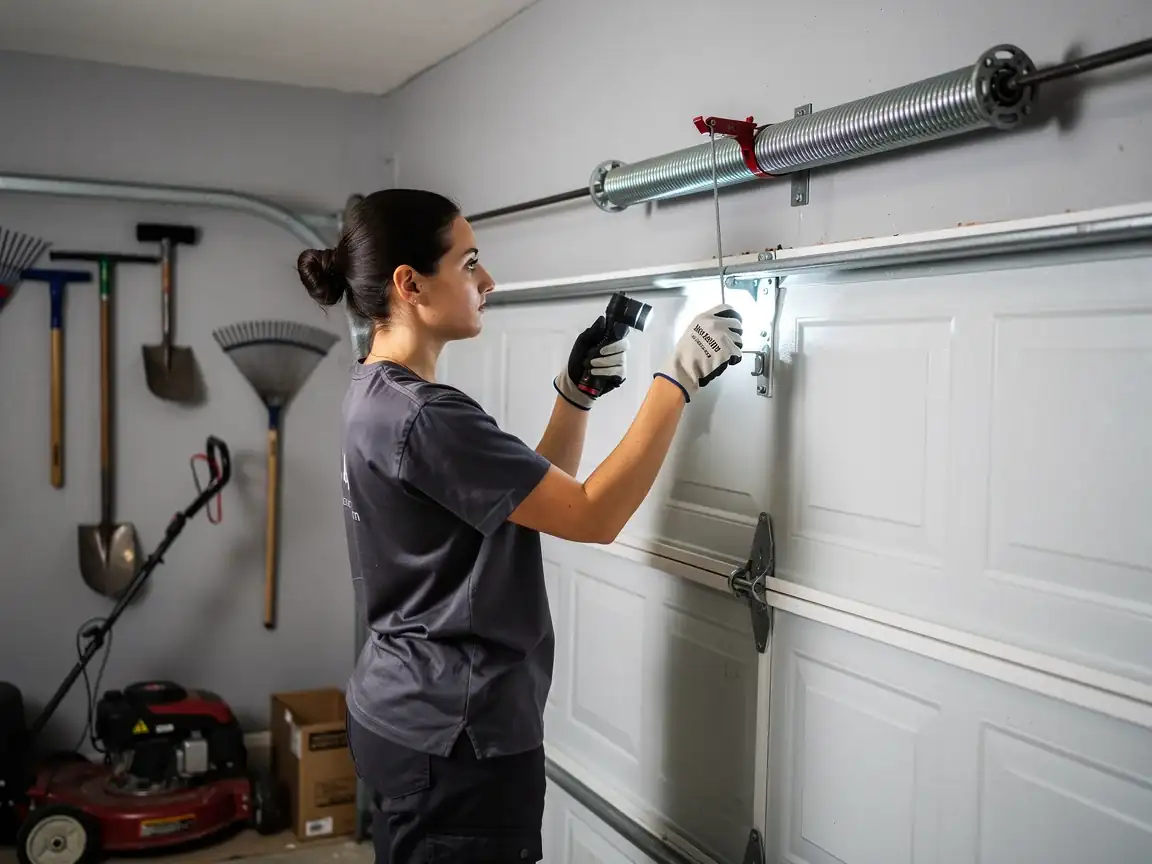
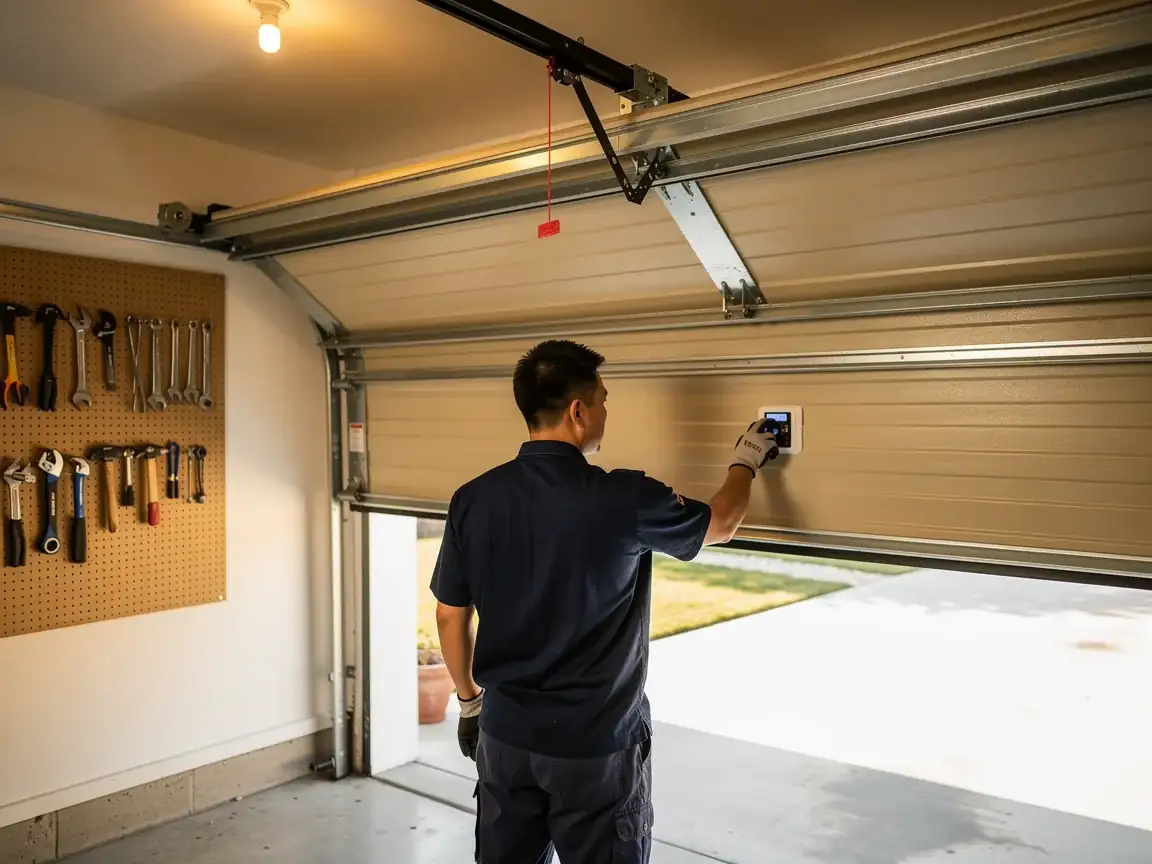
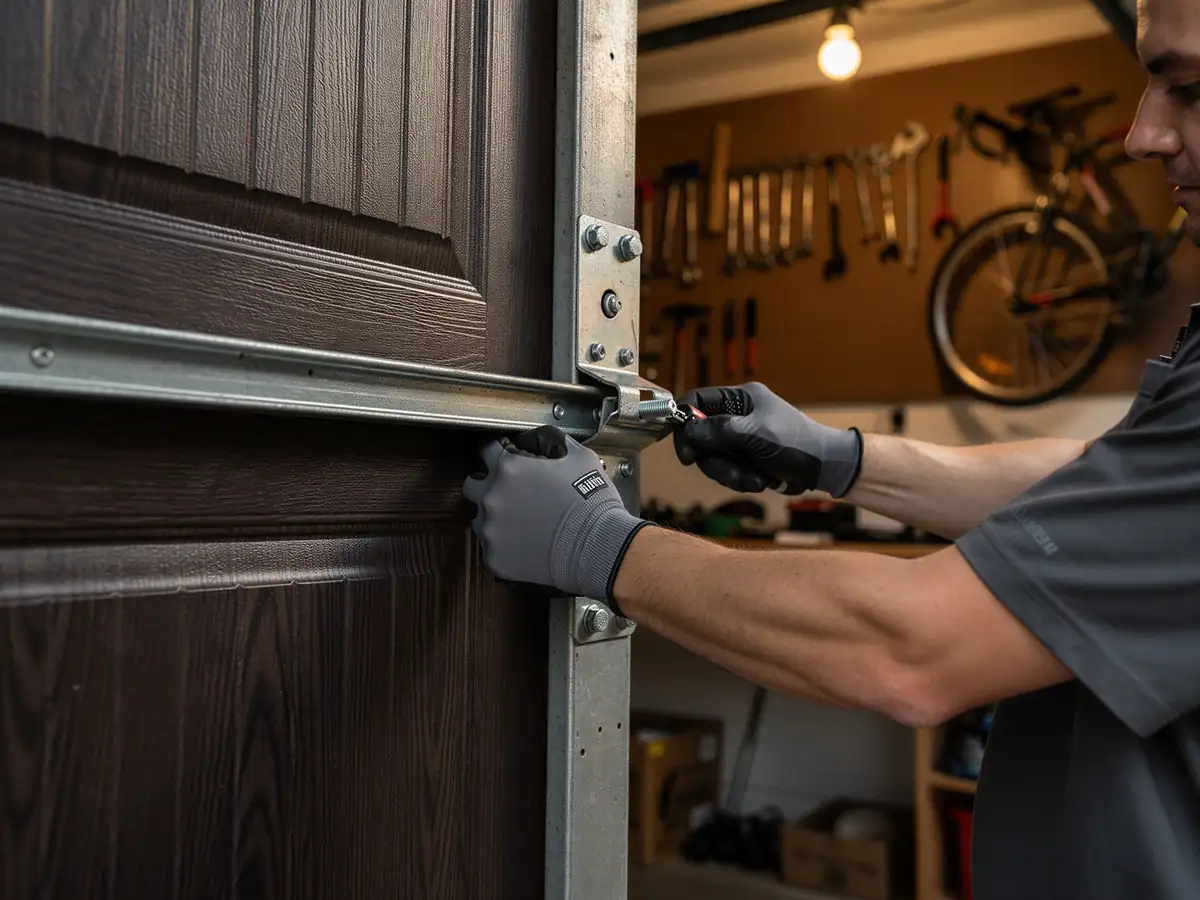
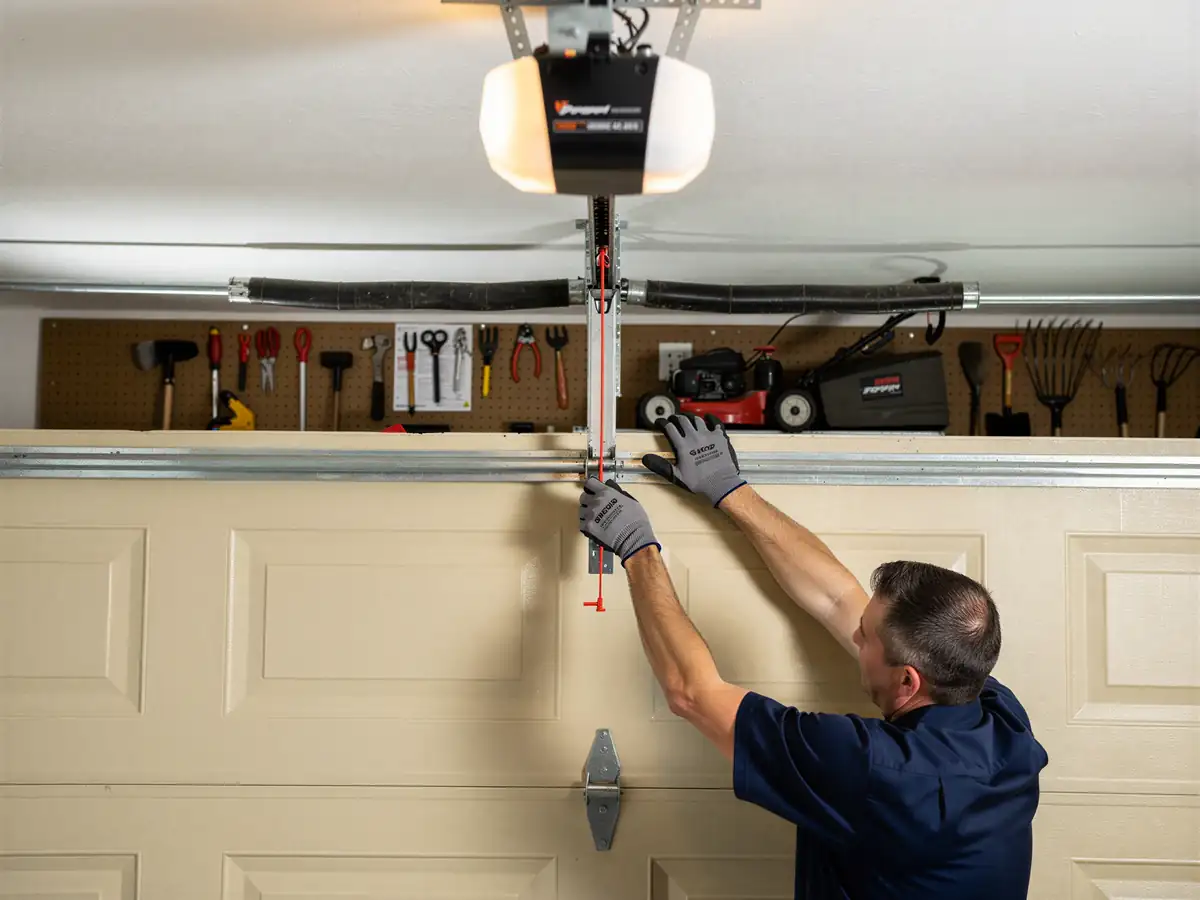
We run the four miles from our Bristol shop to Plainville without much fuss - it's a short trip, not a special one. A maintenance visit on a door this age usually covers the same ground every time: check spring tension and balance, inspect cable wear at the drum, lube hinges and rollers, tighten loose hardware on the track brackets, and test the opener's force and travel limits. On a 1970s door with original extension springs, we also look hard at the safety cable running through the spring - a lot of these were installed before that cable was standard, and it's a cheap add that keeps a broken spring from becoming a projectile. We don't promise a same-day slot from this page; scheduling depends on what's already on the truck's route that day. What we can say is that the inspection itself doesn't take a crew standing around guessing - these are known failure points on known-era hardware, and we go straight to them.
What Is on the Truck
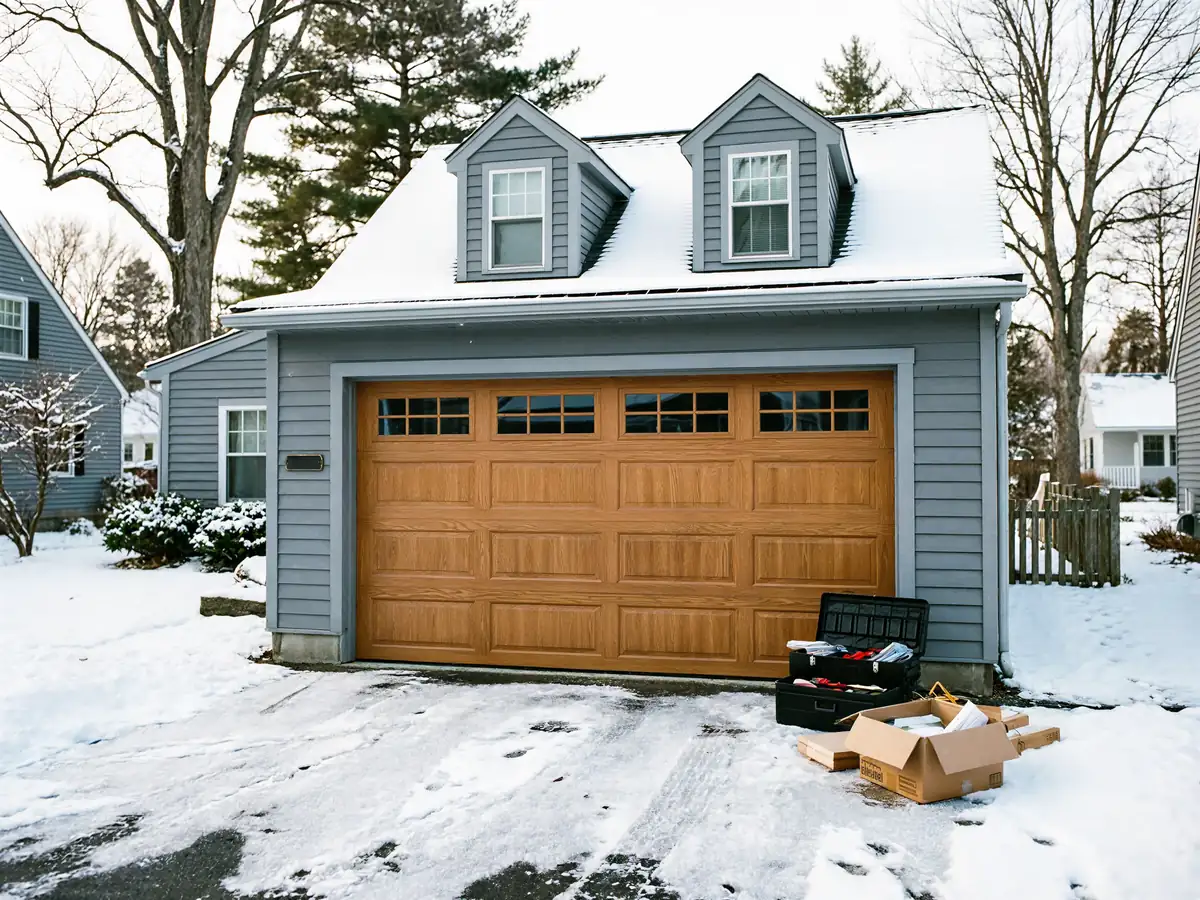
For maintenance calls in Plainville we carry what a 1970s-era door actually needs: rollers and hinges sized for older track profiles, extension and torsion springs in the weight ranges common to that build era, lubricant rated to hold up in a cold-severe climate rather than gum up at low temperatures, and replacement safety cables for doors that never had one installed. What we don't carry on every truck are reproduction panel sections matched to obsolete 1970s door profiles - if a panel's cracked or rusted through on a door that old, we'll tell you straight that patching it rarely makes sense next to a full replacement. That's a call we make on-site, not a guess from a sales sheet. For the full list of services we run out of Bristol, see our garage door maintenance page, and for more on how we cover this area, see the Plainville service page.
Why It Happens Here
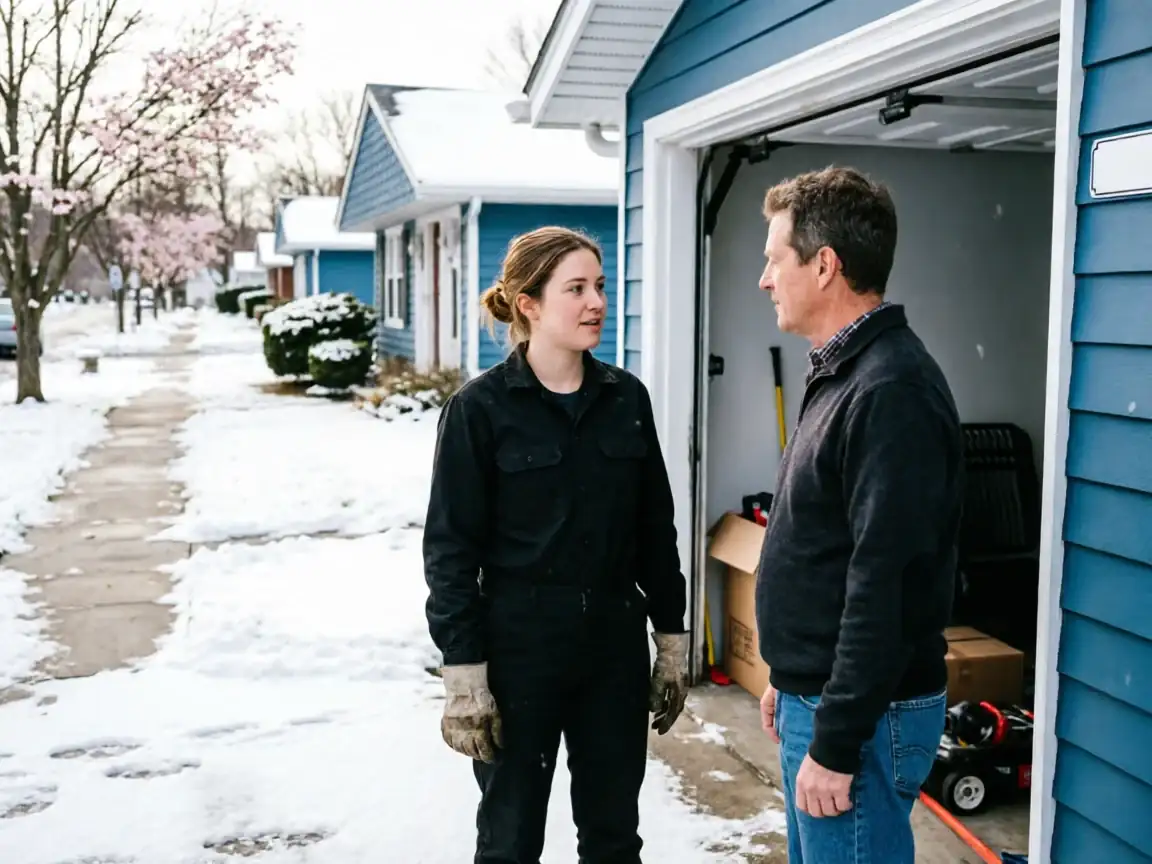
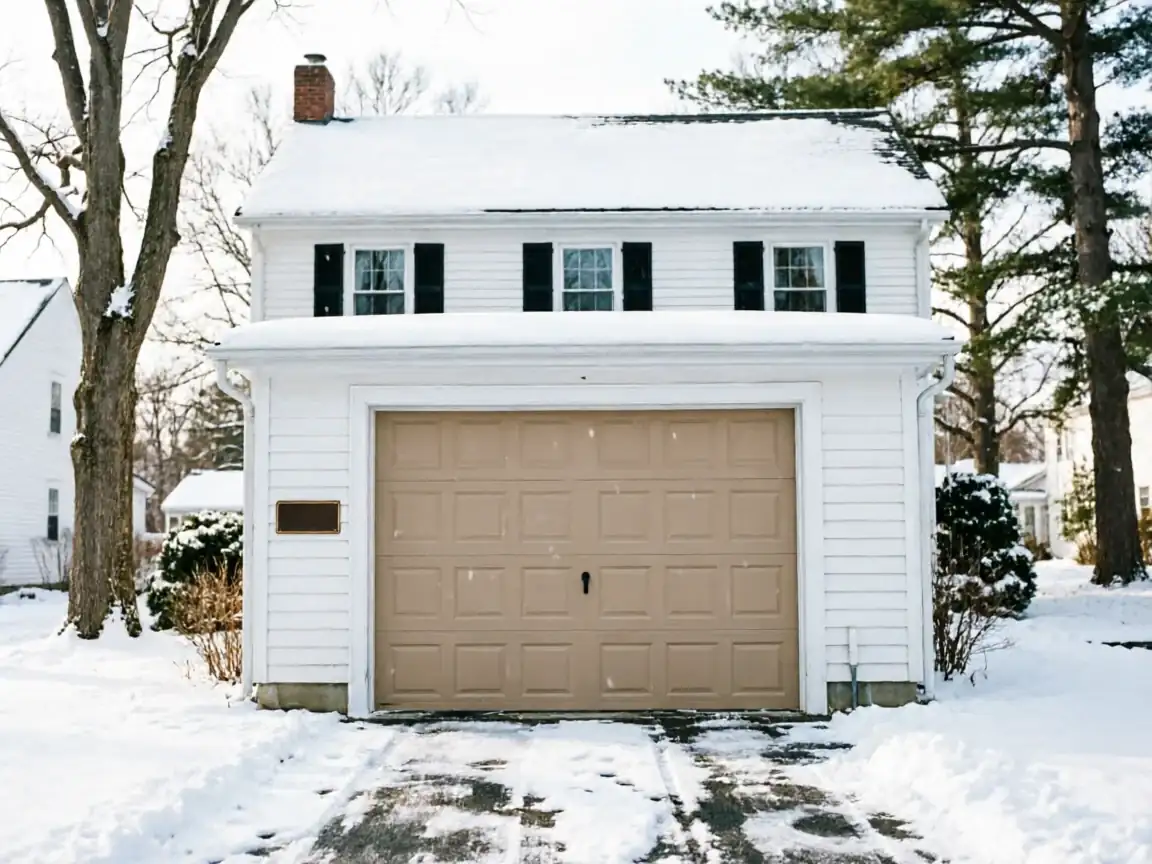
Connecticut's winters sit in a cold-severe climate band, and that's hard on any garage door, but it's harder on hardware that's already fifty-some years old. Steel contracts in the cold, which tightens tolerances on tracks that were never perfectly aligned to begin with. Torsion and extension springs lose a measurable amount of tension as temperatures drop, which is why a door that closed fine in August can start dropping unevenly by January. Add in that Plainville's housing stock mostly dates to right around 1970, and you've got a lot of doors running original or near-original springs that have absorbed fifty winters of that cycle. Weatherstripping on doors this old has usually hardened and cracked, which doesn't just let in cold air - it lets in moisture that rusts the bottom bracket and track from the inside out. None of this is unique to one street or one house; it's a function of when this part of town was built and what the winters here do to steel and rubber over decades.