How We Fix It
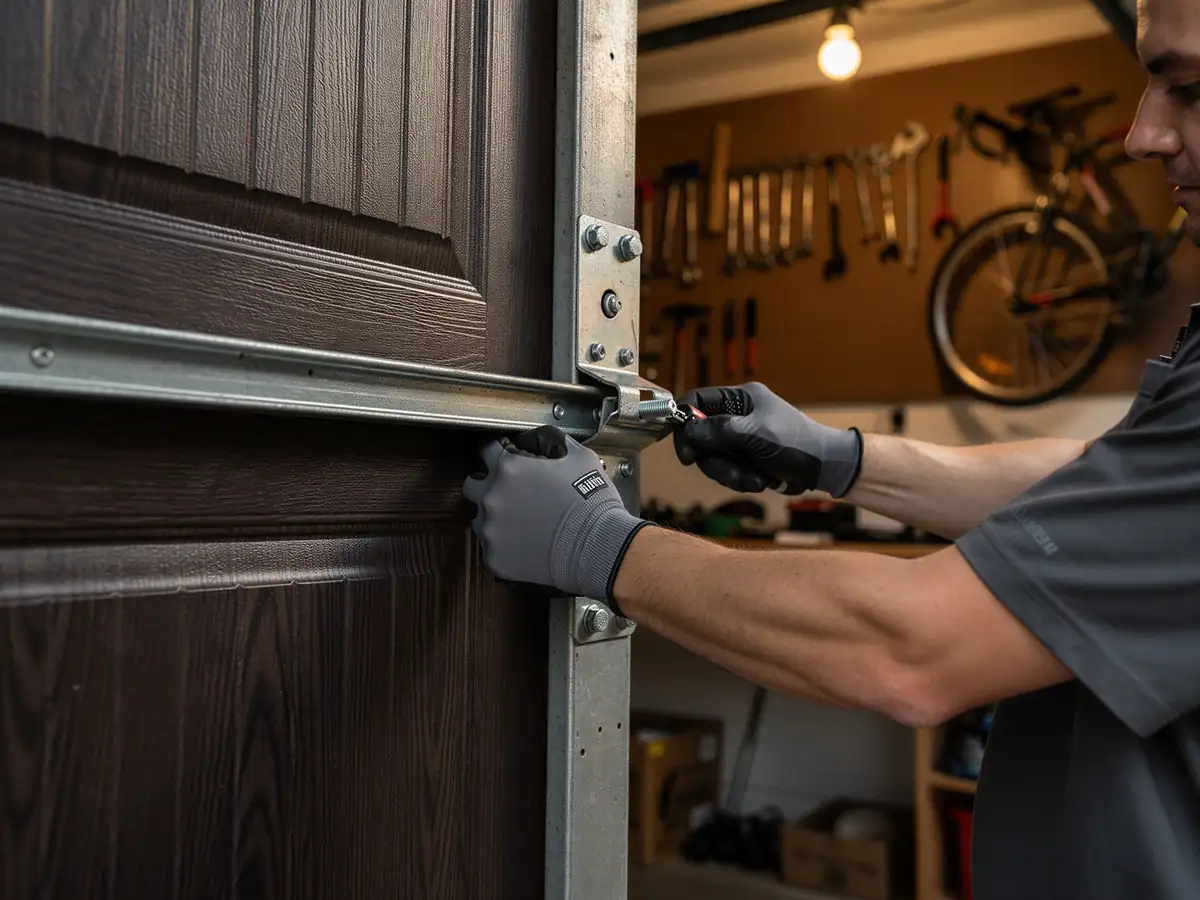
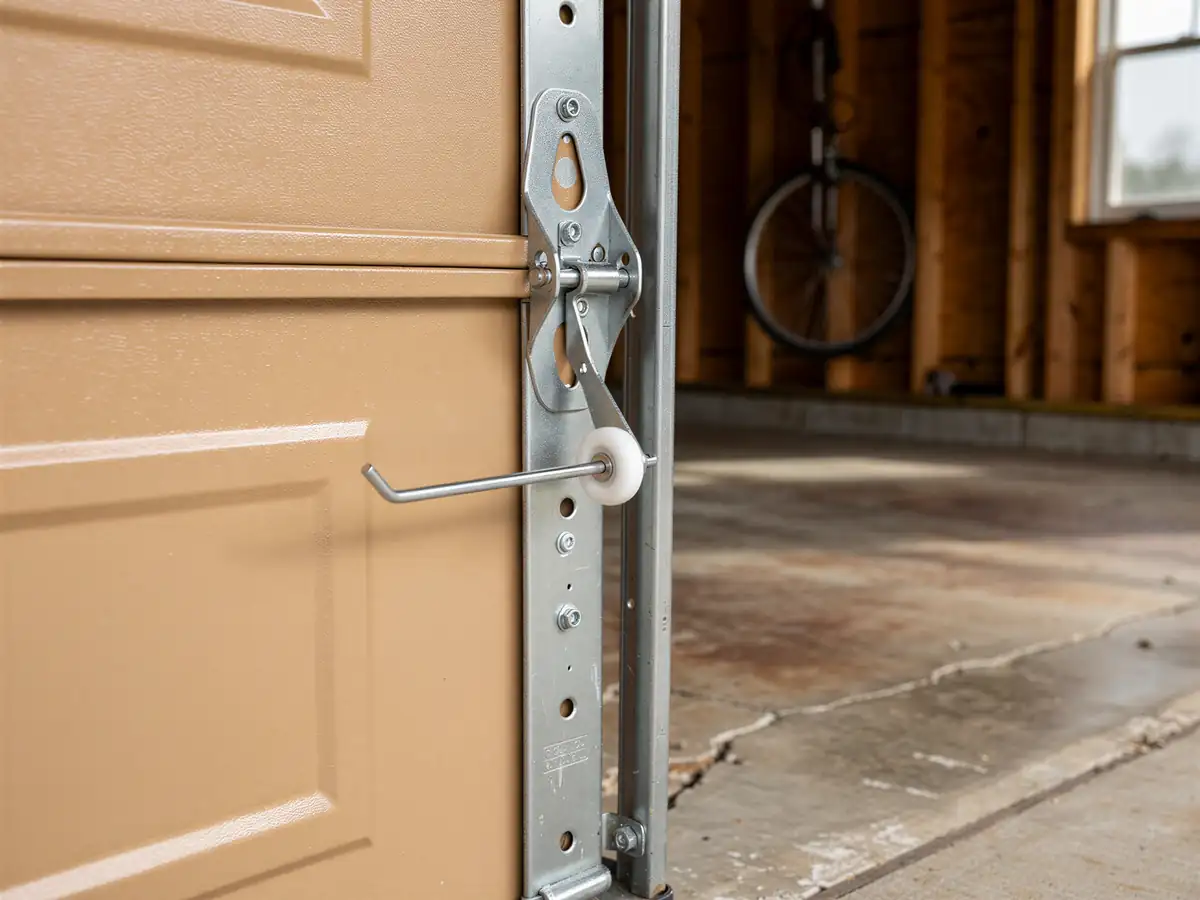
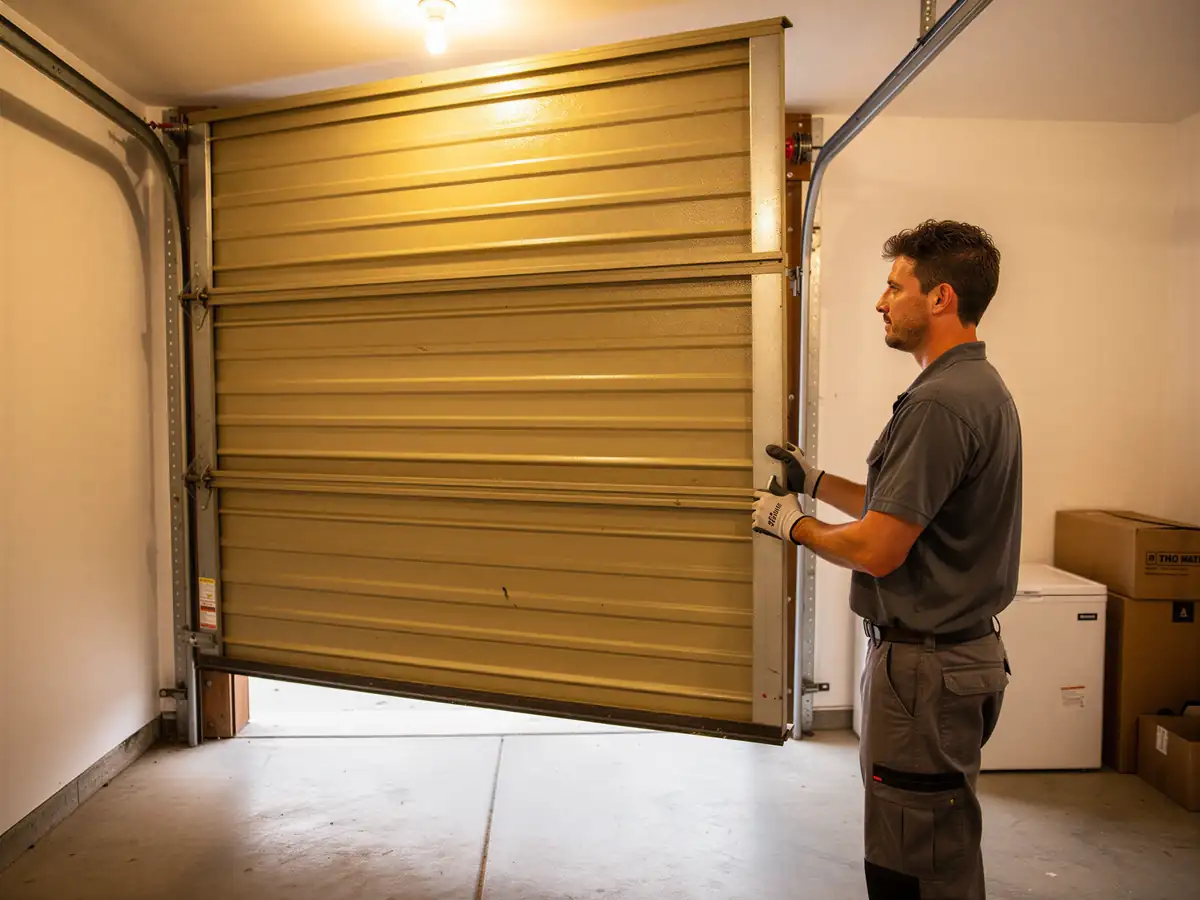
A door built around 1973, which is the typical year for houses on Southington's older streets, is usually a steel sectional door with a single, unlined skin - nothing like the foam-filled panels sold now. When that panel jumps the track, it's heavier per square foot than a modern door and it tends to bend the bottom roller bracket before anything else lets go. We start by checking whether the panel itself is bowed or just displaced, because on a door this age a bent bottom section often can't be forced back onto the track without cracking the seam.
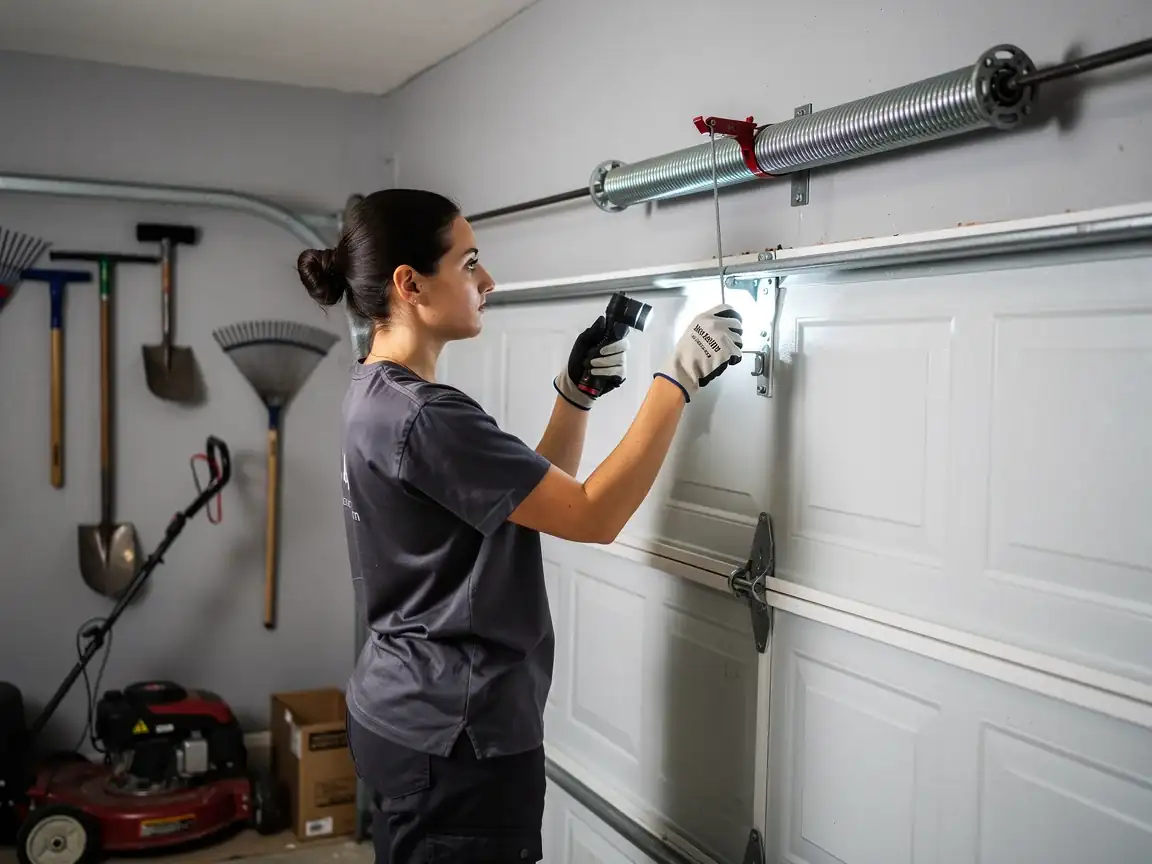
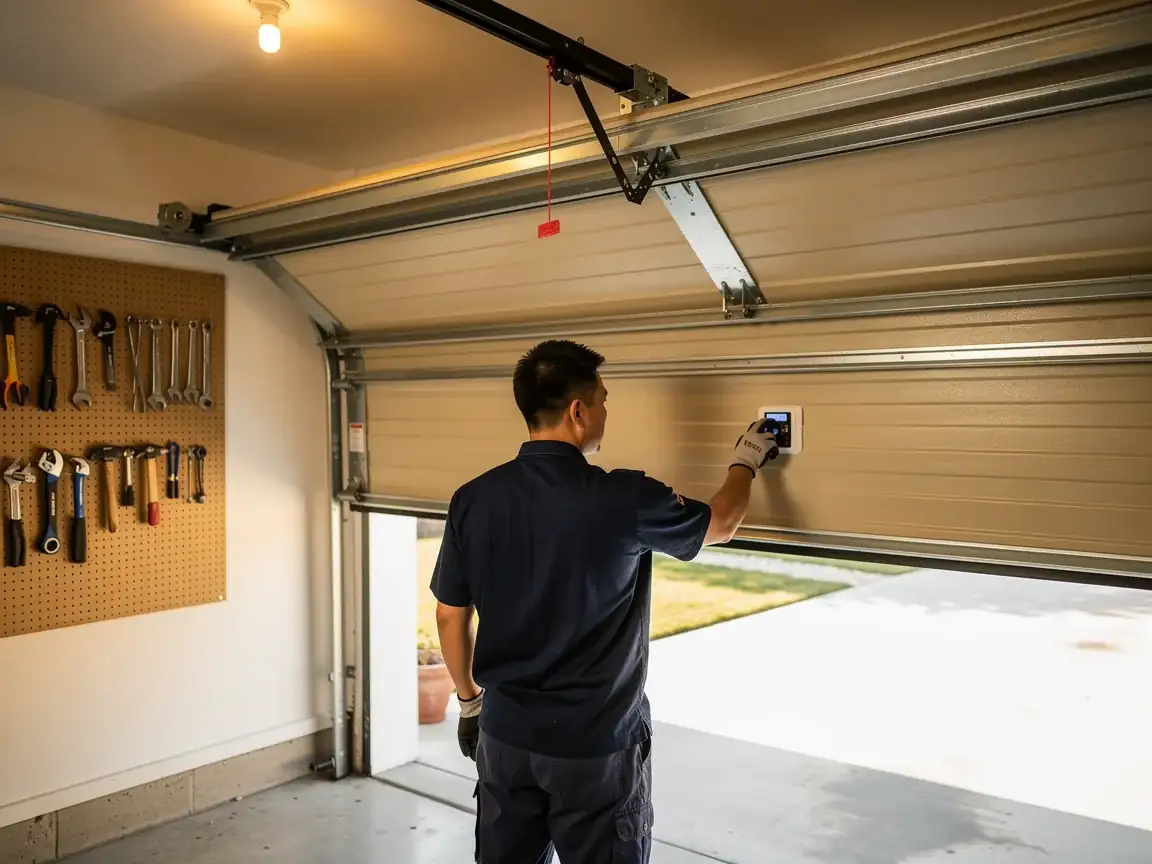
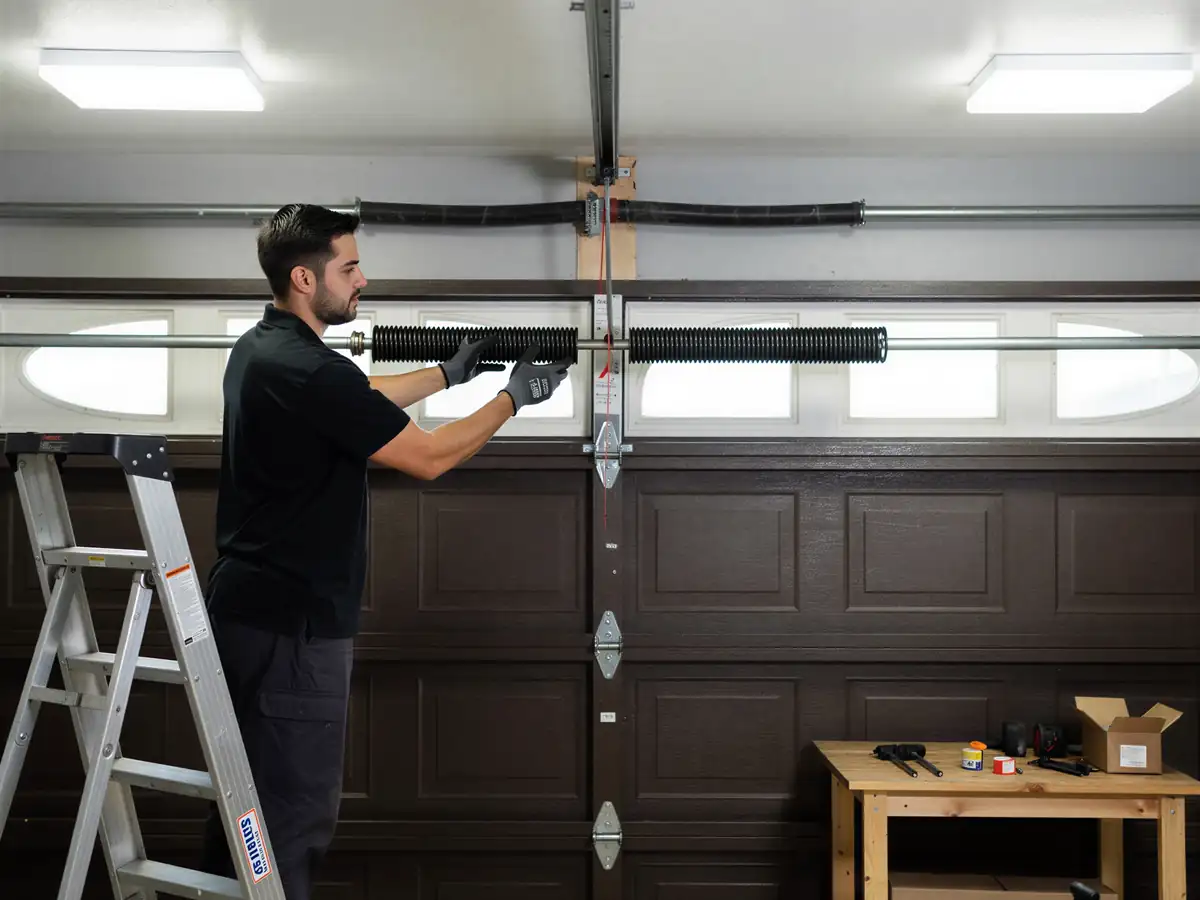
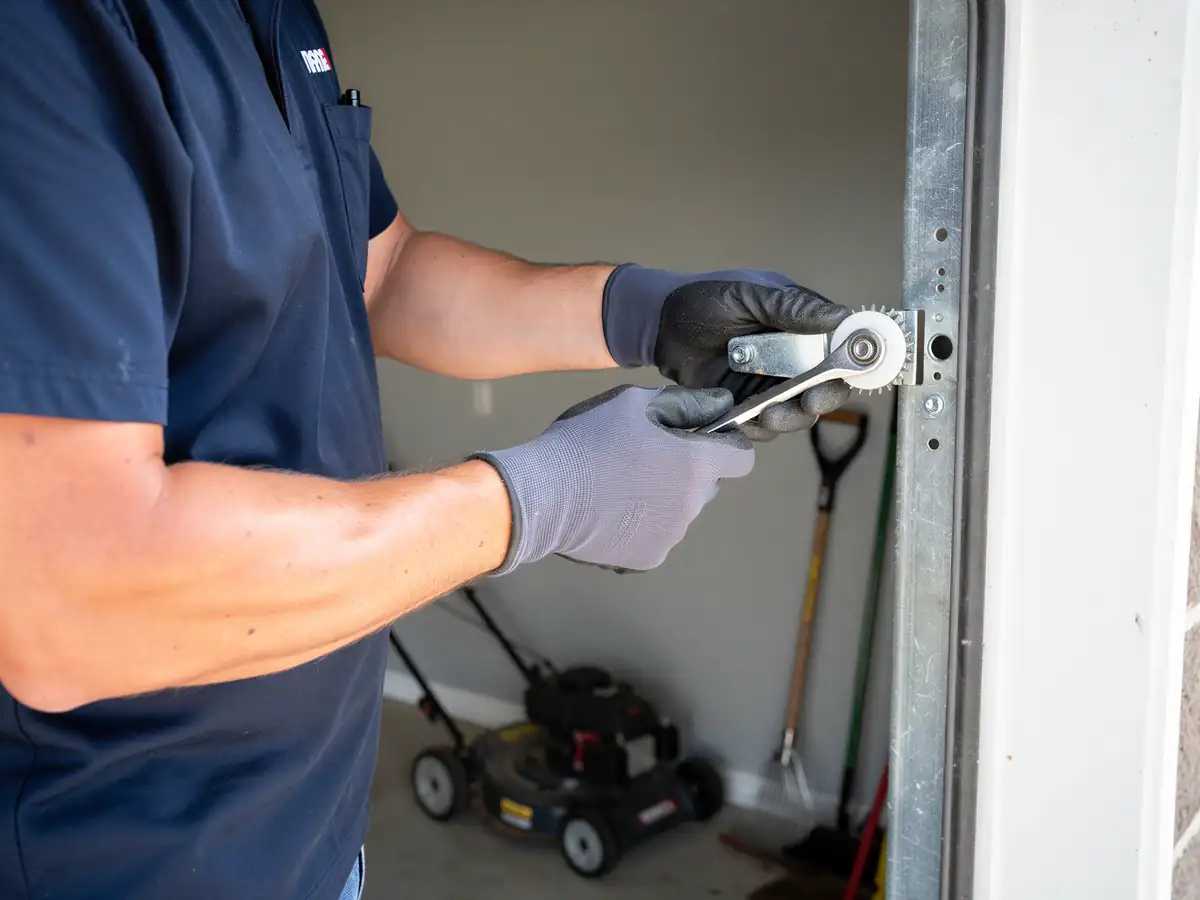
If the track is only knocked loose at the bracket, we re-set it, square it against the jamb, and check the roller stems for wear - galvanized rollers from this era corrode at the stem long before the wheel wears out, and a corroded stem is what lets a roller walk off the rail in the first place. If the cable has come off the drum at the same time, which happens often on these older double-car doors, we re-seat it and check the drum grooves for wear before closing the door again.
The honest limit here: if the bottom panel is bent more than an inch or the end stile has torn loose from the track bracket, we're not forcing it back into service. On a door this old, replacing that one panel usually costs more than it's worth once you account for how hard original 1970s-era sections are to match. At that point we'll tell you straight that a new bottom section, or a full door, beats a patch.
Time on the Job
Most off-track calls on a 1970s door in this part of our service area are a bracket and roller job - an hour or so once we're on site, longer if the cable needs re-threading onto the drum. We don't quote a fixed arrival window for Southington specifically; the job comes from our Bristol shop, about six miles out, so the drive itself isn't the variable - what's on the door is.
Where it runs long is parts. A door from this era sometimes takes a roller bracket or end hinge in a gauge that isn't on the truck, and getting the right one can mean a short delay rather than a same-visit fix. We'd rather tell you that up front than have you waiting on a truck that's actually waiting on a supplier.
How to Book
Call ahead and tell us the door came off track rather than just "it's stuck"
That one detail changes what we load on the truck before we leave Bristol. If you can see which side jumped, bottom or near the top, mention that too; it changes whether we're looking at a bracket problem or a broken cable.
Don't try to force the door back onto the rail yourself with the opener still connected to the drive
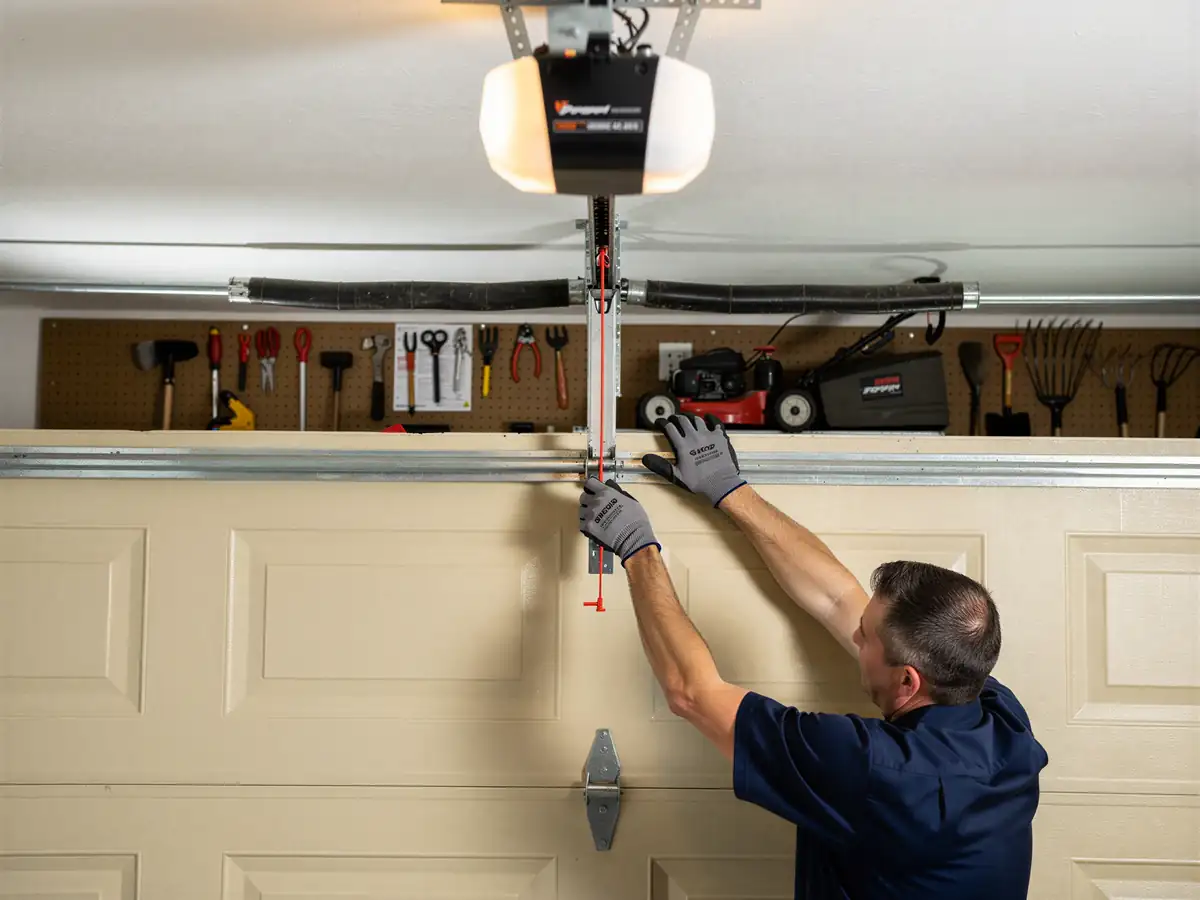
On a cable-driven door, the opener can wind more cable onto a drum that's already off-track and bend the shaft. Disconnect the opener's trolley release if you can reach it safely, then leave the rest to us.
See the main page for our full service list at /garage-doors-southington/
Or read how we handle off-track repairs out of the Bristol shop at /garage-door-off-track-bristol-ct.
Why It Happens Here
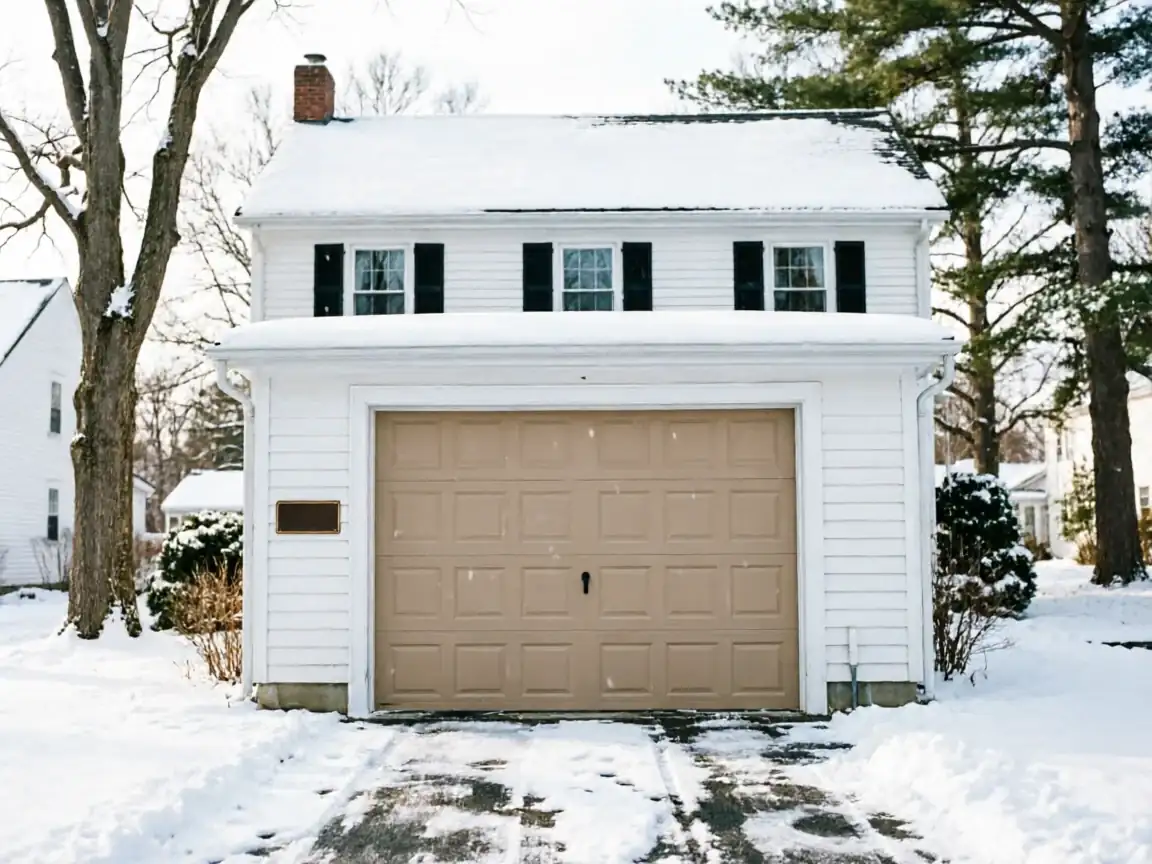
Southington's housing stock sits right in the middle of the wider area's 1938-to-1986 build window, and the typical year here, 1973, puts a lot of original steel doors and original hardware still in service on the same streets. With roughly 17,349 households in town, that's a meaningful number of doors from the same decade aging out of their rollers and cable at close to the same time - not a flood, but a steady, predictable trickle of the same failure.
At a median household income of $121,584, most homeowners we talk to in Southington choose to replace a worn door outright rather than keep nursing fifty-year-old hardware through another winter, which is a different pattern than we see in some of the lower-income towns closer to Bristol. Connecticut's cold winters add their own pressure - a track that's a sixteenth of an inch out of square binds harder once the grease stiffens in the cold, and that's often the push that finally sends a marginal roller off the rail.